
Table of Contents
- The Short Answer
- What Is the Classic Body Shape Test?
- Where Do Both Systems Come From?
- The 4 Weaknesses of the Body Shape System
- What Kibbe Does Differently
- Direct Comparison: Body Shape Type vs. Kibbe
- Common Mistyping
- Does My Type Change With Weight?
- Which System Should You Use?
- Self-Check: 4 Questions
- Frequently Asked Questions (FAQ)
The Short Answer
Short Answer
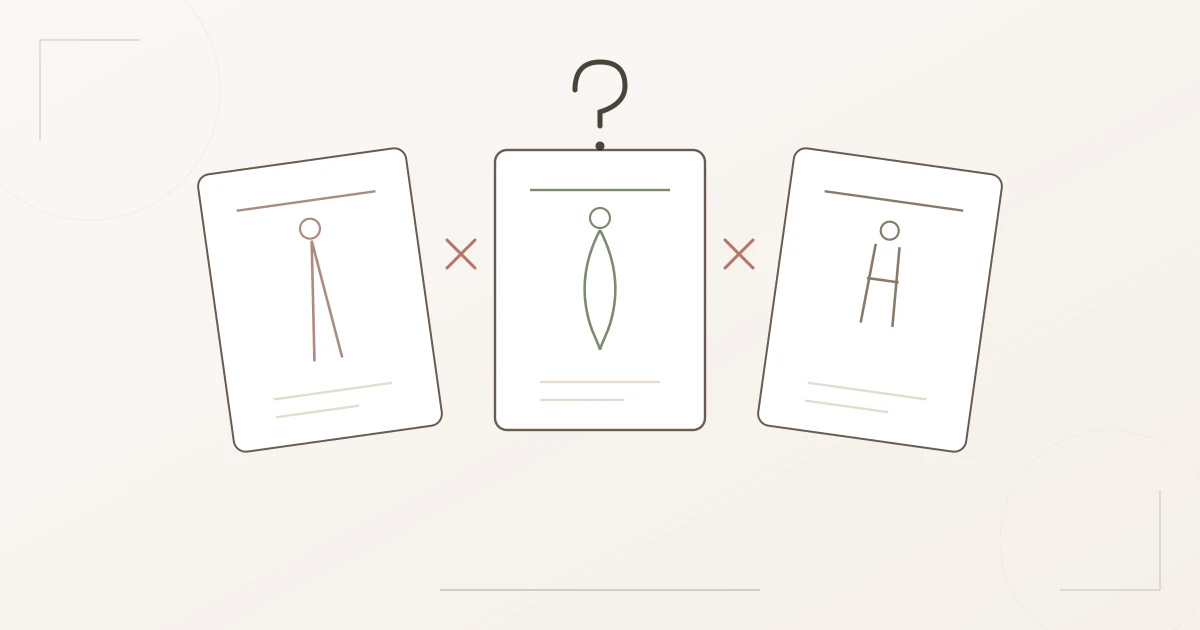
The classic body shape test (apple, pear, hourglass, rectangle, inverted triangle) measures exactly one thing: how your weight is distributed across your shoulders, waist, and hips. The Kibbe Body Type System measures something different and deeper: your bone structure, your body flesh, and your facial features — in other words, the aspects that diet, exercise, or life stage don't change. That's why so many women type themselves as a "pear" or "hourglass," follow the usual advice — and then wonder why nothing quite works anyway. Body shape types are a rough dieting-era orientation. Kibbe is a lasting style system. Both answer different questions, and that's exactly what we unpack here, honestly and in detail.
You've probably taken a body shape test before. Maybe even several — with different results. On one you were a pear, on another a rectangle. You bought the recommended A-line skirts and wrap dresses because "that suits your type" — and still stood in front of the mirror trying them on, thinking: something's not right here. That's not on you. It's because the body shape test is asking the wrong question. This guide shows you what it actually measures, where it reliably falls short, and why the Kibbe Body Type System gives a fundamentally different — and more reliable — answer.
What Is the Classic Body Shape Test?
The body shape test — sometimes also called a figure type test — sorts you into one of usually five categories based on your measurements:
| Type | Definition | Typical Advice |
|---|---|---|
| Pear (A-shape) | Hips wider than shoulders | Statement tops, A-line skirts |
| Apple (O-shape) | Weight concentrated in the middle | Empire cuts, statement legs |
| Hourglass (X-shape) | Shoulders and hips equally wide, defined waist | Waist-defining cuts, wrap dresses |
| Rectangle (H-shape) | Shoulders, waist, and hips similarly wide | "Creating" a waist with belts, peplums |
| Inverted Triangle (V-shape) | Shoulders wider than hips | Emphasize hips, avoid shoulder pads |
The system originally comes from the clothing retail industry of the 1980s and was developed for mass-market ready-to-wear — as a quick way to give customers a purchase recommendation in three minutes on the shop floor. That's exactly what it's built for: a rough sorting tool based on measurements, not a style system.
Where Do Both Systems Come From?
The confusion between the two systems often starts with the term itself: "figure type" gets used colloquially for both, even though they come from completely different traditions and pursue completely different goals.
The body shape type emerged as a sales tool in retail — simplified letter silhouettes (A, O, X, H, V) that can be explained in seconds and applied in a fitting room without any specialist knowledge. Its strength is exactly its simplicity; its weakness is that same simplicity, the moment you need more than a surface-level first impression.
The Kibbe Body Type System has a different origin: New York image consultant David Kibbe developed it in the 1980s out of his hands-on work with actresses and models, publishing it in 1987 in the book "Metamorphosis." His starting point was an observation that every body shape test still ignores today: two women with identical measurements can look completely different in identical clothing — harmonious on one, off on the other. Kibbe searched for the cause of this difference and found it not in circumference measurements, but in bone structure, tissue distribution, and facial lines. For almost 40 years, the system has been applied and developed further by image consultants internationally — with a growing presence in German-speaking style consulting as well.
The 4 Weaknesses of the Body Shape System
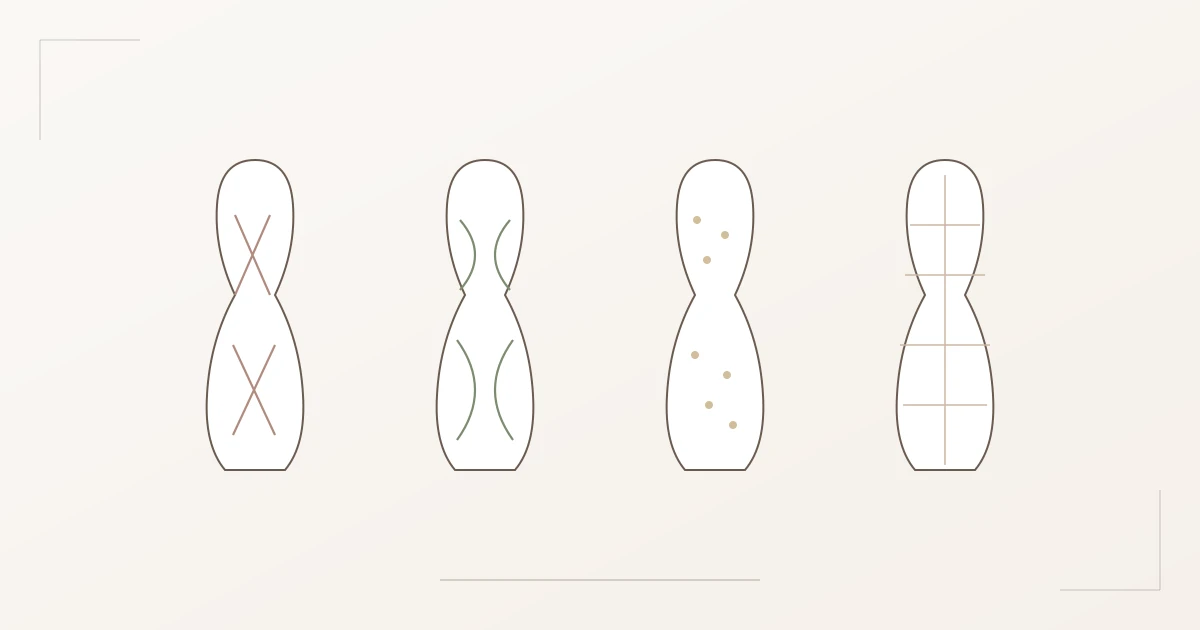
The body shape system isn't wrong — it's just very incomplete. Four problems come up systematically:
1. It Measures Weight Distribution, Not Structure
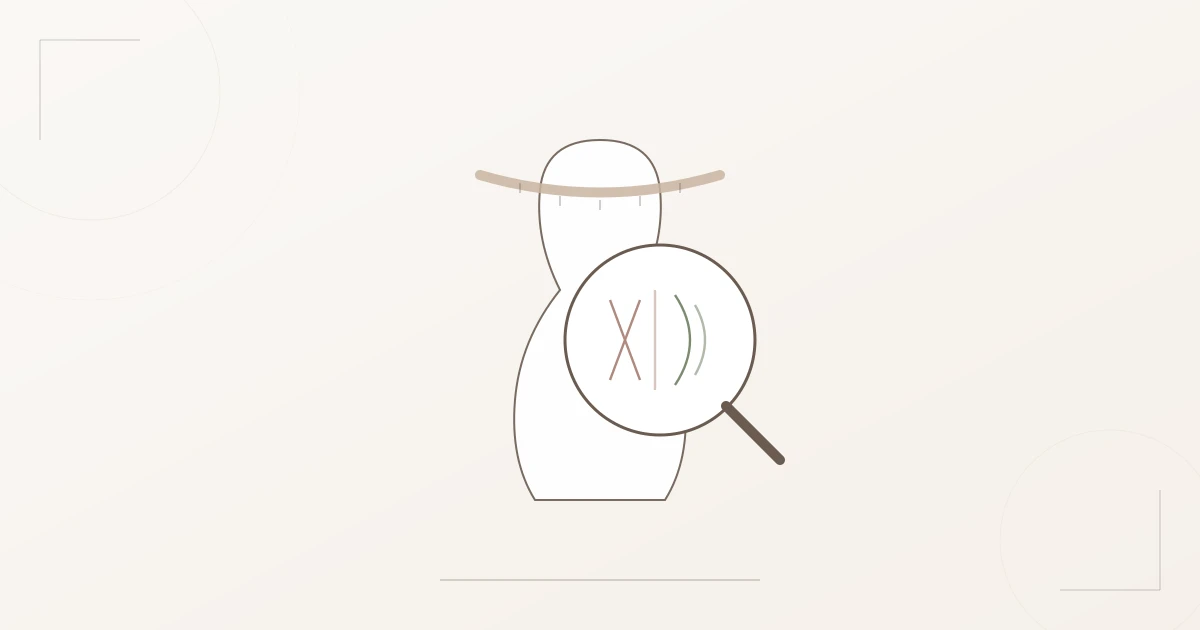
Two women with an identical "hourglass" measurement (shoulders = hips, defined waist) can look completely different and need completely different clothing — because one has fine, short bones with soft flesh (Kibbe: Soft family) and the other has long, sharp bones with little flesh (Kibbe: Dramatic family). The body shape test doesn't know this difference exists, because it only measures circumferences — not bone length, not joint size, not facial features.
This isn't merely an anecdotal objection: a 2024 study published in Scientific Reports shows that the waist-to-hip ratio — the mathematical basis of "apple," "pear," and "hourglass" — is not a reliable, unambiguous indicator of actual body shape: the same ratio can occur across visibly different silhouettes. A purely centimeter-based system is standing on shaky mathematical ground from the start — regardless of what it's even supposed to tell you.
2. It Ignores Everything Above the Shoulders
Facial features, neck length, wrists, and overall proportion don't factor into any body shape system — yet these are exactly the features that determine whether a neckline, a necklace, or a blazer lapel suits you. Kibbe explicitly includes facial bone and flesh, because harmony is a head-to-toe outcome, not a waist-only outcome.
3. Five Categories for Millions of Bodies
Having five drawers for the entire female population inevitably means most women only roughly fit. Kibbe works with 13 types along a Yin-Yang spectrum — not because more categories are automatically better, but because a spectrum captures real nuance that a binary drawer can't.
4. It Says Nothing About Fabric, Pattern, or "Energy"
Whether a fabric should drape fluidly or hold structure, whether a pattern can be bold or should stay fine, whether a silhouette should read sharp or soft — none of that is decided at the waist. It's decided by what's called the line of your entire body. The body shape test has no vocabulary for this. Kibbe does: Yin (soft, flowing, curved) and Yang (sharp, straight, structured) are the central axis of the whole system.
Sources: David Kibbe, "Metamorphosis" (1987) · Scientific Reports (2024), "Curviness is a better predictor of a woman's body attractiveness than the waist-to-hip ratio" · JO-Style's own consulting experience
What Kibbe Does Differently — and Why It Matters
David Kibbe developed his system in 1987 explicitly as an answer to exactly these gaps. Instead of measurements, Kibbe analyzes four dimensions at once:
- Bone structure: the size and length of wrists, shoulders, facial bones — barely changes at all in adulthood
- Body flesh: how muscle and soft tissue are distributed over the bone — independent of absolute body weight
- Facial features: sharp vs. soft facial lines, which help determine the overall impression
- Yin-Yang balance: where you fall between "sharp/straight" (Yang) and "soft/curved" (Yin) — the axis that ultimately determines which cuts, fabrics, and patterns suit you
The result is 13 Image Identities along the Yin-Yang spectrum: Dramatic, Soft Dramatic, Flamboyant Natural, Natural, Soft Natural, Dramatic Classic, Classic, Soft Classic, Flamboyant Gamine, Gamine, Soft Gamine, Theatrical Romantic, and Romantic. Each of these types describes its own combination of bone length, fullness, and line energy — from the maximally straight, sharp Dramatic to the maximally soft, curved Romantic. More on this in the full guide to all 13 Kibbe types, or straight to a single-type deep dive on the Soft Natural Kibbe type.
Crucially: Kibbe never says "you're too heavy for this cut" or "you need to hide this body part" — the system has no "good" or "bad," only different line logic. That's exactly what fundamentally sets it apart from body-shape thinking, which implicitly always works with "hiding" and "balancing out."
Direct Comparison: Body Shape Type vs. Kibbe
| Criterion | Body Shape Type | Kibbe Body Type |
|---|---|---|
| Measures | Circumferences (shoulder/waist/hip) | Bone structure, body flesh, face, Yin/Yang |
| Number of categories | 5 | 13 along a spectrum |
| Changes with weight fluctuation? | Yes, often completely | No — bone structure stays the same |
| Factors in the face? | No | Yes, explicitly |
| Says anything about fabric/pattern? | Barely | Yes, via Yin-Yang line logic |
| Mindset | Hide / balance out | Amplify the natural line |
| Best suited for | Quick first orientation while shopping | A lasting wardrobe strategy |
Important to understand: this isn't a "Kibbe is always right, body shape type is always wrong" comparison. These are two tools for two different jobs — it's just that one keeps getting used in place of the other. A hammer isn't a bad screwdriver; it's simply built for something else. The problem only starts when a boutique salesperson or an online quiz sells you a purchase decision in three minutes that actually needed a structural analysis.
Common Mistyping — When the Shape Test Leads You Astray
Three patterns keep showing up in practice:
Example 1
A woman tests as an "hourglass" — shoulders and hips are equally wide, waist defined. She buys waist-defining, body-hugging wrap dresses, as "recommended for her type." In reality, she's Kibbe Soft Natural: soft, padded bone structure with natural fullness. The tight wrap dress compresses that natural softness and ends up looking unflattering — even though the "hourglass" measurements were correct, the recommendation was wrong, because the structure is different.
Example 2
A woman tests as a "pear" and has worn statement tops with plain, unobtrusive pants for years to "hide" her hips. She's actually Kibbe Dramatic — long, sharp bone structure that thrives on straight, long lines. The loose, camouflaging cuts break up exactly the vertical line that naturally makes her silhouette strong. The result: she looks shorter and heavier in practically every "pear-approved" piece than she actually is.
Example 3
A woman tests as a "rectangle" after a diet, having previously tested as an "hourglass." Her Kibbe type hasn't changed in that time — only her weight. The body shape test gave her two contradictory wardrobe strategies within a few months, even though her actual structure stayed stable the entire time.
Does My Type Change With Weight?
This is the most practically important difference between the two systems. With body shape type: yes, almost always. Gain or lose weight, and your circumferences and proportions shift — an hourglass can become a rectangle, a pear an apple. With Kibbe type: no, generally not. Bone length, joint size, and facial structure stay stable throughout adulthood, regardless of weight fluctuations within a normal range. A Kibbe Dramatic stays Dramatic at 55 kg just as at 85 kg — only the fullness changes, not the underlying line logic.
That makes Kibbe a far more stable investment: a one-time Kibbe analysis stays valid for decades, while a wardrobe built on body shape type would need to be rethought with every weight change.
Which System Should You Use?
An honest recommendation, not a sales pitch:
- Use the body shape test if … you need a rough first orientation in five minutes for quick online shopping and don't want a deeper analysis.
- Use Kibbe if … you want to build a wardrobe that works for years, want to stop recurring bad purchases, or have already struck out with classic advice without knowing why.
- Use both if … you're also looking for a color palette alongside Kibbe's silhouette logic — more on that in Color Analysis or Style Consulting: What Suits Me?
The fastest first step: our free Kibbe test gives you a first, structure-based orientation in just a few minutes — no measuring tape required.
Self-Check: 4 Questions That Tell You More Than a Measuring Tape
Before you even take a test, these four questions help you start thinking in terms of Kibbe rather than body shape type:
- Wrists and ankles: Do they look fine and delicate, or more sturdy and broad? This is a direct clue to bone structure — something no body shape test asks about.
- Facial features: Are your facial features more sharp and angular (defined chin, high cheekbones) or soft and round? This influences your Yin-Yang balance just as strongly as your torso does.
- Body flesh: Does your body feel "padded" and soft even at a lower weight, or does it stay taut and toned even at a higher weight? This is independent of your current weight and reveals your natural tissue quality.
- Reaction to cuts: When you wear tight, straight silhouettes — do you look stronger and more defined, or hard and off? When you wear flowing, soft fabrics — do you look romantically harmonious, or shapeless and undefined? Your spontaneous reaction to these extremes is often the clearest Kibbe clue there is.
None of these four questions can be answered with a measuring tape — and that's exactly the point. A Kibbe test, whether it's the free self-test or a professional photo analysis, works with exactly these four dimensions, not centimeters.
Frequently Asked Questions (FAQ)
What's the difference between body shape type and Kibbe type?
The body shape type measures circumferences (shoulders, waist, hips) and sorts you into one of usually five categories. The Kibbe type analyzes bone structure, body flesh, facial features, and Yin-Yang balance, and sorts you into one of 13 Image Identities. Body shape type changes with weight; Kibbe stays structurally stable.
Why doesn't my body shape type's advice work for me?
Because two women with identical measurements (both "hourglass," say) can have completely different bone structures and line energies. The body shape system can't capture this difference, because it only measures circumferences, not structure.
Is Kibbe more accurate than the body shape test?
For the question of "what works for me long-term" — yes, because it factors in more dimensions (bone, flesh, face, line) and doesn't tip over with weight fluctuations. For a quick five-minute sort while shopping, the body shape type is still more practical, even if less precise.
Can my Kibbe type change if I lose or gain weight?
Generally not. Bone length and joint size stay stable throughout adulthood. What changes is fullness (more or less body flesh over the same structure) — the underlying line logic, and with it your Kibbe type, stays the same.
What do Yin and Yang mean in the Kibbe system?
Yang stands for sharp, straight, structured lines; Yin for soft, flowing, curved lines. Each of the 13 Kibbe types sits at a particular point on this spectrum — from pure Yang (Dramatic) to pure Yin (Romantic). This balance determines which cuts, fabrics, and patterns suit you.
I tested as a "pear" — does that automatically make me a specific Kibbe type?
No, there's no direct 1:1 translation. A "pear" could, depending on bone structure and facial features, be Soft Natural, Theatrical Romantic, or Flamboyant Natural, for example — all with very different style recommendations. That's exactly the core point of this article: body shape alone isn't enough as a criterion.
Why does Kibbe factor in the face too?
Because harmony is a whole-picture outcome, not a waist detail. Sharp or soft facial features affect whether, say, an angular blazer collar or a soft round neckline looks harmonious — regardless of the body shape underneath.
Is the body shape test useless, then?
No. It's a legitimate, quick tool for a rough first sort — it just was never built for a lasting style strategy. The problem only arises when it's used as the sole criterion for long-term purchase decisions.
How do I find out which Kibbe type I am?
With our free Kibbe test, you get a first orientation in just a few minutes. For a definitive, professionally evaluated result with a complete style dossier, we recommend the Kibbe analysis with Image Identity.
What's the difference between Kibbe and seasonal color analysis (4 seasons)?
Both are different systems for different questions: seasonal color analysis determines your color palette based on skin tone, eye color, and hair color. Kibbe determines silhouette, cut, and material based on bone structure and line. More on this in Color Analysis or Style Consulting.
How do I know if I've been mistyped?
Typical signs: the cuts "recommended for your type" fit correctly on paper but still look unflattering. You've gotten different results across repeated tests. Or your result flipped completely after a weight change, even though you've barely changed visually.
Does Kibbe work for every dress size?
Yes. The system works with bone structure and proportions, not absolute measurements or weight — it works just as well for size 34 as for size 56.
Is Kibbe scientifically proven?
Honest answer: Kibbe isn't a peer-reviewed scientific model — it's a system developed out of decades of hands-on practice by image consultants, similar to seasonal color analysis. Its strength lies not in clinical studies, but in almost 40 years of documented application and an internally consistent, traceable logic: structure and line determine visual impression, not circumferences alone. The body shape test, incidentally, holds the same status — it's not a scientific model either, just a retail convention.
Don't measure yourself — understand your structure.
The free Kibbe test shows you in just a few minutes where you sit on the Yin-Yang spectrum — beyond measuring tapes and dress sizes.