
You stand in front of the mirror. The outfit looked great on the hanger, on the woman in the shop, definitely on Instagram. On you it looks… off. Not terrible — just somehow wrong. And you ask yourself for the hundredth time: why do my outfits look bad on me?
The short answer first: it is not your body. Not your weight, not your height, not your age. It is that you keep buying clothes for a body you do not really know — following rules that were never made for you. This guide explains step by step what is actually going wrong and how to finally dress right in 2026. (For the full step-by-step method, see our companion 5-stage guide "How Do I Dress Well?".)
Short answer
Outfits look bad when the lines of the clothes do not match the lines of the body — not because anything is wrong with the body. The five most common causes: unknown body line, wrong fit, unsuitable fabric, unbalanced proportions, and a wardrobe without a system. All five can be fixed.
It is not you — and it is not your body
Almost every woman knows this moment: the wardrobe is full, but "nothing looks good". Most conclude something is wrong with their body. Too broad, too short, too curvy, too straight. So they camouflage, hide, wrap themselves in black — and the result looks even more arbitrary than before.
The truth is both uncomfortable and liberating: clothes never look the same on everyone. The same wrap dress that looks effortless on your friend can look borrowed on you — not because your body is worse, but because your bodies have different lines. Sharpness or softness, length or compactness, straight or curved silhouette. Clothes have lines too. When both match, you get that "made for her" effect. When they clash, even the most expensive piece looks like a costume.
The 5 real reasons your outfits do not work
1. You are dressing a body you do not know
The most common mistake of all. Most women roughly know whether they are "more pear or more apple" — and that is where the knowledge ends. But fruit categories say nothing about your bone structure, your vertical line, the balance of yin (soft, rounded) and yang (sharp, long) in your body. Yet exactly these factors decide whether a blazer looks powerful or costume-like on you.
2. Fit beats size — always
A number on a label is not information about you. Clothing that fits at the shoulders but wrinkles at the waist (or vice versa) sabotages every outfit — no matter how beautiful the piece. Women notoriously buy for the "problem area" and accept poor fit everywhere else. The right way is the opposite: buy for your widest point, have the rest tailored.
3. The fabric is working against you
The same silhouette can look stunning in heavy wool and cheap in thin polyester. Soft, curved bodies need fabrics with flow and drape; long, sharp bodies can carry structure and stiffness. If you are soft and force yourself into stiff fabrics, you look trapped. If you are sharp and wear only flowing pieces, you look shapeless.
4. Your proportions are out of balance
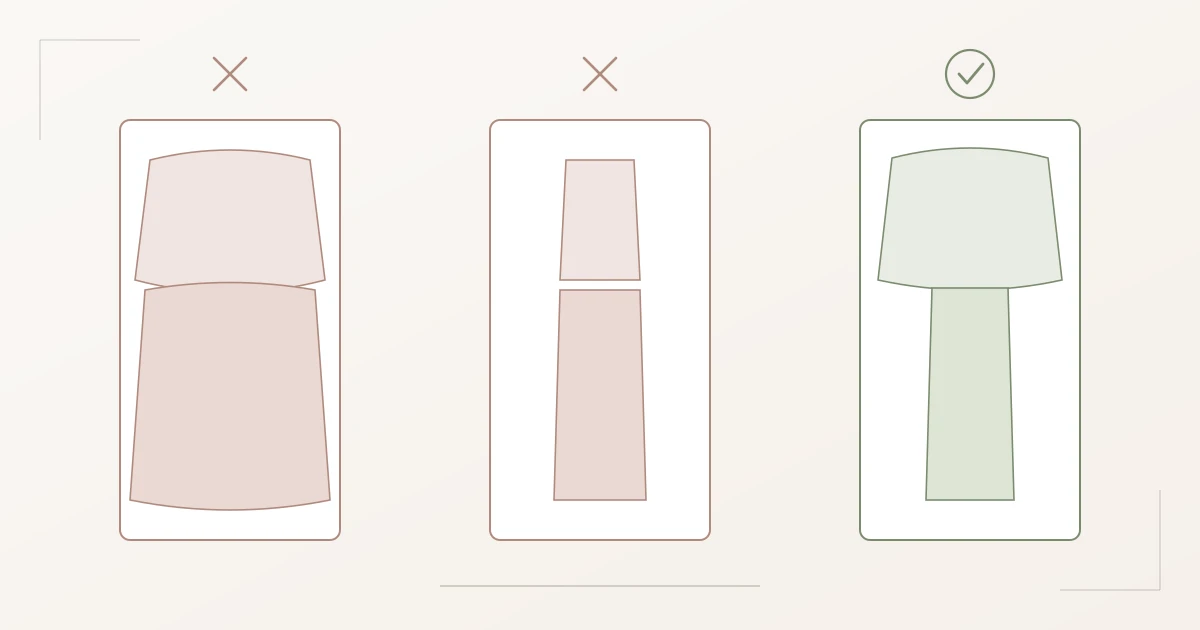
An outfit lives from volume distribution: loose on top, narrow below — or the reverse. Two wide pieces swallow you; two tight pieces put every insecurity on stage. Even the question of where your waist visually sits (and whether to emphasise it) depends on your body line — not on a blanket rule.
5. Your wardrobe is full — but it is not a system
Twenty good individual pieces do not make one good wardrobe. If your clothes come from ten different style phases, trends and impulse buys, no outfit can look coherent, because nothing belongs together. The problem then is not the single piece — it is the wardrobe as a whole.
Wardrobe Check tool
Full wardrobe, nothing to wear?
Our free Wardrobe Check guides you through your closet in a structured 10-minute session: what truly works, what can go, which gaps you should actually fill? Afterwards you know — instead of guessing.
Start the Wardrobe Check →How do I dress right? The method for 2026
Forget "10 trends you need now". Dressing well in 2026 works in reverse order: understand first, then declutter, then buy deliberately.
Step 1 — Know your body line. Not fruit, but lines: are you long and sharp (yang), soft and curved (yin), or a blend? The Kibbe Body Type System answers exactly that — with 13 types instead of 4 fruits.
Step 2 — Analyse what you own. Go through your wardrobe piece by piece: does it match your line? Do you actually wear it? What is genuinely missing — and what do you own five times over?
Step 3 — Buy by line, not by trend. A trend that respects your line can come along. One that fights it stays in the shop — no matter how celebrated it is.
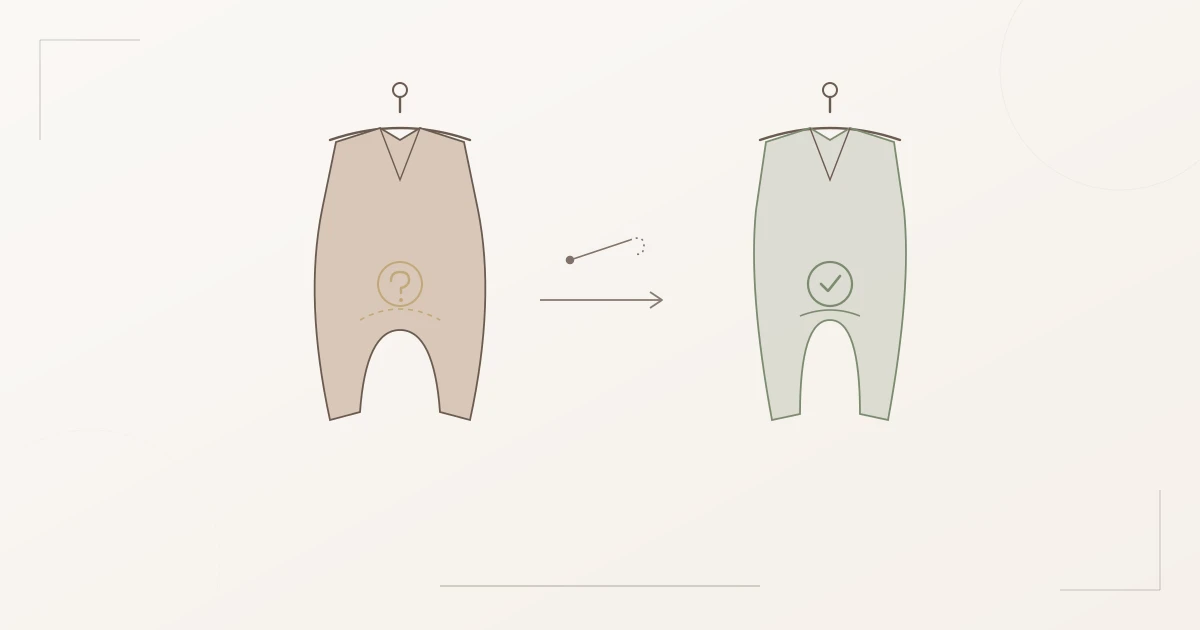
Step 4 — Fit above everything. Budget for tailoring. A 15-euro alteration turns a 60-euro blazer into a made-to-measure piece.
Free tool
What line does your body have?
The first step is always the same: know your type. Our free Kibbe quiz determines your body line in 8 questions — with a full type explanation and concrete styling tips. No account, no email.
Start the Kibbe quiz →Why "rules for pear shapes & co." are not enough
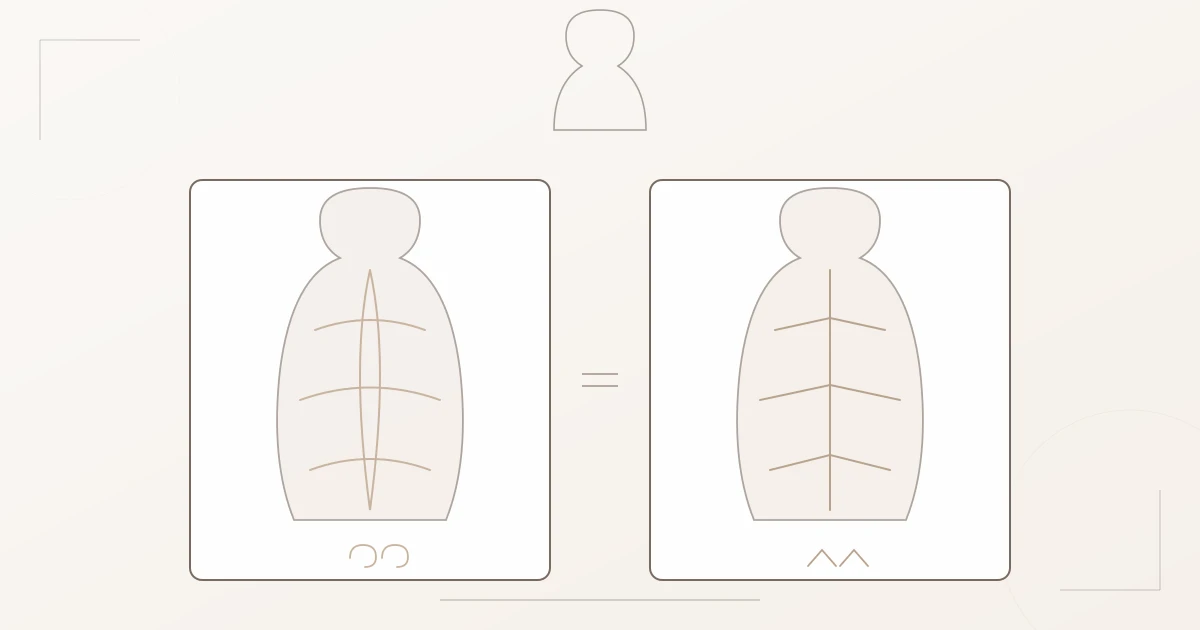
Classic figure advice sorts bodies by outline: pear, apple, hourglass, rectangle. The problem: two women with the identical outline can have completely different bone structure, height and presence — and need completely different clothes. The Kibbe system from the 1980s thinks further: it does not ask "where are you wide?", but "what energy does your body radiate — and which clothes make it visible?" Each of the 13 Image Identities has its own silhouettes, fabrics, necklines and prints. That is why it works where blanket rules fail.
When professional style consulting makes sense
Self-testing and wardrobe analysis take you far. But there are moments when an outside eye is irreplaceable: when you waver between two types, when your career demands a new presence, after body changes (pregnancy, weight change, menopause) — or when you are simply done guessing. A professional Kibbe analysis determines your type definitively and translates it into concrete cuts, colours and a wardrobe that works together instead of hanging side by side.
Frequently asked questions (FAQ)
Why does nothing look good on me even though my weight is normal?
Because weight is not the variable. Fit, line harmony, fabric choice and proportions decide — at every size. A woman in size 16 who knows her line looks better dressed than a woman in size 6 who works against hers.
Should I camouflage my body?
No. Camouflage creates shapelessness, and shapelessness never reads as confident. The goal is harmony: clothes that repeat your body's lines instead of fighting them.
How do I find my Kibbe type?
Fastest with our free quiz (8 questions, 5 minutes). Definitively and in detail with a professional analysis — including a styling roadmap for your type.
Why do Instagram/Pinterest outfits look different on me?
Because you see the outfit but not the wearer's body line. A look that works on a long, sharp yang line cannot work on a soft yin line — the same pieces, a completely different effect. Inspiration only transfers between similar body lines.
Is cheap clothing the reason outfits look bad?
Rarely. An inexpensive piece in your line with adjusted fit beats a designer piece in the wrong line. Clothes look cheap mainly through wrong fabric (too thin, too shiny) and poor fit — both fixable regardless of price.
Why does black look boring on me instead of elegant?
Black needs contrast: it suits appearances with dark hair, clear contours and cool undertones. On soft, warm, low-contrast types, black "swallows" the face. Equally serious alternatives: navy, espresso, charcoal, forest green.
What matters more: colour or cut?
Cut (line). A wrong colour makes you look tired — a wrong cut makes the whole outfit implausible. Ideally both are right; if you must prioritise, start with the line.
Why does nothing off the rack fit me?
Ready-to-wear is an average measurement — almost nobody matches it fully. The solution is not hunting for the perfect brand but the two-step strategy: buy for your widest point, have the rest altered. A 15–30 euro alteration turns ready-to-wear into real fit.
Can my Kibbe type change (age, weight, pregnancy)?
No. The body line is based on bone structure and basic distribution — it stays stable for life. Weight, age and pregnancy change the expression, never the principle. That is why a one-time type determination pays off permanently.
When do I need professional style consulting?
When you waver between two types, want to realign your presence professionally, after body changes — or when you want to stop guessing. A professional Kibbe analysis determines your type definitively and translates it into cuts, colours and a working wardrobe.
Stop guessing.
If you want to know which clothes are truly made for your body: start with the free quiz — or take the definitive route with a professional Kibbe analysis.