
Table of Contents
- The Quick Answer
- Why Generic Business Style Guides Fail
- Why Kibbe Is the Better Starting Point
- The Blazer as Your Foundation
- Dramatic & Soft Dramatic in Business Style
- Natural & Flamboyant Natural in Business Style
- The Classic Family in Business Style
- The Gamine Family in Business Style
- The Romantic Family in Business Style
- Comparison Table: All 5 Families
- The Business Capsule Wardrobe
- 5 Common Mistakes When Shopping for Business Wear
- Business Style for Home Office & Video Calls
- Frequently Asked Questions (FAQ)
The Quick Answer
Quick Answer
There is no single "correct" business look — there are five, one for each Kibbe style family. A sharply cut, long blazer makes a Dramatic look commanding, but on a Romantic it reads as a costume. A softly falling, unstructured blazer lets a Natural appear effortlessly competent, yet leaves a Classic looking blurred and unfinished. Generic capsule wardrobe lists ("1 black blazer, 1 white blouse, 1 black trouser") ignore exactly this — they treat business wear like a uniform instead of a line that has to match your bone structure. This guide walks through all 5 Kibbe families to show you which blazer cut, which fabrics, and which silhouette will genuinely make you look strong at work — plus an 8-piece capsule wardrobe foundation that works across every type.
You've probably already bought several blazers that were "office-appropriate" on paper — and still felt like you were wearing a costume in every one of them. Not like yourself, just more serious. That's rarely about the blazer itself. It's because business style guides almost always assume a single body type: tall, straight, sharply defined — coincidentally the exact silhouette that classic power-dressing rules were originally built around. If your line runs differently, you end up fighting the same recommendations against your own structure. This guide flips the order: your Kibbe style and body type first, the cut second.
Why Generic Business Style Guides Fail
Open any five articles on "business capsule wardrobes" and you'll get nearly identical lists: a structured blazer, a white blouse, black tailored trousers, closed-toe pumps. That's not a wrong list — it's an incomplete one. It answers what you need, but never which cut of these pieces suits your structure. And that's exactly where the familiar frustrations come from:
- "I have three blazers in my closet — and I feel like I'm in costume in every one." Usually because the cut (shoulder line, length, structure) follows the generic recommendation instead of your own line.
- "I want to look competent, but not like someone else." The tension between authority and authenticity often isn't caused by color or outfit concept, but by a cut that works against your own bone structure.
- "Shoulder pads and severe blazers look sharp on other people, just stiff on me." Structured power-dressing elements flatter sharp, straight lines (in Kibbe terms, the Yang families) — on a softer, curvier structure (the Yin families) they often read as a costume.
- "I want to invest properly once, not make three more wrong purchases." A fair concern with business wear, which is usually higher quality — and pricier — than casual clothing. The uncertainty is measurable: according to a survey on German online fashion retail, around 35% of buyers abandon a clothing purchase purely over fit uncertainty, and 15% won't buy clothing online at all. A system that creates clarity upfront saves you exactly these costly missteps.
- "What does 'business' even mean anymore when half my meetings happen on video?" A question that barely existed in 2020 and is now part of everyday working life.
None of these can be solved with a generic shopping list. They can be solved once you know what line your body actually has — and that's exactly what the Kibbe Body Type System answers.
Why Kibbe Is the Better Starting Point for Business Wear
Business wear is the area where poor style advice fails most visibly — because the margin for error is high, but the tolerance is low. A casual outfit that misses the mark is noticed by you alone. A business look that misses the mark stands next to you in every meeting, every client conversation, every job interview. That's exactly why a more precise system than "wear structured pieces, it reads as professional" is worth the effort here.
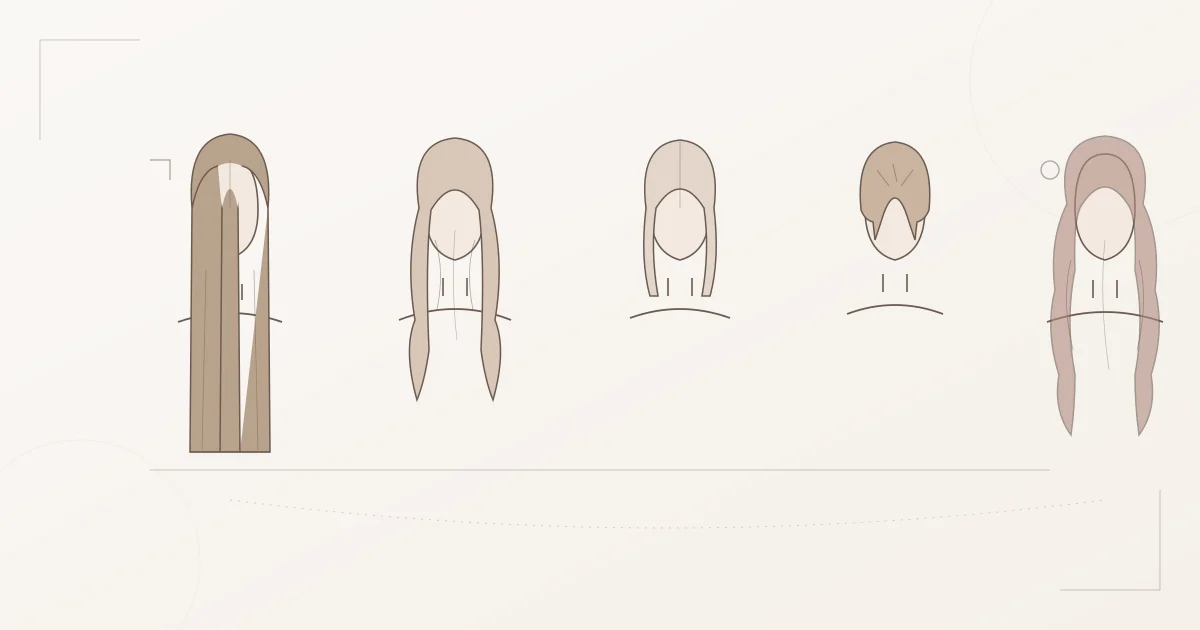
The Kibbe Body Type System places you, based on bone structure, body flesh, and facial features, into one of 13 Image Identities along a Yin-Yang spectrum — from sharp, straight Yang (Dramatic) to soft, curved Yin (Romantic). These 13 types group into 5 style families, and for business contexts it's precisely this family level that matters, because it determines:
- whether a blazer should be cut structured or unstructured
- whether the line should read as long and continuous or short and high-contrast
- whether fabrics should fall fluid or firm and crisp
- whether the waist should be cut defined or straight through
The crucial difference from classic power-dressing thinking: Kibbe never says "this is the one professional look." It shows you which version of professional matches your line — and that's exactly what separates "I'm wearing a suit" from "I feel like the most competent version of myself in this suit."
You may already know your classic figure type — apple, pear, hourglass, rectangle, or inverted triangle. These systems aren't wrong, they simply answer a different question: they measure how your weight is distributed, not how sharp or soft your line is. That's precisely why a blazer "recommended for hourglass" won't automatically work if your bone structure is soft and flowing rather than sharp and straight. The full comparison of both systems is in Kibbe vs. Body Shape Type — the short version here: for business wear, it's the line that matters, not the volume.
It's also worth distinguishing Kibbe from color analysis, with which it's often confused: color analysis determines which colors suit your skin tone. Kibbe determines which cuts, silhouettes, and fabrics suit your line. Both systems complement each other but answer different questions — more on this in Color Analysis or Style Consulting: Which One Do You Need?
The Blazer as Your Foundation — What Differs by Family
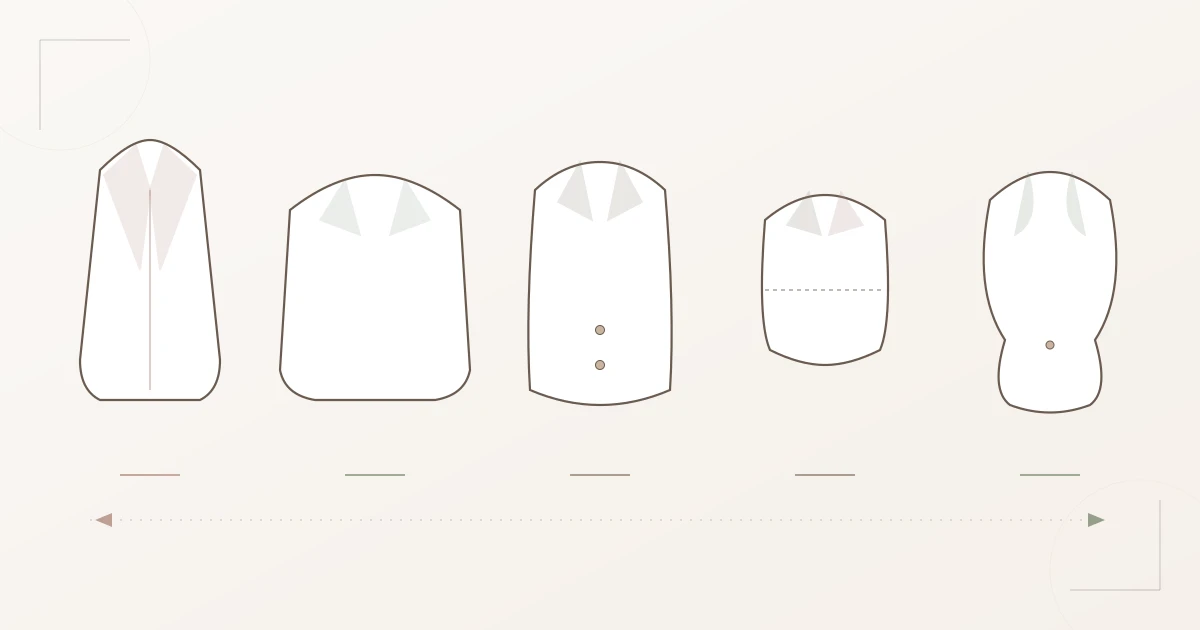
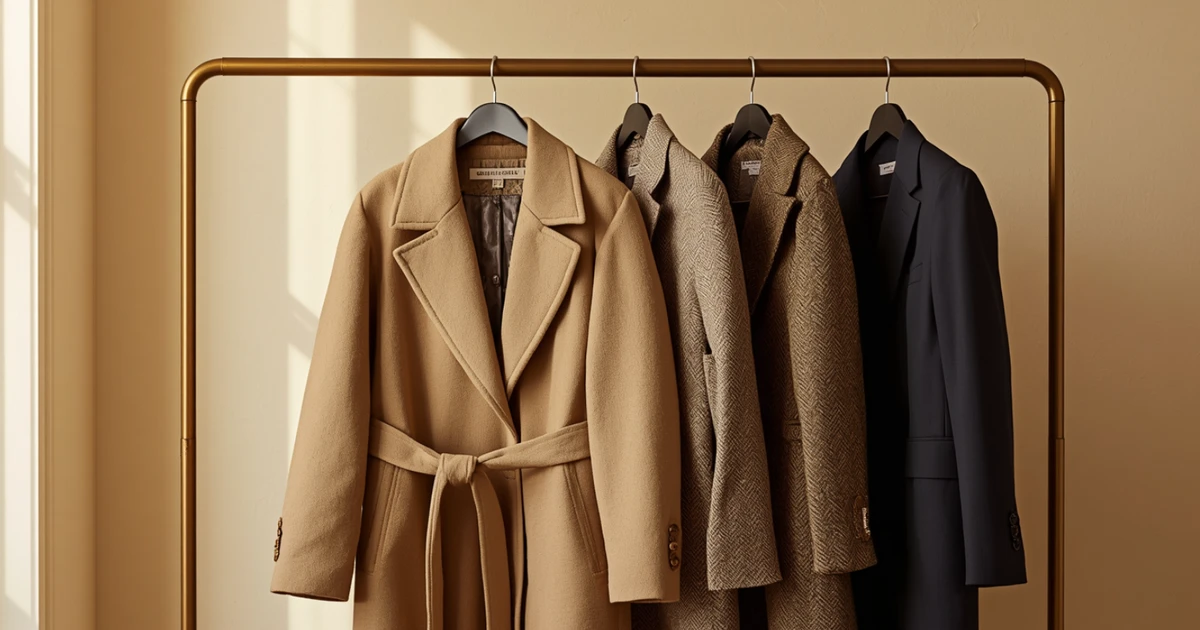
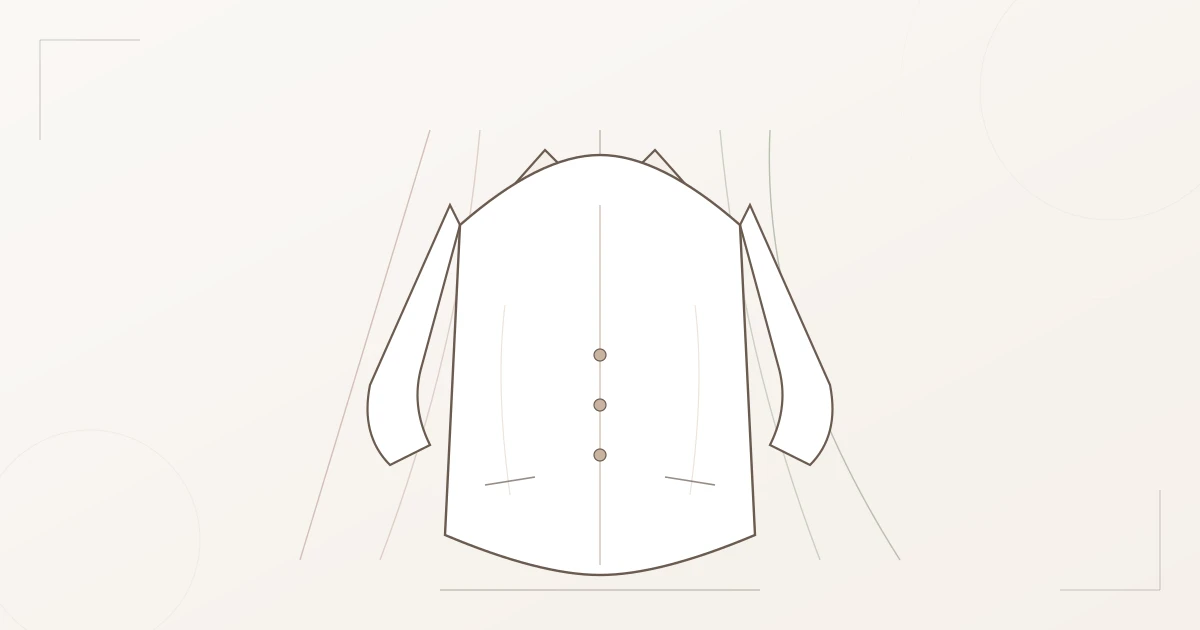
The blazer is the centerpiece of any business wardrobe — and also the piece where Kibbe families diverge most sharply. Four variables determine whether a blazer works for your line:
| Variable | Yang End (e.g., Dramatic) | Yin End (e.g., Romantic) |
|---|---|---|
| Shoulder line | Sharp, defined, slightly built up | Soft, natural, unemphasized |
| Length | Long, continuous | Waist-length to mid-length, waist-defined |
| Structure | Firm, crisp, clearly defined | Soft, fluid, with drape |
| Closure | Single-breasted, closed high, minimal | Wrap or waist-belt effect, softly draped |
Each of the 5 style families sits at a different point on this spectrum. Below is the concrete translation for each family — including the two subtypes usually implied alongside it.
Dramatic & Soft Dramatic in Business Style
Baseline: long, straight, sharply defined — the most commanding line in the entire Kibbe spectrum.
Business Translation
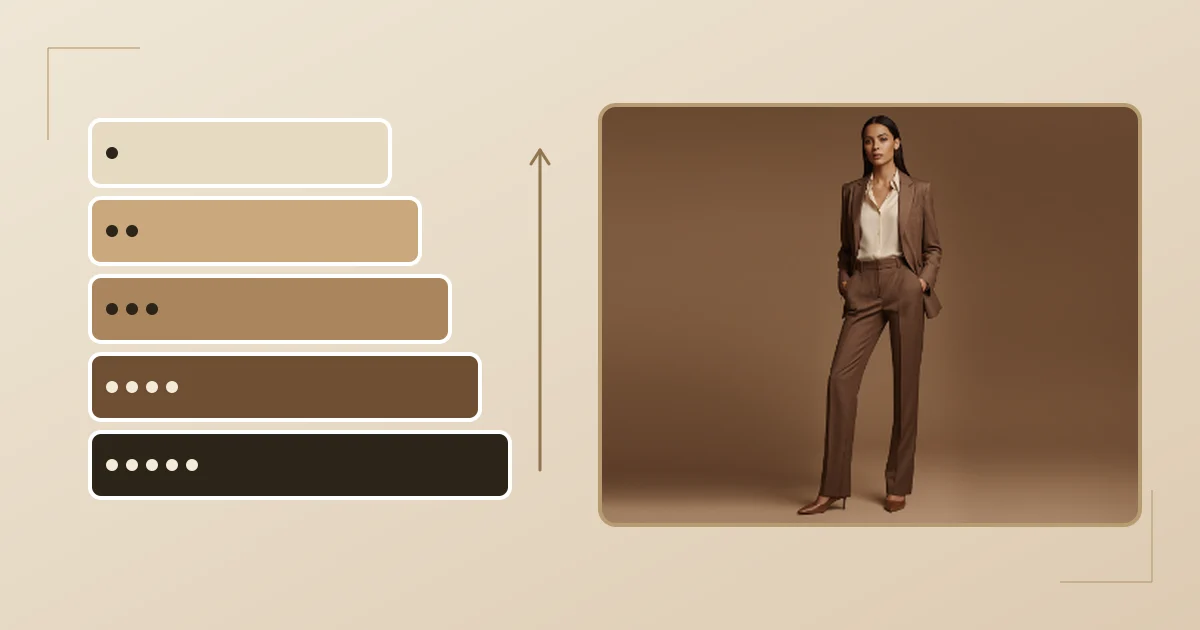
A long, single-breasted blazer that hits around mid-thigh, minimal detailing, with a clean vertical lapel. Length here isn't a stylistic flourish — it's the core rule: any seam that breaks the line too soon works against the type instead of for it. Smooth, firm fabrics like wool gabardine, crepe, or structured cotton blends — nothing that falls softly or has sheen. Monochrome, unbroken color from blazer to trouser extends the already-long line even further. Instead of many small accessories: a single, architectural statement piece.
Biggest no-gos: short, fitted blazer lengths that break the vertical; playful ruffles or flounces; small-scale patterns that fragment the clean line; soft, draped fabrics that dissolve the sharp contour.
Natural & Flamboyant Natural in Business Style
Baseline: broad, unstructured, relaxed — competence through effortless presence rather than visible severity.
Business Translation
An unstructured, softly falling blazer with no reinforced shoulder pads — an open cut, often unlined or only lightly lined. Natural, textured fabrics with visible grain: linen, chunky wool blends, tweed. What matters is that the blazer allows freedom of movement and doesn't sit on the body like a second, stiff skeleton. Understated jewelry in natural materials rather than shiny metal further reinforces the earthy, effortless effect.
One detail that surprises many people: the fully coordinated, matched-to-the-last-detail "suit look" — blazer, blouse, and trouser in the exact same tone and material — reads as stiff rather than polished on this family. Natural types come across better in a business context with a deliberately mixed combination of materials and textures than with a fully matched set.
Biggest no-gos: heavily structured, shiny suiting fabrics; tight, body-hugging blazer cuts; shiny jewelry or patent accessories; a fully monochrome, "perfectly matched" suit set; anything that looks too polished or too "worked on" — it works against this family's natural, earthy presence.
The Classic Family in Business Style
Baseline: balanced, symmetrical, timeless — the family the classic pantsuit was originally designed for.
Business Translation
The traditional, moderately structured blazer with a clean, symmetrical lapel, medium shoulder width, and a length that hits just below the hip — exactly the image most people picture when they think "business look." Fine, even fabrics: wool serge, fine twill, understated crepes. Minimal detailing, but flawless construction and fit. Dramatic Classic can push the line a little longer and sharper; Soft Classic can go a little softer in fabric and silhouette.
Biggest no-gos: extreme trends or avant-garde cuts that disrupt the timeless balance; asymmetrical details; overly bold patterns. This family benefits most from flawless fit rather than eye-catching design.
The Gamine Family in Business Style
Baseline: a contrast of Yin and Yang, compact, energetic — business looks that work through detail rather than expanse.
Business Translation
A short, waist-length blazer that highlights compact proportions instead of hiding them under excess fabric. Contrast elements like different-colored buttons, piping, or a two-tone lapel underscore this family's signature Yin-Yang tension. Clean, graphic patterns (checks, color-blocked stripes) work better here than for any other family. Accessories can be playful and bold — they're the real statement piece.
Biggest no-gos: long, oversized blazers that bury a compact frame under fabric bulk; solid, detail-free expanses with no contrast; anything that reads as too "grown-up-serious" without leaving room for this family's natural energy.
The Romantic Family in Business Style
Baseline: lush, curved, soft — the family most often overlooked in classic power-dressing.
Business Translation
A waist-defined blazer with soft but visible waist shaping — through darts, a subtle wrap effect, or a slim belt. Fluid but high-quality fabrics like fine crepe, silk blends, or softly falling wool qualities. Rounded rather than angular lapel shapes, and understated but present curve emphasis rather than boxy cuts that conceal the shape. Jewelry can be feminine and flowing — pearls, soft chains, no angular hardware.
One detail that's often overlooked: not every business day requires a blazer. A flowing wrap dress in a muted color, or a soft cardigan over a simple blouse, can achieve the same professional effect for this family — often even more convincingly than a blazer fighting against the natural curve of the line. What matters is fabric quality, not the stiffness of the cut.
Biggest no-gos: stiff, boxy blazers with no waist shaping at all; hard, board-like fabrics; completely straight silhouettes that let the natural curve disappear under fabric instead of framing it professionally.
Comparison Table: All 5 Families at a Glance
| Family | Blazer Cut | Fabrics | Biggest No-Go |
|---|---|---|---|
| Dramatic | Long, single-breasted, minimal | Smooth, firm, matte | Short, playful cuts |
| Natural | Unstructured, open | Linen, tweed, natural texture | Shiny, stiff suiting fabrics |
| Classic | Moderate, symmetrical | Fine twill, serge | Extreme trend cuts |
| Gamine | Short, waist-length, contrast | Graphic patterns, block colors | Long, oversized cuts |
| Romantic | Waist-defined, soft | Crepe, silk blends | Stiff, boxy cuts |
Not sure which family you belong to? The free Kibbe quiz gives you an initial read in just a few minutes, and the complete guide to all 13 Kibbe types explains every family in detail.
The Business Capsule Wardrobe — 8 Pieces That Are Enough
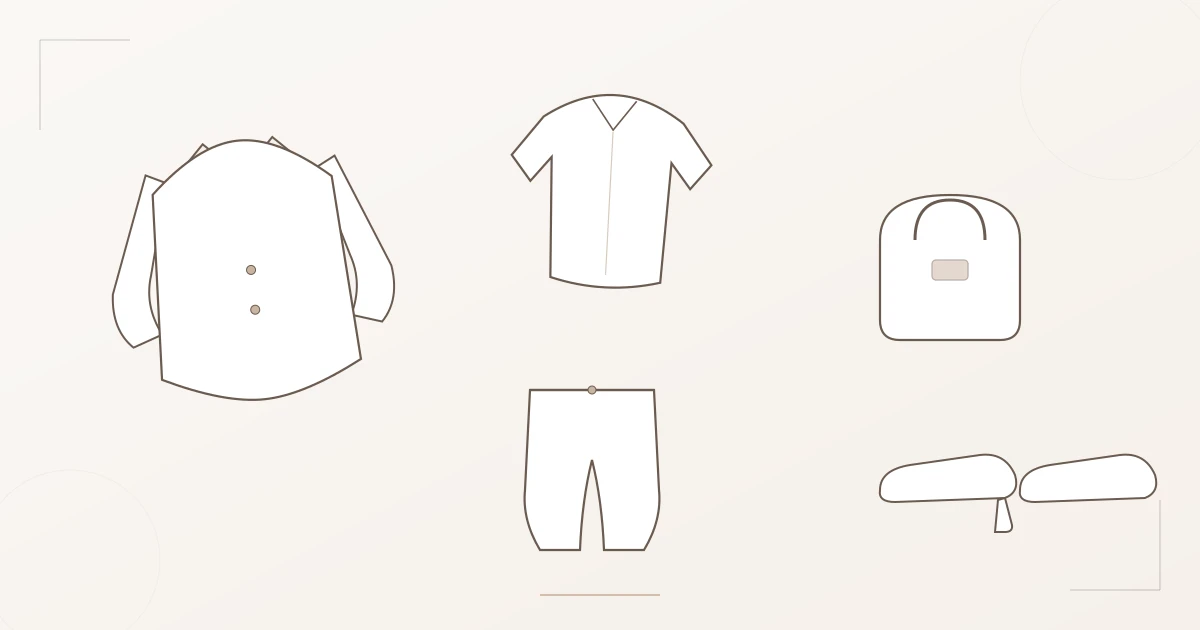
If you've already done a closet audit, you know the principle: not more pieces, just the right ones. A working business capsule wardrobe needs eight categories — the execution of each category varies by your Kibbe family, but the category itself stays the same:
- 1 blazer in your family's silhouette — the single most important piece, see the sections above
- 2–3 blouses/tops in neutrals plus one accent color — cut and neckline follow your line
- 1 pair of tailored trousers in your silhouette — straight for Yang families, lightly fitted for Yin families
- 1 pencil or A-line skirt — as an alternative to trousers, cut is also type-dependent
- 1 dress that works as a "suit substitute" — especially practical for travel and long days
- 1 lightweight cardigan or fine-knit layer — for temperature swings between the office and air conditioning
- 1 pair of closed-toe shoes at a heel height you'll actually wear all day
- 1 structured bag that accommodates a laptop
More important than the number of pieces is how well the colors coordinate with each other — all eight pieces should mix and match freely. If you also know your personal color palette, you can put this list together even more precisely; more on that in Color Analysis or Style Consulting — Which One Do You Need?
The capsule principle does not stop at the office door: to apply the same logic to your entire everyday wardrobe — with piece-count formulas and the core pieces for each style family — see the guide Capsule Wardrobe by Kibbe Type.
5 Common Mistakes When Shopping for Business Wear
1. The "One Blazer Fits All" Fallacy
Probably the most expensive mistake: the same checklist-recommended blazer cut, regardless of your own structure. A cut that looks competent on a colleague can simply sit wrong on you — not because of size, but because of line.
2. Trend Silhouettes That Ignore Your Own Build
Oversized blazers look equally good on everyone on Instagram — but on a compact Gamine frame they swallow the entire proportion, while on a long Dramatic line they work effortlessly.
3. Confusing Structure with Professionalism
"The stiffer, the more serious" only holds true for the Yang families. For Natural and Romantic, that same stiffness often reads as forced and uncomfortable — professional presence here comes more from an effortless yet high-quality fall of the fabric.
4. Prioritizing Look Over Fabric Quality
A blazer that has the right cut at first glance but is sewn from a cheap, shiny blend fabric loses its impact in seconds — especially on video calls, where cameras mercilessly expose cheap fabric.
5. Ignoring Video-Call Suitability Entirely
Fine pinstripes and small-scale patterns can create a moiré flicker on camera; very shiny fabrics reflect screen light unflatteringly. A detail that was irrelevant just a few years ago and should now be part of every business wardrobe plan.
Business Style for Home Office & Video Calls
Practical Tip
On video, almost everything that matters is visible above the desk edge — shoulder line, neckline, and color near the face carry the entire professional impression. That means: put your Kibbe considerations into the blazer, blouses, and neckline shape first, not the entire wardrobe. A single, genuinely well-fitting blazer over a simple top beats any ill-fitting full outfit.
A simple rule of thumb has proven itself for hybrid workdays: the lower half is allowed to be more comfortable than it used to be, but the upper half should still sit exactly along your Kibbe line. Colors near the face — blouses, turtlenecks, scarves — are especially worth the effort in this context, since on camera they determine impact and presence almost instantly.
The fact that business wardrobes have visibly changed in recent years isn't just a feeling — it's a documented trend: a survey by BearingPoint shows that the annual budget for office wear in Germany and Switzerland dropped from around CHF 1,186 (2019) to just CHF 484 — and a large share of respondents say they intend to stay dressed more casually even after returning to the office. That doesn't mean lower standards for impact, but a shift: a few genuinely well-fitting pieces beat a large but ill-fitting wardrobe.
The difference between "I'm wearing a business look" and "I feel like the most competent version of myself in this business look" is rarely a question of budget or trend. It's a question of whether the cut follows your line or works against it.
Frequently Asked Questions (FAQ)
Which blazer cut suits my Kibbe type?
That depends on your style family: Dramatic and Soft Dramatic work best with long, single-breasted, minimalist blazers. Natural and Flamboyant Natural need unstructured, open cuts with natural texture. Classic types carry the traditional, moderately structured blazer most convincingly. Gamine benefits from short, waist-length cuts with contrast details. Romantic needs waist-defined, softly falling blazers with visible curve shaping.
Does a business look always have to be structured and stiff?
No — that's one of the biggest misconceptions in classic power-dressing. Structure only flatters the Yang families (Dramatic, Classic). For Natural and Romantic types, professional presence comes more from a high-quality yet soft fall of fabric than from visible stiffness.
How do I dress professionally in a home office?
Focus your Kibbe-appropriate choices on what's visible on video: blazer, blouse, neckline shape, and color near the face. These elements determine the professional impression on camera almost entirely — the lower half of the body can be considerably more comfortable when working from home.
What's the difference between business casual and business formal according to Kibbe?
The Kibbe line logic stays the same in both cases — only fabric weight and level of detail change. Business casual allows softer, more relaxed fabrics and less rigorous construction within the same family-specific silhouette; business formal calls for the most precise, cleanest version of the same cut.
Which colors work best for business wear?
That depends on your personal color type, not your Kibbe type — the two systems answer different questions. More on this in the comparison Color Analysis or Style Consulting. As a rough rule of thumb for business wear: neutral base tones for the capsule wardrobe, your personal accent color near the face.
How do I build a business capsule wardrobe?
With eight basic categories: blazer, 2–3 blouses, tailored trousers, skirt, a dress as a suit substitute, a knit layer, closed-toe shoes, and a structured bag. The categories are the same for every Kibbe type; the specific cut of each category differs by your family.
Is a pantsuit suitable for every Kibbe type?
Generally yes, but not in the same cut. Dramatic and Classic carry the classic, straight pantsuit most convincingly. Gamine works better with a shorter, more contrast-driven blazer paired with the trousers. Romantic should look for a lightly fitted jacket rather than a completely straight blazer.
What should I wear to an important meeting or job interview?
The safest choice is the most precise, best-fitting version of your family-specific blazer in a neutral color, paired with your personal accent color near the face. More important than a new piece is an already tested, genuinely well-fitting outfit — save test runs for new clothing for occasions other than important appointments.
How do I avoid looking like I'm in costume in a business look?
This feeling usually comes from a cut following a generic recommendation instead of your own line — for example, a heavily structured blazer on a soft, curved frame. The starting point is always your Kibbe family, not a generic "business uniform."
Which fabrics work best for business wear?
For Yang families (Dramatic, Classic): smooth, firm fabrics like wool gabardine or fine twill. For Yin families (Natural, Romantic): structured natural texture (Natural) or fluid, high-quality fabrics like crepe or silk blends (Romantic). Gamine benefits from clean, graphic patterns in any fabric weight.
Do I need to buy different blazers for every Kibbe type?
No — you only need the blazer cut that matches your own family. The family-specific recommendations in this guide are an overview of all 5 types, not a shopping list for one single person.
How many blazers does a business capsule wardrobe really need?
A single, genuinely well-fitting blazer in your family's silhouette does more than three mediocre-fitting ones. Two blazers — one in a neutral base color, one in your accent color — fully cover most business days.
What if I fall between two Kibbe families (a mixed type)?
Many of the 13 Kibbe types are deliberately defined as blends — for example, Soft Dramatic sits between Dramatic and Romantic, or Soft Classic between Classic and Romantic. In this case, it's worth testing elements from both neighboring families and noticing which version feels more coherent. A professional analysis provides the most reliable clarity here.
How do I find out which Kibbe type I am for my business look?
The free Kibbe quiz gives you an initial read in just a few minutes. For a definitive, professionally evaluated analysis with a complete style dossier — including concrete recommendations for business wear — the style consultation with Image Identity analysis is the way to go.
Your business look, finally without the guesswork.
In a personal Kibbe analysis, we'll show you exactly which blazer cut, which fabrics, and which silhouette will genuinely make you look strong at work.