
Table of Contents
- The Short Answer
- Why We Make Bad Buys: The 6 Buying Traps
- What Bad Buys Really Cost
- The 5 Buying Rules Based on Your Body Line
- The Fitting Room Checklist: 8 Points
- Online Shopping: The Special Rules
- Sales & Discounts: Friend or Trap?
- What to Do with the Bad Buys You Already Own?
- Frequently Asked Questions (FAQ)
The Short Answer
Short Answer
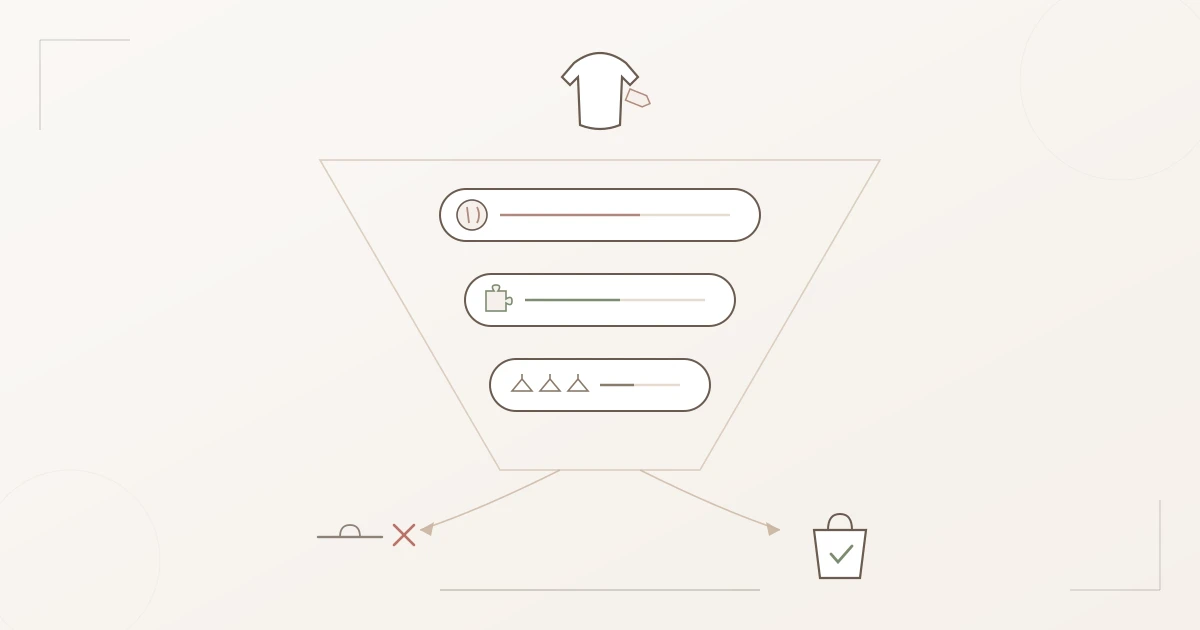
Bad buys almost never happen at the register — they happen before it: through six predictable buying traps (the discount reflex, the mannequin illusion, the fantasy self, trend pressure, the stress buy, the almost-right compromise) — and through one missing criterion that defuses them all. That criterion is your body line: once you know which cuts, fabrics, and silhouettes suit your structure, you can evaluate any buying decision objectively in seconds. The short formula before every purchase: Does it match my line? Does it fill a real gap? Does it immediately make three outfits with what I already own? Three yeses → buy. A single no → leave it hanging. This guide explains the psychology behind it, the 5 buying rules, and the complete fitting room checklist.
Every closet has them: the pieces with the tags still on, never worn. The dress from the sale, the pants that are “actually great,” the blouse that looked amazing in the store and never again at home. According to a widely cited study by researchers Elizabeth Bye and Ellen McKinney, 85% of women have clothes in their closet that don’t fit or don’t belong to their life — so bad buys are not a personal failing; they are the statistical norm. But they are not fate, either: they follow a predictable psychology, and predictable mistakes can be beaten with systems. This guide builds you one.
Why We Make Bad Buys: The 6 Buying Traps
Bad buys always feel right in the moment of purchase — that is their defining trait. Six mechanisms make sure of it:
1. The Discount Reflex
“70% off” shifts the question in your head: instead of “Do I need this?” we answer “Is this a good deal?” — and the second question almost always gets a yes. The thinking error: a piece you never wear doesn’t cost €30 instead of €100. It costs €30 for nothing. The discount lowers the price, not the risk.
2. The Mannequin Illusion
The piece looked fantastic on the mannequin (or on the model in the online store). Of course it did — it was draped, pinned, and photographed for exactly that one body line. The relevant question is never how a piece looks on someone else’s line, but how its cut behaves against yours. A wrap dress falls completely differently on a soft, curved line than on a straight one — same piece, two different results.
3. The Fantasy Self
The purchase for the life you wish you had: the cocktail dress with no occasions, the elegant coat for a life with more receptions, the hiking jacket for mountain trips that never happen. These purchases feel good because they buy an identity, not a garment. The everyday check, by contrast, is incorruptible: your wardrobe gets built for the 80 percent of your life that actually happens.
4. Trend Pressure
When everyone is wearing oversized blazers, not buying one feels like falling behind. But trends work differently on every body line: the same oversized cut that looks effortless on a broad Natural line swallows a petite frame and buries a sharp one. A trend is an offer, not an obligation — and your line decides whether it is one for you.
5. The Stress Buy and the Reward Buy
What is being bought isn’t the piece — it’s the feeling: the small win after a bad day, the reward after a hard week. The problem isn’t the feeling — it’s that the decision then gets made by mood instead of by criterion. You can recognize these purchases in hindsight: you remember the moment you bought the piece, but you have no answer to the question of what it was ever supposed to be worn with.
6. The Almost-Right Trap
The most expensive trap of all, because it looks the most reasonable: the piece is almost perfect — the color is right, the price is right, only the shoulder doesn’t sit quite right, the fabric is a little stiffer than ideal. But “almost right” at the register means “never quite right” on your body: these are exactly the pieces that later hang in the closet with the tags still on, because in everyday life the piece that is exactly right always wins out next to them.
What Bad Buys Really Cost

Let’s do the honest math. Just three mid-range bad buys per year — a pair of jeans, a dress, a blazer — quickly add up to €150–250. Over ten years, that’s €1,500–2,500 hanging in your closet instead of working for you. And that is the conservative calculation: it counts neither the “small” impulse buys nor the follow-up costs — the full closet where nothing goes together anyway, and the morning ritual of standing in front of it at a loss.
The e-commerce numbers show just how widespread uncertainty around buying clothes really is: around 35% of German shoppers abandon an online clothing purchase because they are unsure about fit, and 15% don’t buy clothes online at all. The uncertainty is real — but without a criterion, it doesn’t lead to better decisions, just more hesitant ones.
This, by the way, is exactly where the honest math behind a professional style consultation lives: it costs a one-time amount roughly equal to two to four bad buys — and then it ends the streak. The complete payback calculation is in the guide What a Style Consultation Costs.
The 5 Buying Rules Based on Your Body Line
Rule 1: Line Before Price
The first test for any candidate is never the price — it’s the cut: does this piece repeat the lines of my body, or does it fight them? Once you know your body line (the free Kibbe test gives you the basic direction in a few minutes), you can answer this question in seconds: a boxy, stiff blazer is out for a soft, curved line no matter how deeply it’s marked down — and a playful ruffled piece is just as out for a long, sharp line. This one rule defuses the discount trap, the mannequin illusion, and trend pressure all at once, because it puts an objective arbiter ahead of the feeling.
Rule 2: The Three-Outfit Rule
No purchase without three specific combinations with pieces you already own — played through in the fitting room, not vaguely promised (“I’ll just buy something to go with it…” doesn’t count). A piece that only works with future purchases isn’t a purchase — it’s a down payment on more of them.
Rule 3: The Gap List Is the Only Shopping List
You buy what’s on the gap list — the list that emerges when you systematically declutter your closet: which connecting pieces are actually missing? Shopping with a gap list flips the power dynamic: it’s no longer the offer that decides what gets bought, but your own needs.
Rule 4: The 80 Percent Check
Before every purchase, ask the fantasy-self question: in which specific situations of my real everyday life will I wear this — and how often do they come up? A piece for the 80 percent of your life (office, everyday, weekend) may be bought more spontaneously than one for the 20 percent of special occasions. For the special occasions, the rule is: first the occasion, then the purchase — never the other way around.
Rule 5: The 24-Hour Rule
For anything that isn’t on the gap list but “absolutely has to come home with you”: wait one night. Take a photo, leave the piece in the store (or leave it sitting in your cart), and run it through the first four rules the next day. Stress buys and reward buys almost never survive that night — real hits do. Whatever still passes every filter after 24 hours may be bought, with a clear conscience.
The Fitting Room Checklist: 8 Points
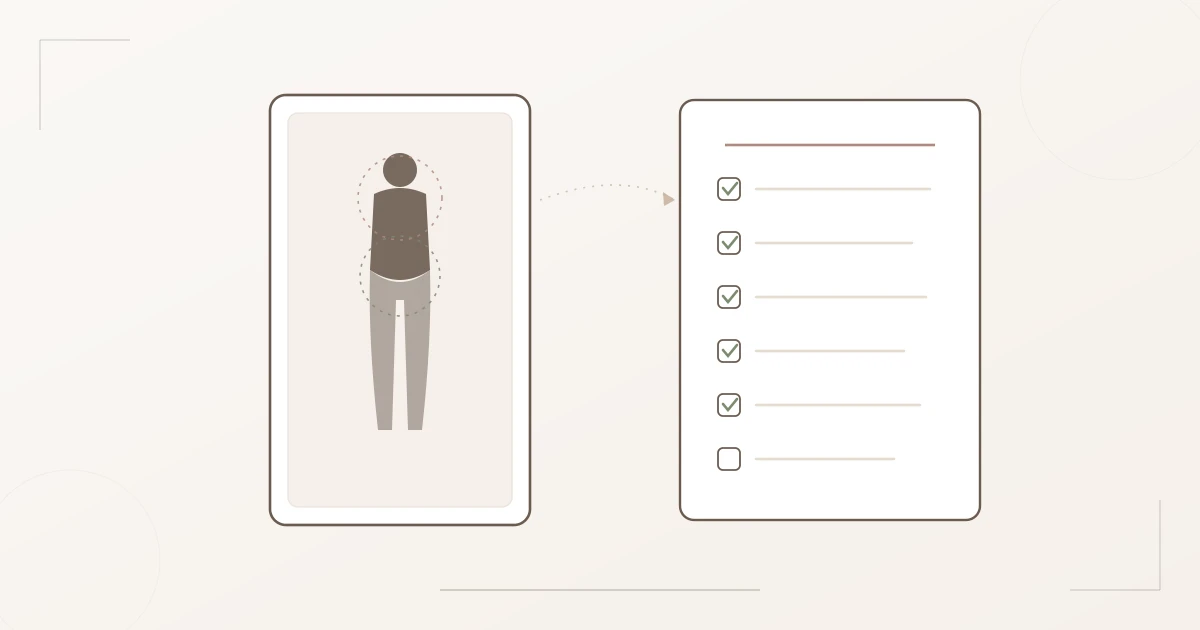
Once a piece has survived the three filters, the fitting room decides. These eight points check everything that will later determine whether it gets worn or left hanging:
- The shoulder line: Does the shoulder seam sit exactly on the edge of your shoulder? The shoulder is the hardest point of any garment to alter — if it sits wrong, nothing else matters.
- The drape: Does the fabric behave like your line — falling softly where you are soft, holding its shape where you are crisp? Fabric against line is the most common invisible reason for a bad buy.
- The waist logic: Does the piece respect your middle — defining the waist where your line needs it, and letting it run straight through where it doesn’t?
- The length: Does the piece end at a spot that flatters your proportions (not at the widest one) — right now, not after some planned alteration?
- The movement test: Raise your arms, sit down, bend over. A piece that only works standing up doesn’t work.
- The wrinkle check: What does the piece look like after two minutes of sitting? Some fabrics will never again be as smooth as the moment you first pulled them on.
- The three-outfit check: Play it through concretely, right now — which three pieces you already own make complete outfits with this candidate?
- The mirror question: Would you keep this piece on today and walk out wearing it? If the honest answer is “kind of,” it’s the almost-right trap. Put it back.
Online Shopping: The Special Rules
Online, you lose the fitting room and the feel of the fabric — the two most important filters against bad buys. Four substitute rules partially make up for it:
- Measurements, not sizes: Standard sizes are barely comparable between brands. More reliable: check the store’s size chart against a well-fitting piece you already own (measure the shoulder width, bust, and length).
- Read the fabric content — before the photo: The photo shows draping and lighting; the fabric line shows the truth. Once you know your line’s fabrics (firm and structured vs. soft and flowing), you can spot many bad buys right in the product description.
- The model is not your line: Ask deliberately: what body line does the model have — and what will the same cut do on mine? Some stores show pieces on different sizes; that helps, but it doesn’t replace the line question.
- Return discipline: Try everything on at home within 48 hours, using the same 8-point checklist — and consistently send back anything that gets a “kind of.” The number one silent source of bad buys is the return window missed out of convenience.
Sales & Discounts: Friend or Trap?
Direct Answer
A sale is an excellent place to work through your gap list for less — and the worst place to browse. The rule: in a sale, you may only buy what you would have seriously considered at full price. A discount is a price advantage on right decisions, not an argument for wrong ones.
In practice, that means: walk into the sale with your gap list (or watch your wish-list pieces off season) and consistently ignore everything else. A good self-test for sale impulses is the reverse question: “Would I buy this piece at the original price?” If not, it isn’t your need doing the buying — it’s the discount reflex, and the discount reflex doesn’t wear clothes.
What to Do with the Bad Buys You Already Own?
The honest answer: let them go — and keep the lesson. The money is spent whether the piece hangs there or not (the sunk-cost principle); from now on, it only costs you space and a guilty conscience. Pieces in good condition can be sold or donated, and every identified bad buy is data: why did this piece never work — wrong line, wrong life, wrong moment? The complete method, including the three-pile system, is in the guide How to Declutter Your Closet — and how the cleaned-up remainder becomes a wardrobe with a system is shown in The Capsule Wardrobe by Kibbe Type.
One special case deserves a mention: if your bad buys keep following the same pattern — the same kind of piece, again and again, that never works — the problem may not be weak buying discipline but a wrong type assumption. If you shop by the recommendations of a mistyped Kibbe result, you produce systematic bad buys with a completely clear conscience. The warning signs and the fix are described in the guide Is Your Kibbe Type Wrong?
The end result of a buying system, by the way, is not deprivation — it’s the opposite. Once you stop funding bad buys, you suddenly have budget for the right pieces: fewer purchases, better quality, and a closet where every piece has earned its place. How that builds, step by step, into a complete style is shown in the 5-Step Guide.
One category especially prone to bad buys, incidentally, is basics: they count as "safe purchases" and get scrutinized less as a result — even though "timeless" without your own body line is just a promise. To see which version of the white shirt, trench, or little black dress actually suits you, check out the guide Timeless Basics.
Most bad buys only become visible once the wardrobe is ordered — then the single item stands there without partners. How organising reveals those gaps is in the guide to organising a wardrobe.
Frequently Asked Questions (FAQ)
How do I avoid bad buys when shopping for clothes?
With three filters before every purchase: (1) Does the cut match my body line? (2) Does the piece fill a real gap in my wardrobe? (3) Does it immediately make three outfits with pieces I already own? Three yeses mean buy; a single no means leave it hanging. Combined with the 24-hour rule for impulse buys, this system reliably prevents most bad buys.
Why do I keep buying clothes I never wear?
Because without an objective criterion, buying decisions get made by feel — and feelings in the store are systematically deceptive: discounts shift the question from “Do I need this?” to “Is this a deal?”, mannequins show someone else’s body lines, and stress buys purchase a mood instead of clothing. The antidote is a criterion that kicks in before the feeling does: your own body line.
What is the three-outfit rule?
No purchase without three specific combinations with pieces you already own — played through in the fitting room, not vaguely promised. Pieces that would only work with future purchases are not purchases; they are down payments on more of them.
Are sale purchases automatically bad buys?
No — a sale is a good place to work through your gap list for less. It becomes a trap when you browse without a list. The self-test: “Would I seriously consider this piece at the original price?” If not, it’s the discount reflex doing the buying, not your need.
What should I check in the fitting room?
Eight points: shoulder seam exactly on the edge of your shoulder, drape that matches your body line, waist logic, flattering length, the movement test (raise your arms, sit, bend over), the wrinkle check after two minutes of sitting, the concrete three-outfit check, and the honest mirror question: would I walk out wearing this today?
How do I buy clothes online without bad buys?
With four substitute rules for the missing fitting room: check size charts against a well-fitting piece you own instead of trusting standard sizes, read the fabric content before the photo, consciously distinguish between the model’s body line and your own — and try everything on at home within 48 hours, consistently returning anything that raises doubt.
What does “line before price” mean?
The first test for any candidate is the cut, not the price: does the piece repeat the lines of your body or fight them? A structurally wrong piece at 70% off is exactly as wrong as at full price — just cheaper to be wrong.
How much money do bad buys cost per year?
Just three mid-range bad buys per year add up to about €150–250 — over ten years, €1,500–2,500, calculated conservatively and without counting the small impulse buys. For comparison: a professional style consultation costs a one-time amount roughly equal to two to four bad buys and ends the streak.
Does a capsule wardrobe help prevent bad buys?
Yes, structurally: a capsule wardrobe enforces exactly the mechanisms that prevent bad buys — a gap list instead of browsing, mandatory combinability instead of single-piece logic, and one clear criterion per purchase. It is the system in which the buying rules live permanently.
What do I do with pieces I have never worn?
Let them go and keep the lesson: the money is spent whether the piece hangs there or not. Sell what’s in good condition (Vinted, Sellpy) or donate it — and first take a moment to analyze why it never worked: wrong line, wrong life, or wrong buying moment. That diagnosis prevents the repeat.
Why do I keep buying similar pieces that never work?
When bad buys repeat the same pattern, the cause is often not weak buying discipline but a wrong type assumption: if you shop by the recommendations of a mistyped Kibbe result, you produce systematic bad buys with a completely clear conscience. Then it’s worth re-checking your typing before the next shopping trip.
When is professional help with shopping worth it?
At the latest when bad buys keep happening despite a system, or when bigger investments are coming up: a professional Kibbe analysis delivers your personal buying criterion (a style dossier with cuts, fabrics, do’s & don’ts), and online shopping guidance curates specific pieces directly for your line — both one-time investments that make every future buying decision more precise.
Your last bad buy is already behind you.
Find your body line with the free Kibbe test — the criterion that turns gut-feeling purchases into hits. Or get your personal buying dossier with the professional analysis.