
Table of Contents
- The Short Answer
- What Is a Capsule Wardrobe — and What Isn't?
- Why Standard Lists Fail
- How Many Pieces Does a Capsule Wardrobe Need?
- Building It in 3 Steps
- A Capsule Wardrobe for the Dramatic Family
- A Capsule Wardrobe for the Natural Family
- A Capsule Wardrobe for the Classic Family
- A Capsule Wardrobe for the Gamine Family
- A Capsule Wardrobe for the Romantic Family
- Comparison Table: All 5 Families
- Colors & Mix-and-Match Logic
- Budget: Where to Invest, Where to Save
- The 5 Most Common Mistakes
- Frequently Asked Questions (FAQ)
The Short Answer
Short Answer
No, there is no capsule wardrobe that works for everyone — and that is exactly where the usual "30 pieces every woman needs" lists fall apart. The capsule wardrobe as a system is universal: a small set of coordinated pieces that (almost) all combine with one another. But the pieces themselves — which blazer cut, which dress silhouette, which fabric weight — have to follow your body line. Otherwise you end up with a perfectly planned capsule hanging in your closet in which you still don't feel like yourself. This guide brings both together: the proven capsule method (piece counts, structure, color logic, budget) and the Kibbe Body Type System, which tells you which cuts your capsule should be built on — broken down in concrete terms for each of the 5 style families.
You've seen the lists: "The 30 pieces every woman needs." White button-down, trench coat, black trousers, blazer — and the capsule wardrobe is done. Maybe you even bought your way through one. And then came the moment in front of the mirror: everything goes together, nothing goes with you. That is not user error. It is a design flaw in the lists themselves — they plan a wardrobe for an average body that doesn't exist. The good news: the capsule principle genuinely works. It just needs one ingredient that is missing from almost every guide: your line.
What Is a Capsule Wardrobe — and What Isn't?
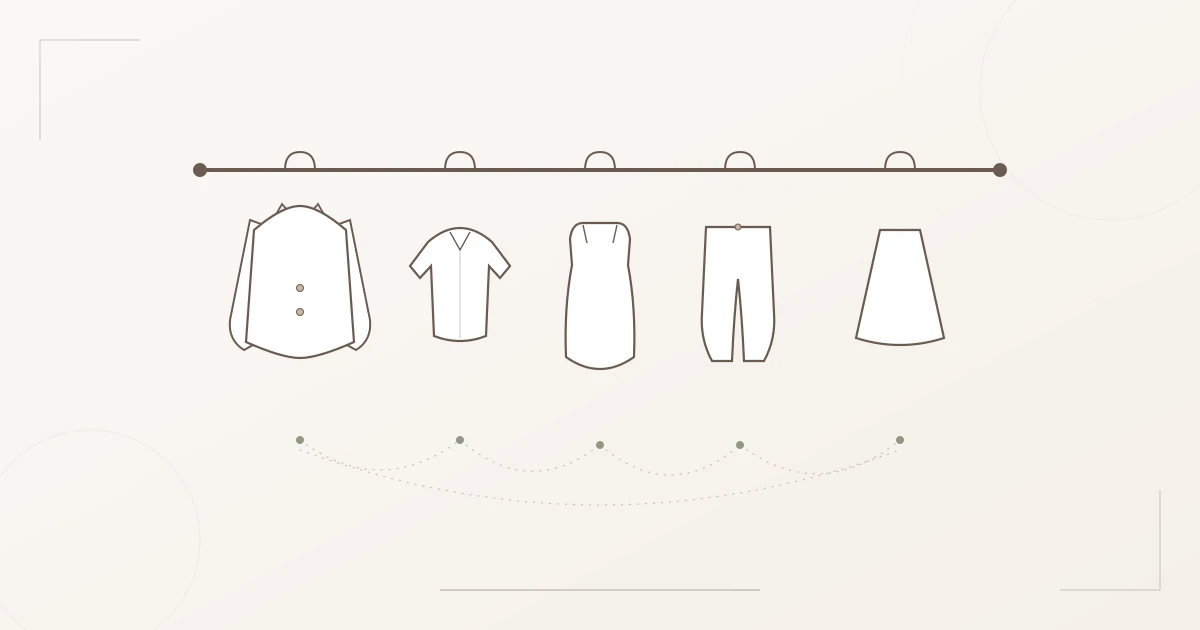
A capsule wardrobe is a deliberately small, curated set of garments in which nearly every piece can be combined with every other. The goal is not deprivation but efficiency: fewer pieces, more wearable outfits, no bad buys, no "full closet and nothing to wear."
What matters is drawing a clear line between this and minimalism, which the capsule wardrobe is often confused with:
- Minimalism is a broad life philosophy of reduction — owning less, without a concrete system behind it.
- The capsule wardrobe is a concrete combination system — the piece count is not the goal but the consequence of requiring every piece to produce multiple outfits.
You can run a capsule wardrobe with 25 pieces or with 45 — what decides is not the number but how well everything combines. A capsule of 20 pieces of which only half can be mixed is not a capsule. It is a small closet with the same problems as a big one.
Why Standard Lists Fail
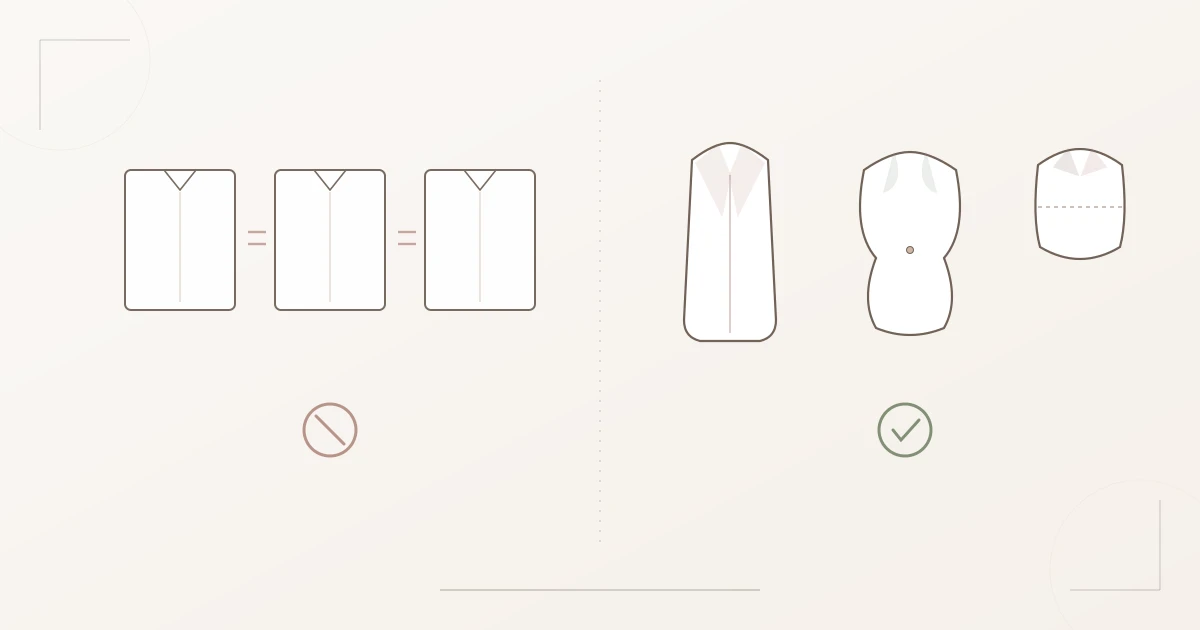
The most common objection to capsule wardrobes goes: "It ends up looking the same on everyone — boring, uniform, interchangeable." The objection is fair — but it doesn't hit the capsule principle itself; it hits the way the principle is usually taught. The typical problems:
- One list for every body. The usual templates recommend the same straight blazer, the same slim trousers, the same wrap dress for every woman — as if there were only one silhouette. A boxy blazer that looks composed on a Classic line looks foreign on a soft Romantic line and borrowed on a petite Gamine frame.
- Fantasy life instead of real life. Many capsules are built around a Pinterest ideal — not around the life that actually happens. The result: the most beautiful pieces stay unworn because the occasion never comes.
- Buying before the foundation. Buying new pieces before you know what your existing wardrobe can already do produces "closet orphans" — single items that combine with nothing.
- No outfit formulas. Without two or three tested combination patterns, any capsule remains theory. The system's strength only emerges through repeatable formulas ("dress + cardigan + ankle boots"), not through the pieces alone.
- Piece count as an end in itself. "Only 30 pieces" is not a goal. 30 ill-suited pieces are worse than 40 well-suited ones — and 25 well-suited pieces beat them both.
All five problems share the same root: the standard guide answers the question "which categories do I need?" — but never the question "which version of those categories suits my body?". That is precisely the question the Kibbe Body Type System answers: it analyzes your bone structure, your body flesh, and your facial features, and derives from them which line — sharp or soft, long or compact, structured or flowing — naturally underlines who you are. Why this is more precise than classic body-shape categories like apple or pear is explained in our comparison Kibbe vs. Body Shape Types.
How Many Pieces Does a Capsule Wardrobe Need?
Direct Answer
As a guideline: 20–25 pieces for a summer capsule, 30–40 pieces for a winter capsule (more layers), roughly 25–37 pieces for a cross-seasonal base — in each case not counting underwear, activewear, and occasion wear. A proven starting point is the 5-4-3-2-1 formula: 5 tops, 4 bottoms, 3 dresses or skirts, 2 blazers or jackets, 1 coat. More important than any number is the test question: does every piece create at least three outfits with the rest?
The honest truth about piece counts: there is no magic number, and the figures in circulation (15! 33! 40!) contradict each other because they reflect different realities. Someone in the office every day needs a different distribution than someone working from home. More useful than a fixed number are three rules of thumb:
- The three-outfit rule: every piece must immediately create three combinations with what you already own — otherwise it doesn't make it into the capsule.
- The 80 percent rule: the capsule is built for the 80% of your everyday life that actually happens — not for the 20% of special cases.
- Grow rather than shrink: starting with a smaller, reliable core and adding deliberately beats the radical purge that gets refilled four frustrated weeks later.
Building It in 3 Steps

Step 1: Determine Your Body Line
Before a single piece is bought or let go, you need the criterion you'll be sorting by: your line. Are you more long and sharp (Yang), soft and curved (Yin), or a balanced blend? The free Kibbe test gives you a first structure-based assessment in just a few minutes — and for a definitive result with a complete style dossier, there is the professional Kibbe analysis.
Step 2: Sort What You Own — With a Criterion
Now it's your existing closet's turn, using the three-pile method: every piece is tested against three questions — Does it suit my line? Does it fit today? Has it been worn in the last 12 months? The complete walkthrough, including the psychology of letting go, is in our guide to decluttering your closet. The outcome of this step is doubly valuable: a working core — and a precise gap list.
Step 3: Fill Gaps — Not Shelves
You only buy what is on the gap list, passes the three-outfit rule, and follows your line. In practice, tops are almost never what's missing — what's almost always missing are the connecting pieces: the right trousers, the transitional jacket, shoes that carry several outfits. Keep to this order and within two to three months you'll build a capsule that takes morning decisions off your plate instead of forcing them.
What these categories should actually look like is decided by your style family. The next five sections translate the capsule principle into the line logic of each Kibbe family — with the silhouette principle, the defining core pieces, and each family's biggest mistake.
A Capsule Wardrobe for the Dramatic Family
Silhouette principle: a long, unbroken vertical — every piece should lengthen the line, nothing should interrupt it.
The Defining Core Pieces
A long, narrow-cut coat or blazer with a slim lapel and no bulky details — the anchor piece of every Dramatic capsule. Add a sleek, longer leather jacket with no cropping, and monochrome straight-cut trousers with a center crease or vertical seam. Fabrics: smooth, firm, or heavy and fluid, always with a clean vertical drape. Monochrome looks and generous color blocking work better here than for any other family; the Soft Dramatic variant adds flowing, more opulent textures such as silk, crêpe, and large-scale prints.
The biggest mistake: short, boxy, or playful pieces — cropped jackets, fussy ruffles, dainty details. On the long, clean Dramatic line they don't read as cute; they read as borrowed. When a standard capsule list says "short boxy blazer," that is this family's permission slip to buy exactly the opposite.
A Capsule Wardrobe for the Natural Family
Silhouette principle: relaxed and unconstructed — a natural shoulder line, freedom of movement, no forced waist emphasis.
The Defining Core Pieces
A straight-cut blazer with a natural, unpadded shoulder, relaxed straight trousers, and a wrap or straight midi dress in cotton or linen. Functional outerwear — a parka, a leather jacket — is no compromise here; it defines the capsule. Fabrics: natural fibers with visible texture (linen, cotton, merino, tweed), organic patterns rather than a slick synthetic look. Jewelry kept minimal and in natural materials.
The biggest mistake: possible in two directions — too sporty (looks unkempt rather than effortless) or too strictly classic (looks like a uniform and fights the natural ease of this line). The Natural capsule lives on a deliberate mix of textures, not on a perfectly matched set.
A Capsule Wardrobe for the Classic Family
Silhouette principle: balance and symmetry — moderate proportions, clean tailoring, nothing extreme in any direction.
The Defining Core Pieces
A moderately fitted blazer in a medium length (never long and boxy), a classic trench or fine wool coat with a natural shoulder, and a well-cut sheath dress or a pencil skirt in premium quality — the one polished piece that can do everything is the Classic specialty. Fabrics: shape-holding medium weights such as poplin, fine wool, silk blends. Color strategy calm and restrained; interest comes from accessories, not from loud prints.
The biggest mistake: borrowed nonchalance — the extra-long boyfriend blazer, the deliberately oversized cut. What looks effortless on a Natural line looks untidy on a Classic line. This family wins through precision, not volume. For the office context, we've broken down the Classic recommendations (and every other family) separately in Business Look by Kibbe Type.
A Capsule Wardrobe for the Gamine Family
Silhouette principle: compact and high-contrast — everything scaled right for a petite frame, with crisp edges and deliberate segmentation.
The Defining Core Pieces
Cropped or ankle-length trousers (the visible ankle articulates the compact line — that's mechanics, not a styling accident), crisp, waist-skimming blouses with clean necklines, and a short, structured jacket with proportional details — small buttons, a narrow lapel, nothing bulky. Fabrics: crisp and shape-holding rather than softly flowing. Color logic: a tight palette, but with deliberately built-in light-dark contrast; small graphic patterns instead of large prints.
The biggest mistake: oversize in any form — the roomy bag, the long coat, the floor-length dress without a slit. On a small, fine-boned frame, oversize doesn't look relaxed; it swallows. The Gamine capsule is built from contrast and compactness, not from length.
A Capsule Wardrobe for the Romantic Family
Silhouette principle: a soft, continuous curved line — waist definition and fluid drape instead of structure and geometry.
The Defining Core Pieces
A draped soft blouse with a rounded or gathered neckline, high-waisted trousers with a flowing leg (or a fitted skirt with a soft fall), and a wrap dress in a supple fabric that behaves like a second skin — the signature piece of this family. Fabrics: soft and flowing — fine jersey, silk, soft crêpe. Romantic is the only family that also wears fine embellishment and detail effortlessly, because those details pick up the natural softness of the line instead of working against it.
The biggest mistake: the sober minimal program of the standard lists — stiff, unadorned, sharply cut basics. What looks elegantly pared-back on a Classic line leaves a Romantic line looking flat and foreign. For this family, the "boring basics capsule" is not just a poor fit — it is the exact opposite of what her line needs.
Comparison Table: All 5 Families at a Glance
| Family | Capsule Principle | Signature Piece | Biggest Mistake |
|---|---|---|---|
| Dramatic | Long, unbroken vertical | Long, narrow coat | Cropped & playful pieces |
| Natural | Relaxed, unconstructed, textured | Blazer with a natural shoulder | Too strict or too sporty |
| Classic | Balance, symmetry, precision | Sheath dress / fine trench | Oversized & boxy |
| Gamine | Compact, high-contrast, well-proportioned | Cropped trousers + short jacket | Oversize of any kind |
| Romantic | Soft curved line, fluid drape | Wrap dress in soft fabric | Stiff minimal basics |
Not sure which family you belong to? The free Kibbe test gives you a first assessment, and the Kibbe test guide explains exactly how the typing process works and which mistakes tend to happen along the way.
Colors & Mix-and-Match Logic
Color logic is the connective tissue of every capsule — and the point where two consulting systems meet that are often confused with each other:
- Kibbe (style consulting) determines cuts, silhouettes, and fabrics — the shape of your capsule pieces.
- Color analysis determines your color palette — which base tones and accent colors harmonize with your skin tone, eyes, and hair.
The basic framework for a capsule: two to three neutral base tones (that work with one another) plus one or two accent colors from your personal palette. That way, practically every combination in your closet stays wearable. Which tones those are, specifically, is a color analysis question — the difference between the two consultations, and the order that makes sense, is explained in Color Analysis or Style Consulting: Which Is Right for Me?
Budget: Where to Invest, Where to Save
A capsule wardrobe is not a luxury project — over time it is the most affordable way to get dressed, because it eliminates the most expensive cost factor of all: bad buys. For distributing the budget, a simple logic has proven itself:
| Invest | Save |
|---|---|
| The anchor pieces of your family (coat, blazer, the signature dress) — they are worn most often and carry the silhouette | Simple basics where quality is barely visible to the eye (plain shirts, basic tops) |
| Shoes and bags that are in daily use | Trend accents that are allowed to leave after one season |
| Fabric quality for everything that sits close to your face | Secondhand for high-quality classics — quality per euro beats buying new |
And the most important budget rule comes before every purchase: know your line first, then invest. An expensive coat in the wrong cut is the most expensive bad buy of all. What a professional analysis costs, and when it pays for itself, is laid out transparently in our guide Style Consulting Costs.
The counterpart to building a capsule is the buying discipline that follows: to sidestep the six classic shopping traps and stop funding unworn pieces with the 5 body-line shopping rules, see the guide How to Avoid Bad Buys.
The 5 Most Common Capsule-Building Mistakes
1. Buying the List Instead of the Line
The cardinal error: buying someone else's template one to one. Every list — including the ones in this article — is raw material that has to be translated through your style family.
2. Wanting Everything at Once
A capsule takes shape in stages, not in a single weekend. First the inventory, then the gaps, then targeted purchases over two or three months. Perfectionism at the start is the surest way to never start at all.
3. Planning for an Imaginary Life
Building the capsule for the version of you who goes to the theater three times a week — while real life is made of office, playground, and supermarket. The 80 percent rule protects you from this.
4. Assuming Combinations Instead of Testing Them
"I'm sure it goes together" is not a test. Try every candidate piece against three existing outfits for real — before you buy, not after.
5. Never Updating the Capsule
A capsule wardrobe is a system, not a monument. Twice a year — at the change of season — comes the quick check: What was actually worn? Where has a gap opened up? What can go? Twenty minutes that keep the system alive.
The result of a capsule built on your line is not just a tidy closet. It is the end of the morning negotiation with the mirror — because every combination you reach for has already decided that it suits you.
The same blocks can be put away as well as bought. How they sit side by side in the wardrobe, so that you reach into one area in the morning rather than three, is in the guide to organising a wardrobe.
Frequently Asked Questions (FAQ)
How many pieces does a capsule wardrobe need?
As a guideline: 20–25 pieces in summer, 30–40 in winter (more layers), roughly 25–37 pieces as a cross-seasonal base — not counting underwear, activewear, and occasion wear. A proven starting point is the 5-4-3-2-1 formula: 5 tops, 4 bottoms, 3 dresses/skirts, 2 blazers/jackets, 1 coat. More important than the number: every piece must create at least three outfits.
How do I build a capsule wardrobe step by step?
In three steps: (1) Determine your body line — it is your sorting and buying criterion. (2) Sort your existing closet with the three-pile method and create a gap list. (3) Fill gaps only — every new piece must suit your line and create three combinations with what you already own.
What is the difference between a capsule wardrobe and minimalism?
Minimalism is a general philosophy of reduction without a concrete system. The capsule wardrobe is a specific combination system: what counts is not how little you own, but that (almost) every piece combines with every other.
Does every body type need the same capsule wardrobe?
No. The system (piece-count logic, combinability, color framework) is universal — but the actual pieces must follow your body line. A blazer cut that makes a Classic line look polished can make a Romantic line look foreign and a Gamine frame look swallowed up. That is why building a capsule starts with determining your own Kibbe type.
Doesn't a capsule wardrobe get boring?
Only if it comes from a generic list. A capsule whose pieces follow your line doesn't look uniform — it looks like a precise version of you. And the built-in accent colors plus two or three deliberate statement pieces provide variety within the system.
How do I start a capsule wardrobe on a small budget?
With what you already own: the first step is not a purchase but an analysis of your existing wardrobe. Then fill the 2–3 most important gaps — for anchor pieces, secondhand quality is often worth more than cheap new items. Over time a capsule saves money because bad buys disappear.
Which pieces should I invest in?
In the anchor pieces of your style family (coat, blazer, signature dress), in shoes and bags you wear daily, and in fabric quality close to your face. You can save on plain basics and deliberate trend accents.
How often should I update my capsule wardrobe?
Twice a year at the change of season is enough: briefly check what was actually worn, which gaps have opened up, and what can go. The capsule is a living system, not a one-time project.
Do I need separate capsules for summer and winter?
What works well is a stable core (about two thirds of the pieces) that functions year-round, plus a seasonal ring that gets swapped twice a year — more layers and heavier fabrics in winter, lighter weaves in summer. That keeps the system lean without rebuilding it from scratch twice.
What is the difference between an everyday and a business capsule wardrobe?
The line logic is identical — only the occasion mix and the level of formality change. The everyday capsule (this guide) covers your whole life; the business capsule is a focused subset with stricter fabric and cut requirements. For the office focus, see our separate guide "Business Look by Kibbe Type."
Does a capsule wardrobe also work with a focus on dresses instead of trousers?
Yes — the category distribution is adjustable. If you prefer dresses, replace the trouser-heavy standard formulas with 4–5 dresses plus layering pieces (cardigans, blazers) that turn them into different outfits. What remains decisive is the three-outfit rule, not the category quota.
Do I need to know my Kibbe type before I start?
For decluttering what you own, the general direction is enough (more Yang, more Yin, or balanced) — the free Kibbe test delivers that in a few minutes. Before larger investments in anchor pieces, a definitive determination through a professional analysis is worth it, so expensive purchases are guaranteed to suit your line.
Your capsule. Your line. No more guessing.
The free Kibbe test shows you in just a few minutes which line direction your body has — the foundation for any capsule wardrobe that actually works.