
Table of Contents
- The Quick Answer
- What Defines the Dramatic Type?
- The Characteristics in Detail
- Are You Really a Dramatic? Telling the Types Apart
- The Styling Logic: The Unbroken Vertical
- The Dramatic Wardrobe: Cuts & Pieces
- Fabrics, Patterns & Colors
- Jewelry & Accessories
- The 5 Biggest Styling Mistakes
- The Dramatic at Work & in Everyday Life
- Famous Dramatic Examples
- The Dramatic Self-Check: 5 Questions
- Frequently Asked Questions (FAQ)
The Quick Answer
Quick Answer
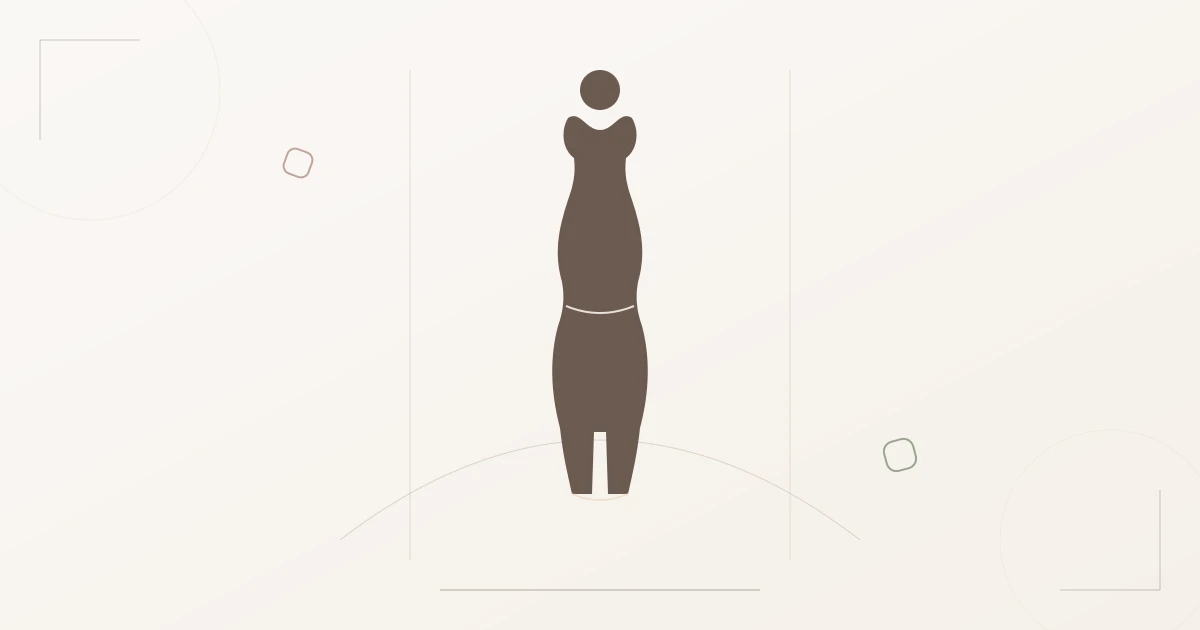
The Dramatic is the Yang end of the Kibbe spectrum: visibly tall (about 165 cm and up, always reading elongated), with a narrow, sharply drawn bone structure, taut, straight body flesh with barely a curve, and striking, angular facial features. Its styling logic comes down to a single rule: the unbroken vertical — long, clean, sharp lines from shoulder to hem, with nothing that cuts the length apart. The most common mistakes: playful, small-scale details (they get lost on this stature), short, fitted cuts (they interrupt the line), and the assumption that oversized is automatically right (wrong — the Dramatic needs sharpness, not volume). This guide explains every characteristic, how to tell the Dramatic apart from Soft Dramatic, Flamboyant Natural, and Dramatic Classic, and the complete wardrobe logic.
The Dramatic is the type classic power dressing was invented for — and still one of the most frequently mis-styled. If you have this long, sharp line, you spend your whole life hearing two well-meaning, wrong pieces of advice: “Soften yourself up” (ruffles, flounces, playful details — all of which sit on this stature like they belong to someone else) and “Give oversized a try” (which simply throws away the type’s sharpest weapon: the clean contour). The truth lies elsewhere: the Dramatic looks breathtaking precisely when she does what no other type can — wear uncompromising length and sharpness. This deep dive shows you how to recognize the type with certainty and how its wardrobe works.
What Defines the Dramatic Type?
In the Kibbe Body Type System, each of the 13 types describes a balance of Yang (sharp, straight, long) and Yin (soft, round, short). The Dramatic marks the pure Yang end — the exact counterpart to the Romantic, which we analyzed last. In no other type is the long, sharp, straight line so consistent: from the bone structure through the body flesh all the way into the facial features.
Here, too, “consistent” is the decisive word. Being tall alone does not make a Dramatic — it takes all three levels speaking the same language:
- Bone structure: narrow and sharp — angular, rather high-set shoulders, long limbs, prominently visible slender joints, long hands and feet
- Body flesh: taut and straight — the body follows a column line, the waist and hips form barely any curve, and even with weight gain the base line stays straight
- Face: sharply drawn — high, prominent cheekbones, an angular jawline, a straight nose, rather thin lips, and deep-set or narrow eyes
Add to that the fourth dimension as a hard criterion: the long vertical line. The Dramatic always reads as tall — typically from about 165 cm up, and even at the lower end of that range, her proportions make her look more elongated than the number suggests. A woman standing 1.55 m with sharp features is not a Dramatic but almost certainly a Flamboyant Gamine — the same sharpness, expressed as contrast rather than length. Why the height rule is so uncompromising is explained in the mistyping guide.
The Characteristics in Detail
| Characteristic | The Dramatic | For Comparison (the Yin End) |
|---|---|---|
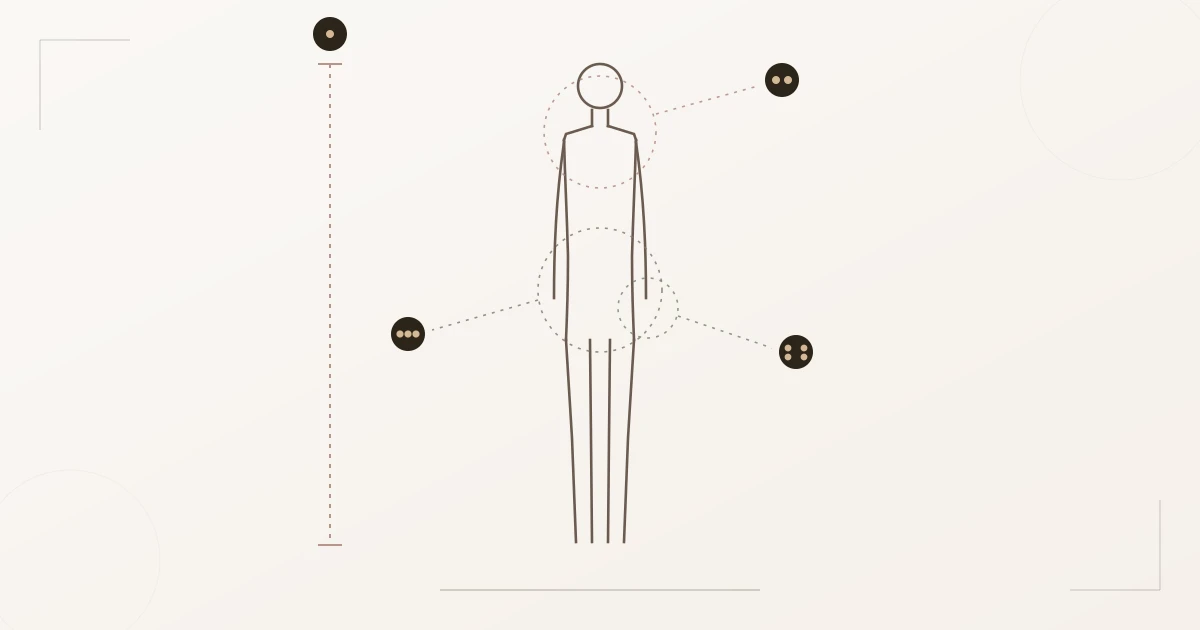
| Vertical line / height | Long — from about 165 cm, always reads elongated | Romantic: short, up to about 165 cm |
| Shoulders | Narrow, sharp, tending angular and high-set | Softly sloping, rounded |
| Bones & joints | Long, slender, prominently visible — long hands and feet | Delicate, fine, hidden beneath soft skin |
| Body flesh | Taut, straight, column-like — barely a hint of curve, even with weight gain | Soft, full, pronounced hourglass |
| Face | High cheekbones, angular jaw, straight nose, thin lips | Round cheeks, large eyes, full lips |
Here, too, the system’s ground rule applies: these characteristics describe structure, not weight. A Dramatic stays a Dramatic at every weight — the column line and the sharp bones do not disappear; beneath any fullness, they remain the architecture of the body.
Are You Really a Dramatic? Telling It Apart from the Neighboring Types
“Tall and slim” gets equated with Dramatic all too quickly — yet three other types share that description. The distinctions that decide it:
Dramatic vs. Soft Dramatic
Both tall, both with a sharp bone structure — the difference lies in the flesh on top: the Soft Dramatic carries soft, curvy Yin flesh over the Yang bones (distinct bust and hip curves, softer facial fullness), while the pure Dramatic stays taut and straight there too. The practical check: does a true hourglass emerge beneath your straight base line? Then Soft Dramatic. Does the silhouette stay column-like? Then Dramatic.
Dramatic vs. Flamboyant Natural
The most common mix-up among the tall types. Both long, both with a strong bone presence — but the bones speak different languages: the Dramatic is narrow and sharp (pointed edges, a lean silhouette), the Flamboyant Natural is broad and blunt (expansive shoulder width, strong, rounded-off edges). The shoulder check decides: narrow and angular → Dramatic; broad and athletic → Flamboyant Natural. The styling consequence differs fundamentally too — the Dramatic needs sharp precision, the FN relaxed ease.
Dramatic vs. Dramatic Classic
The Dramatic Classic is the moderate relative: balanced base proportions with a Yang undertone. It is more moderate in everything — medium height, less extreme limb length, softer transitions. If your features are “sharp, but not extreme” and your overall appearance reads polished and balanced rather than commanding, Dramatic Classic is the closer fit. The true Dramatic is rare — it demands extremes on every level.
If uncertainty persists, follow the proven sequence: hard filters first (measure your height), standardized photos instead of the mirror, structure before fullness. The free Kibbe test gives you a first indication — the complete type profile with all the do’s & don’ts lives on the Dramatic type page.
The Styling Logic: The Unbroken Vertical
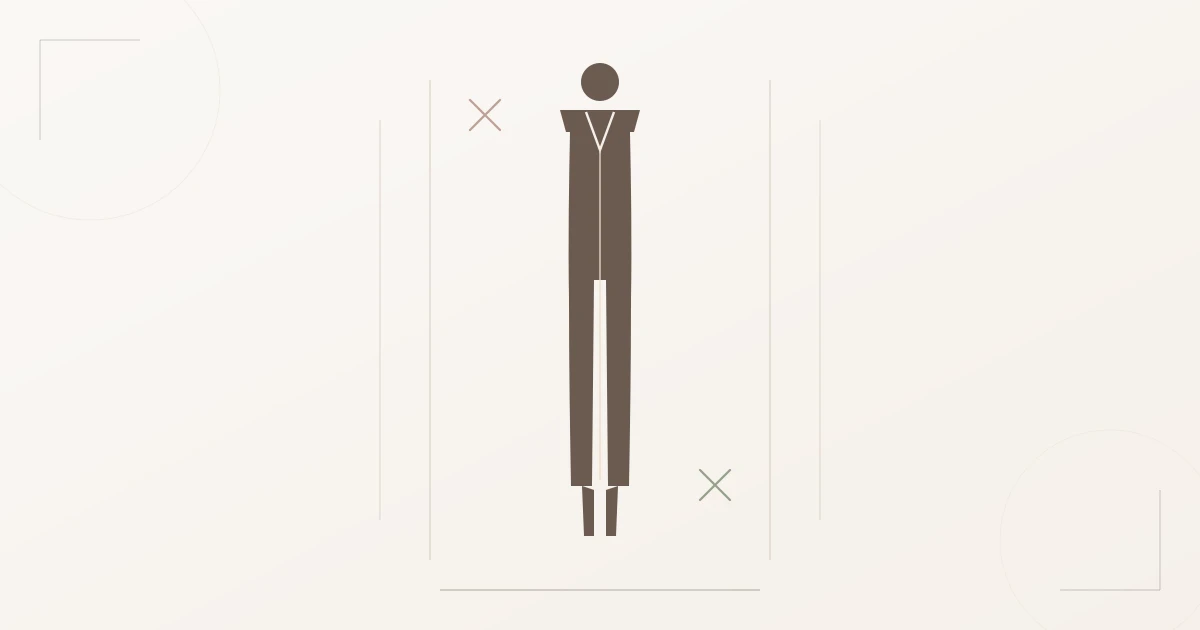
The entire Dramatic wardrobe follows a single principle: the clothing extends the body’s long, sharp line — and interrupts it nowhere. Three rules follow from it:
- Carry the length through instead of cutting it apart. Long silhouettes, unbroken fields of color, vertical seams and details. Every horizontal break — short jackets, wide contrasting belts, a color change at hip level — cuts apart the type’s most valuable feature.
- Sharpness over softness. Clean edges, precise cuts, defined shoulders, peak lapels. The fabric may drape, but it must have backbone — anything flowing and soft blurs the contour this type lives on.
- One statement instead of many details. A grand stature demands grand gestures: one striking piece, one clear gesture, one statement accessory. Small-scale elements — delicate patterns, lots of little pieces of jewelry, playful details — simply get lost on this line.
And the most important misconception up front: oversized is not automatically Dramatic-appropriate. The trend reflex of “tall woman = oversized blazer” throws away exactly what distinguishes the type: the sharp contour. A Dramatic in shapeless volume doesn’t look relaxed — she looks imprecise. The right kind of width is cut, not arbitrary.
The Dramatic Wardrobe: Cuts & Pieces
The Long Coat — The Main Event
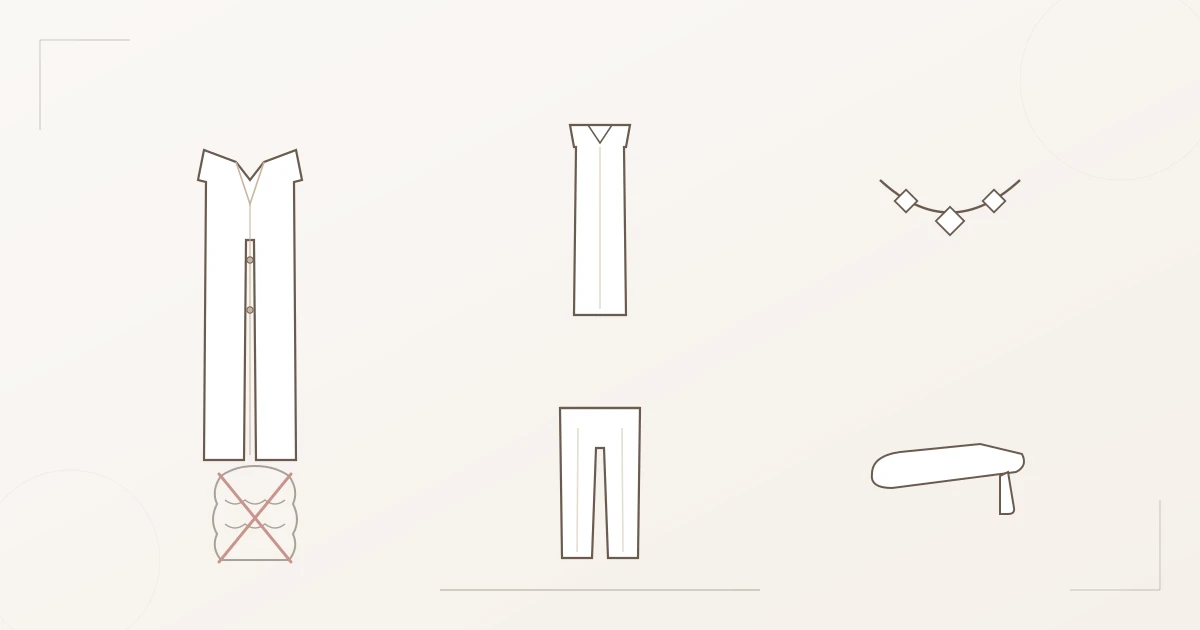
No type wears long coats and blazers as magnificently as the Dramatic. The signature piece: a long, narrow-cut coat with a sharp shoulder, a clean lapel, and minimal detailing — mid-thigh length or longer. It repeats the body’s column line in its purest form. The same logic applies to the blazer: long, single-breasted or precisely double-breasted, peak lapels, nothing playful.
Dresses
Column and sheath shapes in one continuous length: straight-cut, clean necklines (V, square, sharply asymmetrical), floor-length welcome — the Dramatic is the type on whom a straight maxi dress looks majestic rather than overwhelming. Avoid: waist-emphasizing fit-and-flare shapes and anything ruffled.
Trousers
Straight and long, with a pressed crease or a clean vertical seam, a high waist, and full length falling all the way to the shoe. Wide styles work when they are cut wide — wide-leg Marlene trousers — rather than arbitrarily loose. Avoid: cropped lengths and a strong taper at the ankle — both break the line before it finishes.
Skirts & Tops
Skirts: narrow and long — a pencil shape below the knee or a straight maxi length. Tops: clean and structured, ideally with an emphasized shoulder; turtlenecks and asymmetrical necklines underscore the vertical. Everything stays smooth and precise — draping and gathering belong to the soft types.
Fabrics, Patterns & Colors
| Category | Ideal | Avoid |
|---|---|---|
| Fabrics | Firm and shape-holding: wool gabardine, structured wool, firm crepe, smooth leather, heavy satin with body | Anything fluffy and soft, thin flowing chiffon, anything that wrinkles or hangs limp |
| Patterns | Large-scale and geometric: wide vertical stripes, large abstract prints, clean blocks | Tiny florals, fine pin dots, delicate watercolor patterns — they “pixelate” on a tall stature |
| Color logic | Monochrome columns (one tone from shoulder to hem) and uncompromising light-and-dark blocks | Many small color changes stacked on top of each other — every change is a horizontal cut line |
For the Dramatic, the monochrome recommendation is not a matter of taste but of line logic: an unbroken column of color maximizes the vertical. Which colors those are, as always, is determined not by your Kibbe type but by color analysis — the difference is explained in Color Analysis or Style Consultation.
Jewelry & Accessories
- Jewelry: large, clean, geometric — one architectural statement piece instead of many small ones. Long, straight drop earrings, angular cuff bracelets, striking collar necklaces with a clear shape. Delicate, filigree pieces visually disappear on this stature.
- The one-piece rule: a single striking accessory has more impact on the Dramatic than any combination — it underscores the clarity instead of scattering it.
- Bags: structured, angular, on a generous scale — clean rectangular shapes with a firm edge instead of soft, slouchy pouches.
- Shoes: pointed, slender shapes — pumps with a pointed toe, slim boots with a clean shaft line. Playful little straps and round ballet-flat shapes fight against the length of the foot instead of working with it.
- Belts: use sparingly — if at all, then tone-on-tone and narrow, so the column is not cut apart. On this type, the wide contrasting belt is the classic way to destroy the line.
The 5 Biggest Styling Mistakes for the Dramatic
1. “Soften Yourself Up” — Ruffles as an Attempted Counterbalance
The most common advice from others: “tone down” the striking appearance with flounces, ruffles, and playful touches. The result is never softness but dissonance — small-scale Yin details look pasted on against the sharp, long line. If softness is what you want, you achieve it through depth of color and quality of fabric — never through a design language that isn’t yours.
2. Cutting the Line Apart
Short fitted jackets, wide contrasting belts, a color change at mid-height: every horizontal edge visually halves the vertical — and robs the type of its strongest feature. The rule of thumb in front of the mirror: where does the eye stop? If it gets stuck halfway down, the line is broken.
3. Mistaking Oversized for Effortless
Shapeless volume buries the sharp contour. The Dramatic version of width is cut width — wide-leg Marlene trousers, a straight long coat — with a clean edge at the shoulder and hem.
4. Small-Scale Patterns and Jewelry
Tiny florals, dainty chains, filigree details: on a 1.75 m line with striking features, small-scale elements don’t look delicate — they look lost. For the Dramatic, scale is not a question of style but of proportion — grand stature, grand gestures.
5. Trying to Make Yourself Smaller
Flat shoes on principle, drawn-in shoulders, cuts that say “just don’t stand out”: many tall women with a sharp line have learned to hide. But this type has no neutral setting — she reads as either commanding or unsure of herself, with little in between. Your wardrobe can only support one of those two messages.
The Dramatic at Work & in Everyday Life
Direct Answer
The Dramatic is the type classic power dressing was designed for: a long, sharply cut blazer, straight trousers, a monochrome column of color — and you have the most commanding business silhouette in the entire spectrum. The challenge is not building authority but calibrating it: for more approachable occasions, it is enough to lighten the color column and relax the materials — the cut logic stays.
The complete office translation — including the blazer-length rule and the comparison with all the other families — is in Business Looks by Kibbe Type. For building your wardrobe as a system: the Capsule Wardrobe by Kibbe Type includes the Dramatic capsule with the long coat as its anchor piece.
Famous Dramatic Examples
The classic documented examples of the Dramatic are Katharine Hepburn and Joan Crawford — both tall, both with a narrow, sharp bone structure, a straight body line, and striking facial features. Hepburn may be the single best illustration of the styling logic: her iconic looks — wide-cut trousers with a razor-sharp fall, long clean lines, zero playfulness — remain the blueprint of the Dramatic wardrobe to this day.
Both also show why “commanding” is not a question of occasion: this type’s presence comes not from loud clothing but from the agreement between body line and clothing line. Where that agreement is missing, the same presence quickly tips into severity or insecurity — the difference almost always lies in the cut, not the person. If you want your type determined conclusively before making bigger wardrobe investments: here is how the professional online analysis works.
The Dramatic Self-Check: 5 Questions
Before you commit, give honest answers to these five questions — each one tests a different level of the type:
- The height question: Are you at least 165 cm tall (actually measured) — and are you regularly assumed to be taller than you are? If not, look at Flamboyant Gamine or Dramatic Classic.
- The shoulder question: Are your shoulders narrow and angular — or broad and athletic? Broad, blunt shoulders point to Flamboyant Natural, not Dramatic.
- The curve question: Does your silhouette stay essentially straight and column-like even as your weight fluctuates? Distinct bust and hip curves over sharp bones point to Soft Dramatic.
- The face question: Do sharp elements dominate — high cheekbones, an angular jaw, a straight nose? Soft, full features contradict the pure Dramatic.
- The fabric question (the practical test): Try on a long, sharply cut coat, then a soft ruffled blouse. If the coat feels like a second skin and the blouse like a costume, your body is confirming the Yang line more clearly than any questionnaire could.
Four to five yes answers are a strong Dramatic signal. At two to three, the methodical route through the Kibbe Test Guide is worth it — and if the tie persists, the trained outside eye of a professional analysis.
And if you combine sharp bones with real curves instead of a straight column, you don't belong to pure Dramatic but to the Soft Dramatic Kibbe type — the same family, but with a pronounced hourglass instead of a straight line.
And if your shoulders are broad and blunt rather than narrow and sharp — but the long straight line remains? Then you're not a Dramatic but a Flamboyant Natural — the same length, but worn as ease instead of precision.
The most common misidentification downward leads to the Flamboyant Gamine: the same wiry, narrow Yang structure with the same angular features — but distinctly petite (up to about 165 cm/5'5") and with a broken instead of unbroken line. If you'd be a too-short Dramatic, you lose the long column effect — the Flamboyant Gamine solves the same Yang language through contrast and combination rather than through height.
Frequently Asked Questions (FAQ)
What is the Dramatic type in the Kibbe system?
The type with the purest Yang: a visibly tall stature (from about 165 cm), a narrow, sharp bone structure with long limbs, taut, straight body flesh with almost no curves, and striking, angular facial features. Its clothing follows the rule of the unbroken vertical: long, clean, sharp lines without horizontal breaks.
How tall does a Dramatic have to be?
At least about 165 cm — and her proportions typically make her look even taller. The long vertical line is a hard criterion: petite women with the same sharp features are Flamboyant Gamine (sharpness as contrast) or Theatrical Romantic, not Dramatic.
Am I automatically a Dramatic if I’m tall and slim?
No. Flamboyant Natural (broad, blunt bones), Soft Dramatic (curves over sharp bones), and tall Naturals are also tall and slim. Dramatic additionally requires a narrow, sharp bone structure, straight body flesh, and angular facial features — every level has to speak the same Yang language.
What is the difference between Dramatic and Soft Dramatic?
The body flesh: both have long, sharp Yang bones, but the Soft Dramatic carries soft, curvy Yin flesh over them, with a distinct hourglass. The pure Dramatic stays taut and straight in the flesh as well — its silhouette is a column, not a curve.
What is the difference between Dramatic and Flamboyant Natural?
The language of the bones: Dramatic is narrow and sharp (pointed edges, a lean silhouette), Flamboyant Natural is broad and blunt (expansive shoulders, strong, rounded-off edges). The shoulder check decides — narrow and angular versus broad and athletic.
What clothing suits the Dramatic type?
Long, sharply cut silhouettes: a long narrow coat, a precise blazer with peak lapels, column and sheath dresses, straight long trousers with a pressed crease, narrow long skirts. Firm, shape-holding fabrics, monochrome color columns, one big statement instead of many details.
What fabrics should a Dramatic wear?
Firm, shape-holding qualities with a clean fall: wool gabardine, structured wool, firm crepe, smooth leather, heavy satin. Avoid: fluffy-soft, thin and flowing, or wrinkle-prone fabrics — they blur the sharp contour the type lives on.
Can a Dramatic wear oversized pieces?
Only the cut version: wide-leg Marlene trousers, long straight coats — width with a clean edge at the shoulder and hem. Shapeless oversized volume buries the sharp contour and makes the silhouette imprecise instead of effortless.
How does a Dramatic dress for the office?
In the silhouette power dressing was invented for: a long, sharp blazer, straight trousers, a monochrome column. The task is more about calibrating the natural authority — lighter tones and more relaxed materials make the look more approachable without giving up the cut logic.
What jewelry suits the Dramatic?
Large, clean, geometric — one architectural statement piece instead of many small ones: long, straight drop earrings, angular cuff bracelets, striking collar necklaces. Delicate, filigree jewelry visually disappears on a tall stature.
Does my Dramatic type change if I gain weight?
No. The type is based on bone structure and the underlying line of the flesh, not on weight. The column line and the sharp bones remain the architecture of the body at every weight — the styling logic does not change.
Which celebrities are Dramatic types?
The classic documented examples are Katharine Hepburn and Joan Crawford — both tall, with a narrow, sharp bone structure, a straight body line, and striking features. Hepburn’s razor-sharp long trouser looks are still considered the blueprint of the Dramatic wardrobe today.
Are You a Dramatic — or a Flamboyant Natural After All?
The free Kibbe test gives you a structure-based assessment in just a few minutes — and the professional analysis delivers the reasoned answer, complete with your personal style dossier.