Last updated: 20 August 2026 · Reading time: 16 min · Author: Jola Deja
TL;DR — Which clothing style suits me?
- A clothing style is a decision about effect, not about individual pieces. The direction that suits you is the one you like, that fits your real daily life, and that can be built on your body line — all three at once.
- Forget the style labels first. Every style direction can be described on four axes: structure (soft to sharp), level of detail (pared back to decorative), colour depth (light to dark) and formality (casual to formal).
- Aesthetic, body line and colour type are three separate levels. The style says which mood you want. Your body line says which cuts create that mood on you. Your colour type says in which shades.
- The most common mistake is the lifestyle break: choosing a style for a life you do not lead. A look at the last fourteen days in your calendar corrects that faster than any mood board.
- Style mixing works at a ratio of 70 to 30 — one direction carries, the second accents. At 50/50 the result reads as undecided.
Which clothing style suits me? The style direction that suits you meets three conditions at once: you like it, it fits the life you actually live, and it can be translated into your body line and your colour palette. Drop one of the three and the pieces stay on the rail. The fastest route there is not a style label but four axes: structure, level of detail, colour depth and formality.
Contents
- What a clothing style really is — and what it is not
- The three levels: aesthetic, line, colour
- The four axes behind every style direction
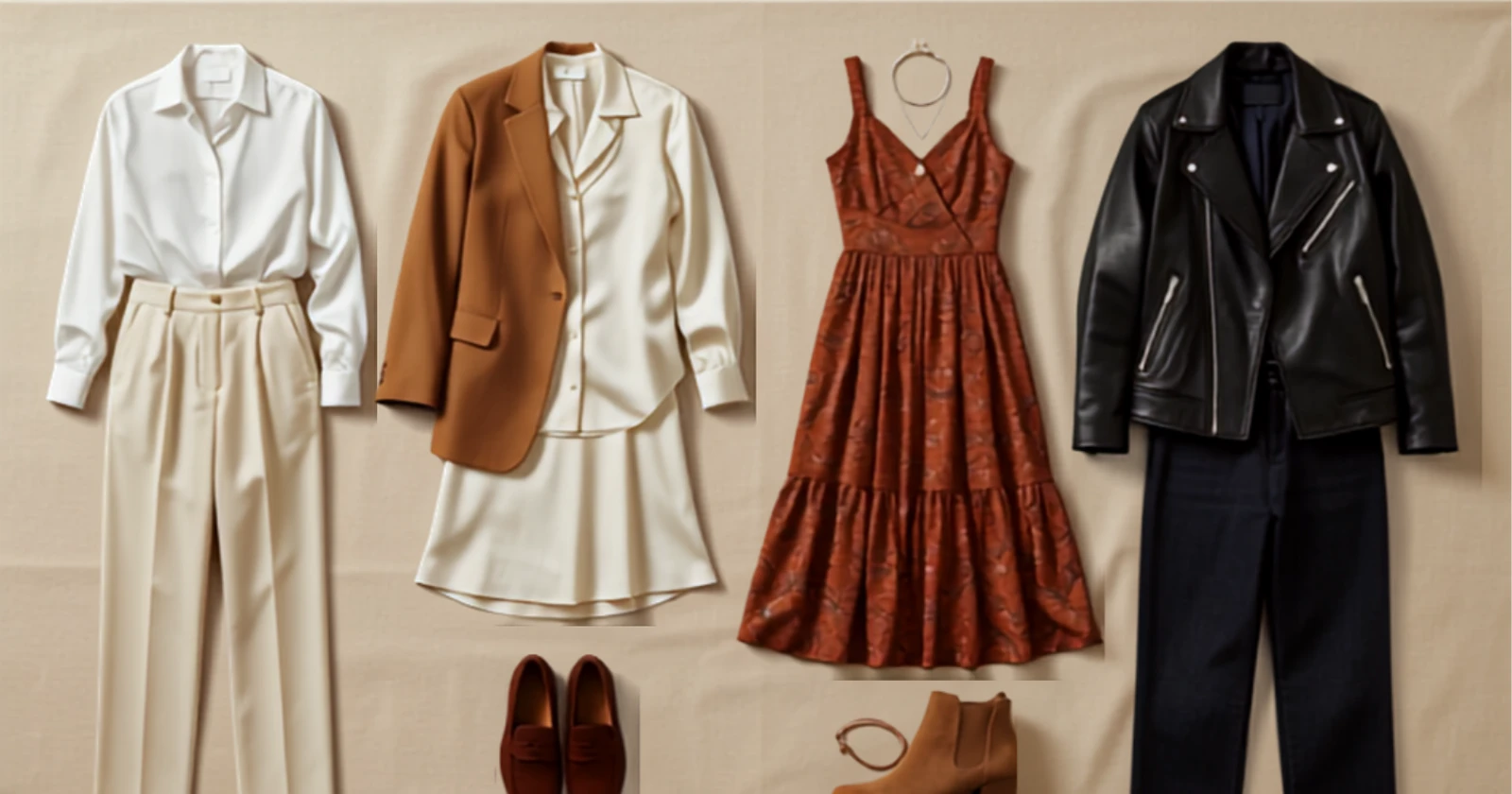
- The ten most important style directions
- The lifestyle filter: your calendar has a vote
- Step by step: finding your clothing style
- Your style direction meets your body line
- The same style direction in your colour world
- Style mixing: two directions without vagueness
- The most common mistakes in the search for a style
- When your style changes
- FAQ — Frequently asked questions
What a clothing style really is — and what it is not
A clothing style is a recurring decision about how you want to come across. It does not show in single pieces but in what repeats across hundreds of outfits: a certain amount of structure, a certain level of decoration, a certain colour depth, a certain level of formality.
From that follows a set of distinctions that saves a lot of searching:
- Style is not a trend. A trend is time-limited and arrives from outside. A style is a constant and comes from you. You can let trends into your style or leave them out.
- Style is not a brand. The same style direction can be built on a supermarket budget or in a boutique. What changes with the budget is material quality, not direction.
- Style is not a uniform. A style direction is a frame, not a rulebook. It does not forbid deviation, it only makes deviation visible — which is precisely why accents work at all.
- Style is not a question of figure. You decide which effect you want. How you produce it depends on your body. Those are two different questions, and they get confused constantly.
The German-language Wikipedia list of fashion styles names around fifty of them, from historical dress through punk to normcore. Museums such as the Victoria and Albert Museum in London organise fashion by period and movement, not by personality type. For practical purposes that is good news: you do not have to work through fifty labels. Ten base directions cover virtually everything that turns up in a real wardrobe.
The question is never "which style is the right one?" but "which effect do I want to produce reliably — and which pieces produce it on me?" A style label is only shorthand for the first half of that question.
The three levels: aesthetic, line, colour
Most style guides fail because they blur three things together. They treat "old money", "pear shape" and "autumn type" as competing answers to the same question. In fact they answer three different questions and sit on top of one another:
| Level | Answers the question | Chosen or given? |
|---|---|---|
| Aesthetic / style direction | Which mood should my appearance have? | Freely chosen — your call |
| Body line | Which cuts and volumes create that mood on me? | Given — bone structure and proportion |
| Colour type | In which shades does it look fresh rather than tired? | Given — skin, eyes, hair |
This separation is the single most important idea in this article. It explains why two women can wear the same boho dress and it looks coherent on one and like a costume on the other. The aesthetic was identical. The translation into cut and colour was not.
How the two lower levels work together is covered in detail in the guide on combining colour type and Kibbe type. For this article it is enough to know: you choose your style direction. How you implement it is negotiated with your body and your palette — not against them.
The four axes behind every style direction
Style labels age. "Quiet luxury" was called understated elegance twenty years ago; "clean girl" is largely the old minimalism with different make-up. What does not age are the axes underneath. Every style direction — including every future one — can be placed on these four scales:
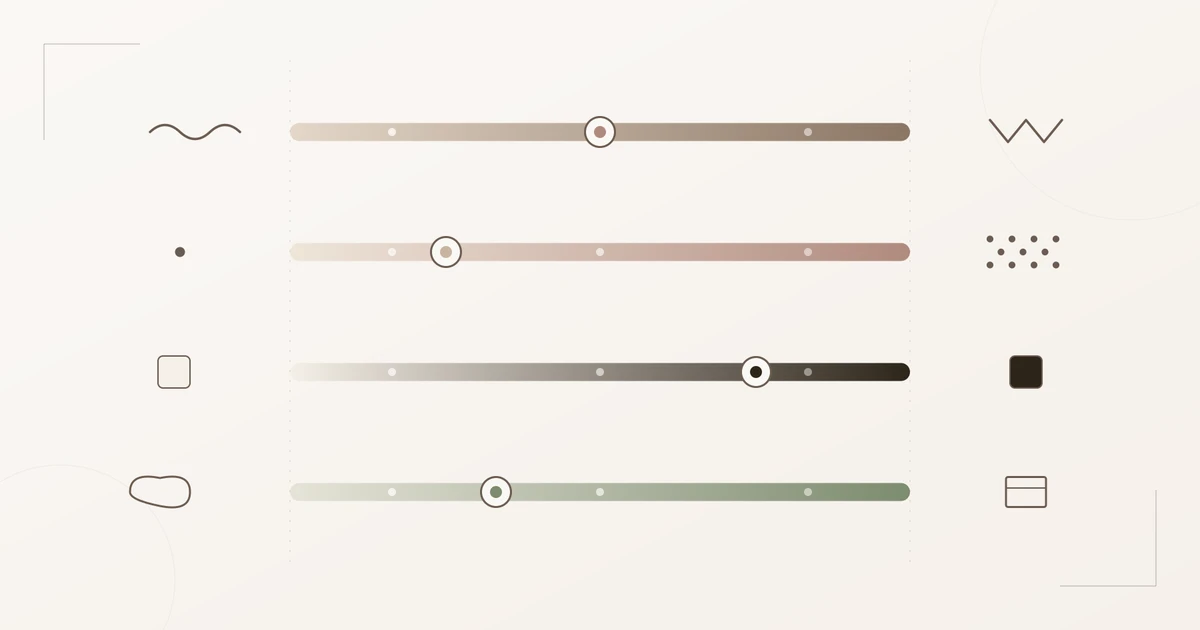
Axis 1: Structure — soft to sharp
How defined are the edges? A sharply cut blazer with a built shoulder sits at one end, a fluid wrap dress at the other. This axis decides more about the effect of an outfit than any colour does.
Axis 2: Level of detail — pared back to decorative
How much happens on the surface? Ruffles, prints, jewellery, appliqué, contrast stitching. Minimalism sits on the left, boho and romantic on the right. This is the axis people misjudge about themselves most often — your real tolerance for decoration is almost always lower than the mood board suggests.
Axis 3: Colour depth — light to dark
Do you work with light, broken tones or with saturated, deep ones? That is a style question first: coastal and French chic are light, edgy and many business looks are deep. Only afterwards does it become a colour-type question — namely which version of light or deep suits you.
Axis 4: Formality — casual to formal
How far is an outfit from the sofa? This is the only axis your daily life gets a vote on. It is also the axis on which style wishes fail most often. Anyone who knows the dress code scale already has it in mind.
Name your four values and you no longer need the style label. "Sharp, pared back, deep, formal" describes a look more precisely than any name — and it still works once the name has gone out of fashion.
The ten most important style directions
These ten directions cover practically every daily life. The axis values are guidance, not law — each direction exists in a softer and a sharper variant.
| Style direction | Axes (structure / detail / depth / formality) | Typical pieces | Suits a life with |
|---|---|---|---|
| Classic | medium / pared back / medium / rather formal | Trench coat, shirt blouse, straight trousers, pumps | office work, representation, mixed occasions |
| Minimalist | clean / very pared back / variable / medium | Single-colour sets, clear silhouettes, little jewellery | little time, high repetition |
| Old money / quiet luxury | medium to clean / pared back / muted / formal | Blazer, cashmere, loafers, pearls, camel and navy | client contact, conservative environments |
| Casual | soft to medium / medium / medium / casual | Jeans, knitwear, trainers, shirt jacket | home office, family, lots of movement |
| Sporty / athleisure | soft / pared back / medium / very casual | Technical fabrics, trainers, zip jackets | commuting, children, physical work |
| Boho | soft / decorative / warm-medium / casual | Flowing dresses, prints, suede, layers | creative settings, no dress code |
| Romantic | soft / decorative / light / medium | Ruffles, lace, florals, soft drape | occasions, less regulated professions |
| Edgy / rock | sharp / medium / deep / medium | Leather, black, boots, hard contrast | creative or independent environments |
| French chic | medium / pared back / light-muted / medium | Stripes, ballet flats, straight jeans, blazer | days with changing occasions |
| Preppy | clean / medium / fresh / rather formal | Knitted vests, shirts, pleated skirts, loafers | academic or classic environments |
Recognising yourself in several rows is not a mistake. Almost every coherent wardrobe consists of two directions — see the 70/30 principle further down.
The lifestyle filter: your calendar has a vote
The most expensive mistake in the search for a style does not cost money but wardrobe space: a style that fits a life you do not lead. Correcting it takes ten minutes.
Open your calendar and look at the last fourteen days. Assign every day to exactly one of three columns: home / private, work, occasion. Count the days and convert to percentages. That distribution is the brief for your wardrobe — not your mood board.
In consultations this is the moment the room goes quiet. Almost everyone brings occasion images, and almost nobody has more than ten per cent occasion days. The wardrobe follows the imagined life; the calendar follows the real one.
The distribution directly determines the formality level of your style direction. Someone with eighty per cent casual days does not need an old money wardrobe built on blazers — they need the casual version of the same direction: fine knitwear, straight trousers, a good coat, quiet colours. Structure, level of detail and colour depth stay identical. Only the formality axis moves down.
How to turn that distribution into a working core wardrobe is covered in the guide to the capsule wardrobe.
Step by step: finding your clothing style
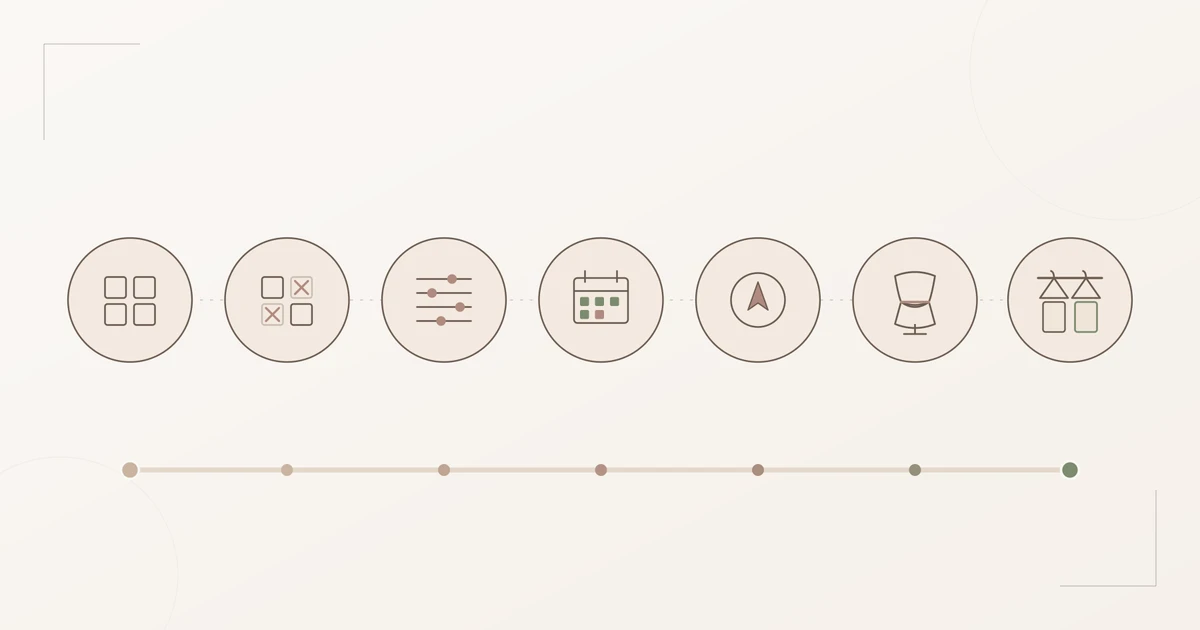
- Collect twenty images. Outfits that pull you in. No filter, no deliberation, from Pinterest, Instagram or magazines.
- Delete everything you would not wear on Tuesday. Not "on a perfect day" — next Tuesday. Usually eight to twelve images survive. That is the difference between admiring and wearing.
- Determine the four axis values. Look at what is left and note a tendency for each axis: structure soft or sharp, detail pared back or decorative, colour depth light or deep, formality casual or formal.
- Run the calendar check. Fourteen days, three columns, percentages. Correct the formality axis against reality.
- Assign a style direction. Find the row in the table above that comes closest to your four values. The name is only shorthand — the values are what matters.
- Translate into your body line. Only now does it become a question of cuts: which shoulder shape, which lengths, which volume your structure carries. The Kibbe quiz gives you a first orientation.
- Rebuild the wardrobe slowly. Do not replace everything. With each purchase, check whether the piece fits on all four axes. After two to four seasons the wardrobe reflects the direction.
If almost nothing survives step two, you do not have a style problem but a fit or occasion problem. The honest guide Why do my outfits look bad on me? follows that question.
Your style direction meets your body line
This is the gap that practically every style overview leaves open: they describe aesthetics but do not say how to build them on your own body. Yet that is exactly the point at which a look becomes either coherent or costume-like.
The rule is simple: the style direction stays, the cuts change. Every aesthetic exists in five translations — one per body line family.
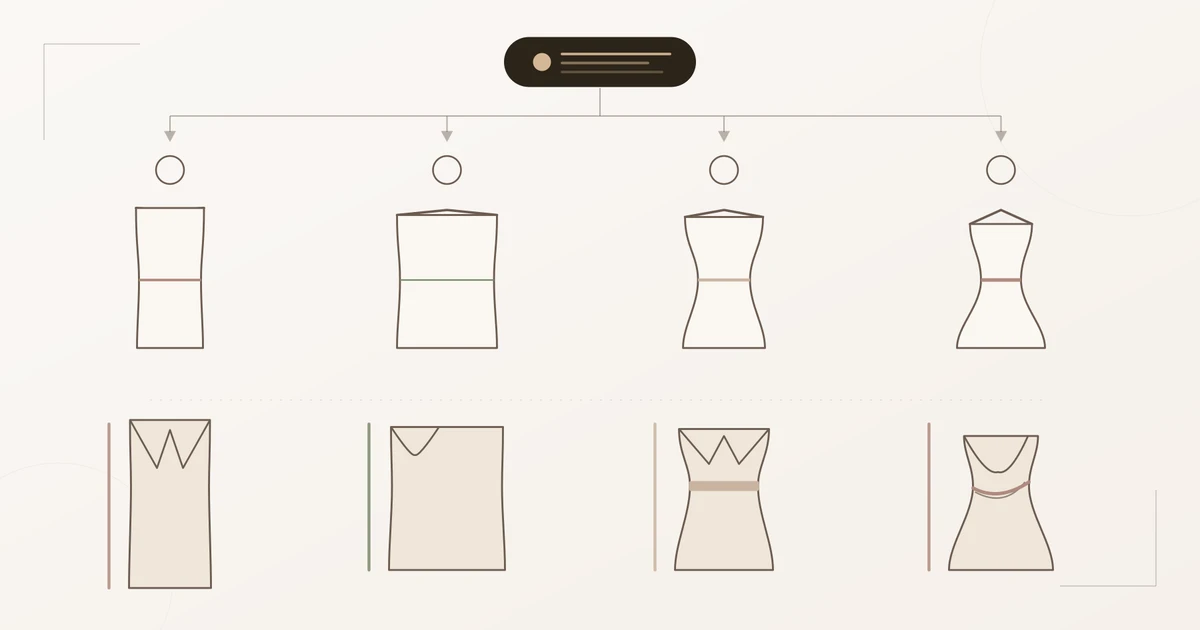
| Body line | How old money is built | How boho is built |
|---|---|---|
| Sharp and long (Dramatic) | Straight, long blazer, clean edges, monochrome | Long, smoothly falling maxi silhouette instead of flounces |
| Strong and relaxed (Natural) | Unstructured blazer, linen, open collars | The natural fit: texture, suede, layers |
| Balanced (Classic) | The classic fit: waisted blazer, pearls | Boho in moderation, one patterned piece per outfit |
| Compact and high-contrast (Gamine) | Short blazer, small-scale detail, clean breaks | Smaller prints, shorter lengths, no stacked volume |
| Soft and curvy (Romantic) | Soft coat instead of blazer, fluid fabrics | Wrap cuts, soft drape, waist marked |
Two things stand out in this table. First, every aesthetic has one line on which it works almost by itself — boho on a Natural line, old money on a Classic line. Second, that does not mean the other lines cannot carry that aesthetic. They simply need a different implementation. Which cuts belong to which line is covered in the Kibbe clothing guide; the system behind it is explained in the guide to the 13 Kibbe types.
The same style direction in your colour world
The third level is the quickest. Your style direction sets the colour depth — light and broken, or saturated and deep. Your colour type sets which version of it suits you: warm or cool, clear or muted.
An example that comes up constantly in consultations: camel is considered the old money colour. On a warm autumn type that is correct. On a cool summer type the same camel looks washed out — there, taupe or a cool greige produces exactly the same restrained effect. The style direction is identical; the shade is not.
- Light directions (French chic, coastal, romantic) need a light version of your palette — not white at any price.
- Deep directions (edgy, many business looks) need your darkest shade, which is not necessarily black. For many warm types it is dark brown or deep olive.
- Muted directions (old money, minimalism) live on two or three neighbouring shades from your palette rather than on contrast.
Which palette is yours is covered in the guide Which colour type am I?
Style mixing: two directions without vagueness
Hardly anyone is one hundred per cent a single style direction. Mixing is the normal case — it just has to be weighted.
The 70/30 principle: one direction carries the base, meaning silhouette, colour world and formality level. The second supplies the accents: individual pieces, jewellery, shoes, prints. As soon as both appear with equal weight, the result is not an individual style but indecision.
Combinations that work in practice:
- Classic 70 / edgy 30 — the quiet base, broken by boots, leather or one hard colour edge. Reads current rather than staid.
- Minimalist 70 / boho 30 — clean silhouettes with texture, suede and a single patterned piece. The mix that goes wrong least often.
- Casual 70 / old money 30 — jeans and knitwear, lifted by a coat, loafers and quiet colours. The most common realistic solution for home-office life.
- Romantic 70 / classic 30 — soft fabrics in clearly cut shapes. Takes the whimsy out of romantic without deleting it.
The rule for the 30 per cent share: it may break the base, but it must not invert its axis values. A leather boot with a classic coat works. A fully decorative outfit with one classic belt does not — there the base has already changed.
The most common mistakes in the search for a style
Mistake 1: copying signature pieces instead of principles
The classic. Old money gets understood as pearls plus loafers, boho as a crochet vest. What results is a costume. The principles would be: for old money, quiet colours, good material, high formality; for boho, soft structure, texture, warm tones. Principles can be implemented with clothes you already own; signature pieces require new purchases and still look staged.
Mistake 2: matching the style to the imagined life
See the calendar check. The wardrobe should reflect the last fourteen days, not the next fourteen holiday days.
Mistake 3: confusing style with figure
"Boho doesn't suit me" is almost always wrong. The accurate version is: "this boho implementation doesn't suit me." The aesthetic is rarely the problem; the choice of cut is.
Mistake 4: too many directions at once
Three or four directions in one wardrobe produce many outfits on paper and almost none in practice. Two directions with clear weighting beat four equal ones every time.
Mistake 5: the complete overhaul
Replacing everything at once means buying with the old eye and under budget pressure. Rebuilding across several seasons works better — and clearing out first makes visible what already fits.
Mistake 6: treating basics as neutral
There are no style-neutral basics. A white T-shirt is minimalist, casual or romantic depending on its cut. Which basics belong to which line and direction is covered in the guide to timeless basics.
When your style changes
Style directions are more stable than the fashion industry suggests. What shifts over a lifetime is usually two of the four axes: formality and level of detail. Structure and colour depth stay remarkably constant for most people across decades.
Typical triggers for a genuine shift are a change of job, parenthood, moving to a different region or a change of social environment — that is, changes in the calendar, not in taste. A birthday alone changes no style.
In practice: repeat the calendar check once a year. If the distribution across the three columns has moved significantly, adjust the formality axis — and leave the other three alone.
FAQ — Frequently asked questions
Which clothing style suits me?
The style direction that suits you meets three conditions at once: you like it, it fits the life you actually live, and it can be translated into your body line and your colour palette. Drop any one of the three and the pieces stay in the wardrobe. The fastest route runs through four axes — structure, level of detail, colour depth and formality — not through a style label.
How do I find my style when I like almost everything?
Separate admiring from wearing. Collect twenty images you are drawn to, then keep only the ones you could see yourself in next Tuesday. What survives is your style core; the rest is taste. The surviving images usually share a clear tendency on the four axes, even when their style labels differ.
Which clothing styles exist?
The German-language Wikipedia lists around fifty named fashion styles, from historical dress to normcore. For everyday purposes about ten base directions are enough: classic, minimalist, old money, casual, sporty, boho, romantic, edgy, French chic and preppy. Every other name is a variation or a rebranding of these.
What is the difference between clothing style and body line?
Your clothing style is a decision; your body line is a given. The style sets the mood you want to project. The body line determines which cuts create that mood on you. The two never contradict each other because they operate on different levels.
Can I combine several style directions?
Yes, and most coherent wardrobes do exactly that. A ratio of roughly 70 to 30 works best: one direction carries the base, the second supplies the accents. As soon as both appear with equal weight, the result reads as undecided rather than individual.
Does old money style suit every body?
The direction does; its signature cuts do not. Old money lives on quiet colours, good material and clear formality, and that can be built on any body line. The classic straight blazer with pearls, however, is a solution for balanced to sharp lines. On a soft, curvy line the same effect comes from a waisted coat in a softer fabric.
How long does it take to develop your own style?
The direction is usually settled after a few hours of honest analysis. The wardrobe takes considerably longer, because it grows through individual purchases rather than one big shopping trip. Two to four seasons is realistic before the wardrobe genuinely reflects the chosen direction.
What if my dream style does not match my daily life?
Translate it instead of abandoning it. Every style direction exists in a casual and a formal version. If you love old money but work from home, wear the principle as fine knitwear with straight trousers rather than a blazer with loafers. The axes stay the same; only the formality level drops.
Does clothing style change with age?
The base direction stays remarkably stable for most people; formality and level of detail shift. The typical movement is towards less decoration and better material within the same base direction. A genuine style change almost always follows a change in life stage, not a birthday.
Do I need a style consultation to find my clothing style?
No, you can determine the direction yourself. What a consultation saves is the translation work: which cuts, lengths and colours produce that direction on your particular structure. If you keep accumulating mistaken purchases or have been torn between two directions for years, an analysis usually saves more than it costs.
From direction to wardrobe
Your style direction, translated to your line
This guide gives you the framework to determine your direction yourself. A professional style and colour analysis gives you the translation: which cuts, lengths and shades actually produce that direction on your structure — in an individual dossier. A free initial consultation is always included.
About the author
Jola Deja — style consultant & image consultant
Jola Deja is a certified style and image consultant working online as well as in person in the Märkischer Kreis region and around Dortmund. She combines Kibbe analysis and colour consulting into one coherent picture. The question "which clothing style suits me?" opens almost every first consultation — the four-axis framework in this guide comes from exactly that daily work.
Last updated: 20 August 2026 · Author: Jola Deja, certified style & image consultant