
Table of Contents
- The Quick Answer
- The Myth of the Universal Basics List
- The 3 Criteria for True Timelessness
- The 10 Classic Basics, Checked Against Body Lines
- The 3 Biggest Basics Myths, Explained
- The Real Basics: Your Core Pieces by Style Family
- Recognizing Quality: What to Look for in Basics
- Care: How Basics Really Last Ten Years
- Buying Basics Without Costly Mistakes
- Frequently Asked Questions (FAQ)
The Quick Answer
Quick Answer
There's no such thing as "timeless basics" in the sense of one list that works for everyone — the white shirt, the trench coat, and the little black dress are only timeless for certain body lines; for others, they're permanent compromises. True timelessness comes from three criteria at once: trend distance (the cut belongs to no season), quality (the material and construction survive for years), and — the overlooked third — line fit (the cut echoes your body line). Only when all three line up does a piece become what basics promise: a garment you're still wearing in ten years. This guide checks the 10 classic basics against the 5 Kibbe style families — and shows which version of your core is actually timeless.
Every women's magazine has printed it, every capsule-wardrobe guide repeats it: the list of "ten pieces that never go out of style." White shirt, trench coat, blazer, little black dress, straight-leg jeans. The promise: buy these pieces, and you're dressed for life. And yet, for a surprising number of women, that exact list hangs unworn in the closet — the stiff shirt that never quite fit right, the trench that somehow looked like a costume. The problem isn't the quality of the pieces. It's a design flaw in the promise itself: "timeless" was sold as a property of the garment — when really, it's a relationship between the garment and the body line.
The Myth of the Universal Basics List
The classic basics list carries a stowaway assumption: an unspoken body line. Look at the canon pieces — the crisp white shirt, the straight-cut trench, the classic blazer, the slim straight pants: that's the wardrobe of a balanced-to-slightly-straight line of medium scale — in the Kibbe system, the Classic family and its neighbors. For that line, the list really is timeless. For everyone else, it's a compromise with a pattern:
- On a soft, curvy Yin line, the stiff shirt reads like packaging — the fabric stands where the body flows.
- On a petite, compact frame, the classic trench buries the proportions under fabric length.
- On a long, sharp Yang line, the polite standard silhouette looks too moderate — it undersells the frame instead of using it.
That explains the paradox of unworn basics: they're objectively "correct" pieces — they just answer a question nobody ever asked: correct for whom? The Kibbe Body Type System supplies the missing variable: the body line that decides which version of a basic is the timeless one for you.
The 3 Criteria for True Timelessness
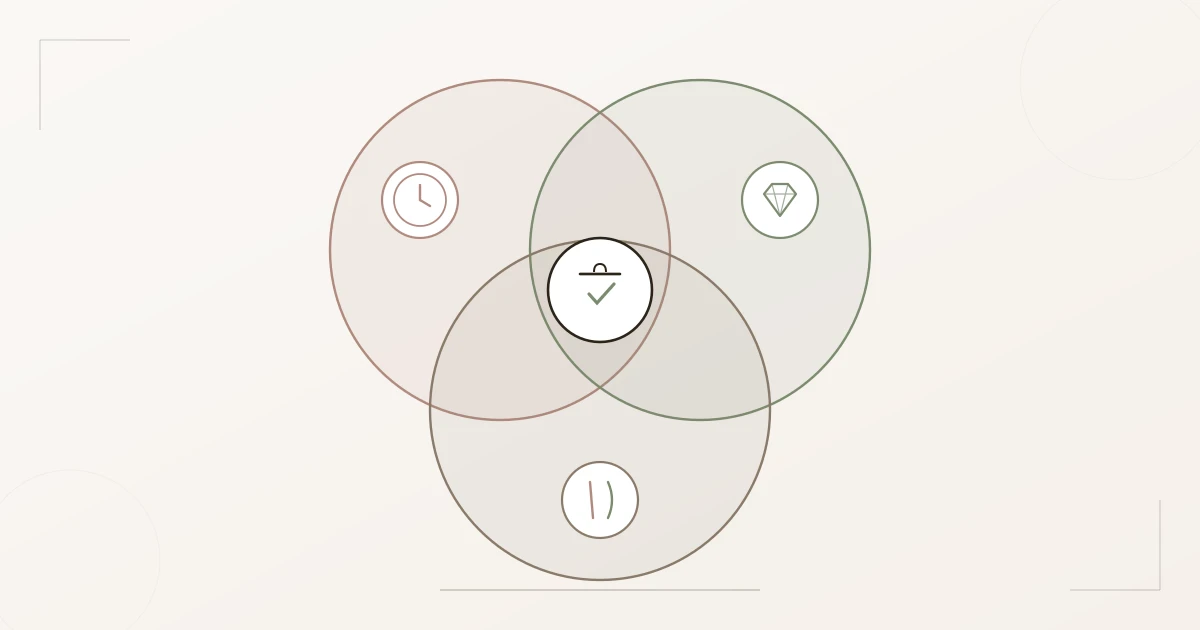
A garment is timeless when three conditions are met at the same time:
- Trend distance: The cut belongs to no identifiable season — no trend silhouette, no logo fashion, no details that date it to a particular fashion year. (Necessary, but not sufficient on its own.)
- Quality: The material and construction are built for years — the fabric holds its shape and surface, the seams hold up, and the piece still looks like itself after thirty washes.
- Line fit: The cut echoes your body line — shoulder line, drape, waist logic, and length all align with your structure. This is the criterion every list leaves out — and the reason "timeless" pieces still end up unworn.
Here's the logic behind it: trend distance and quality make a piece durable — but only line fit makes it wearable. A piece you don't enjoy wearing isn't timeless — it's just durably wrong.
The 10 Classic Basics, Checked Against Body Lines
Here's the canon list under an honest check: who wears the original effortlessly — and what translation do the other lines need? (Family codes: D = Dramatic, N = Natural, C = Classic, G = Gamine, R = Romantic.)
| "Timeless" Basic | Wears the Original Effortlessly | The Translation for the Others |
|---|---|---|
| White shirt (crisp) | C, D (long cut) | R: soft blouse with drape · N: relaxed linen shirt · G: short, crisp version |
| Trench coat | C, N (relaxed version) | D: long, slim coat · G: short jacket · R: soft wrap coat with belt |
| Classic blazer | C | D: long & sharp · N: unstructured · G: cropped · R: soft wrap jacket instead of a blazer |
| Black straight-leg pants | C, D (full length) | N: relaxed leg · G: cropped, ankle-baring · R: fluid fabric, high waist |
| Straight-leg jeans | C, N | D: long & slim · G: cropped/slim · R: soft stretch content, high waist |
| Little black dress | All — but each in her own silhouette | D: column · C: sheath · N: straight-relaxed · G: short & graphic · R: wrap/fit-and-flare |
| White T-shirt | All — it's a cut question | Neckline & fit by line: V-neck/crew, body-skimming/relaxed, length to proportion |
| Fine-knit sweater | C, R (soft drape) | D: long turtleneck · N: textured knit · G: compact with contrast |
| Pumps | C (classic), D (pointed) | N: loafers/flats · G: petite versions · R: round/almond toe |
| White sneakers | N, G, C (clean shape) | D: slim, minimalist shape · R: soft, feminine silhouette instead of chunky |
Two patterns stand out. First: the Classic column is filled almost every time — the canon list is the Classic wardrobe, which confirms the stowaway-assumption thesis. Second: not a single basic is a total washout — it just needs the right translation. Timelessness isn't an exclusive club; it's a question of version.
The 3 Biggest Basics Myths, Explained
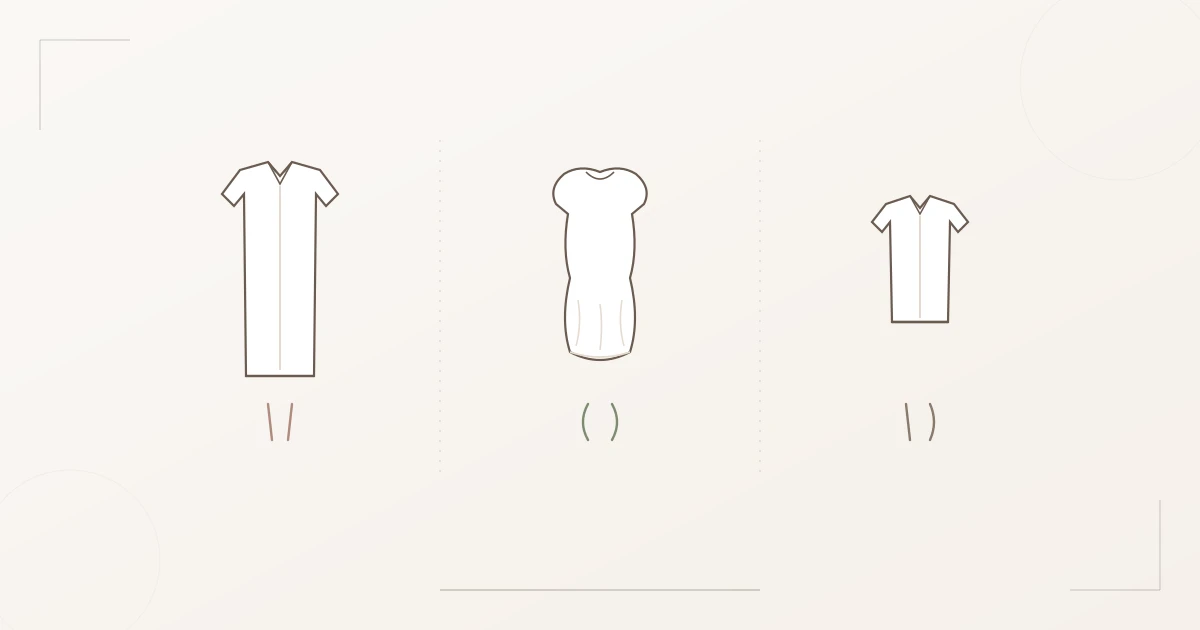
Myth 1: "The white shirt looks good on every woman"
The classic white shirt is a Yang garment: crisp fabric, a defined collar, straight structure. On a soft, curved line, it pulls in the wrong places, stands away from the body, and looks borrowed — not because the size is wrong, but because the character is. The Romantic translation is a soft blouse with drape (round neckline, flowing fabric); the Natural translation is relaxed linen; the Gamine version is short and crisp. All four are still "the white shirt" — just in their own timeless version.
Myth 2: "A trench coat belongs in every wardrobe"
The trench is a wonderful piece — for moderate-to-relaxed lines of medium scale. On a petite frame it turns into a mass of fabric (the Gamine answer is the short, cleanly cut jacket); on the long, sharp line it reads as too polite (the Dramatic answer is the long, slim coat with no belt interruption); and on the soft, curved line, the stiff construction fights the body (the Romantic answer: a soft wrap coat that keeps the belt idea but drops the stiffness).
Myth 3: "The little black dress works for everyone"
The little black dress is the most interesting case: it really is universal — but only as a concept, not as a cut. The color and the idea ("one simple dark dress that does everything") work for anyone; the silhouette, on the other hand, is highly line-dependent: the straight column for the long line, the tailored, moderate sheath for the balanced line, the wrap dress for the curvy line, the short graphic dress for the compact line. Anyone searching for "the" little black dress is really searching for her own little black dress.
The Real Basics: Your Core Pieces by Style Family
Instead of one list for everyone: the timeless core of each style family — the pieces that will still work in ten years, because they're built on the structure that doesn't change.
Dramatic
The core is built on length and precision: a long, slim-cut coat as the anchor piece, full-length straight pants with a crisp crease, a column dress with no waist interruption, and a precise, high, closed turtleneck. Every one of these pieces extends the same unbroken vertical line — more detail in the Dramatic deep dive.
Natural
The core is relaxed, but never careless: an unstructured blazer with a natural, unpadded shoulder, straight-cut pants with an easy drape, a wrap or midi dress in linen or cotton, and quality knits with visible texture rather than a smooth surface. Here, texture carries the value — not structure.
Classic
Here, your own core genuinely lines up with the familiar canon list: the tailored, moderate sheath dress, the fine trench with a natural shoulder line, the classically cut blazer, and a pencil skirt in flawless construction. That's exactly why generic basics guides work most reliably for this family — and for no other.
Gamine
The core is compact and high-contrast: a short, structured jacket with proportional details, cropped pants that show the ankle, crisp blouses with clean necklines, and compact knits with deliberate light-dark contrast. Length is almost always the first mistake here — short beats long.
Romantic
The core stays soft and fitted at the waist: the wrap dress as the signature piece, a softly draping blouse with a round neckline, fluid pants with a high waist, and a draped cardigan that often replaces the classic blazer. More detail in the Romantic deep dive.
How many of these pieces a functioning wardrobe needs, and how they connect into a system, is covered in the Capsule Wardrobe by Kibbe Type — the basics here are its anchor pieces.
Recognizing Quality: What to Look for in Basics
Because basics are the most-worn pieces in your wardrobe, quality pays off here more than anywhere else — and you can spot it before the price tag gives it away:
- Fabric hand over label: The fabric should feel substantial — structured weaves should hold their shape, soft ones should have weight in the drape. Thin and stiff at the same time is the warning sign for cheap finishing that disappears after three washes.
- The crush test: Scrunch the fabric in your hand, then let go — does it bounce back, or does it leave sharp creases? Basics get worn often; the ability to recover is what makes a fabric livable day to day.
- Seams and pattern matching: Straight, dense seams with no pulling; on patterned pieces, the lines should continue across the seams — the small detail that separates real quality from fast fashion.
- Natural fibers or quality blends: pure cotton, wool, linen, and silk age with dignity; high synthetic content in "investment basics" ages into pilling.
- Check for replaceability: Real basics still exist in a similar form next year — if a "basic" gives you last-chance panic, you're probably holding a trend piece instead.
Care: How Basics Really Last Ten Years
Even the most expensive quality piece loses its timelessness in the washing machine if the care doesn't match the material. Four rules noticeably extend a garment's life:
- Wash less, air out more: Most basics — blazers, coats, fine knits — need air after a day of wear, not a wash cycle. Frequent washing is the most common cause of premature aging, not the wearing itself.
- Dry wool and fine knits flat: Hung on a hanger, knit fibers stretch out over months — a sweater that "grows" on the hanger loses exactly the fit it was bought for.
- Repair before replacing: A loose button, a hem coming undone, a moth hole in the cashmere sweater — most early basics failures are small repairs, not total losses. A tailor or alterations service is usually the cheaper option here compared to buying new.
- Have the fit adjusted: Bodies change slightly over the years. A good basic whose waist or hem needs a small adjustment is often still cheaper to alter than to replace — and it keeps the line fit that's already proven itself.
The underlying rule matches the rest of this guide: an investment piece is only as timeless as the way you treat it. How you figure out which of the pieces you already own are even worth that investment — and which ones belong in the decluttering pile — comes down to the same question again: does the line fit, or was the care only well-intentioned?
Buying Basics Without Costly Mistakes
Direct Answer
The same three filters apply when buying basics: Does this version fit my line? Does it close a real gap? Does it immediately create three outfits? Precisely because basics are seen as "safe buys," this is where the most stubborn costly mistakes happen — the objectively good piece in the subjectively wrong version.
The complete buying toolkit — the 6 buying traps, the 5 rules, the fitting-room checklist — is in the guide Avoiding Costly Mistakes. For basics, one special rule applies on top: clarify your line first, then invest. Basics are the most expensive pieces per category and the longest-lasting — which means a wrong pick sticks around for just as long. The free Kibbe quiz gives you your line's basic direction in just a few minutes. And a note on color: which neutrals your basics should wear (pure white or cream, black or deep brown) isn't a line question at all — it's a color-type question; more on that in Color Analysis or Style Consulting.
In the end, the logic is disarmingly simple: trends age because they're tied to a moment in time. Your bone structure is tied to no moment — it stays. Pieces built on it inherit that permanence. That's what real timelessness is: not the absence of character, but alignment with your own.
Basics only help if you can find them. Which place in the wardrobe they should get — and why eye level is the most valuable — is in the guide to organising a wardrobe.
Frequently Asked Questions (FAQ)
What basics does every woman really need?
The categories are universal — a reliable top, well-fitting pants, a dress that does everything, a jacket, a coat, good shoes. The specific versions aren't: which cut, which fabric, and which length are timeless for you is decided by your body line. The popular one-size-fits-all lists are really describing the Classic line's wardrobe.
What makes a garment timeless?
Three criteria at once: trend distance (the cut belongs to no season), quality (the material and construction survive for years), and line fit (the cut echoes your own body line). The first two make a piece durable — only the third makes it durably wearable.
Does the white shirt really look good on every woman?
No. The classic crisp shirt is a Yang piece and works effortlessly on balanced and long, clear lines. Soft, curved lines need the translation into a flowing blouse, relaxed Naturals need the easy linen shirt, compact frames need the short, crisp version.
Does every woman need a trench coat?
No — the trench is timeless for moderate and relaxed lines of medium scale. Petite frames do better with a short, clean jacket, long sharp lines with a slim, long coat, soft curved lines with a wrap coat in a softer fabric.
Is the little black dress really universal?
As a concept, yes; as a cut, no. A simple dark dress works for every woman — but in the silhouette of her own line: as a straight column, a tailored sheath, a relaxed straight shape, a short graphic dress, or a soft wrap dress.
How many basics does a wardrobe need?
As a core, about eight to twelve pieces are enough: two to three tops and bottoms each, a dress, a jacket, a coat, and two pairs of shoes — all in your own line's version and interchangeable with each other. This core matches the anchor pieces of a capsule wardrobe.
How do I recognize quality in basics?
By the fabric hand (substantial rather than thin-and-stiff), the crush test (fabric bounces back instead of creasing sharply), straight and dense seams, patterns that continue across seams, and natural fibers or quality blends instead of a high synthetic content.
Are expensive basics automatically better?
No — price is a weak signal. An expensive piece in the wrong line version is a durable buying mistake; a more affordable one in the right version with solid quality will beat it every day of the week. Check line and quality first, then decide on price.
What colors should basics come in?
Two to three neutrals that mix and match, plus one or two accent colors — which exact shades (pure white or cream, black or deep brown) is decided by your personal color type, not your body line. Kibbe decides cut and fabric; color analysis decides the palette.
Do basics ever go out of style?
Real basics age extremely slowly, because their cut belongs to no season and their fit depends on body structure, which doesn't change. What ages faster are pseudo-basics: trend pieces in neutral colors sold as basics — recognizable by the fact that they won't exist in a similar form next year.
What's the difference between basics and a capsule wardrobe?
Basics are the pieces — the capsule wardrobe is the system they work within: piece-count logic, a mix-and-match requirement, and a color framework. The basics in this guide are the anchor pieces a capsule is built around.
Should I know my Kibbe type before I buy basics?
Yes — especially for basics. They're the most expensive and longest-lasting purchases in your wardrobe; a wrong pick in the wrong line version sticks with you for years. A free self-test gives you the basic direction in minutes; a professional analysis gives you the definitive answer — and both cost less than a single wrong investment piece.
Find out which version of basics is yours.
The free Kibbe quiz shows you your line direction in just a few minutes — before you invest in pieces that are meant to last for years.