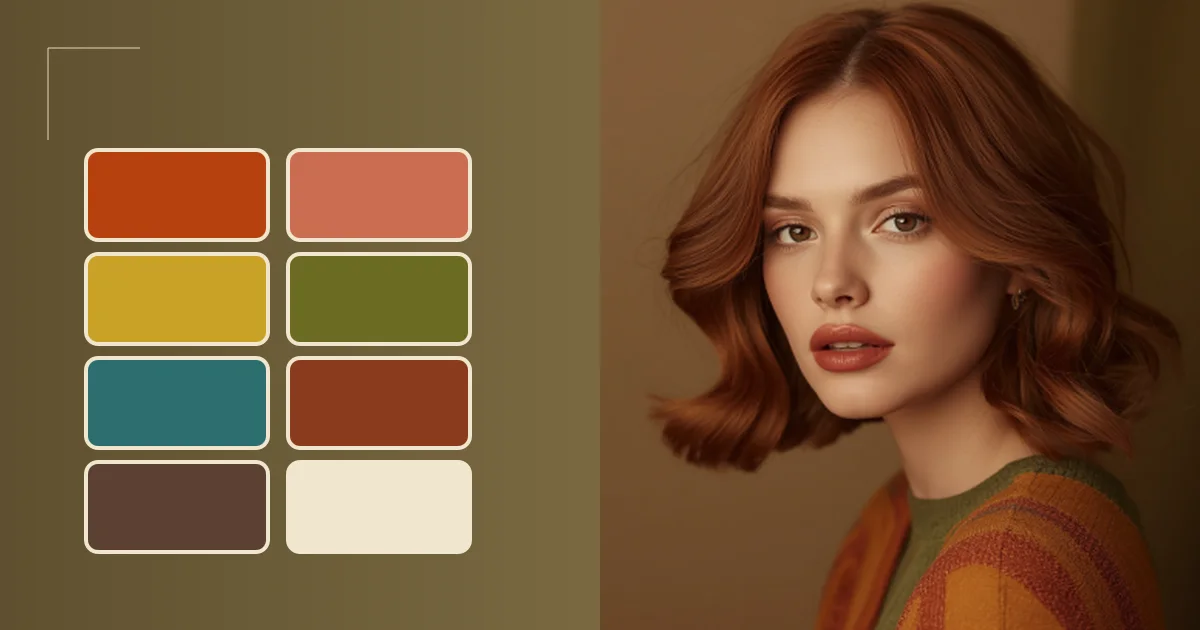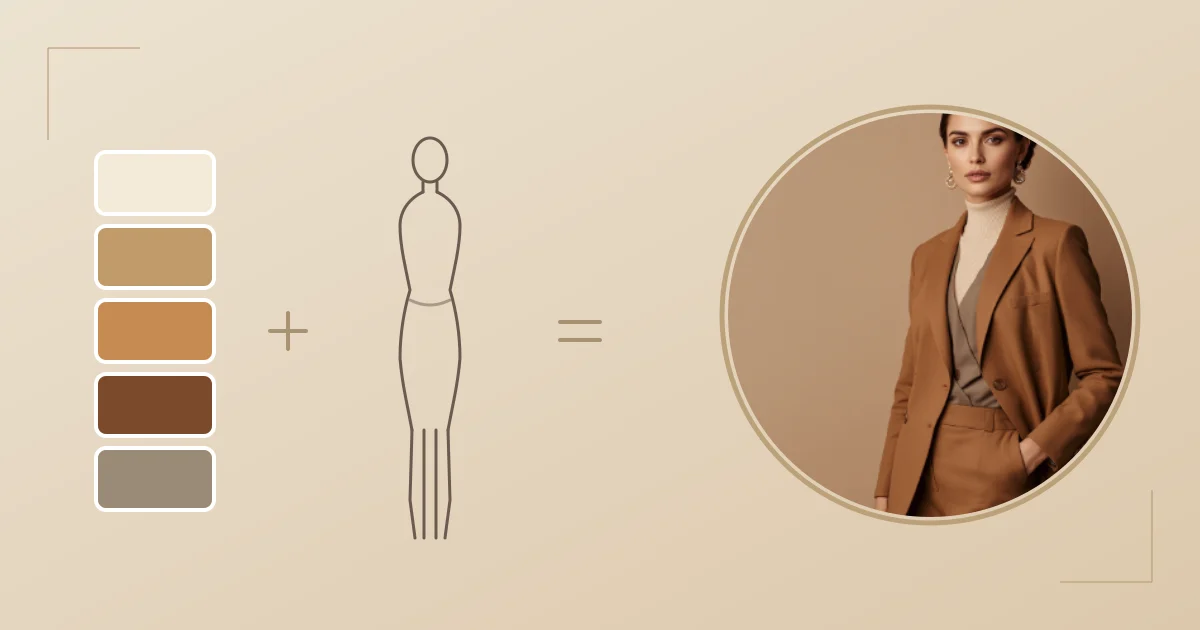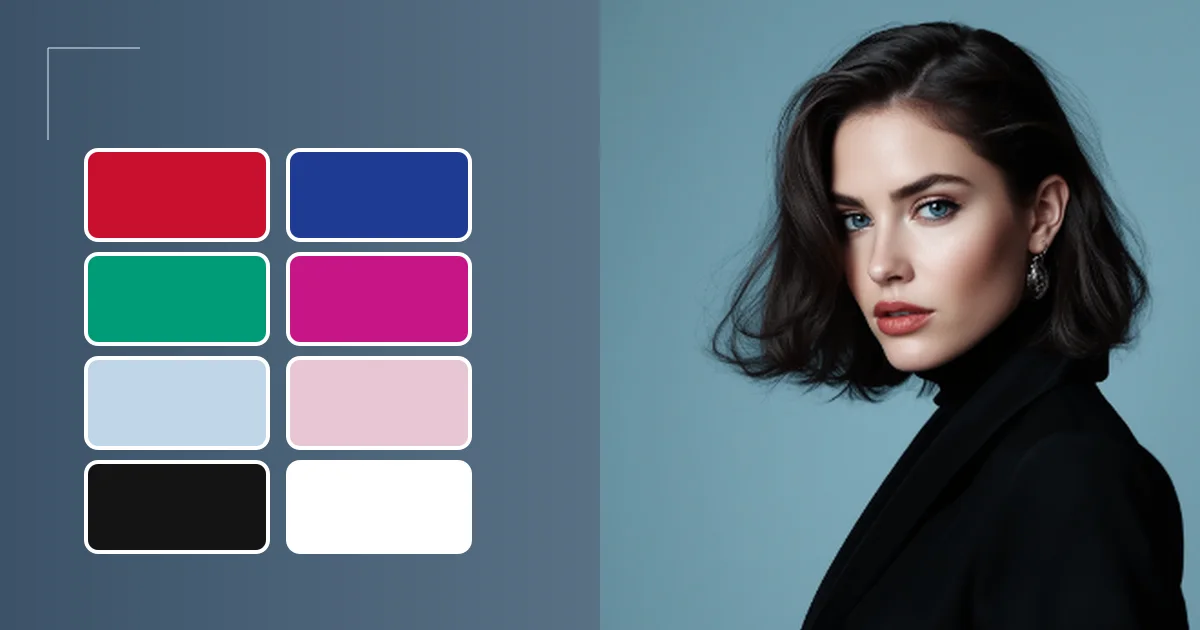

TL;DR — the key points at a glance
- The Winter type is a cool, clear and high-contrast colour type with a bluish undertone. Its colours are pure and intense, never warm and never washed out.
- Best colours: pure white and true black, clear red, magenta, royal blue, emerald, icy pastels. Silver rather than gold.
- The Winter type is the only colour type whom pure black and pure white truly suit.
- Avoid: warm and earthy tones — orange, rust, mustard, olive, warm brown, camel — and all muted, dusty shades.
- Three subtypes: Cool Winter (close to Summer), Clear Winter (close to Spring), Dark Winter (close to Autumn).
Table of contents
- The short answer
- What is the Winter type?
- The traits: Are you a Winter type?
- The colour check: 4 quick tests
- The Winter type colour palette
- Which colours to avoid
- The 3 Winter subtypes
- Combining Winter type clothing
- Make-up & jewellery
- Winter type vs. Summer & Autumn type
- Colour meets form: Winter type & Kibbe
- Self-check: 5 questions
- Frequently asked questions (FAQ)
The short answer
Short answer
The Winter type suits cool, clear and intense colours with a bluish undertone: true black and pure white, clear red, magenta, royal blue, emerald and icy pastels. Silver flatters more than gold. Avoid all warm, earthy and muted tones such as orange, rust, olive or warm brown — they rob the high-contrast face of its freshness. In short: the Winter type thrives on clarity over softness and on high contrast over gentleness.
The Winter type is the most dramatic of the four colour types — and the only one whom pure black and white truly flatter. It is the cool, high-contrast sister of the Summer type: the same coolness, but far more clarity and power. This guide shows you which colours make you glow, how to find your subtype and how to translate the Winter palette into a wearable wardrobe. It is a deep dive that builds on the overview Which colour type am I?

What is the Winter type?
The Winter type is one of four colour types in the classic four-seasons colour analysis. It is defined by three qualities: cool (bluish undertone), clear (pure and saturated rather than muted) and high-contrast. This combination makes it the most intense and dramatic of all the types.
The four-seasons model has its roots in the colour theory of Johannes Itten at the Bauhaus and was popularised in the 1980s by Carole Jackson's "Color Me Beautiful" (background on the method: Color analysis). The core idea: clothing in your own colour temperature and intensity makes the face light up, while the opposite makes it fall flat.
With the Winter type the undertone is cool and bluish — as with the Summer type. The difference lies in clarity and contrast: Winter can take and needs bold, pure colours and strong contrasts. Soft, washed-out tones that flatter the Summer make Winter look pale. Its signature colour is the combination that suits no one else so well: black and white.
The traits: Are you a Winter type?
A Winter type is recognised by a cool undertone combined with high contrast. Unlike the Summer type, whose features blend softly into one another, a Winter's hair, skin and eyes are clearly set apart from each other — the classic "Snow White" effect: dark hair, fair skin, clear eyes.
- Skin: cool undertone — from very fair and porcelain-like to deep and cool-olive. Often a marked contrast between skin and hair.
- Hair: cool and dark — dark brown to black, often with an ashy or bluish sheen. No golden or reddish tone.
- Eyes: clear and luminous — intense blue, cool green or a dark, high-contrast brown that stands out sharply against the skin.
- Contrast: high. The opposition between dark hair, fair skin and clear eyes is the surest Winter trait.
"The surest Winter marker is the black test. If a pure-black turtleneck makes your face clearer and more awake rather than overwhelming it, you are almost always a Winter — because black is the one colour that truly suits only this type."
The colour check: 4 quick tests
These four tests, done in daylight by a window, clarify whether you are a Winter type. Artificial light distorts the temperature — so always test at the window.
- The vein test: If the veins at your wrist look bluish or violet, your undertone is cool — a prerequisite for Winter (or Summer). Greenish veins point to a warm type.
- The jewellery test: Hold silver and gold up to your face. If silver flatters and gold looks too warm, you are cool.
- The black test: Place pure black directly against your face. If you look clearer and fresher, you are a Winter. If black makes you look tired and hard, you are more likely a Summer type.
- The contrast test: Photograph yourself without make-up and convert the picture to black and white. If the contrast between hair, skin and eyes is high, that clearly points to Winter rather than Summer.
Only when three of the four tests point in the same direction is the result reliable. If it stays ambiguous, a professional colour consultation with fabric swatches helps.
The Winter type colour palette: your colours
The Winter type colour palette consists of cool, clear and saturated colours with high contrast. They are pure and intense — never toned down with grey, never underlaid with warmth. That is the principle: clarity meets clarity.
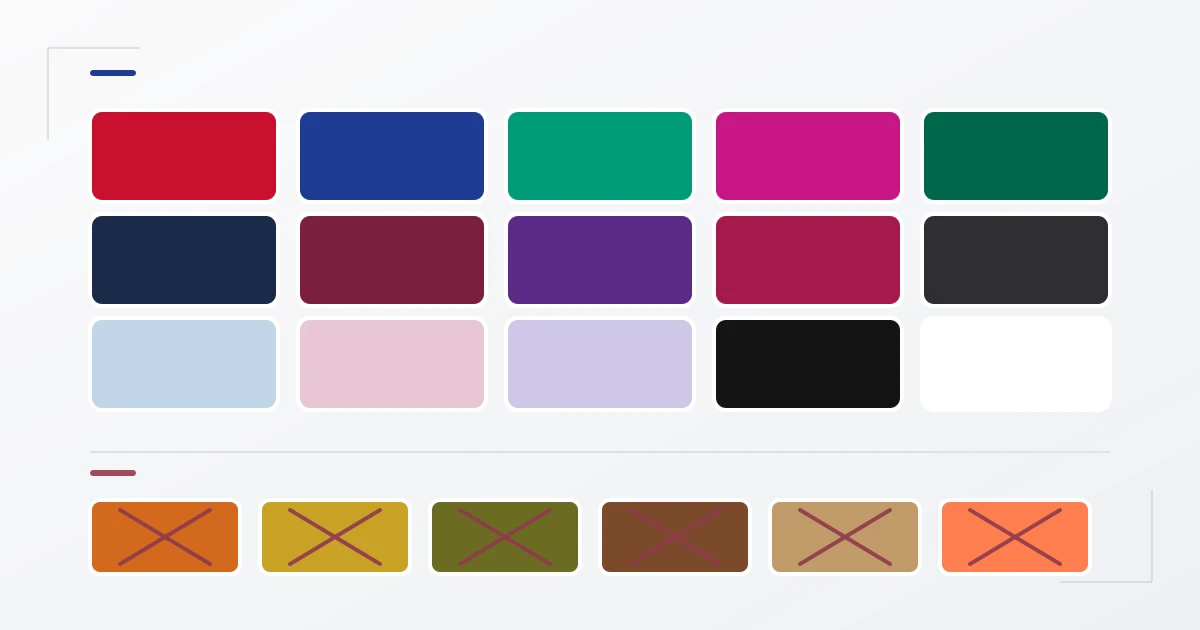
- Clear jewel tones: true red, magenta, fuchsia, royal blue, cobalt, emerald, pine green — the powerful signature colours.
- Deep cool tones: midnight blue, navy, cool burgundy, deep berry, cool violet, charcoal.
- Icy pastels: ice blue, ice pink, ice lavender — cool pastels with a hint of grey, never creamy.
- The Winter neutrals: pure black, pure white, charcoal, navy and cool grey — the only palette in which true black and white belong to the base.
For a long-lasting wardrobe you build on these cool neutrals and set clear jewel tones as accents — the foundation of any well-thought-out capsule wardrobe.
Which colours to avoid
Just as important are the wrong colours. These tones work against the Winter type because they are either too warm or too muted:
- Warm tones: orange, rust, brick, mustard yellow, warm gold, camel and chocolate brown make the cool complexion look sallow and yellowish.
- Earthy tones: olive, khaki, terracotta and warm beige belong to Autumn — on Winter they look dull.
- Muted, dusty shades: washed-out dusky pink, sage or dove grey are Summer colours; they do not outshine the clear Winter aura but make it look lifeless.
- Cream white instead of pure white: broken, warm white looks dirty on Winter — it needs pure, cool white.
The 3 Winter subtypes: Cool, Clear, Dark
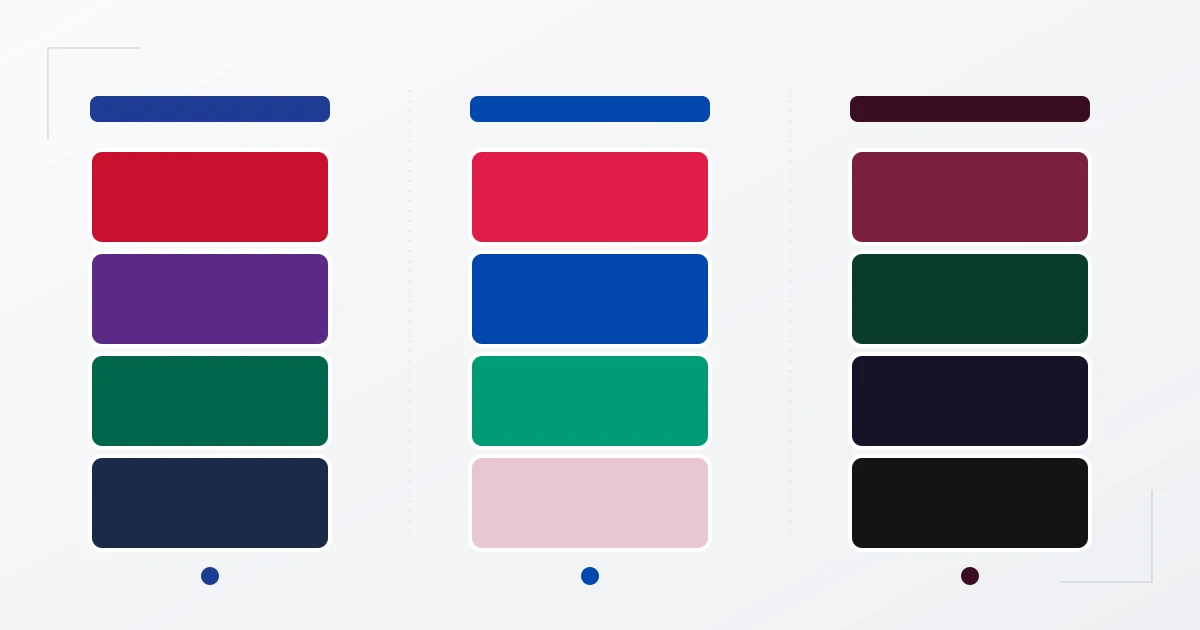
"Winter type" is not a monolith. In the extended 12-colour analysis the Winter splits into three subtypes, depending on which of its three qualities — cool, clear or dark — dominates. The image shows the three palettes side by side (left to right: Cool, Clear, Dark).
| Subtype | Neighbouring season | Character | Best colours |
|---|---|---|---|
| Cool Winter | Summer type | The coolest, tolerates no warmth | Signal red, violet, pine green, navy, grey |
| Clear Winter | Spring type | The clearest, highest contrast | Clear red, cobalt, emerald, ice pink, black and white |
| Dark Winter | Autumn type | The deepest, rich dark tones | Burgundy, berry, dark emerald, midnight blue |
The classification is decided by the dominant quality: if coolness is strongest, you are a Cool Winter. If clear brilliance dominates, a Clear Winter. If depth dominates, a Dark Winter. Most people recognise themselves instantly in exactly one of the three columns.
Combining Winter type clothing
The Winter type is the only type that not only tolerates strong contrasts but needs them. Soft tone-on-tone combinations tend to make it disappear — it thrives on clear opposites. The three practical ground rules:
- Use contrast deliberately: black and white, navy and white or a clear jewel tone against black mirror your own high contrast. Exactly what makes other types look pale makes you glow.
- One clear colour as a statement: a single pure jewel tone — royal blue, emerald, magenta — looks powerful on you rather than loud. Use it close to the face.
- Pure neutrals as a base: build the wardrobe on black, pure white, navy and charcoal. Warm camel and beige do not belong in your base.
A concrete example: instead of a complete look in muted beige — which makes Winter look sallow — you combine a pure-white blouse with black trousers and a single clear accent, say a royal-blue coat or a magenta bag. The high contrast of the base plus one pure colour accent near the face is the most reliable Winter formula — it works at the office as well as in the evening and never looks overloaded, because the rest stays calm and clear.
Colour is only half the battle — the cuts that suit you depend on your body line, not on your colour season. More on this under Colour meets form.
Make-up & jewellery for the Winter type
For make-up the rule is: cool and clear, with intensity welcome. The Winter type is one of the few types whom a clear, cool red on the lips truly suits — from cherry red to berry and cool pink. Pale, nude tones, by contrast, often make it look sickly.
- Lips: clear cherry red, cool berry, fuchsia, cool pink. No coral, no nude brown.
- Eyes: cool grey, charcoal, clear blue — for a defined, high-contrast look.
- Jewellery: silver, white gold and platinum flatter; yellow gold looks too warm. Clear stones such as crystal or sapphire underline the clarity.
Winter type vs. Summer & Autumn type
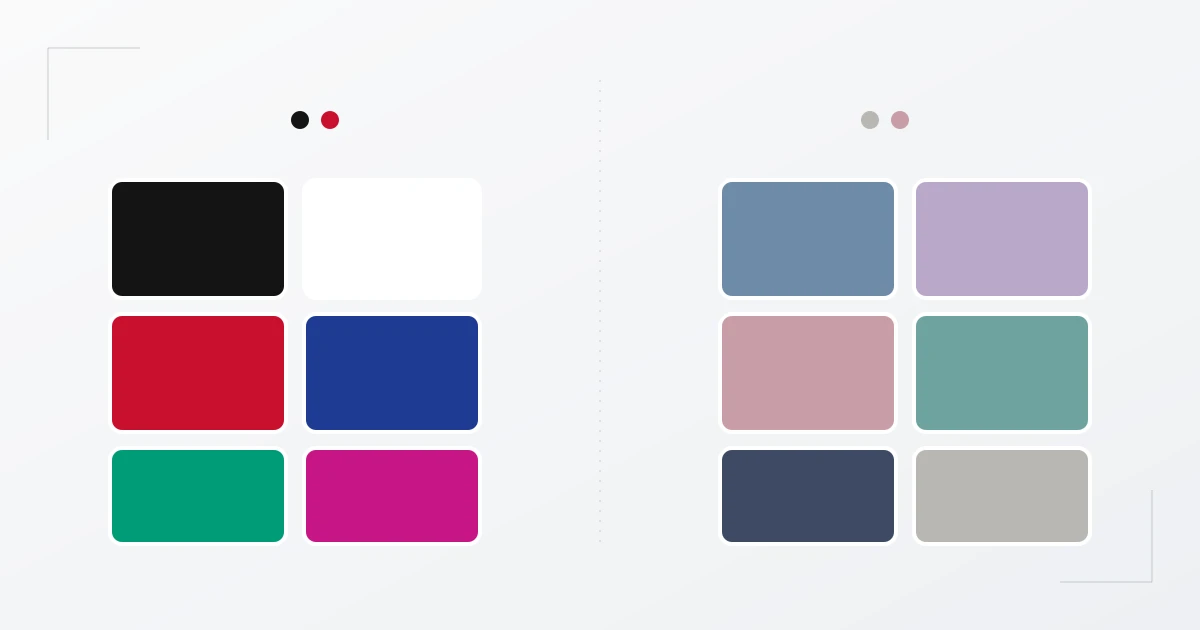
The most common mix-up is with the Summer type — both are cool. The difference lies solely in contrast and clarity. This table and the image separate the three cleanly:
| Trait | Winter type | Summer type | Autumn type |
|---|---|---|---|
| Temperature | Cool | Cool | Warm |
| Clarity | Clear, brilliant | Muted, soft | Muted, earthy |
| Contrast | High | Low | Medium |
| Signature colour | Pure black and white | Muted blue | Rust & olive |
The rule of thumb: Winter is coolness with high contrast, Summer is coolness with low contrast, Autumn is softness with warmth. Anyone who thinks they are a delicate Summer but drowns in pastels and only comes alive in clear colours is usually a Winter.
Colour meets form: the Winter type and your Kibbe type
One point many colour guides leave out: your colour season and your body line are two completely independent systems. The colour analysis (Winter type) tells you which colours suit you. The Kibbe Body Type System tells you which cuts and lines suit you.
A Winter type can be any of the 13 Kibbe types — a soft Romantic just as much as an angular Dramatic. An example: two women are both Winters and wear the same clear royal blue — one as a softly draping silk blouse (Romantic), the other as a sharply cut blazer (Dramatic). Same colour, opposite cut. Only the combination of the clear Winter palette and the right cut gives the complete picture. You can find out which Kibbe type you are in the do-it-yourself Kibbe test.
Self-check: 5 questions
This self-check does not replace a full analysis, but it quickly filters whether Winter type is plausible for you. Answer honestly in daylight:
- Undertone: Do the veins at your wrist look bluish or violet rather than green?
- Metal: Does silver flatter you more than gold?
- Black: Does pure black at the collar make you clearer and more awake — rather than tired?
- Contrast: Is the opposition between hair, skin and eyes high (e.g. dark hair, fair skin)?
- Clarity: Do you get more compliments in clear, bold colours than in soft pastels?
Five times yes strongly points to Winter type. If the boundary with Summer stays unclear, contrast decides — or the overview Which colour type am I?
Unsure whether you are a Winter, Summer or Autumn type? A professional colour and style consultation clarifies your palette and your line in a single appointment — with no guesswork.
To the colour & style consultation →Frequently asked questions (FAQ)
Which colours suit the Winter type best?
The Winter type is best suited to cool, clear and intense colours: true black and pure white, clear red, magenta and fuchsia, royal blue and cobalt, emerald and pine green, as well as icy pastels such as ice blue and ice pink. All these tones are pure and saturated rather than muted. The signature combination is pure black and white.
Which colours should a Winter type avoid?
A Winter type should avoid all warm and earthy tones — orange, rust, mustard yellow, olive, warm brown, camel and warm beige. Muted, dusty shades such as washed-out dusky pink or sage also make the clear type look lifeless. Instead of cream white it needs pure, cool white.
Can a Winter type wear black?
Yes — the Winter type is the only one of the four colour types whom pure black truly suits. It underlines its high contrast and makes the face look clearer. Pure black and white as a combination is also its signature. For all other types, pure black is usually too hard.
How do I tell whether I am a Winter or Summer type?
Both types are cool — the difference lies in contrast and clarity. The Winter type has high contrast and needs clear, brilliant colours; pure black and white looks powerful on it. The Summer type has low contrast and needs soft, muted tones; clear colours outshine it. A practical test: if pure black looks fresh and clear on you, you are a Winter; if it looks hard and overwhelming, you are a Summer.
What is the difference between a Winter and an Autumn type?
The Winter type is cool and clear, the Autumn type warm and muted. Winter signature colours are clear red, royal blue and pure black and white; Autumn signature colours are rust, olive and warm brown. The jewellery test decides quickly: silver for Winter, gold for Autumn. Confusion arises above all with the Dark Winter, who like the Autumn wears deep colours — but cool ones rather than warm.
What are the three Winter subtypes?
The Winter type splits into Cool Winter, Clear Winter and Dark Winter. The Cool Winter borders on Summer and tolerates no warmth whatsoever. The Clear Winter borders on Spring and has the highest contrast with the clearest, most brilliant colours. The Dark Winter borders on Autumn and wears the deepest, richest tones such as burgundy and midnight blue.
Which jewellery suits the Winter type?
Silver suits the cool Winter type best, as do white gold and platinum. Yellow gold looks too warm on it and robs the face of its freshness. Clear, sparkling stones such as crystal, diamond or sapphire underline its clarity and high contrast especially beautifully.
Is the Winter type rare?
The pure, high-contrast Winter type is considered rarer than the Summer type in Central Europe, because the typical combination of a cool undertone and very high contrast occurs less often. It is more widespread in regions with darker hair and cool complexions. There are, however, no reliable representative statistics on this — the figure is based on the practical experience of colour consultants.
Is the Winter type linked to my body type?
No. The colour season and the body line are two independent systems. The Winter type determines your colours, the Kibbe Body Type System your cuts and lines. A Winter type can be any of the 13 Kibbe types — only the combination of a clear palette and the right cut gives the complete style picture.
Does grey suit the Winter type?
Yes, but only the right grey: cool, clear grey from light silver grey to charcoal works wonderfully as a neutral. Warm or dusty greige with a brown cast, by contrast, looks dull on Winter. As a rule of thumb: the clearer and cooler the grey, the better it suits the Winter palette.
Sources & further reading: Johannes Itten — colour theory · Color analysis (art).