
TL;DR — the essentials at a glance
- The right hair colour follows three axes: temperature (warm/cool), depth (light/dark) and contrast — not just “warm or cool”.
- Cool types (Summer, Winter) need ashy tones with a bluish base. Warm types (Spring, Autumn) need golden, coppery, reddish tones.
- The 2-level rule: Stay no more than two lightness levels away from your natural hair colour — otherwise the contrast against your face tips out of balance.
- As you go grey, it is the depth and the contrast that change, not the temperature — cool types stay cool.
- At the salon, name your undertone, depth and contrast instead of just showing a photo — that is the most reliable way to communicate.
Table of contents
- The short answer
- The 3 axes of hair colour
- First: determine your colour type
- The hair colours for each colour type
- Overview: which tone for which type
- The 2-level rule
- Contrast: the overlooked factor
- Your right hair colour in 5 steps
- The salon briefing
- Going grey: what changes
- The 5 most common mistakes
- Hair colour vs. haircut
- Frequently asked questions (FAQ)
The short answer
Short answer
The right hair colour depends on your colour type: Summer types suit ashy, cool blonde and brown tones, Winter types cool dark brown through to black, Autumn types copper, auburn and warm chocolate tones, Spring types golden blonde and warm light brown. Three factors are decisive: the undertone (warm or cool), the depth (light or dark) and your natural contrast. As a rule of thumb: stay no more than two lightness levels away from your natural colour.
Most guides only say “warm or cool” — and that is exactly why the colour so often still ends up off. Because temperature is only one of three axes. This guide explains all three, gives you concrete tones for each of the four colour types and shows you how to tell your colourist exactly what you need. It complements the overview Which colour type am I? with the hair colour dimension.

The 3 axes of hair colour
A hair colour suits you when it harmonises with your natural colouring on three axes. If you only consider one of them, you have at best made a third of the decision.
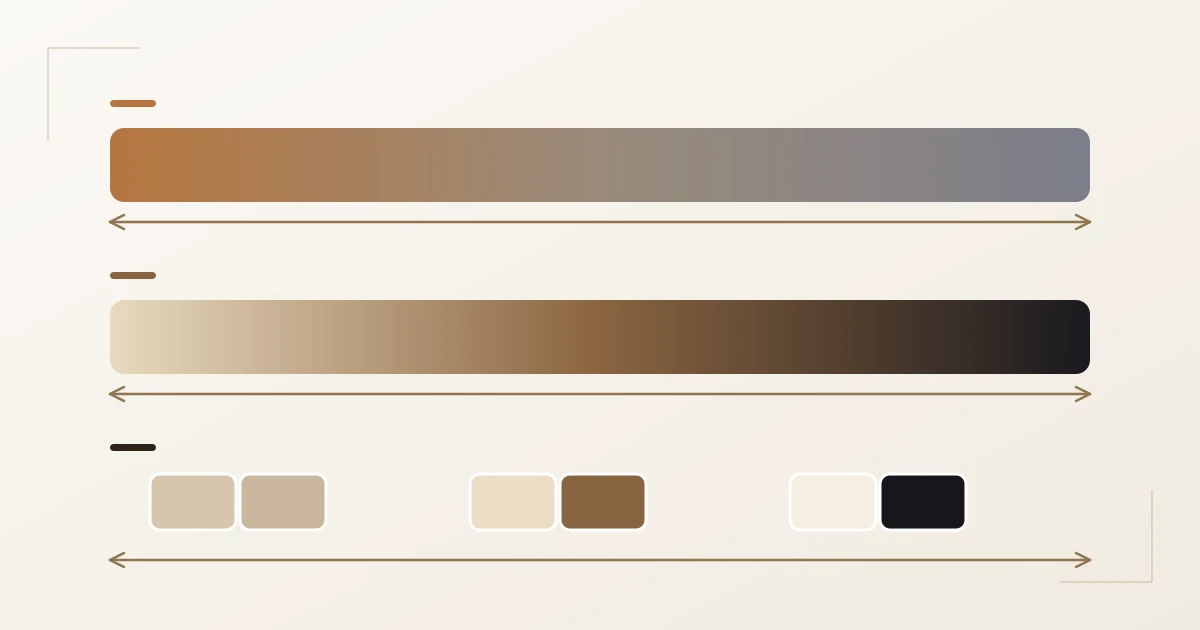
Axis 1: temperature (warm or cool)
Temperature is the undertone of your skin and therefore the most important junction. Warm types (Spring, Autumn) have a golden or peachy undertone and need hair colours with a gold, copper or red component. Cool types (Summer, Winter) have a rosy or bluish undertone and need ashy tones with a bluish base. A warm hair colour on a cool type quickly makes the skin look yellowish — and conversely, ash blonde on a warm type looks grey and tired.
Axis 2: depth (light or dark)
Depth describes how light or dark a colour is — independent of its temperature. It is the axis almost all guides leave out, even though it explains most failed colourings. A Summer type with naturally medium-blonde hair looks harmonious in cool ash brown, but washed out in platinum blonde — both tones are cool, but only one matches the depth.
Axis 3: contrast
Contrast is the difference between your skin and your hair. A Winter type thrives on high contrast (light skin, dark hair); a Summer type on low contrast (everything sits close together). If you strongly change your own contrast when colouring, you change the whole effect of your face — often unintentionally.
“The most common piece of bad advice is: ‘You’re cool, so ash blonde.’ Cool is right — but without the depth, the colour still isn’t right. Temperature tells you which direction, depth tells you how light, contrast tells you how much distance from the skin.”
First: determine your colour type
Before you think about hair colours, you need your colour type. Three quick tests in daylight by the window are enough for an initial classification:
- Vein test: Bluish-purple veins on the wrist point to a cool undertone, greenish ones to a warm one.
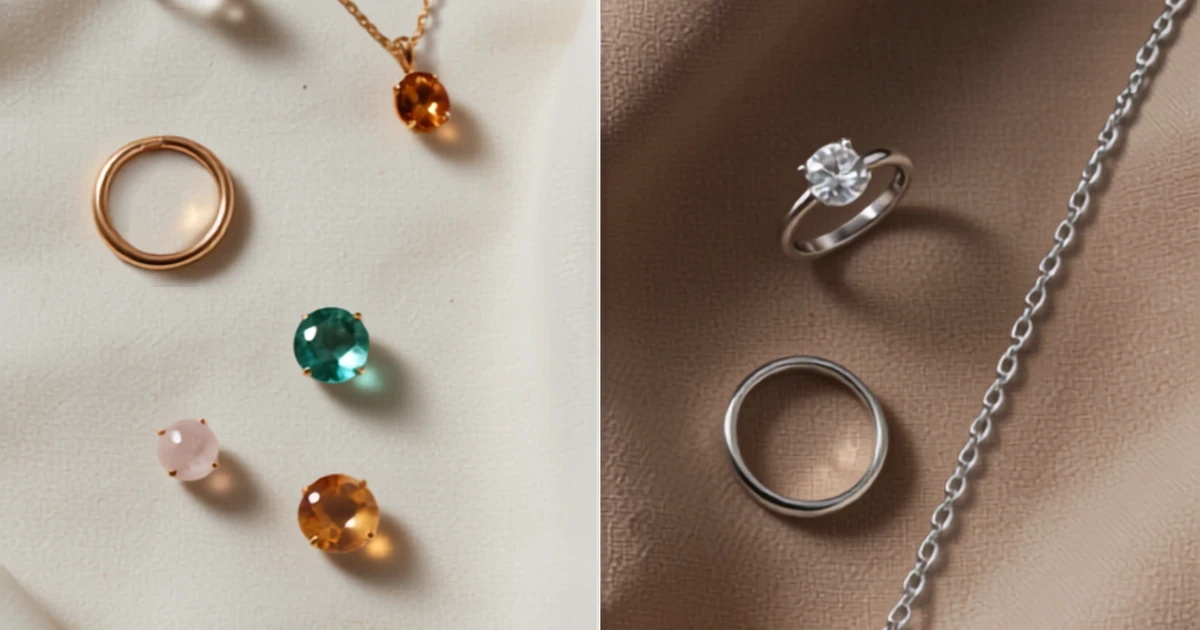
- Jewellery test: If silver flatters you, you are cool (Summer/Winter). If gold flatters you, you are warm (Spring/Autumn).
- Contrast test: A black-and-white photo shows whether your contrast is high (Winter), medium (Autumn/Spring) or low (Summer).
The full guide, including how to tell the types apart, is in Which colour type am I? — there you will also find the paths to the four detailed guides.
The hair colours for each colour type
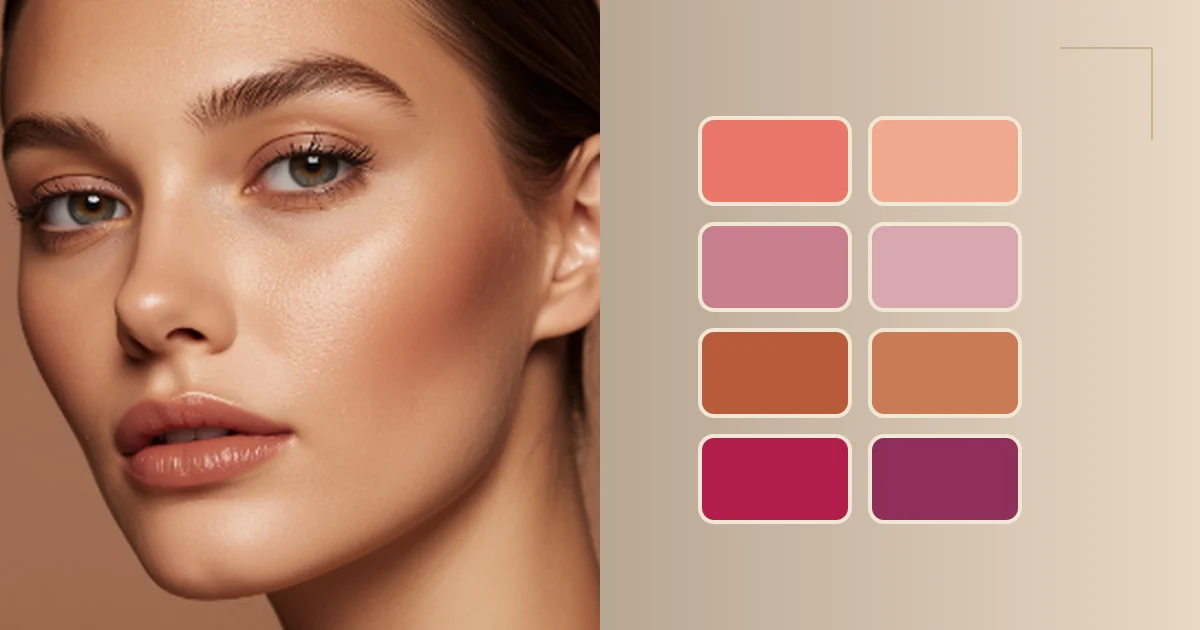
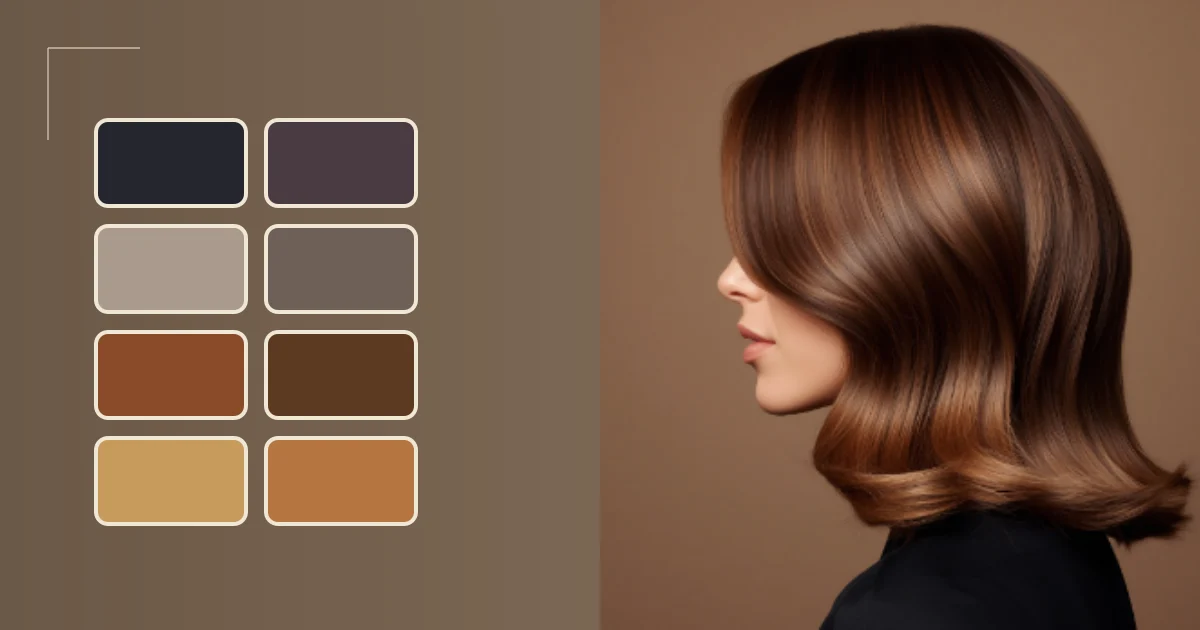
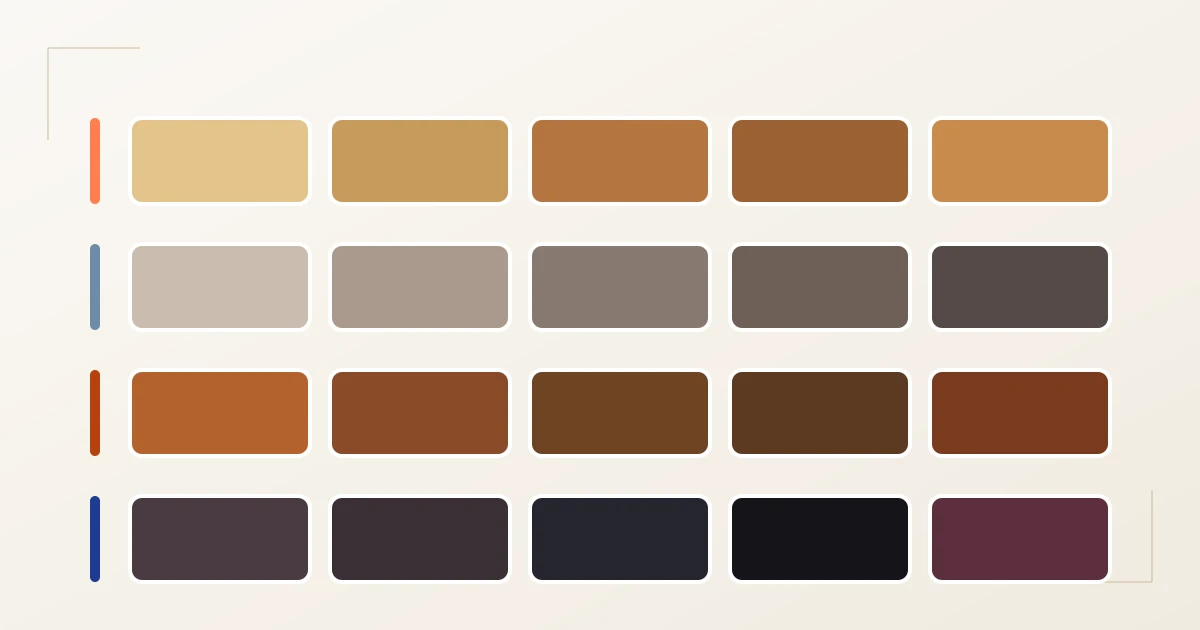
Each colour type has a range of hair colours that support its natural colouring. The image shows the four palettes (top to bottom: Spring, Summer, Autumn, Winter).
Summer type: ashy and cool
The Summer type suits cool, ashy tones without a gold component: ash blonde, medium ash blonde, ash brown and cool light brown. Red tones only work with a bluish base, such as mahogany or a cool bordeaux. Golden, coppery and honey-coloured shades are to be avoided — they make the delicate complexion look yellowish. Very dark black is also usually too harsh for the low Summer contrast.
Winter type: cool and deep
The Winter type suits cool, deep tones: dark brown with an ash component, blue-black, cool espresso and, as an accent, a cool bordeaux or aubergine. It is the only type that true black genuinely suits, because its high contrast carries it. Warm caramel and honey tones, by contrast, quickly look out of place on it.
Autumn type: warm and rich
The Autumn type suits warm, earthy tones: copper, auburn, chestnut, warm chocolate brown, henna and golden caramel. It is the type that red tones suit most naturally. Ashy and platinum-blonde shades, on the other hand, strip away its warmth and make it look sallow.
Spring type: warm and light
The Spring type suits warm, light tones: golden blonde, honey blonde, strawberry blonde, warm light brown and light caramel. Very dark colours overshadow its light, fresh radiance; ashy tones look grey and lifeless on it.
Overview: which tone for which type
| Colour type | Undertone | Best hair colours | To avoid |
|---|---|---|---|
| Spring | Warm, light | Golden blonde, honey blonde, strawberry blonde, warm light brown | Ash tones, black, very dark brown |
| Summer | Cool, light–medium | Ash blonde, ash brown, cool light brown, mahogany | Gold, copper, honey, harsh black |
| Autumn | Warm, medium–deep | Copper, auburn, chestnut, warm chocolate brown | Ash tones, platinum blonde, blue-black |
| Winter | Cool, deep | Cool dark brown, blue-black, espresso, bordeaux | Gold, caramel, honey, warm red |
The 2-level rule
The 2-level rule is the most practical guardrail when colouring: stay no more than two lightness levels away from your natural hair colour. Within this range, the contrast between skin and hair stays in the ratio your face is used to — the colour looks like “yours”, only better.
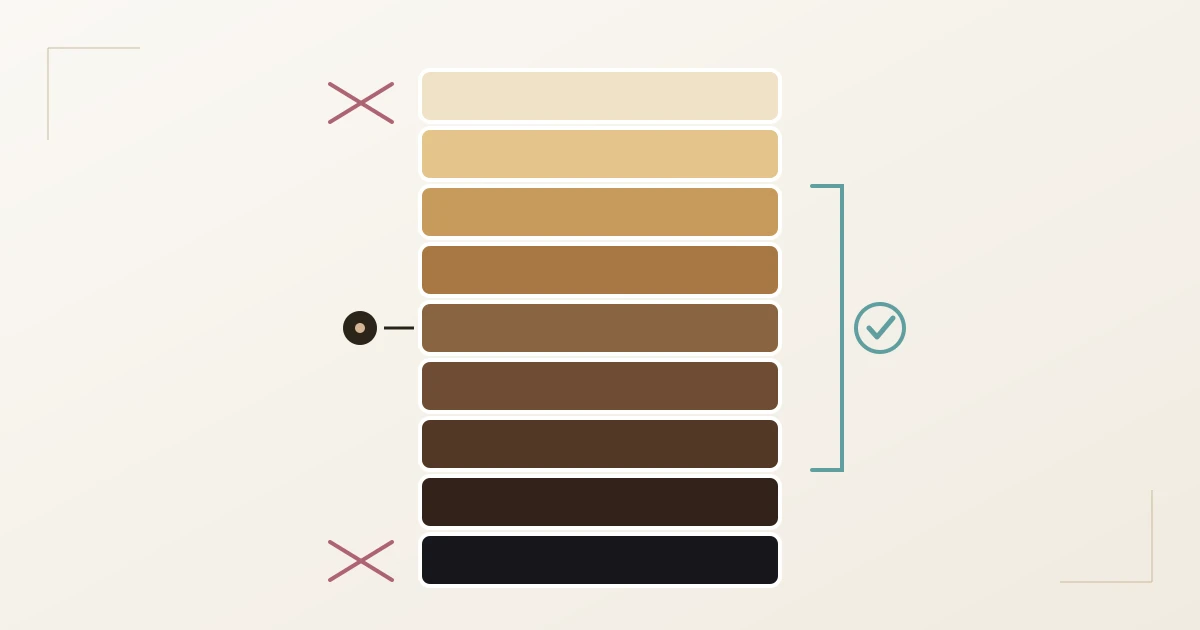
Why this works: your natural hair colour has been attuned to your skin over years — it creates exactly the contrast that makes your face look balanced. If you lighten by four or five levels, you cancel out that relationship; the face loses definition, the eye area looks flatter. If you darken heavily, you create a contrast that a low-contrast type cannot carry — the hair then dominates the face.
The rule applies to the base colour. Highlights and balayage may go beyond it, because they do not sit across the whole area around the face: a Summer type can keep their base colour at ash brown and set fine, cool highlights two to three levels lighter. What matters is what arrives directly at the face.
Contrast: the overlooked factor
Contrast is the distance between your skin colour and your hair colour — and it helps decide how much attention your hair draws. It is the reason the same colour looks completely different on two people with the same undertone.
- High contrast (light skin, dark hair — typically Winter): carries clear, deep colours. A very light colouring robs it of its presence.
- Medium contrast (typically Autumn and Spring): carries medium depths and thrives on nuance and tonal gradation such as balayage.
- Low contrast (everything sits close together — typically Summer): needs soft transitions. Harsh contrasts like black or platinum blonde quickly look like a mask.
Your right hair colour in 5 steps
- Clarify the undertone: the vein and jewellery tests decide between warm and cool. That sets the colour family.
- Determine the natural level: look at your roots in daylight — that is your true starting depth, not the coloured lengths.
- Assess the contrast: a black-and-white selfie shows instantly whether skin and hair sit close together or are strongly set apart.
- Choose the target tone: combine the three values — the right temperature, no more than two levels of distance, matching contrast. That yields a small, reliable selection.
- Test rather than jump: start with a tint or fine highlights in the target direction before you change the base colour permanently.
The salon briefing: what you should really say
A photo alone is rarely enough, because light, camera and the starting hair distort the result. More reliable is a short description in the language colourists use:
“I have a cool undertone and don’t want any golden reflects. My natural level is around medium blonde; I’d like to go at most two levels darker and an ashy tone — and I want my root line to stay soft.”
Three pieces of information are enough: undertone (warm or cool, plus the reflects you don’t want), depth (your natural level and how far you want to deviate from it) and contrast (softly blended or clearly set apart). If you also show a photo, say what you like about it — the lightness, the tone or the technique. That prevents the most common disappointment: a result that resembles the photo but doesn’t suit your colouring.
Going grey: what changes — and what doesn’t
As you go grey, it is not your temperature that changes but your depth and your contrast. The undertone of your skin stays stable for life: a cool Summer type stays cool, a warm Autumn type stays warm. What shifts is the lightness of the hair — and with it the distance to the skin.
In practice this means: many people become lower in contrast with grey hair, because the hair becomes lighter and moves closer to the skin. This is exactly why very dark re-colourings often look harsh with increasing age — they restore a contrast the face no longer carries. Two approaches work well: choose the base colour one level lighter than before, or deliberately embrace the grey as its own colour — for cool types with a silver shampoo against yellowing, for warm types with a warm, soft golden shimmer instead of a cold silver tone.
The 5 most common mistakes
- Colouring by trend alone. A cool platinum trend on a warm Autumn type stays a misstep, no matter how current it is.
- Ignoring the depth. Right temperature, wrong lightness — that is the most common cause of “somehow it doesn’t quite work”.
- Too many levels at once. Lightening by four levels changes not just the colour but the whole effect on the face.
- Going by the photo instead of the starting colour. The same colouring yields different results on different natural hair.
- Forgetting the roots. The greater the distance from the natural colour, the more visible and maintenance-heavy the roots — one more reason for the 2-level rule.
Hair colour vs. haircut: two different questions
Hair colour and haircut follow different systems. The colour depends on your colour type — that is, on undertone, depth and contrast. The cut depends on your body line and facial structure, that is, on your Kibbe type.
This is more than a subtlety: two women can share the same Summer type and both look good in ash brown — but one needs a soft, layered cut, the other a clean, geometric line. Which cut suits you is covered in the guide Hairstyles by Kibbe type. How colour and form generally interact is explained in Combining colour type & Kibbe type.
Anyone who knows both systems makes two separate, clear decisions at the salon — colour by colour type, cut by line — instead of one vague overall decision by feel. The approach goes back to the classic colour theory that Johannes Itten systematised at the Bauhaus and which was later developed into the four-seasons colour analysis.
Unsure which colour type you are — and which hair colour really suits you? A professional colour and style consultation clarifies undertone, depth and contrast in a single appointment.
To the colour & style consultation →Frequently asked questions (FAQ)
Which hair colour suits my colour type?
The Spring type suits golden and honey-coloured blonde tones, the Summer type ashy blonde and brown tones, the Autumn type copper, auburn and warm chocolate tones, the Winter type cool dark brown through to blue-black. Alongside temperature, depth is also decisive: the colour should deviate no more than two lightness levels from your natural hair colour.
How do I know whether I need warm or cool hair colours?
The jewellery test is the quickest way: hold gold and silver up to your face. If gold flatters you, you need warm hair colours with a gold, copper or red component. If silver flatters you, you need cool, ashy tones. The vein test confirms the result: greenish veins indicate warm, bluish ones cool.
What is the 2-level rule when colouring hair?
The 2-level rule says that your hair colour should deviate no more than two lightness levels from your natural hair colour. Within this range, the contrast between skin and hair that your face is used to is preserved. For highlights and balayage the distance may be greater, because they do not sit across the whole area around the face.
Can a Summer type go blonde?
Yes, but only in cool, ashy shades without a gold component — such as ash blonde or medium ash blonde. Golden and honey-coloured blonde tones make the cool Summer complexion look yellowish. Very light platinum blonde only works if the natural level is already light anyway, otherwise the distance to the natural colour becomes too great.
Which hair colour suits the Winter type?
The Winter type suits cool, deep hair colours: dark brown with an ash component, blue-black, cool espresso, plus bordeaux or aubergine as an accent. It is the only colour type that true black genuinely suits, because its high natural contrast carries it. Warm caramel and honey tones, by contrast, look out of place on it.
Do red tones suit the Autumn type?
Yes — the Autumn type is the colour type that red tones suit most naturally. Copper, auburn, chestnut and henna underline its warm, golden undertone. What matters is that the red tone stays warm: cool, bluish-based red tones such as cold bordeaux suit the Winter or Summer type better.
Does my colour type change if I dye my hair?
No. The colour type is based on the undertone of your skin, which stays stable for life. Coloured hair changes only one of three factors — which is why an unsuitable colouring can disrupt the overall effect without changing the underlying colour type. So your clothing palette stays the same.
What do I do when I go grey?
As you go grey, the depth and with it the contrast change, not the temperature — a cool type stays cool. In practice it works well to choose the base colour one level lighter than before, because very dark re-colourings look harsh as the grey proportion increases. Alternatively, you can care for the grey as its own colour: cool types with a silver shampoo, warm types with a soft golden shimmer.
How do I tell my hairdresser which hair colour I want?
Give three pieces of information instead of just a photo: the undertone (warm or cool, including the reflects you don’t want), the depth (your natural level and how far you want to deviate) and the desired contrast (softly blended or clearly set apart). If you show a photo, explain what you like about it — the lightness, the tone or the technique.
Does the colour type also determine my haircut?
No. The colour type determines the hair colour; the haircut depends on your body line and facial structure — in the Kibbe system, on your type. So two women with the same colour type may need the same hair colour and completely different cuts. Colour and form are two independent decisions.
Sources & further reading: Johannes Itten — colour theory · Color analysis (art).