
TL;DR — Kibbe hairstyles at a glance
- Your Kibbe hairstyle is guided by the Yin-Yang balance of your whole body — bone structure, scale and body line — not by your face shape alone. That is the key difference from any classic "hairstyle by face shape" guide.
- Three layers decide it: volume (how much fullness), texture (sleek to curly) and line (sharp-blunt to soft-round). If even one of them is off for your type, the whole hairstyle looks unbalanced — even with a flawless cut.
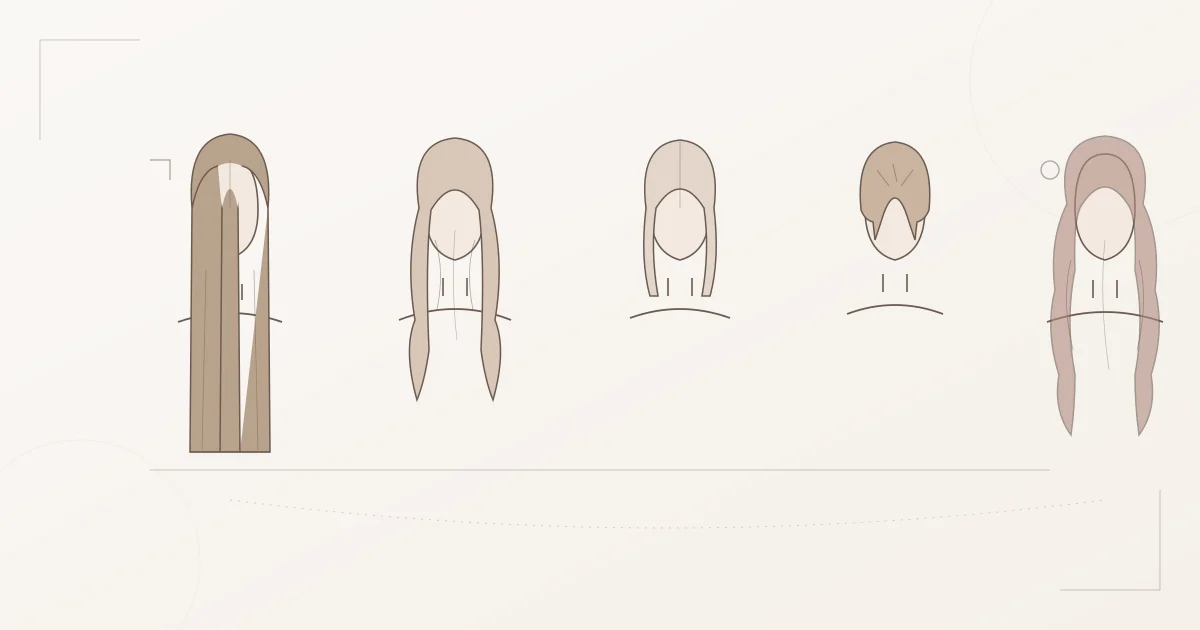
- Yang types (Dramatic) wear long, sleek, unbroken lines. Yin types (Romantic) wear soft, round, voluminous waves. Natural needs texture and undone looks, Classic needs symmetry and moderation, Gamine needs short, high-contrast cuts.
- The most common mistake: choosing your hairstyle by your face and ignoring scale. Hair volume has to match your bone size — not your height.
- If you don't know your type yet, the Kibbe quiz on this page or a professional Kibbe analysis will help.
Kibbe hairstyles: A Kibbe hairstyle is the choice of cut, volume and texture matched to the natural Yin-Yang balance of one of the 13 Kibbe types. Instead of building the hairstyle around your face shape, the Kibbe approach follows the overall line of the body — from the crown of the head down to the shoulders as one continuous silhouette. The goal is coherence: hair and body should read as one harmonious image, not as two separate elements.
Contents
- The core principle: why Kibbe beats face shape
- The three hair layers — volume, texture, line
- Yin & Yang in hair — the base table
- The Dramatic family: Dramatic & Soft Dramatic
- The Natural family: Flamboyant Natural, Natural & Soft Natural
- The Classic family: Dramatic Classic, Classic & Soft Classic
- The Gamine family: Flamboyant Gamine, Gamine & Soft Gamine
- The Romantic family: Theatrical Romantic & Romantic
- The 3 most common Kibbe hairstyle mistakes
- Step by step: finding your Kibbe hairstyle
- Hairstyle, hair color & where Kibbe stops
- FAQ — Common questions about Kibbe hairstyles
The core principle: why Kibbe beats face shape
Every classic hairstyle guide opens with the same question: "What's your face shape — oval, round, heart, square?" Kibbe never asks it. And that isn't an oversight — it's the decisive advantage.
Face shape is only one slice. It tells you nothing about your shoulder width, your bone size, your vertical line, or whether your body reads as sharp-and-straight or soft-and-round overall. But a hairstyle doesn't sit in isolation on a face — it's the top segment of a continuous line that runs from the crown over jaw and neck down to the shoulders. When that line breaks, the prettiest face-shape rule won't save it.
This is exactly where David Kibbe comes in. His system, first laid out in Metamorphosis in 1987, doesn't assess individual body parts but the Image Identity — the harmonious overall effect of body, face and presence. Hair is part of that overall effect. A Dramatic with soft, romantic curls doesn't look more feminine — she looks as though the hairstyle belongs to a different person. A Romantic with a sharp, geometric blunt bob doesn't look sharper — the round body line and the angular cut visibly fight each other.
"Hair is the frame of the picture, not the picture itself. It has to follow the line of the whole person — not just the shape of the face." — Core idea of the Kibbe method, after David Kibbe, Metamorphosis (1987)
That doesn't mean face shape is irrelevant. It feeds into the Kibbe diagnosis — as one of several factors. But it's never the sole measure. Look only at the face and you optimize a cropped detail while missing the whole picture. Work the Kibbe way and you do the opposite: the whole picture first, then the details.
The three hair layers — volume, texture, line
Before we get to the individual types, you need a tool for evaluating any hairstyle. In the Kibbe system every outfit is checked on three layers — silhouette, line, fabric. The same principle applies to hair, with three layers of its own: volume, texture and line. If even one of them is off for your type, the overall picture suffers.
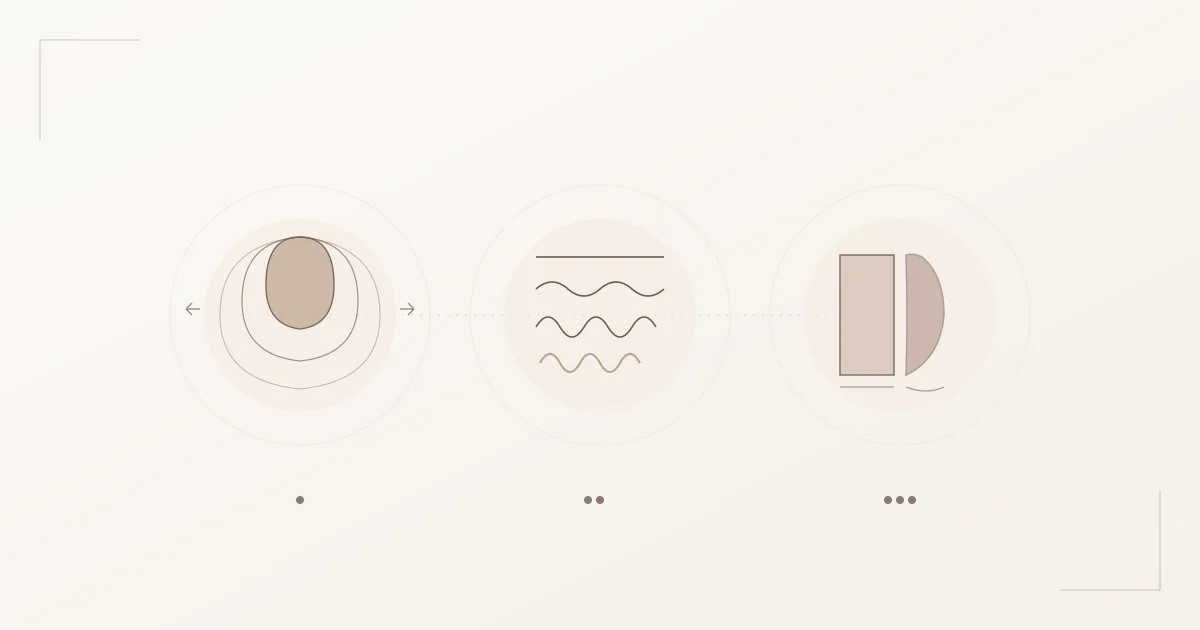
Layer 1: Volume — and the scaling principle
Volume is the fullness of your hairstyle — how far it stands out from the head and how much space it takes up. The most common misconception is: "Tall women need lots of volume, petite women need little." That's wrong. In the Kibbe system, volume doesn't scale with your height but with your bone size. A Flamboyant Natural with large, broad bones wears big texture and fullness, because dainty hairstyles look lost against her structure. A Soft Gamine with fine, small bones wears compact, controlled volume — a lavish mane would bury the delicate structure.
So the rule is: the volume of your hairstyle has to match the scale of your bones. Large bones can carry (and need) more; fine bones need less and more precise. Height in centimeters is secondary.
Layer 2: Texture
Texture describes the surface quality of the hair: sleek and glossy (Yang) or wavy, curly, broken up (Yin). Yang types wear their hair sleek and polished — any irregularity disturbs the clean line. Natural types need visible, organic texture — beach waves, undone waves, shag structure; too sleek looks stiff and "overstyled" on them. Yin types wear soft, round waves and curls that echo the roundness of their body line.
Layer 3: Line
Line is the contour of the cut — the shape the hairstyle draws at its edges. A sharp, straight line comes from blunt cuts, straight bangs, geometric bobs and precise edges (Yang). A soft, round line comes from layered ends, sweeping waves, wispy contours and curves (Yin). In hairstyling, line is what silhouette is in clothing: the most important of the three layers. A wrong cut outline can't be rescued by any styling.
Remember
Volume follows bone size. Texture follows the Yin-Yang ratio. Line follows the sharpness of your body contour. Get all three layers right and you get a hairstyle that doesn't just look "well cut" but coherent.
Yin & Yang in hair — the base table
Before you read your type in detail, a rough map helps. This table shows how pure Yang and pure Yin differ in hair. Most types sit somewhere in between — but the poles make the direction clear.
| Hair trait | Yang (sharp / straight) | Yin (soft / round) |
|---|---|---|
| Line | Blunt, straight, geometric | Layered, sweeping, round |
| Texture | Sleek, glossy, polished | Wavy, curly, lush |
| Length (tendency) | Very long or very short | Medium, falling to accent curves |
| Bangs / fringe | Straight blunt bangs, micro-fringe | Soft curtain bangs, wispy fringe |
| Overall impression | Clean, powerful, controlled | Soft, sensual, in motion |
Note: Natural types are a special case. Their Yang isn't sharp but broad and relaxed — which is why they wear neither the polished sleekness of the Dramatic nor the round curls of the Romantic, but broken-up, organic texture. More on that in a moment.
The Dramatic family: Dramatic & Soft Dramatic
The Dramatic family is the most Yang-dominant in the Kibbe system. Sharp, vertically emphasized bones, big presence, clean lines. The hair has to take up that power — not soften it.
Dramatic (D)
The Dramatic is pure Yang. Her hairstyle follows a long, sleek, unbroken line. Anything that interrupts that verticality — lots of soft layers, fluffy volume, playful little curls — weakens the effect.
- Works: Very long, sleek hair with blunt ends; a sharp geometric bob; slick-back looks; a strict center part; precise straight bangs
- Texture: Sleek and polished; if there's a wave, make it big, smooth and controlled — never frizzy or finely crimped
- Avoid: Soft layered cuts, undone curtain bangs, voluminous natural curls, playful short crops
Soft Dramatic (SD)
The Soft Dramatic carries the Dramatic's Yang foundation — with a lush Yin overlay. Large bones, but soft, sensual fullness. Her hair may and should be dramatic and glamorous: long, big, with polished Old-Hollywood waves.
- Works: Long, glamorous waves with shine and volume; opulent blowouts; long manes with movement
- Texture: Big, soft, polished waves — lush, but never frizzy or finely crimped
- Avoid: Short choppy crops; fine, understated cuts; anything minimalist that shrinks the big presence
| Dramatic family — what works | Dramatic family — what doesn't |
|---|---|
| Long sleek hair, blunt ends | Soft, fluffy layered bob |
| Sharp geometric bob (D) | Playful natural curls with lots of movement |
| Big Old-Hollywood waves (SD) | Short, choppy pixie |
| Strict center part, high shine | Frizzy-fine, small-scale texture |
The Natural family: Flamboyant Natural, Natural & Soft Natural
The Natural family stands for moderate, broad and relaxed Yang. Broad shoulders, often large bones, a grounded, effortless presence. The hair needs visible, organic texture — never the polished perfection of a Dramatic and never the round curls of a Romantic.
Flamboyant Natural (FN)
Tall, broad, with pronounced bones. The Flamboyant Natural needs big, moving texture — length with a casual, broken-up structure. Anything too precise or too small in the cut looks out of place.
- Works: Long, tousled beach waves; a shag; a wolf cut; casual long layers; undone looks with grit
- Avoid: A precise, glossy blunt bob; stiff blowout sets; anything overly controlled
Natural (True Natural, N)
More relaxed and moderate than FN. The hair should fall naturally, with simple texture — low-maintenance and easygoing.
- Works: A casual lob with soft layers; air-dried natural texture; a simple, wearable everyday cut
- Avoid: Overstyled straightening; overly elaborate sets; strict geometry
Soft Natural (SN)
The Yin representative of the Natural family: broad bones, but a softer, rounder body line. The most common mix-up: Soft Natural with Romantic. The difference is bone width. The hair should be soft and textured at the same time.
- Works: Soft, long layers; gentle waves; face-framing layers; undone-but-feminine
- Avoid: Sharp blunt edges; strict symmetry; stiff structure
The Natural type is the only one who looks worse with a "perfectly set" cut. Her beauty lives on deliberate imperfection — the texture that looks as though it just fell that way on its own.
The Classic family: Dramatic Classic, Classic & Soft Classic
Classic types are the most balanced of all the Kibbe families — near-perfect Yin-Yang balance. The hair mirrors that: symmetry, moderation, groomed elegance. Extremes in either direction — too short, too wild, too opulent — look out of place on a Classic.
Dramatic Classic (DC)
Balance with a Yang accent. The Dramatic Classic can carry a little more sharpness and precision than a True Classic — but not the full Dramatic spectrum.
- Works: A polished, symmetrical bob or lob; a clean, groomed line with a touch of sharpness; controlled shine
- Avoid: A messy shag; extreme volume; wild undone textures
Classic (True Classic, C)
Perfect 50/50 balance. Everything has to be symmetrical, moderate and calm. The classic, timeless cut — nothing extreme in length, texture or shape.
- Works: A timeless bob; shoulder-length hair with gentle movement; groomed, symmetrical cuts
- Avoid: A very short pixie or very long, wild hair; any kind of extreme
Soft Classic (SC)
Balance with a Yin accent. The Soft Classic can carry softer, more feminine details than the True Classic — but not the full Romantic spectrum.
- Works: Soft, symmetrical waves; a gently layered lob; feminine, groomed movement
- Avoid: Hard blunt edges; heavy, strict structure; powerful geometry
The Gamine family: Flamboyant Gamine, Gamine & Soft Gamine
Gamine types are the most compact and highest-contrast segment in the Kibbe system. Small to moderate size, fine bones, but a strong Yin-Yang contrast. The hair should pick up that contrast — short to medium length, with play between sharp and soft. Long, uniform manes bury the compact structure.
Flamboyant Gamine (FG)
Yang-dominant, compact, with sharp features. The Flamboyant Gamine wears bold, short, geometric cuts.
- Works: A sharp pixie; a geometric short bob; an undercut; blunt micro-bangs; high-contrast crops
- Avoid: Long, soft, romantic hair; uniform long waves
Gamine (True Gamine, G)
Perfect Yin-Yang contrast in a compact body. The recipe: contrast within the cut itself — sharp and soft in the same look.
- Works: A textured pixie; a choppy bob; short cuts that mix sharp edges with soft movement
- Avoid: Long, uniformly sleek or uniformly curly lengths with no contrast
Soft Gamine (SG)
Yin-dominant, compact, with fine bones. The Soft Gamine keeps the Gamine contrast but expresses it more softly: sweet, compact, with defined movement.
- Works: A sweet, soft pixie; a chin-length bob with waves; short curled styles; wispy bangs
- Avoid: Long, strict, sleek hair; oversized volume that crushes the delicate structure
| Type | Hairstyle motto | The one typical mistake |
|---|---|---|
| Flamboyant Gamine | Bold, short, geometric | Long soft mane |
| Gamine | Contrast: sharp + soft | Uniform length with no play |
| Soft Gamine | Sweet, compact, defined | Strict, long sleekness |
The Romantic family: Theatrical Romantic & Romantic
The Romantic family is the counterpole to the Dramatic family — pure Yin. Soft, round, curvy, lush. This refers to the quality of the lines, not to body mass: a slim woman can be Romantic too, as long as her bones and body line are soft and round. The hair has to follow that roundness.
Theatrical Romantic (TR)
Yin-dominant — with a sharp Yang accent, usually through expressive facial features. The Theatrical Romantic needs soft, lush hair with one precise detail. Purely round looks unfinished; a sharp accent gives it the energy it needs.
- Works: Lush waves or curls with one defined element — a clean part, a polished section, precise bangs
- Avoid: Completely undefined softness with no accent; but also hard, continuous geometry
Romantic (R)
Pure Yin — the softest, roundest energy in the system. Every line has to be flowing, sweeping and voluminous. The most common error: Romantics reach for straight, "slimming" cuts — and work against their natural line in the process.
- Works: Soft, round waves and curls; voluminous, rounded lengths; layered, sweeping contours
- Avoid: Blunt geometric cuts; strict sleekness; sharp asymmetry; hard edges of any kind
The 3 most common Kibbe hairstyle mistakes
These are the three mistakes I see most often in my consulting work. They cut across types — a Dramatic makes them as easily as a Romantic.
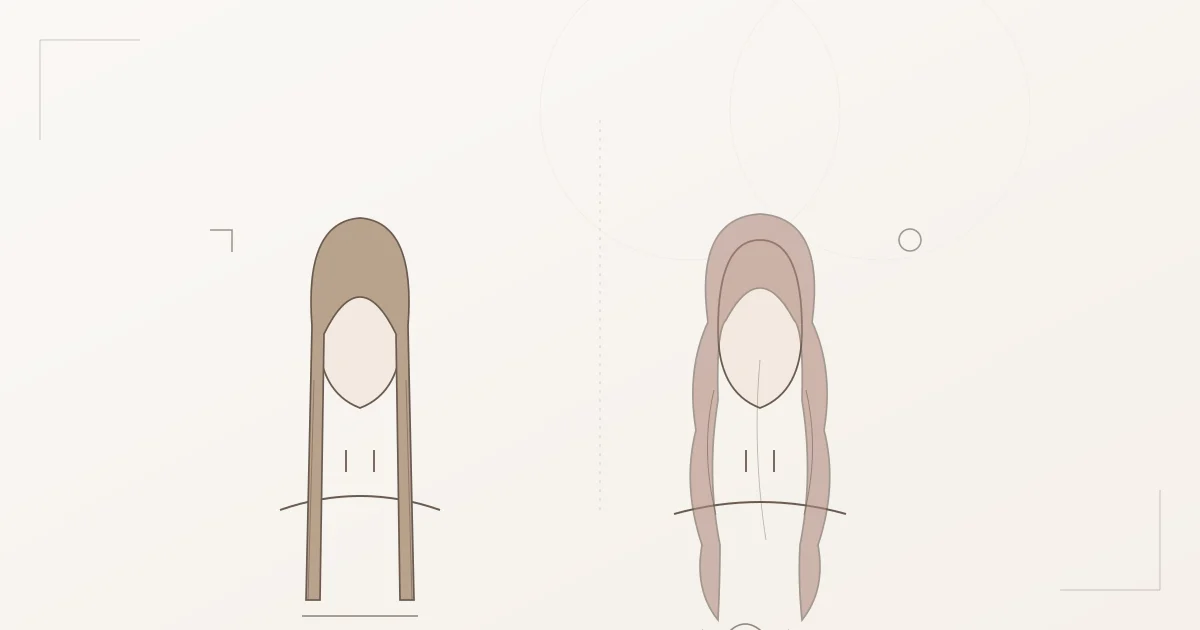
Mistake 1: Choosing by face shape instead of body line
This is the mother of all hairstyle mistakes. You read "oval face — everything suits you" or "round face — add volume on top" and choose accordingly. The result ignores your shoulders, your bone size and your overall line. A hairstyle that suits the face in isolation can still work against the body. Kibbe reverses the order: the body line first, then the face as fine-tuning.
Mistake 2: Scaling the volume wrong
The second most common mistake: lots of volume because you're tall — or little because you're petite. The right question isn't "How tall am I?" but "How big are my bones?" A delicate Soft Gamine with a lavish lion's mane disappears under the hair. A large-boned Flamboyant Natural with a flat, precise bob looks as though she ordered the wrong size. Volume scales with bone size, not with height.
Mistake 3: Working against your natural texture
If you spend 40 minutes every morning fighting your natural texture, you usually have the wrong cut — not the wrong hair. A Natural type with wavy hair who blow-dries it straight every day loses exactly the texture that carries her type. A Dramatic with straight hair who forces it into curls breaks her clean line. The smartest Kibbe hairstyle works with your natural texture — not against it. That saves time and looks better.
Step by step: finding your Kibbe hairstyle
These five steps take you from your type to a concrete hairstyle decision — even with no prior knowledge.
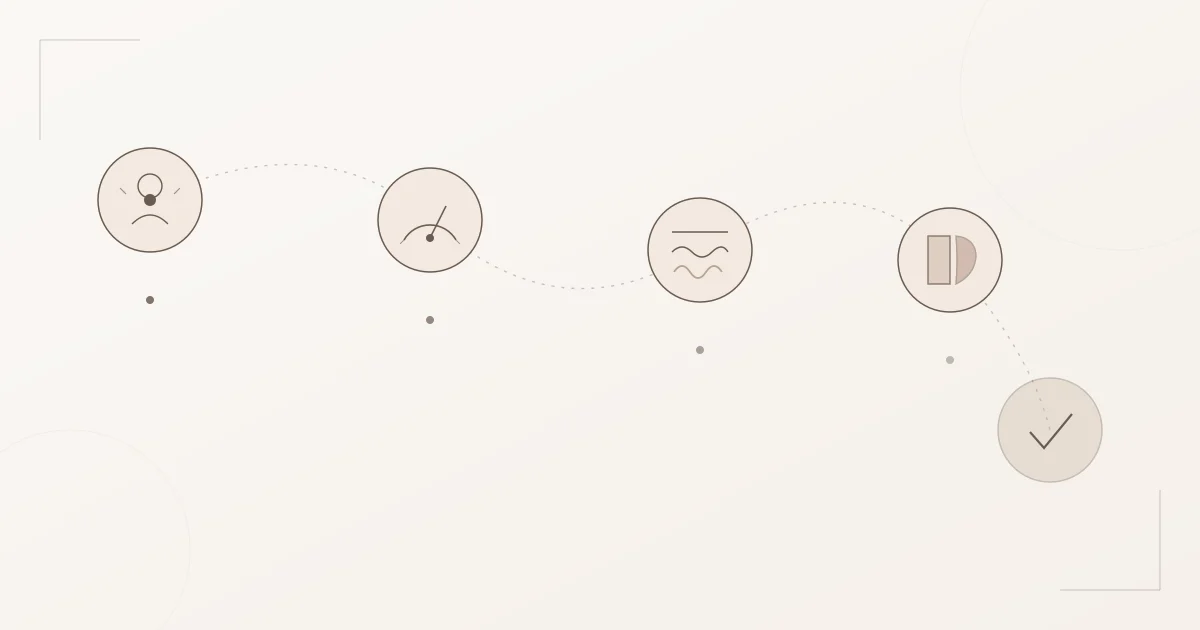
- Determine your Kibbe type. No type, no Kibbe hairstyle. Use the Kibbe quiz for an initial direction or the professional analysis for a confirmed result. If you're torn between two types, read both hairstyle profiles above and pay attention to the bone line.
- Read your scale. Look at your wrists, ankles and collarbones. Large, broad bones mean: more volume and bigger texture. Fine, small bones mean: more compact, more precise volume. This sets the fullness of your hairstyle.
- Check your natural texture — the wet test. Wash your hair and let it air-dry with no product and no blow-dryer. What you see then is your real texture. A type-compatible hairstyle builds on that texture — not on the one you force with heat every morning.
- Choose your line. Yang types choose a sharp, clean contour (blunt, geometric). Yin types choose a soft, round contour (layered, sweeping). Natural chooses broken-up texture, Classic chooses symmetry, Gamine chooses contrast.
- Check it in a full-length mirror — not in a selfie. The decisive step almost everyone skips. Never judge a new hairstyle by the face crop alone, always at full length, with your shoulders in frame. Only then can you see whether the line runs through or breaks.
Take the analysis to your hairdresser
A professional Kibbe analysis gives you your exact rulebook — for clothing and hair. You get a personal style dossier as a PDF that you can take straight into the conversation with your hairdresser. No more "just something short," but a clear, well-reasoned direction.
The Kibbe analysis with style dossier costs €150. Free intro call via WhatsApp — 30 minutes, no obligation.
Hairstyle, hair color & where Kibbe stops
An important point that often gets muddled: Kibbe determines the cut — not the color. Volume, texture and line follow your Kibbe type. Which hair color suits you is a question of color analysis and depends on your skin undertone, your contrast and your natural depth of color.
The two systems complement each other but work on different levels. A Dramatic with high natural contrast often wears clear, cool, saturated tones — but that's decided by the color analysis, not the Kibbe type. Conversely, Kibbe tells you nothing about whether ash or golden blonde suits you better. Combine the two and you get the full picture: the right cut in the right color. Not sure which consultation makes sense for you first? The comparison color analysis vs. style consultation gives you a clear way to decide.
And if you want to understand the principle behind all of this — why Yin and Yang govern your entire appearance — the complete guide to all 13 Kibbe types lays the foundation. For how the same principle carries over to cuts and silhouettes, see the Kibbe clothing guide.
Volume at the right height changes the perceived face shape more than any accessory. Which one you have is settled with four measurements in what face shape do I have.
FAQ — Common questions about Kibbe hairstyles
What is a Kibbe hairstyle?
A Kibbe hairstyle is a cut whose volume, texture and line match the Yin-Yang balance of your Kibbe type. Instead of building around your face shape, it follows the overall line of your body from the crown to the shoulders. The goal is a coherent whole rather than a cut that's "pretty" in isolation.
Does face shape really not matter in Kibbe?
It matters, but it isn't decisive on its own. Face shape feeds into the Kibbe diagnosis as one of several factors. The difference: classic guides make face shape the sole measure, while Kibbe looks at it in the context of bone structure, scale and body line. That's why Kibbe reaches more reliable results.
Which hairstyle suits a Dramatic type?
A Dramatic wears long, sleek, unbroken lines: very long hair with blunt ends, a sharp geometric bob or a slick-back look. The texture stays sleek and polished. Soft layers, fluffy volume and playful curls weaken the clean Yang line and should be avoided.
Which hairstyle suits a Romantic type?
A Romantic wears soft, round, voluminous waves and curls with sweeping contours. Every line should flow rather than break. Blunt geometric cuts, strict sleekness and sharp edges work against the round Yin body line and therefore look wrong — even when the cut is technically well executed.
Can a Romantic wear short hair?
Yes, but the shortness has to stay soft. A Romantic with a short cut needs round, curled or wavy texture and soft contours — not a sharp, geometric crop. Length is secondary; what matters is that the line stays round and soft rather than turning angular.
Do bangs (fringe) suit my Kibbe type?
That depends on the kind of bangs. Yang types wear straight, precise blunt bangs or micro-fringes. Yin types wear soft curtain bangs and wispy fringe. A Natural type wears a broken-up, textured fringe. So the question is never "bangs or no bangs?" but "which bang line matches my body line?"
How much volume should my hairstyle have?
Volume is set by your bone size, not your height. Large, broad bones carry more volume and bigger texture; fine, small bones carry more compact, more precise volume. Check your wrists and collarbones: are they large and prominent or fine and delicate? That sets the right fullness.
Does my Kibbe hairstyle change with age?
The underlying Kibbe type doesn't change, because it's based on bone structure. So your core hairstyle rules stay the same for life. What may be adjusted are length and styling in the details — but the direction of volume, texture and line stays constant over the years.
Do I have to cut my hair short if I'm a Gamine?
Short to medium length suits Gamine types best, because long, uniform lengths bury their compact, high-contrast structure. But a short cut isn't mandatory. More important than pure length is contrast within the cut — sharp edges next to soft movement. A medium-length cut with clear contrast can work better than a long, uniform mane.
Does Kibbe also determine my hair color?
No. Kibbe determines cut, volume, texture and line — the shape of your hairstyle. Which hair color suits you is settled by color analysis based on skin undertone, contrast and natural depth of color. The two systems complement each other: Kibbe says which cut you wear, the color analysis says in which color.
Can I determine my Kibbe type from my hair alone?
No. Hair is an output of the Kibbe diagnosis, not its starting point. The type is determined by bone structure, body flesh, proportions and facial features working together. Only once the type is set do the matching hairstyle rules follow from it — never the other way around.
Why does my hairstyle look different in photos than in the mirror?
Because the mirror usually shows only the face crop, while the photo shows the overall line with shoulders. That's exactly the Kibbe point: a hairstyle only reads as coherent or off in relation to the whole body. So always judge a new hairstyle in a full-body image — with shoulders visible — rather than in a tight selfie crop.
Ready for your coherent hairstyle?
Find the hairstyle that matches your line
This guide gives you the rulebook. A professional Kibbe analysis gives you your personal result — with concrete cut, volume and texture recommendations in an individual PDF you can take straight to the hairdresser. A free intro call is always included.