
TL;DR — the essentials at a glance
- Jewellery by colour type follows the undertone: warm types (Spring, Autumn) wear gold, rose gold and brass, cool types (Summer, Winter) wear silver, white gold and platinum.
- The gold-or-silver test decides in minutes: veins, a jewellery check against the face, white vs. cream, sun reaction. If gold suits you best, you are warm; if silver suits you, you are cool.
- Gemstones follow the palette: warm types wear amber, coral, turquoise and citrine; cool types wear sapphire, amethyst, clear rubies and diamond.
- Your contrast determines how bold the jewellery may be: Winter types wear large, clear statements, Summer types delicate, muted pieces.
- The jewellery scale follows your Kibbe type — dainty for Yin types, large and striking for Yang types, mixed for combined types.
Table of contents
- The short answer
- Undertone decides: gold or silver
- Metal by season
- Gemstones & stone colours by colour type
- Jewellery by colour type at a glance
- Contrast: how bold the jewellery may be
- The gold-or-silver self-test
- Jewellery scale by Kibbe type
- Mixing gold and silver
- The most common mistakes
- Jewellery that always works
- Frequently asked questions (FAQ)
The short answer
Short answer
The right jewellery depends on your undertone: warm types (Spring, Autumn) wear gold, rose gold and brass with warm stones such as amber and turquoise. Cool types (Summer, Winter) wear silver, white gold and platinum with cool stones such as sapphire and amethyst. How bold the jewellery may be is set by your contrast; the scale follows your Kibbe type.
Make-up and hair colour by colour type have long been standard — jewellery often stays the blind spot. Yet metal sits directly at the neck, ear and wrist and reinforces or breaks your undertone more strongly than any blouse. This guide closes the gap in the accessories department and complements Make-up by colour type and Hair colour by colour type. You will find the starting point on colour type itself in the guide Which colour type am I?

Undertone decides: gold or silver
The choice of metal is a question of undertone, not taste. The undertone is the base temperature of your skin — warm (golden), cool (bluish-pink) or neutral. Metal against the skin acts like a second undertone right beside the first: if the two match, the skin looks fresher; if they clash, it looks sallow or greyish.
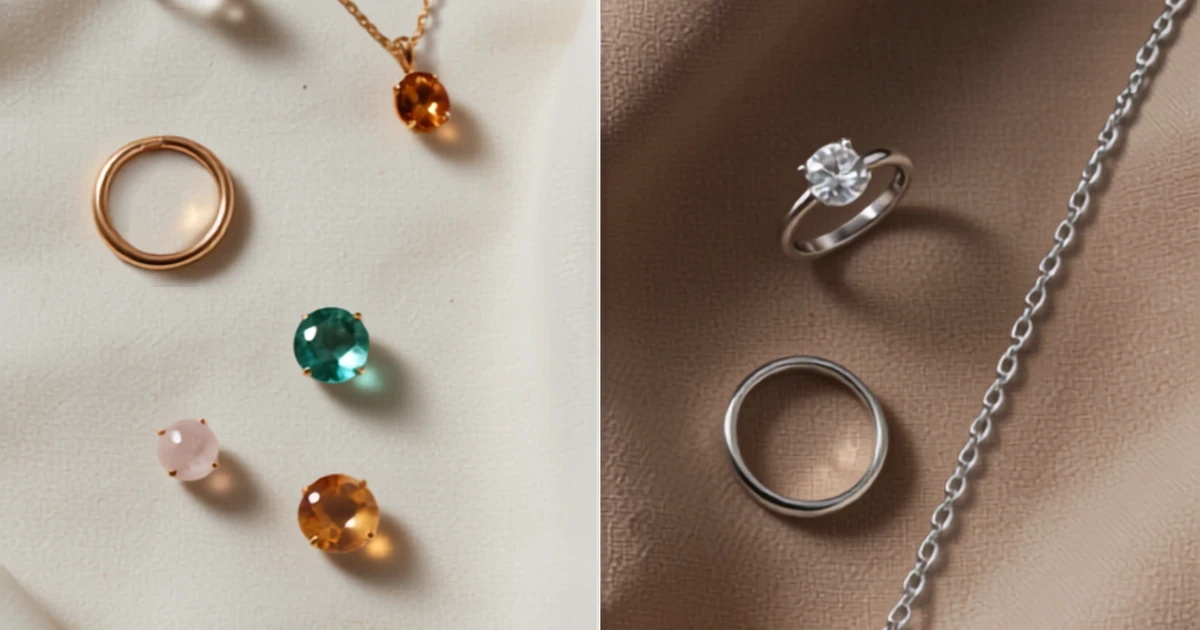
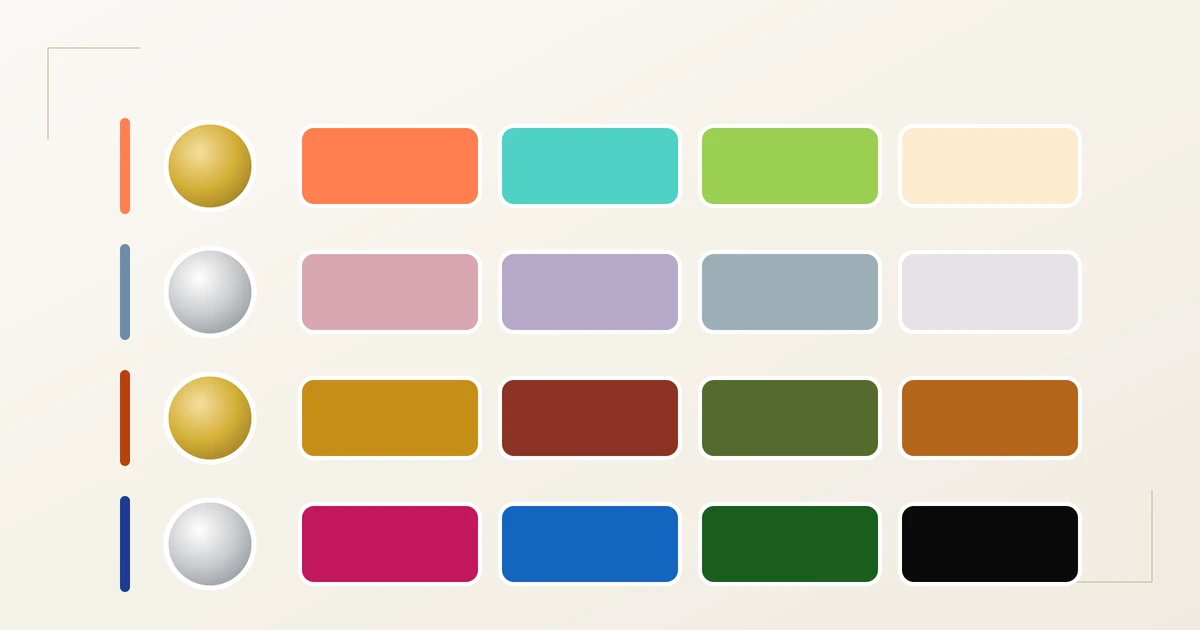
- Warm undertone = gold. Golden metals — yellow gold, rose gold, brass, bronze, copper — mirror the golden sheen of the skin and make it glow. Suited to Spring and Autumn types.
- Cool undertone = silver. Silvery metals — silver, white gold, platinum, stainless steel — pick up the cool, clear tone of the skin. Suited to Summer and Winter types.
- Neutral undertone = both. Anyone who is neither clearly warm nor clearly cool can wear gold and silver, choosing by contrast and occasion. Rose gold and a light champagne tone are especially safe bridges here.
„Gold or silver is not a question of style but of temperature. The right metal sits so close to the skin that it either confirms its undertone or gives it away.“
Rose gold is the most common borderline case. It has a warm coppery cast but looks softer than yellow gold, and so it also flatters many neutral and slightly cool types. A pure Winter type with very clear, cool skin still stays with clear silver or white gold — rose gold often looks a touch too soft on them.
Metal by season
Each of the four colour seasons has a lead metal and a fine gradation. The season is the combination of undertone, lightness and contrast — and it is precisely these three that determine which metal sits best.
Spring type: bright, clear gold
The Spring type suits warm but bright and shiny gold — yellow gold with radiance, polished rose gold, light amber. Matte, heavy antique gold looks too earthy on them. Fresh, clear and light is the keyword.
Summer type: matte silver and white gold
The Summer type suits muted, soft silver — matte silver, white gold, light rose gold as a bridge. No high-shine, no hard metal. The cool, muted palette carries delicate, soft finishes best.
Autumn type: warm gold, copper and brass
The Autumn type suits the warmest, earthiest metals: matte yellow gold, antique gold, copper, bronze and brass. This is the type whom rich, patinated gold in particular suits especially well. Clear silver looks cool and out of place on them.
Winter type: clear silver, white gold and platinum
The Winter type suits the coolest, clearest metals: high-shine silver, white gold, platinum and stainless steel. They are the only type who also carries bold, sparkling jewellery effortlessly. Warm yellow gold quickly looks yellowish and hard on them.
Gemstones & stone colours by colour type
Gemstones follow the same logic as the metal — only in colour. A stone is jewellery colour right against the body: it should come from your palette so that it enlivens the skin instead of bleaching it out. Warm types wear warm-based stones, cool types cool-based ones.
Warm types (Spring, Autumn)
Amber, citrine, carnelian, coral, warm turquoise, tiger's eye, peridot, smoky quartz and creamy pearls. Spring wears them light and clear, Autumn deep and rich. These stones have a golden or earthy core that mirrors the warm undertone.
Cool types (Summer, Winter)
Sapphire, amethyst, aquamarine, rose quartz, moonstone, clear rubies, emerald and diamond. Summer wears them soft and muted, Winter clear and radiant. Their bluish or clear core harmonises with cool skin.
Pearls are the best test: cream-white pearls with a golden sheen suit warm types, pure-white or pinkish-grey pearls with a cool shine suit cool types. The same pearl, two undertones.
The setting counts too: a warm stone looks even warmer in gold, broken in silver. If you are unsure, choose a clear, colourless stone — diamond, rock crystal or a plain pearl — and let the metal set the temperature. That keeps a piece flexible, even if your palette still shifts in the details.
Jewellery by colour type at a glance
The table sums up the lead metal, suitable stones and the typical missteps for each season.
| Colour type | Best metal | Stone colours | Better avoided |
|---|---|---|---|
| Spring | Bright yellow gold, polished rose gold | Citrine, coral, light amber, peridot | Cold silver, dark grey stones |
| Summer | Matte silver, white gold | Rose quartz, amethyst, moonstone, aquamarine | Yellow gold, copper, orange stones |
| Autumn | Matte gold, copper, bronze, brass | Amber, tiger's eye, turquoise, carnelian | Clear silver, cool blue, fuchsia |
| Winter | Clear silver, white gold, platinum | Sapphire, ruby, emerald, diamond, amethyst | Yellow gold, amber, earthy tones |
Contrast: how bold the jewellery may be
Contrast is the difference between skin, hair and eyes — and it decides how striking your jewellery may be before it outshines you. A high-contrast Winter type wears the same wide silver cuff as a statement, while it overwhelms a low-contrast Summer type.
- High contrast (Winter): wears large, clear, sparkling pieces — wide cuffs, striking stones, shiny metal. Jewellery that is too delicate disappears on them.
- Medium contrast (Autumn, Spring): wears medium, clearly visible pieces with character but without hard shine — texture and shape may speak.
- Low contrast (Summer): needs delicate, muted, matte pieces with soft transitions. Large, shiny statements look tacked on.
How to judge your contrast in seconds is shown by a black-and-white selfie — more on that in the overview Which colour type am I?
The gold-or-silver self-test
The gold-or-silver test is a series of small comparisons that reveal your undertone. No single test is infallible — the majority of the results decides. Do it in daylight by the window, without make-up and without coloured clothing in view.
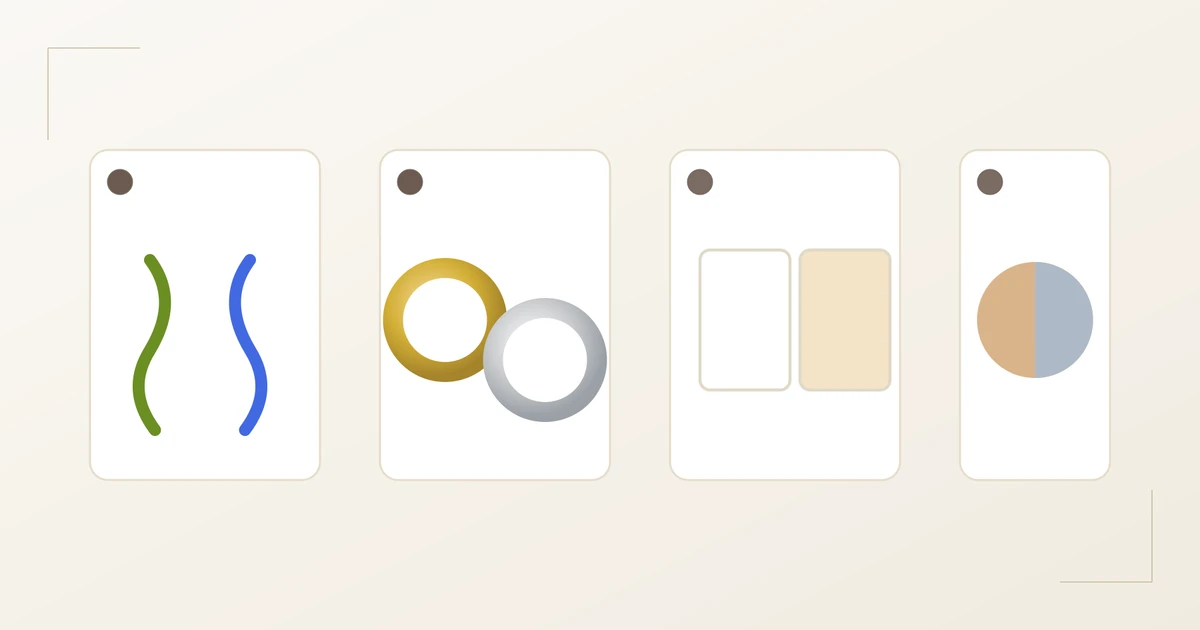
- Vein test: Turn your wrist into the daylight. If the veins look greenish, you are warm (gold). If they look bluish-violet, you are cool (silver). If they are hard to place, that points to neutral.
- Jewellery check against the face: Hold a gold piece and a silver piece in turn directly beneath your face. With which metal does the skin look fresher and more even, with which does it emphasise shadows and redness? The flattering metal reveals your undertone.
- White vs. cream: Place a pure-white and a cream-white cloth against your neck. If pure white suits you better, you are cool. If cream/ivory suits you better, you are warm.
- Sun reaction: If you quickly go golden-brown in the sun and rarely turn red, that speaks for a warm undertone. If you burn easily and turn rather pink, that speaks for cool.
Count the results: three or four times gold means warm, three or four times silver means cool. A mixed picture (two to two) points to a neutral undertone — then contrast leads the decision. The full colour type test refines the result with lightness and contrast.
Jewellery scale by Kibbe type
Colour clarifies which metal, but not how large. The jewellery scale and shape follow your overall line — in the Kibbe system, your type. The rule of thumb: the jewellery should mirror your natural scale, not work against it.
- Yin types (Gamine, Romantic, Soft Natural): daintier, finer, rounder jewellery — slim chains, small studs, soft shapes. Large, angular pieces overwhelm the delicate features.
- Yang types (Dramatic, Flamboyant Natural): large, clear, angular jewellery — long lines, wide cuffs, geometric shapes. Tiny jewellery looks lost on the striking line.
- Combined types (Theatrical Romantic, Soft Dramatic, Classic): mixed scale — a medium-sized statement with soft edges that balances sharpness and roundness.
Colour picks the metal, Kibbe picks the size. A Winter type with a Romantic line wears clear silver — but in a soft, curvy shape, not as a sharp-edged statement.
How colour and shape work together in general is explained by the guide Combining colour type & Kibbe type. In short: the colour analysis supplies the temperature, the Kibbe system the proportion.
Mixing gold and silver
Mixing metals is allowed — but not at random. Mixed metals work when one piece connects both tones (say a two-tone watch or a pendant with a gold and a silver element), so the eye sees a deliberate transition rather than an accident.
- Neutral undertones can mix freely and thereby look modern and effortless.
- Warm and cool types let their lead metal dominate (roughly 70/30) and use the other only as an accent.
- A bridge piece — a two-tone item — makes the mix deliberate and prevents the „I forgot to switch it out“ look.
Closest to the face — earrings and necklace — you stay with your lead metal when in doubt, because this area influences the undertone most strongly. At the wrist, you may mix more freely.
The most common mistakes
- Choosing metal by trend instead of undertone. Rose gold hype or not — on a clear Winter type, cool silver remains the more flattering choice.
- Ignoring the stones. An orange amber against cool skin tips the whole look, even if the setting is right.
- Wearing a size that fights your own line. Dainty jewellery disappears on a Yang line, large statements overwhelm a Yin line.
- Overlooking the level of shine. Summer types need matte metal; high shine looks hard against their muted complexion.
- Mixing everything in a jumble. Three metal tones without a bridge piece look accidental rather than intended.
- Checking only in artificial light. Only daylight shows whether metal and stones truly hit the undertone.
Jewellery that always works
A few pieces suit almost everyone — provided the metal matches the undertone. They are the jewellery version of a capsule wardrobe.
- A fine chain in your lead metal, just above the collarbone — works solo and as a layering base.
- Hoops or studs in a size that fits your own scale.
- A signature piece — a ring or bangle that hits your palette and your Kibbe scale.
- Pearls in the right undertone — creamy for warm, pure white or pinkish-grey for cool.
Once you own these four categories in the right metal, you combine them effortlessly with almost any outfit — that is the accessory complement to the colour and shape logic of the whole wardrobe.
Unsure whether gold or silver suits you — and which stones really match your palette? The free colour type test gives you the direction, and a personal colour and style consultation clarifies undertone, palette and Kibbe scale in one appointment.
Frequently asked questions (FAQ)
Does gold or silver suit me?
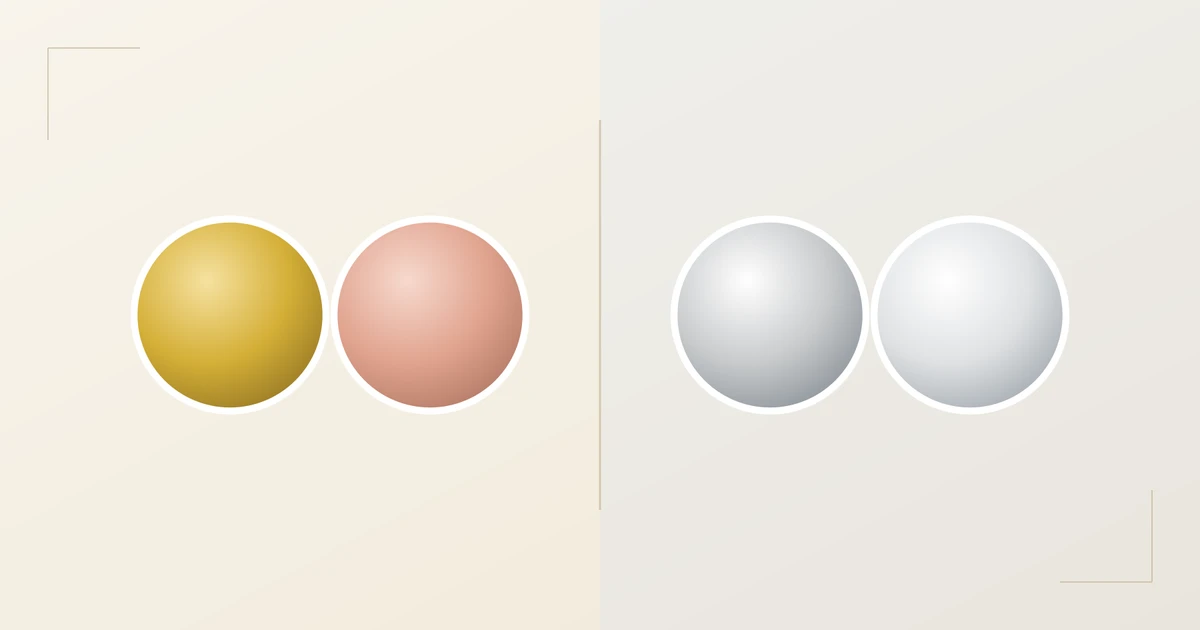
That depends on your undertone. Warm undertones (Spring, Autumn) glow in gold, cool undertones (Summer, Winter) in silver. The quickest test: hold both metals beneath your face and look, in daylight, at which one makes the skin appear fresher. Greenish veins point to gold, bluish ones to silver.
Can I mix gold and silver?
Yes. Best with a bridge piece that connects both tones — such as a two-tone watch or a pendant with a gold and a silver element. Neutral undertones mix freely; warm and cool types let their lead metal dominate and use the other only as an accent. Close to the face, stay with your lead metal when in doubt.
Which jewellery suits the Summer type?
The Summer type suits matte silver and white gold, plus light rose gold as a bridge. Among the stones, rose quartz, amethyst, moonstone and aquamarine work — soft and muted. High-shine or very large pieces look hard against the low-contrast Summer complexion; delicate, matte shapes flatter more.
Which jewellery suits the Winter type?
The Winter type suits clear, shiny silver, white gold and platinum. As the only type, they also carry large, sparkling statements effortlessly. Suitable stones are sapphire, ruby, emerald, diamond and amethyst — clear and radiant. Warm yellow gold and earthy stones look yellowish and out of place on them.
Which gemstones suit my colour type?
Warm types wear warm-based stones — amber, citrine, coral, turquoise, tiger's eye. Cool types wear cool-based stones — sapphire, amethyst, aquamarine, rose quartz, diamond. For pearls the rule is: cream-white with a golden sheen for warm, pure white or pinkish-grey for cool. The stone should enliven the skin, not bleach it out.
Does the Kibbe type affect jewellery scale?
Yes. Colour clarifies the metal, the Kibbe type the size and shape. Yin types (e.g. Romantic, Gamine) wear dainty, fine jewellery; Yang types (e.g. Dramatic) wear large, angular jewellery; combined types mix the scale. The jewellery should mirror your natural proportion, not work against it.
Does rose gold suit everyone?
Almost. Rose gold has a warm coppery cast but looks softer than yellow gold and so flatters warm, neutral and many slightly cool types. Only a pure, very cool Winter type is better off with clear silver or white gold, because rose gold looks a touch too soft on them.
Which metal suits a neutral undertone?
With a neutral undertone, both gold and silver suit you. The decision is then led by contrast and occasion: bolder, shiny pieces for high contrast, more delicate ones for low. Rose gold and a light champagne tone are especially safe bridges. You can also mix metals deliberately.
How do I find out whether I am warm or cool?
Do the gold-or-silver test: check the veins (greenish = warm, bluish = cool), hold gold and silver against your face, compare pure white with cream and observe your sun reaction. The majority of the four results decides. A two-to-two result points to a neutral undertone.
Sources & further reading: Johannes Itten — colour theory · Color analysis (art).