Last updated: August 1, 2026 · Reading time: 15 min · Author: Jola Deja
TL;DR — Styling for Short Women
- Good styling for short women isn't about looking taller — it's about looking balanced and cohesive. Proportion beats inches: a harmonious outfit always looks better than one straining to add height at any cost.
- The single strongest lever is the uninterrupted vertical line: a monochrome outfit in one color family, with no hard horizontal breaks, makes the body read longer.
- Raising the waistline (high-rise, or tucking at the waist) visually lengthens the legs — the most effective proportion trick there is.
- Many "rules" are myths: maxi dresses, oversize pieces, bold prints and flats all work — as long as the proportion is right.
- Petite is not a body line. The cuts that suit you depend on your Kibbe type — a short woman can be any of the 13 types, not automatically a Gamine.
How should short women dress to their best advantage? Short women look most cohesive when their outfit shows balanced proportions and an uninterrupted vertical line — not when it artificially tries to add height. The most effective levers are a raised waistline, a monochrome look in one color family, and garments in the right lengths. What matters is the proportion between the upper and lower body, not absolute height.
Contents
- The core principle: proportion beats height
- The strongest lever: the vertical line
- The three proportion rules
- What actually lengthens — and what shortens
- The 6 most stubborn styling myths
- Petite + Kibbe: why your type refines the rules
- Piece by piece: trousers, skirts, dresses, coats & tops
- Step by step: building your lengthening outfit
- Fit & tailoring
- Color & print for short women
- The most common mistakes
- FAQ — Frequently asked questions
The core principle: proportion beats height
Almost every guide for short women shares the same goal: to make you look taller. That's the wrong starting point. The goal isn't height, it's balance. An outfit that strains with all its might to lengthen while ignoring your proportions looks worse than a cohesive one that simply accepts those few inches.
The reason lies in perception. The eye doesn't read absolute inches — it reads ratios. It judges how the upper and lower body relate to each other, where the waist sits, and whether the body's line runs through or breaks. Two women of exactly the same height can appear completely different in stature — purely through the proportions of their clothing.
That's why the key question isn't "How do I look taller?" but "How do I bring my proportions into balance?" Once the proportion is right, the whole look reads longer, leaner and more assured — without the tense effort of trying to be someone else.
Short women don't look better by looking taller. They look better by looking cohesive. The good news: cohesion is easier to achieve than height — and it holds up every single day.
The strongest lever: the vertical line
The vertical line is the continuous, unbroken contour of an outfit from top to bottom. The less it's interrupted by hard horizontal breaks, the longer the body reads. This is the single strongest lever in styling for short women.
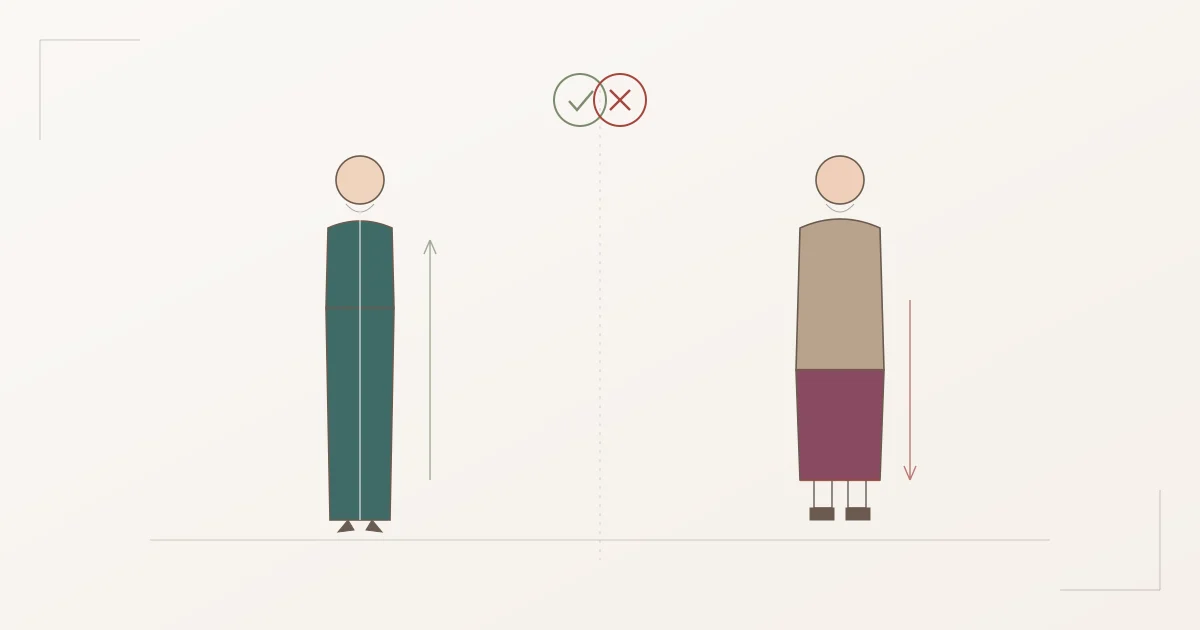
Here an honest clarification is worth making. The popular rule "vertical stripes make you look taller" is an oversimplification. Perception research since Hermann von Helmholtz shows that the lengthening effect depends less on the direction of the stripes than on the unbroken line of the whole outfit. It isn't the stripe that lengthens — it's the continuous silhouette with no interruptions.
In practice this means: anything that breaks the line shortens. A color change at the hip, a wide contrasting belt slung low on the hips, a cropped top with a visible band of bare skin, a hem that ends at the widest part of the calf. And anything that lets the line run through lengthens: a monochrome look in one color family, a long open coat, a dress in a single continuous color.
The column trick
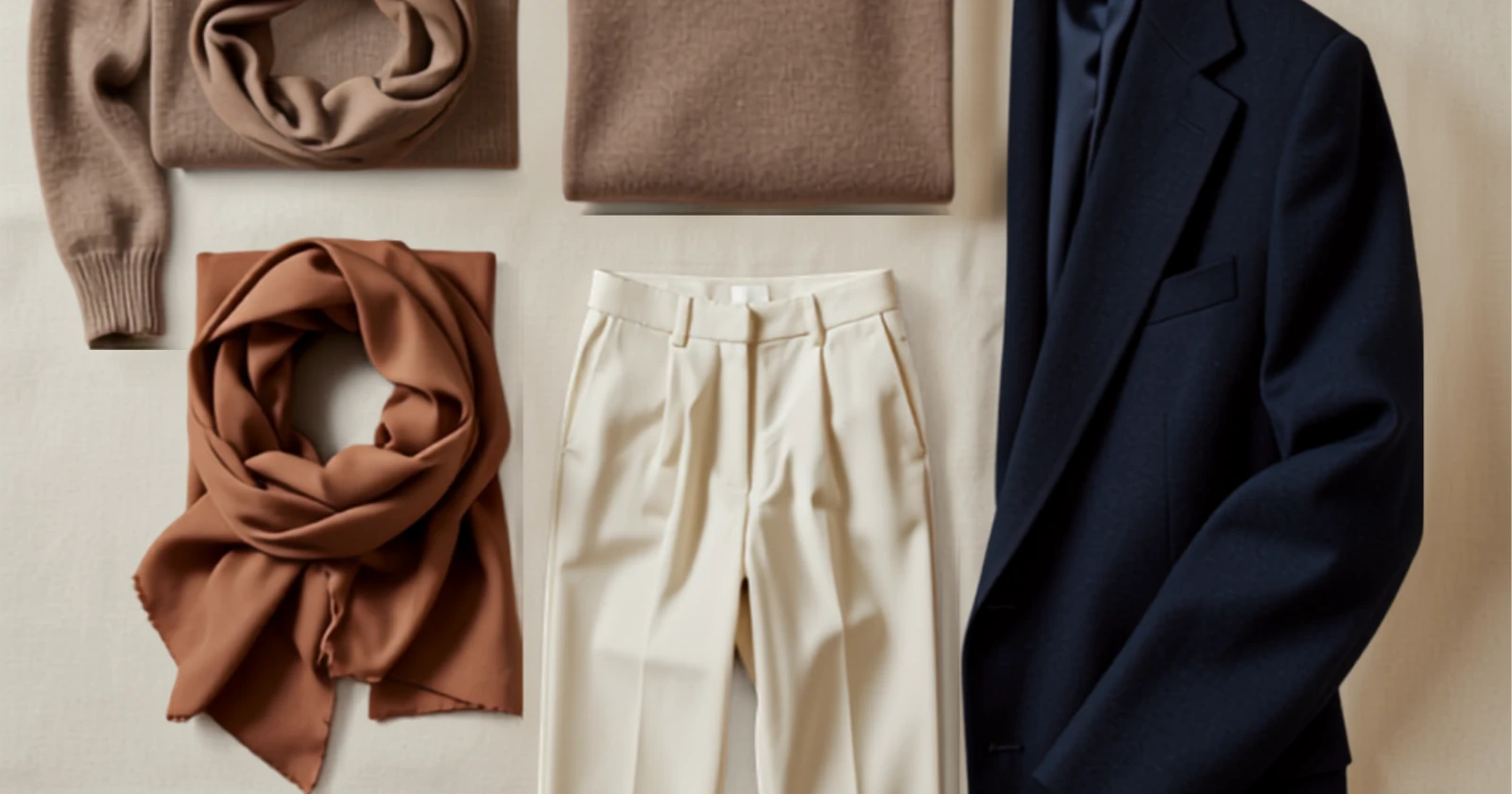
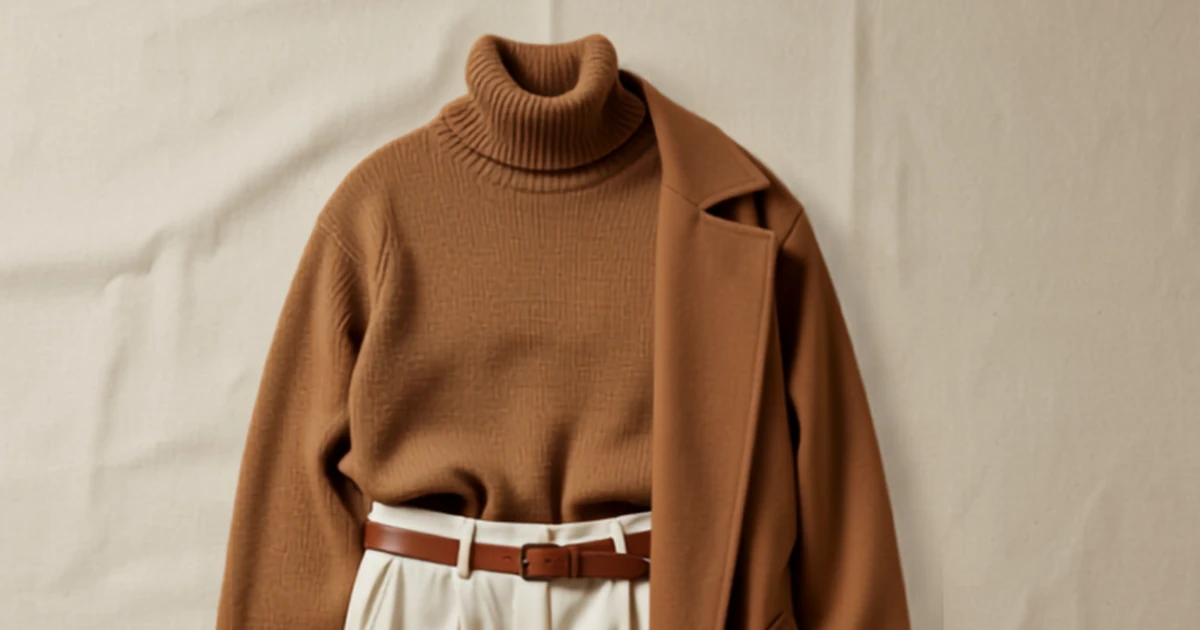
Wear your top and bottom in the same color family and add a third layer (coat, blazer, cardigan) in a harmonizing tone over the top. This continuous "color column" is the fastest route to a lengthening line — and it works regardless of your body line.
The three proportion rules
The principle of balance gives rise to three concrete rules. They are the foundation of almost every successful outfit for short women.
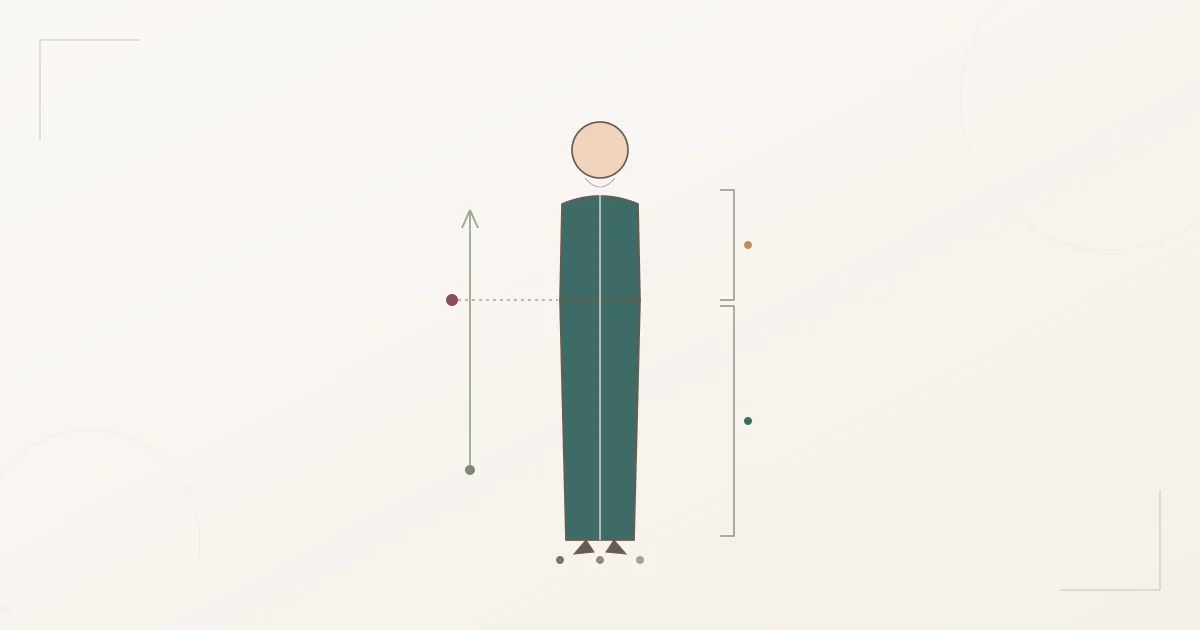
Rule 1: Raise the waistline
Visual leg length doesn't begin at the leg — it begins at the waist. Raising the waistline — with high-rise trousers and skirts, or by tucking in your top — visually lengthens the legs and shortens the upper body. This is the single most effective trick. A top tucked into a high-rise trouser can fake several inches of leg length.
Rule 2: Short on top, long on the bottom
Short women read longest when the upper body is kept visually compact and the lower body is kept long. A shorter or tucked top over a long, flowing bottom creates exactly this ratio. The reverse — a long top over a short skirt — shortens, because it visually cuts off the legs.
Rule 3: Don't break the line
Every hard horizontal break shortens. Avoid strong color and fabric contrasts across the midsection, very wide belts slung low on the hip, and hems that end at the widest point. If you want contrast, do it vertically — with a long open coat or a long necklace — not horizontally.
What actually lengthens — and what shortens
This table sums up the underlying principles. It holds regardless of height and figure — these are rules of perception, not of taste.
| Area | Lengthens | Shortens |
|---|---|---|
| Waist | High-set, tucked | Low-slung, hidden |
| Color | Monochrome, one color family | Strong contrast at the midsection |
| Top | Shorter or tucked in | Long, falling over the hip |
| Trousers | Full length, straight or slightly flared | Cropped at the widest part of the calf |
| Neckline | V-neck or pointed (draws lengthwise) | High, wide crew neck |
| Shoes | Pointed, skin-tone (nude), low-cut vamp | Ankle straps, chunky sole |
The 6 most stubborn styling myths
More prohibitions circulate around short women than around any other figure. Most are wrong — they mistake a rule of thumb for a law. Here are the six most common, each with the real rule behind it.
Myth 1: "Short women must wear high heels"
Wrong. Heels help, but they're not a must. A flat, pointed shoe in a skin tone often lengthens the leg more convincingly than a chunky heel with an ankle strap. What matters is the line of the shoe, not its height.
Myth 2: "Maxi dresses make short women look smaller"
Wrong, when the proportion is right. A maxi dress in a single continuous color with a raised waistline is actually especially lengthening, because it creates an unbroken vertical line. It only becomes a problem when the dress is voluminous, horizontally patterned, or cut with a dropped waist.
Myth 3: "Oversize is off-limits"
Wrong. Oversize works when it sits in just one place and the rest stays slim. A roomy blazer over slim high-rise trousers looks fantastic. It's only when top and bottom are both wide that the short woman disappears into the fabric.
Myth 4: "Bold prints overwhelm short women"
Only partly true. A single bold print can look elegant, as long as the rest of the outfit stays calm. More critical than the scale of the print is the quantity: many small, busy prints at once fragment the line more than a single large one.
Myth 5: "No turtlenecks, no high necklines"
It's more nuanced than that. A high neckline visually shortens the neck — that can shorten the look. A fine turtleneck within a continuous color column, on the other hand, supports the vertical line. It depends on the context, not on a blanket ban.
Myth 6: "Everything has to be tight"
Wrong. It isn't tightness that lengthens, but the continuous line and the right fit. Clothing that's too tight tends to emphasize every curve and looks strained. Well-fitting means: following the silhouette, not clinging to the body.
Almost every "short women can't wear …" dissolves the moment you understand proportion. There are hardly any forbidden pieces — only poorly proportioned outfits.
Petite + Kibbe: why your type refines the rules
Here's the most important point almost every guide overlooks: petite is not a body line. Two short women can have completely different bone structures, proportions and silhouettes — and therefore need different cuts. Height tells you how much length you have; the Kibbe system tells you which line carries that length.
A common misconception goes: "short = Gamine." That isn't true. Gamine is a Kibbe type with a compact, high-contrast build — height is only one factor of it. A short woman can just as easily be a Romantic, a Soft Natural or a Classic. And each of these types applies the basic proportion rules differently.
An example: the column rule holds for everyone — but how the column looks differs. A short Dramatic wears it as a long, smooth, sharp line; a short Romantic as a softly flowing, curve-emphasizing column; a short Gamine as a compact, high-contrast version with crisp edges. The cuts that suit your type are shown in the Kibbe clothing guide; you can find your own type through the Kibbe quiz.
Piece by piece: trousers, skirts, dresses, coats & tops
The basic rules translated into concrete garments — with what short women should look for in each piece.
| Garment | What to look for | Better avoided |
|---|---|---|
| Trousers | High-rise, full length, straight/slightly flared | Cropped at the calf, low rise |
| Skirt | High-rise, hem at a slim point | Hem at the widest part of the calf |
| Dress | High waist, continuous color, wrap cut | Dropped waist, lots of volume |
| Coat | Long & open (vertical panels) | Ends just below the hip |
| Top | V-/pointed neck, ending at the waist/tucked | Long, falling over the hip |
Trousers
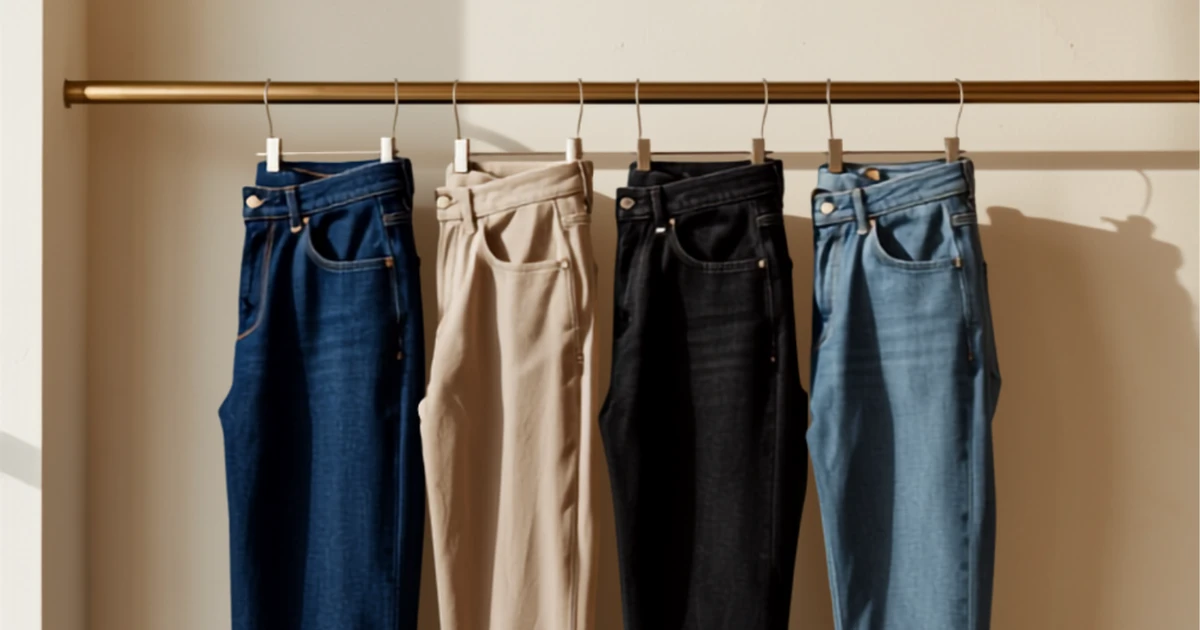
High-rise is almost always the best choice for short women, because it visually lengthens the legs. Look for full length down to the ankle — cropped trousers that end at the calf shorten the look. A straight or slightly flared fit in a continuous color, ideally matched to your shoes, draws the line all the way to the floor.
Skirts
The critical question with a skirt is the hem: it should end at a slim point — just above the knee, or as a midi just below the calf, never at the widest part of the calf. High-rise skirts with a tucked-in top raise the waistline and work beautifully.
Dresses
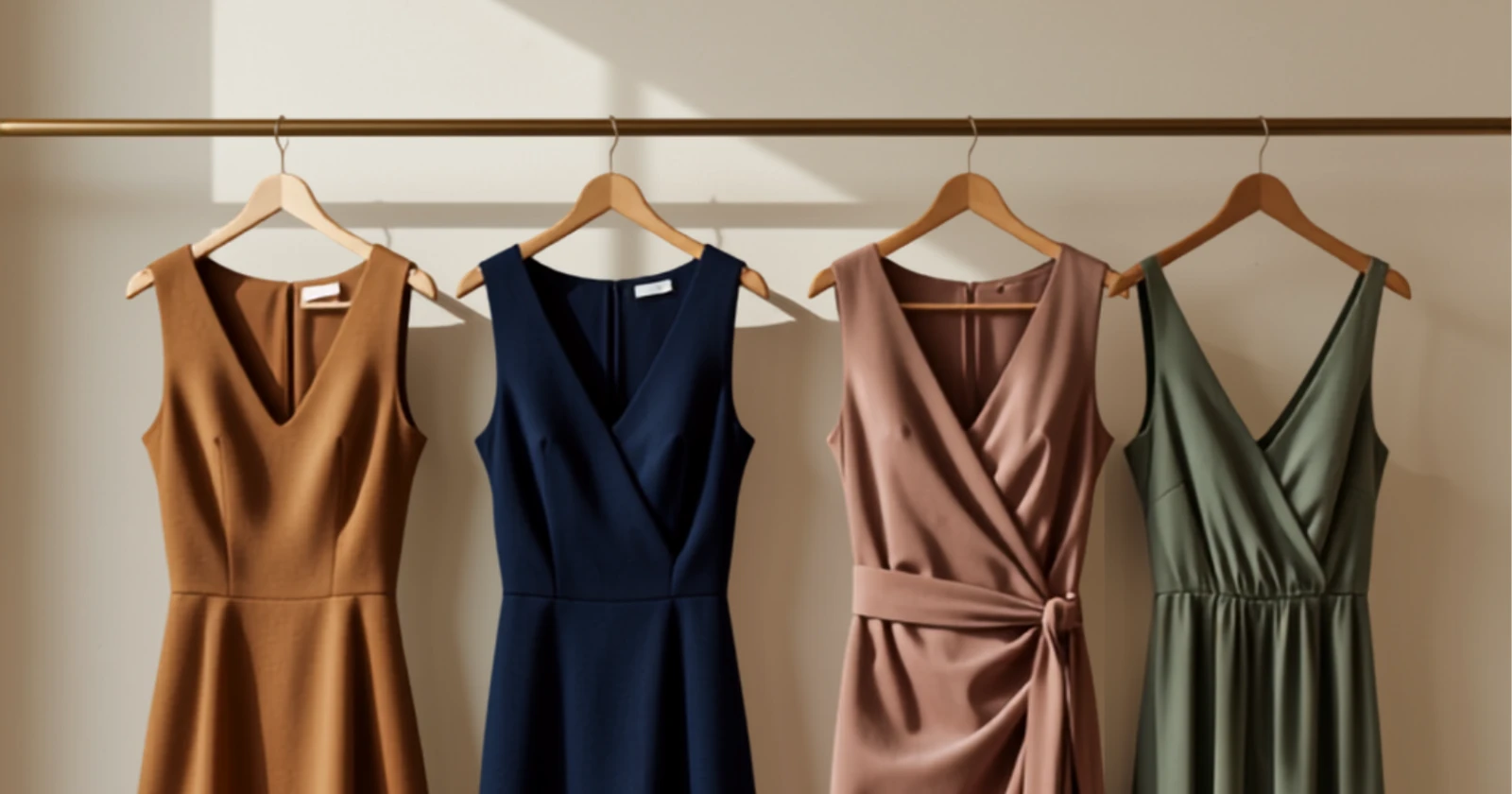
Dresses are ideal because they naturally form a continuous line. Wrap dresses and dresses with a raised waistline are especially flattering. For maxi dresses the rule is: continuous color, high waist, not too much volume — then they lengthen instead of shortening.
Coats & jackets
A long, open coat is a powerful ally: the two vertical panels of fabric act like lengthening stripes. Length matters — a coat that ends just below the hip cuts the figure; a knee- or calf-length coat draws it out. Short, tailored jackets work when they end at or above the waist.
Tops
Tops with a V-neck or pointed neckline draw the eye upward and lengthwise. The length of the top should end at or just below the waist — or be tucked in. Long tops that fall over the hip are the most common shortening mistake.
Step by step: building your lengthening outfit
These six steps take you from an empty wardrobe to a balanced outfit — in the right order.
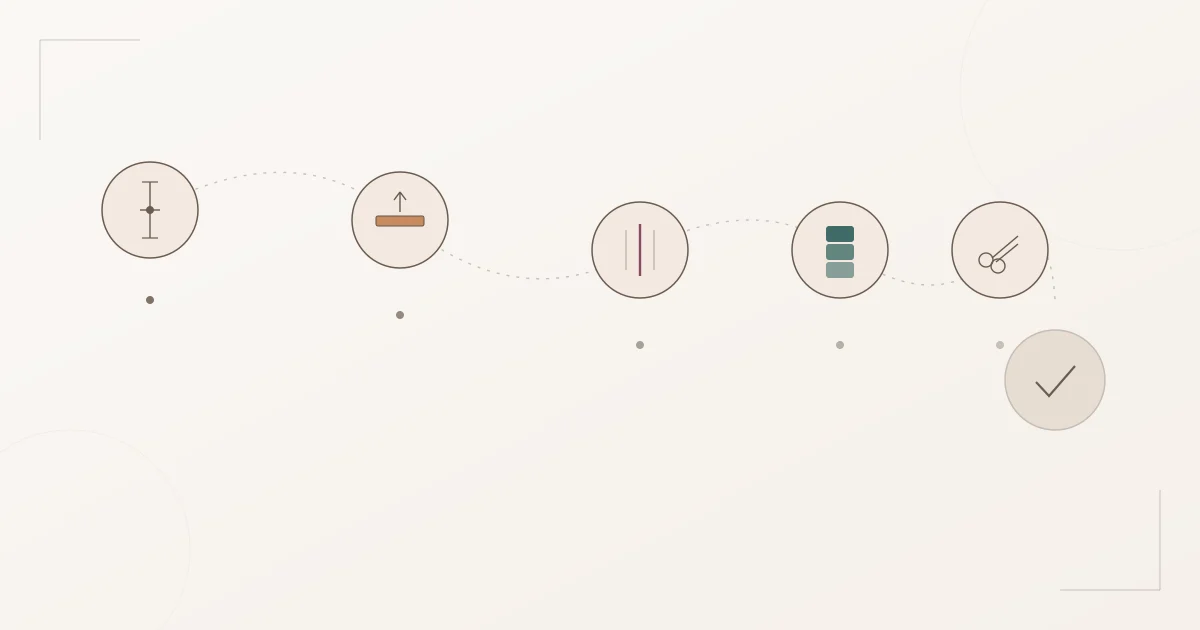
- Check the proportion. Look in the full-length mirror and find your waist. Ask: does the upper body read too long relative to the legs? Then that's your starting point.
- Raise the waistline. Choose a high-rise bottom or tuck in your top. This one step shifts the proportion the most.
- Lay down the vertical line. Build a continuous color column: top and bottom in one color family, optionally a long third layer over the top. Avoid hard horizontal breaks.
- Match color to your color type. Choose the tones from your color palette so the column also flatters your complexion — color and proportion working together.
- Check the lengths. Inspect every hem: does it end at a slim point? Do the trousers reach the ankle? Does the neckline draw upward? Correct whatever shortens.
- Refine with fit. Anything too long or too wide belongs at the tailor. The perfectly shortened hem is the difference between "it wears me" and "it almost wears me."
Your line, determined professionally
The proportion rules apply to all short women — but the cuts that suit you depend on your body line. A Kibbe analysis gives you your personal rulebook: which silhouettes, lengths and fabrics your structure truly carries.
The "Image Identity" style consultation combines your Kibbe type and color palette in a personal dossier and is bookable from 450 €. Free intro call via WhatsApp — 30 minutes, no obligation.
Fit & tailoring
The most underrated lever for short women isn't the cut, but the fit. Off-the-rack fashion is cut for an average size that rarely matches your own. Sleeves, hems and leg lengths are almost always too long — and a hem that's too long shortens the look instantly.
Tailoring is therefore the best investment a short woman can make in her wardrobe. A shortened trouser hem, shortened sleeves, and a waistband reset to your own waist turn "roughly fits" into "fits like a glove." The cost is small relative to the effect.
Also keep an eye out for petite sizes when a brand offers them: they aren't simply smaller, but proportionally adapted — shorter sleeves, a higher waistline, a shorter torso length. That often spares you part of the alterations. Shopping deliberately for fit rather than for size means fewer bad buys.
Color & print for short women
For short women, color is a proportion tool. Monochrome looks in one color family create the longest line, because the eye finds no break point. That doesn't mean boredom: a tone-on-tone look built from different textures of the same color reads refined and lengthening at once.
Which colors those should be is determined by your color type — the combination of undertone, value and intensity of your complexion. That way the lengthening color column also works for your face, not just for your proportion. For prints, the rule of thumb is: better a single, clear print than many small, busy ones that fragment the line. Vertical elements — a long button placket, a continuous seam, a long necklace — support the line further.
The most common mistakes
These are the mistakes I see most often in consultations — and all of them are proportion mistakes, not height problems.
Mistake 1: Wearing hems that are too long
The most common and most consequential mistake. Trousers pooling at the floor, or a sleeve past the wrist bone, make any outfit look out of proportion. Having them shortened is a must, not a luxury.
Mistake 2: Hiding the waist
Wide, long tops that fall low over the hip conceal the waist and shorten the legs. Set the waist visibly and high — even in relaxed outfits, by tucking in or with a slim belt at the waist.
Mistake 3: Too many horizontal breaks
A contrasting belt at the hip, cropped tops, shoes that contrast with the trousers — every break costs visual length. Reduce the interruptions and keep the line continuous.
Mistake 4: Building everything around "looking taller"
Choosing every piece solely by whether it lengthens lands you in a joyless uniform. Proportion is the foundation — but within a cohesive proportion, your style can and should be visible.
FAQ — Frequently asked questions
How should short women dress to their best advantage?
Short women look most cohesive with balanced proportions and an uninterrupted vertical line. The most effective levers are a raised waistline, a monochrome look in one color family, and garments in the right lengths. What matters is the ratio of upper to lower body, not absolute height.
Do short women have to wear high heels?
No. Heels help, but they're not a must. A flat, pointed shoe in a skin tone often lengthens the leg more convincingly than a chunky heel with an ankle strap. More important than heel height is the line of the shoe and the continuous color from trouser to shoe.
Can short women wear maxi dresses?
Yes. A maxi dress in a single continuous color with a raised waistline is actually especially lengthening, because it forms an unbroken line. You should only avoid voluminous, horizontally patterned or dropped-waist styles that break the line.
Which trousers are best for short women?
High-rise trousers in full length down to the ankle, in a straight or slightly flared fit. They raise the waistline and visually lengthen the legs. Cropped trousers that end at the widest part of the calf shorten the look and are best avoided.
Does monochrome really make short women look taller?
Yes, it's one of the most effective tricks. An outfit in one color family with no hard contrasts at the midsection gives the eye no break point, so the body reads longer. Different textures of the same color keep the look interesting without interrupting the line.
Are bold prints off-limits for short women?
No, that's a myth. A single bold print can look elegant, as long as the rest of the outfit stays calm. More critical than the scale of the print is the quantity — many small, busy prints at once fragment the line more than a single large one.
Where should the skirt hem end for short women?
At a slim point of the leg — just above the knee, or as a midi just below the calf. The least flattering point is the widest part of the calf, because the hem there visually emphasizes the widest line. A high-rise skirt with a tucked-in top reinforces the lengthening effect.
Is every short woman a Gamine type?
No. Petite is a height; Gamine is a Kibbe type with a compact, high-contrast build. A short woman can be any of the 13 Kibbe types — Romantic, Classic, Natural and all the rest. The cuts that suit you depend on your type, not on height alone.
Can I wear oversize as a short woman?
Yes, but only in one place. A roomy top works over a slim high-rise bottom, a roomy coat over a slim silhouette. As soon as top and bottom are wide at the same time, the figure disappears into the fabric and the look shortens.
Is tailoring worth it for short women?
Yes, it's the single most effective investment there is. Off-the-rack fashion is almost always too long at the hems, sleeves and legs — and a hem that's too long shortens the look instantly. Shortened lengths turn a "roughly fits" into a "fits perfectly" and lift every piece to a new level.
Which neckline lengthens for short women?
A V-neck or pointed neckline draws the eye upward and lengthwise, lengthening the upper body. Very high, wide crew necks visually shorten the neck and can shorten the look. A fine turtleneck within a continuous color column, by contrast, is no problem.
How do I find out which cuts suit me?
The proportion rules apply to all short women, but the specific cuts depend on your body line. The Kibbe system pinpoints them precisely from bone structure and proportions. The free Kibbe quiz gives you a first assessment; a professional analysis gives you the confirmed result.
From the rule to your personal result
Find the cuts that carry your line
This guide gives you the proportion rules. A professional Kibbe analysis gives you your personal result — which silhouettes, lengths and colors your structure truly carries, in an individual dossier. A free intro call is always included.
About the author
Jola Deja — Style & Image Consultant
Jola Deja is a certified style and image consultant, working online as well as in person in the Märkischer Kreis and the Dortmund area. She combines Kibbe analysis and color consulting into one cohesive whole, and regularly guides clients of every height in bringing their proportions into balance. The recommendations in this guide come from her day-to-day consulting work.
Last updated: August 1, 2026 · Author: Jola Deja, certified style & image consultant