
TL;DR — Style over 50
- Age is not a style category. No garment becomes inappropriate because of a date of birth. Anyone looking for new rules at 50 is looking in the wrong place.
- What stays constant: bone structure and body line as well as your style direction. Your Kibbe type at 25 still applies unchanged at 55.
- Exactly one variable really shifts: the contrast between hair, skin and eyes. It drops as hair greys — and with it the colour depth that carries you. The colour family stays.
- The most searched look is sporty-elegant. It works on a single rule: exactly one structured piece in the outfit, everything else comfortable.
- "With a tummy" is not solved by more fabric but by fabric that falls and a seam in the right place.
Which clothes suit women over 50? The same ones that suited them before — at an adjusted colour depth. Body line and style direction stay unchanged, because both rest on bone structure and on a decision, not on age. What really shifts is the contrast between hair, skin and eyes. It governs the intensity of your colours, not the selection of your clothes.
Contents
- What really changes after 50 — and what does not
- Contrast: the one variable that shifts
- Your body line stays
- Sporty-elegant: the most searched look
- Style over 50 with a tummy — structural, not concealing
- Striking, without turning into a costume
- Festive occasions after 50
- Step by step: building your outfit after 50
- The rule audit: six "not after 50" claims fact-checked
- Material, fit and where quality really counts
- The most common mistakes
- FAQ — Frequently asked questions
What really changes after 50 — and what does not
Style over 50 is not a fashion style of its own but a life stage in which three things stay constant and three shift. That distinction is the whole guide — everything else follows from it.
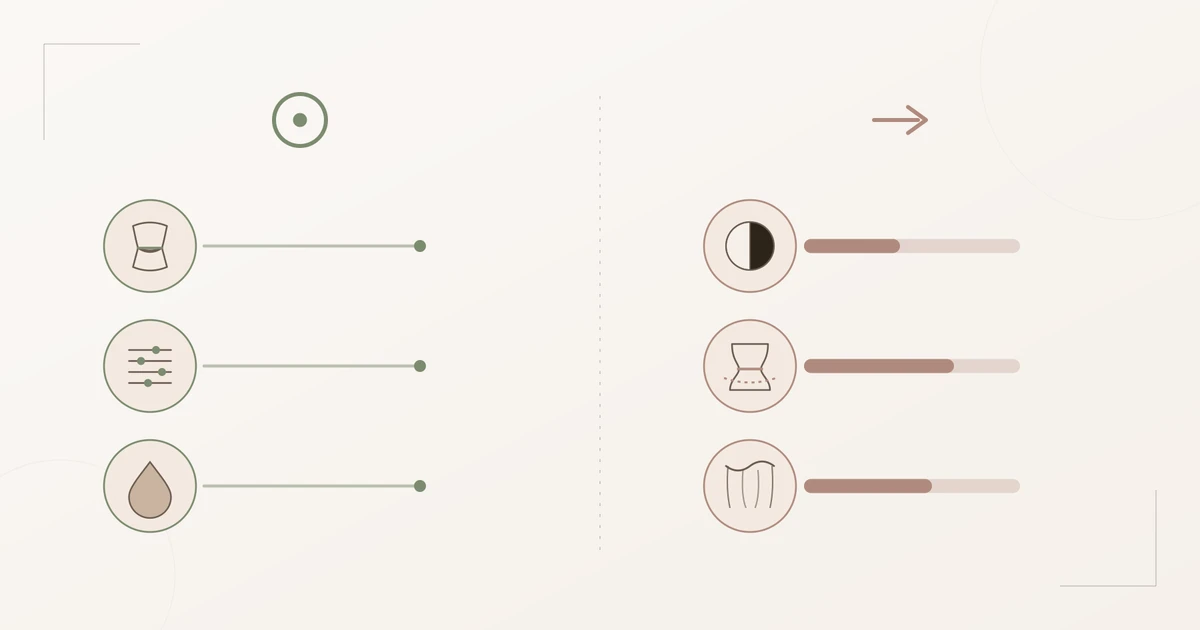
What stays constant:
- Bone structure and therefore body line. Shoulder shape, torso length and proportion ratios do not change in adulthood.
- The style direction. Whether you present as classic, minimalist or unconventional is a decision — and no birthday makes it for you.
- The undertone of your colours. Warm stays warm, cool stays cool. That holds for life.
What shifts:
- The contrast between hair, skin and eyes — the most important change, more on it shortly.
- The distribution of fullness. Weight often sits differently than at 30. That changes fullness, not line.
- Tolerance for certain materials. Stiff, shiny and very thin fabrics often read harder on mature skin than on young skin — a question of surface, not of age.
Almost every "style over 50" rule online answers the wrong question. It asks what you are still allowed to wear. The right question is: what has changed about me — and what follows from that for colour and material?
Contrast: the one variable that shifts
Contrast is the difference in lightness between your hair, your skin and your eyes. It is the only colour variable that changes systematically over a lifetime — and the reason familiar colours suddenly stop working.
The mechanism is well described: hair at the temples has a shorter lifespan than the rest of the scalp hair, which is why greying becomes visible there first for most people. With every grey strand the hair colour moves closer to the skin tone. The gap between the two shrinks — your overall contrast drops.
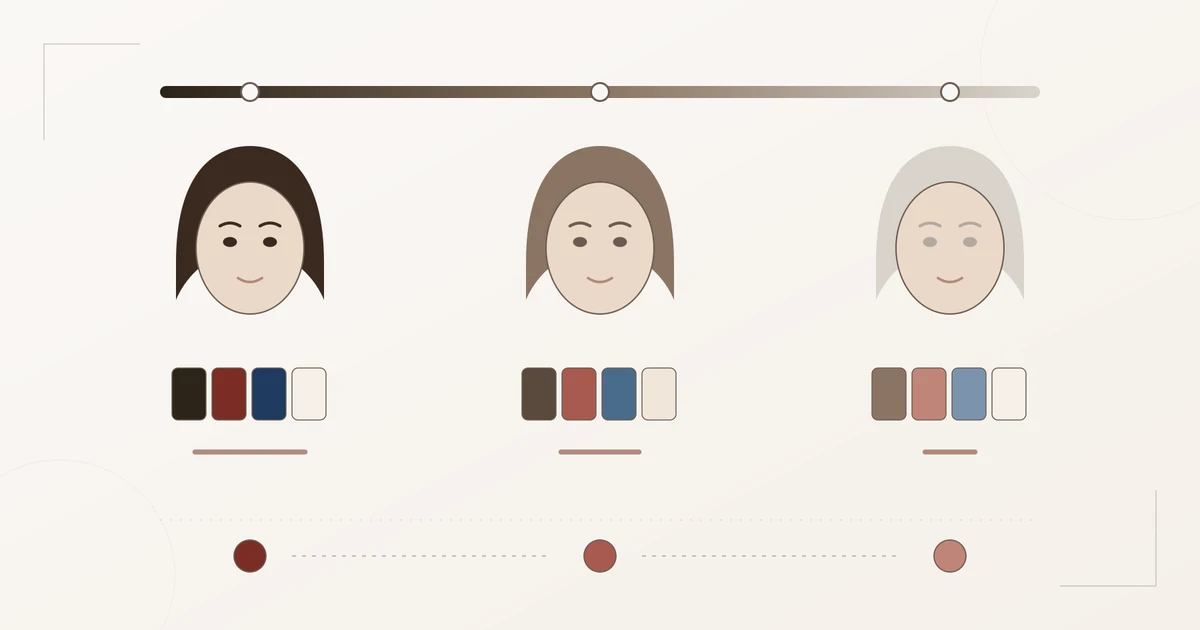
From that follows a rule none of the usual lists contains: adjust the depth, not the colour. Anyone who used to wear deep wine red is now often better served by dusty rose or terracotta — the same warm family, less intensity.
| Contrast level | How you recognise it | Suitable colour depth near the face |
|---|---|---|
| High | Hair clearly darker than the skin, clear eye colour | Deep, saturated tones; hard light-dark combinations work |
| Medium | First grey sections, hair moving closer to the skin tone | Medium depth; strong contrast only as an accent |
| Low | Predominantly grey or white hair | Soft, lightened tones; replace black near the face with charcoal or deep brown |
Which colour family is yours in the first place is settled by the guide Which colour type am I?. How the hair colour itself behaves is covered in detail in hair colour by colour type — which also explains why the undertone stays the same as hair greys and only depth and contrast move.
Your body line stays
The body line is the structure of your skeleton: shoulder shape, bone weight, torso length, proportion ratios. It is constant in adulthood — and that is the most reassuring news in this guide.
Concretely: if you established at 30 that straight, cleanly cut pieces suit you and soft ruffles do not, that still holds at 55. What may have changed is fullness — and fullness affects how much width a cut needs, not which line belongs to you.
The Kibbe system describes exactly this structure, through bone rather than circumference. That is why the classification stays stable while clothing sizes may well change over the years. If you do not know your line yet, the Kibbe test gives you a first orientation.
Anyone who feels at 50 that "nothing suits me any more" has almost never lost their line. Usually the contrast has dropped while the wardrobe stayed at the old colour depth.
Sporty-elegant: the most searched look
Sporty-elegant is the combination of one structured piece and several comfortable ones. It is by far the most frequent search in this area — and the reason is practical: the look sits exactly in the middle of the formality scale and therefore covers most everyday situations.
The rule behind it is surprisingly plain: exactly one piece supplies the structure. Usually that is the jacket.
- Blazer + straight trousers + fine knit. The classic. Structure comes from the blazer, everything else may be soft.
- Shirt jacket + dark jeans + loafers. One step more relaxed, same principle.
- Fine knit coat + tailored trousers + trainers in a muted tone. Structure through length rather than through the shoulder.
What tips the look over: two structured pieces at once (blazer plus stiff trousers quickly reads like a uniform) or none at all (then it is not sporty-elegant, just comfortable). To judge how formal an occasion actually is, the dress code scale helps.
Style over 50 with a tummy — structural, not concealing
"Concealing a tummy" is one of the most frequent searches in this field — and it is usually answered wrongly, namely with more fabric. More fabric does not conceal; it adds bulk and merely moves the widest point outwards.
What actually works are three levers:
- Falling rather than firm fabric. Viscose, crêpe and fine knit follow the silhouette. Firm cotton poplin and stiff blends stand away.
- The seam slightly higher. A raised waist with a soft fall below it plays down the middle more reliably than any width at stomach height.
- Vertical guidance. An open long cardigan or coat forms two vertical lines and divides the surface — that works better than any dark top.
What reliably does not work: tight bands exactly at stomach height, very thin jerseys, and wide tops without any hint of a waist. The same logic applies to dresses in detail — see Which dress suits my body?.
Striking, without turning into a costume
Striking fashion for women over 50 is one of the strongest searches in the field — and it shows that the opposite of the common assumption is being sought. Not restraint, but expression.
The line is not drawn at the amount of boldness but at its distribution. One striking element per outfit wears effortlessly. Three at once read restless at any age — at 30 just as much as at 60.
- Through the cut: an unusual sleeve shape, an asymmetric hem, an extra-long coat. Reads calmest, because the colour stays restrained.
- Through the material: texture, gradations of sheen, unusual surfaces. Very effective and rarely too much.
- Through the colour: a strong tone, but at your depth. Here the contrast rule from section two is decisive.
Festive occasions after 50
At festive occasions the material level matters more than the amount of decoration. A plain cut in crêpe, silk or fine velvet reads reliably festive; an elaborately worked piece in thin fabric never does.
- Dress: knee- or calf-length, refined fabric, colour at your adjusted depth.
- Trouser suit: an equivalent alternative, provided the material is of evening quality — a business suit does not qualify.
- Jewellery: one visible piece rather than several small ones. At low contrast, matte gold often reads calmer than high-shine silver.
Which formality level an occasion actually calls for can usually be read from time, venue and occasion. For weddings the colour rule applies on top — the details are in the wedding guest guide.
Step by step: building your outfit after 50
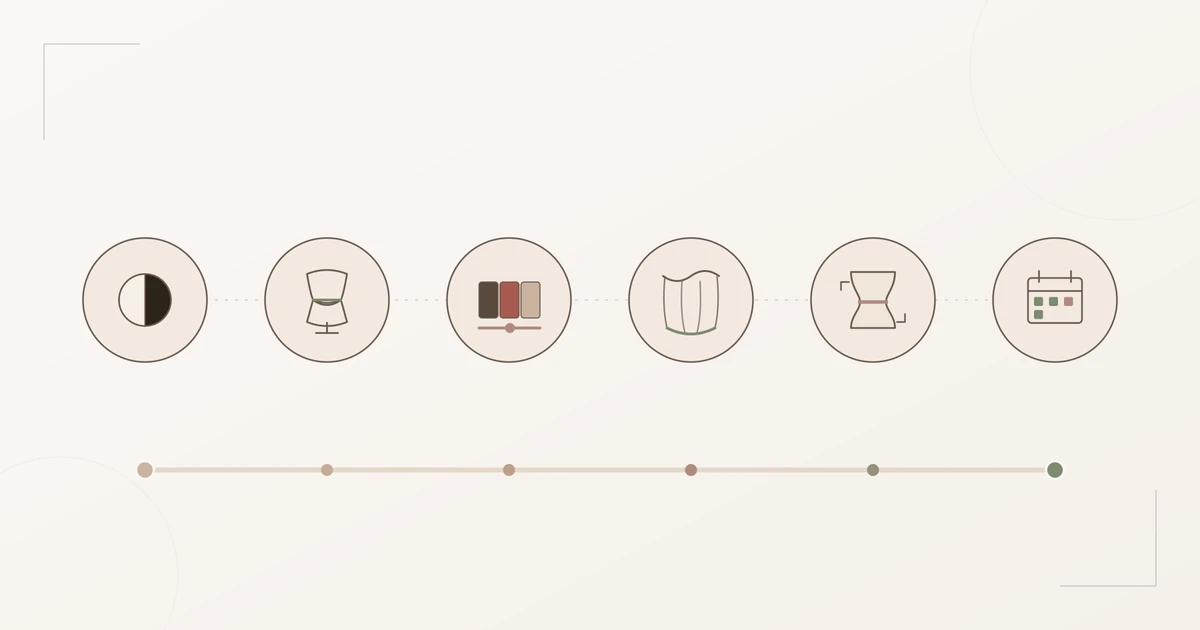
- Determine your contrast again. Without make-up, in daylight, in the mirror: how large is the gap between hair and skin today? This is the only step that has changed compared with before.
- Check the body line — it is unchanged. Shoulder shape, torso length, bone weight. If you know your type, skip this step.
- Adjust the colour depth. Same family, lower intensity. Start near the face; further down the leeway is greater.
- Choose material and fall. Take the fabric in your hand and let go. Does it fall or stand away?
- Check the fit. Shoulder seam on the shoulder, waist seam on the waist. If either is off, no colour will help.
- Place the occasion. Only now the formality level — it decides material and structure, not the basic direction.
The rule audit: six "not after 50" claims fact-checked
These six sentences appear in almost every guide. Checked against what actually changes, none of them holds up fully.
| The rule | What is actually true |
|---|---|
| "No more long hair" | A question of hair density and facial proportion, not of age. Thinning hair carries shorter lengths better — which may happen at 40 or never. |
| "No more black" | Right in essence, wrongly reasoned. It is not age that jars but the lowered contrast directly at the face. Worn further down, black remains fine. |
| "No more jeans" | Unfounded. What stands out are heavy distressing and rips — but those rarely match the rest of the wardrobe, regardless of age. |
| "No more strong colours" | Often the opposite is true. With lowered contrast, colour is enlivening — it just has to sit at the right depth rather than at maximum saturation. |
| "Nothing fitted any more" | Confuses fit with tightness. Well-fitting means neither tight nor wide; too wide adds just as much bulk as too tight. |
| "No more trends" | Trends were never the question. A trend that matches your line and depth works; one that does not never worked at 25 either. |
Material, fit and where quality really counts
The pointer to high-quality materials appears in every guide — usually without saying where quality makes the difference and where it does not. The answer is surprisingly precise: near the face, and wherever the fabric has to fall.
- Near the face, quality pays off most. Scarf, blouse, knitwear at the neckline — there the surface decides whether the skin beside it reads fresh or tired. Matte, soft materials flatter; hard shine works against you.
- For the fall, it pays off functionally. A dress or wide trousers live on how the material hangs. Here quality is not a luxury but the precondition for the cut working at all.
- For basics, soundness is enough. A plain T-shirt under a blazer has to fit and hold its shape — it does not have to be expensive. Which basics genuinely carry is covered in timeless basics.
One point on fit that often gets missed: clothing sizes describe circumferences, not torso lengths. Anyone finding over the years that tops sit differently than before often has a length question rather than a size question — and that is solved by alterations, not by the next size up.
The most common mistakes
Mistake 1: not letting the colour depth move along
By far the most common. The wardrobe stays at the depth of fifteen years ago while the contrast has dropped. The result feels like "nothing suits me any more" and is in truth purely a question of intensity.
Mistake 2: confusing age with figure
What has changed is usually fullness, not line. Anyone who switches style direction because of it solves a problem they do not have.
Mistake 3: width as the solution
More fabric hides nothing, it only relocates. Falling fabric in the right size beats wide fabric every time.
Mistake 4: changing everything at once
A contrast shift is a gradual process. The wardrobe best follows over two to three seasons — starting with the pieces near the face.
Mistake 5: following age rules instead of yourself
The lists online describe no body and no colour values. They describe an expectation. Anyone shopping by them shops for an image, not for themselves.
Mistake 6: consulting the mirror in the wrong light
Contrast can only be judged in daylight. Artificial light shifts brightness and temperature so strongly that any colour decision made under it is unreliable.
How strongly historical clothing was built on the individual wearer is shown by the costume collections of museums such as the Victoria and Albert Museum — ready-to-wear by standard measurement is the recent exception, not the rule.
FAQ — Frequently asked questions
Which clothes suit women over 50?
The same ones that suited them before — with an adjusted colour depth. Your body line and your style direction stay unchanged, because both rest on bone structure and on a decision, not on age. What really shifts is the contrast between hair, skin and eyes, and with it the intensity at which your colours work.
What should you no longer wear after 50?
From a style point of view there is no such list. No garment becomes inappropriate through a date of birth. What genuinely works less often are very hard colour contrasts directly at the face once your own contrast has dropped — and badly fitting pieces, which look bad at any age but are forgiven less from a certain point on.
What does sporty-elegant mean in style over 50?
Sporty-elegant is the combination of one structured piece and a comfortable cut: blazer with straight trousers, fine knit with good jeans, loafers instead of trainers or pumps. The look works because it sits exactly in the middle of the formality scale and therefore covers most everyday situations. What matters is that exactly one piece supplies structure.
How do I best conceal a tummy?
Not through more fabric but through falling fabric and a seam in the right place. Firm fabric stands away and adds bulk; viscose or crêpe follow the silhouette. A slightly raised waist with a soft fall below reads more reliably than any wide top, which only relocates the widest point.
Does my Kibbe type change with age?
No. The Kibbe type describes bone structure and body line, and both stay constant in adulthood. Weight changes alter fullness, not structure. A Dramatic stays a Dramatic, a Romantic stays a Romantic — the execution adapts, the classification does not.
Which colours suit me when my hair is grey?
Your colour family and your undertone stay the same; the suitable depth becomes lower. Anyone who used to wear deep wine red is now often better served by a softer dusty rose or terracotta. Black directly at the face becomes too hard for many and can be replaced by charcoal, deep brown or navy.
Can you still wear jeans after 50?
Yes, without restriction. What matters is not age but cut and wash: a straight or slightly wide jean in an even, dark wash reads appropriate in any situation. What tips the look over are heavy distressing and rips, because they rarely match the rest of the wardrobe.
How much boldness does an outfit after 50 take?
As much as before, as long as it stays concentrated in one place. One striking piece per outfit wears effortlessly; three at once read restless at any age. Anyone looking for striking fashion is best served by setting the accent through cut or material rather than through several strong colours at once.
What do I wear to a festive occasion after 50?
A knee- or calf-length dress in refined material, or an elegant trouser suit. For the effect, the material level counts more than the amount of decoration — crêpe, silk or fine velvet lift a plain cut more reliably than an elaborate dress in thin fabric. You choose the colour at your adjusted depth.
Is a style consultation worth it after 50?
It is especially worth it in phases where something has shifted and the old routines no longer work. Anyone who suddenly feels that familiar colours no longer land usually has no style break but a contrast shift. An analysis separates exactly those two levels and saves the mistaken purchases that come from trial and error.
From the rule to your own decision
Your line, your contrast, your depth
This guide shows you what has shifted and what has not. A professional Kibbe and colour analysis gives you your personal result: your body line, your current contrast level and the colour depth that carries you today — in an individual dossier. A free initial consultation is always included.