
Table of Contents
- The Quick Answer
- What Defines the Gamine Type?
- The Characteristics in Detail
- The Mixed Signals: Why Pure Gamine Is Theoretical
- Are You Really Gamine? Telling the Types Apart
- The Styling Logic: The Broken Line
- The Gamine Wardrobe: Cuts & Pieces
- Fabrics, Patterns & Colors
- Jewelry & Accessories
- The 5 Biggest Styling Mistakes
- Gamine at Work & in Everyday Life
- Famous Gamine Examples
- The Gamine Self-Check: 5 Questions
- Frequently Asked Questions (FAQ)
The Quick Answer
Quick Answer
The Gamine is the contrast type of the Kibbe system: small and compact, with sharp Yang bones and soft Yin flesh side by side rather than blended. These opposites in a small space produce a lively, cheeky, playful appearance. Its styling logic is unique in the entire system: the broken line. Where all the other families want unbroken lines — long verticals or flowing curves — the Gamine lives on the break alone: contrasts, color blocks, a mix of pieces, short plus long elements, boldness on a small scale. The pure Gamine, meanwhile, is theoretical: almost all are in truth Soft Gamine (more Yin) or Flamboyant Gamine (more Yang). This guide explains every characteristic, the principle of the broken line, and how to tell Gamine apart from Romantic and Natural.
No Kibbe type is more often misunderstood by the fashion world than the Gamine — and none is more often overlooked. Because the women who have this type get the same wrong advice their whole lives: “Buy one-piece, flowing silhouettes that lengthen.” For almost every other type, that’s true. For the Gamine, it’s the opposite of what works. If you’re small and compact and yet always feel a little lost in long, unbroken lines, here you’ll find the explanation — and the rule turned on its head.
What Defines the Gamine Type?
In the Kibbe Body Type System, the Gamine is the type of opposites in a small space. In most other types, Yin (soft, round) and Yang (sharp, straight) blend into a unified effect, or one side clearly dominates. With the Gamine it’s different: Yin and Yang stand unblended, side by side — sharp, angular bones in one place, soft, round flesh in another. This juxtaposition is the core of the type.
The second, equally hard hallmark is the small, compact stature. As with the Romantic, the short vertical counts as a criterion: the Gamine is small, typically up to about 165 cm. Height plus contrast together create the signature effect — lively, cheeky, youthfully energetic, often described as “elfin” or “impish.” In concrete terms:
- Stature: small and compact — the short vertical is a hard criterion, typically up to about 165 cm
- Bone structure: mixed — sharp and angular in some places (shoulders, facial features), delicate and round in others; never uniformly one or the other
- Body flesh: compact, often with a soft component, but without the continuous lush curve of the Romantic — contrast instead of evenness
- Face: lively and expressive — often large eyes (Yin) over sharp cheekbones or a defined chin (Yang), a visible blend
The Gamine family comprises three variations: the pure Gamine (the theoretical middle, equal parts Yin and Yang), the Soft Gamine (with more soft Yin), and the Flamboyant Gamine (with more sharp Yang). All three share the same foundation: small, compact, and shaped by contrast.
The Characteristics in Detail
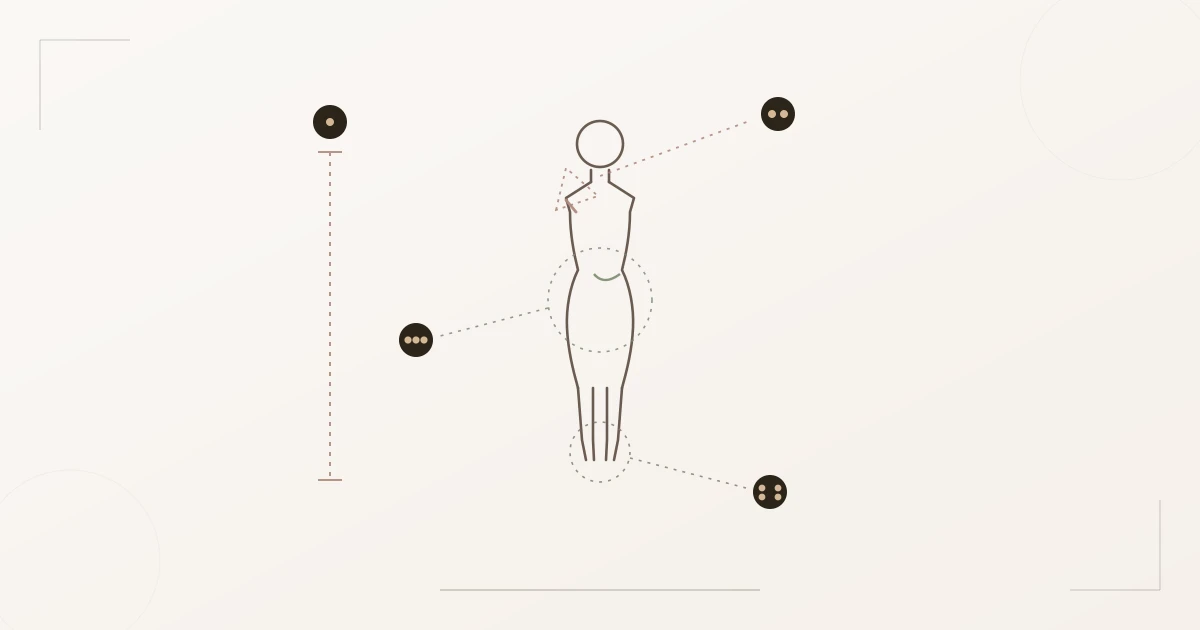
| Characteristic | The Gamine | For Comparison |
|---|---|---|
| Vertical line / height | Small, compact — up to about 165 cm | Dramatic / Flamboyant Natural: emphatically long |
| Yin/Yang ratio | Contrast — both side by side, unblended | Classic: both blended into balance |
| Bone structure | Mixed — sharp in one place, delicate and round in another | Romantic: uniformly soft and round |
| Face | Lively, expressive — large eyes over sharp features | Classic: even, symmetrical, calm |
| Overall impression | Cheeky, playful, energetic — “elfin” | Romantic: sensual, soft, grown-up feminine |
As always: these characteristics describe structure, not weight. A Gamine stays a Gamine at every weight — the compact stature and the side-by-side of sharp and soft features don’t change, only their fullness.
The Mixed Signals: Why Pure Gamine Is Theoretical
The Gamine is the type that drives most people to despair when they try to self-diagnose — for a logical reason: it sends contradictory signals. Anyone with sharp shoulders and soft cheeks, large childlike eyes and an angular chin will search the usual descriptions in vain for the one matching characteristic. This very contradiction is the characteristic. Anyone who thinks during the analysis, “sometimes I look sharp, sometimes soft, I don’t fit any box,” is often unknowingly describing the exact Gamine signature.
From this follows an important point that connects the Gamine with the Classic: the pure Gamine — exactly equal parts Yin and Yang — is a theoretical middle. David Kibbe set aside the pure Gamine (like the pure Classic) as a standalone recommendation in his updated classification, because perfect equilibrium without any tendency at all is extremely rare. In practice, the scale almost always tips slightly in one direction: a little more soft Yin yields the Soft Gamine, a little more sharp Yang the Flamboyant Gamine.
In practical terms: anyone who recognizes themselves as Gamine should, as a second step, check which direction their own blend leans — because the concrete styling details (how soft or how sharp the contrasts may be) depend on it. The shared foundation — small, compact, high-contrast, broken line — applies equally to all three, however, and is the subject of this guide.
Are You Really Gamine? Telling It Apart from the Neighboring Types
The Gamine is confused above all with two other families — and in both cases the mix-up leads to exactly the wrong wardrobe. The key distinctions:
Gamine vs. Romantic
Both are small and have a soft component — but the structure behind them is opposite. The Romantic is uniformly soft and round: an even, lush hourglass without a single sharp edge. The Gamine has sharp Yang points in the midst of the softness — angular shoulders, a defined chin, angular features. The practical check: on a neutral photo, look for genuine sharpness in the bones or face. If you find clear edges alongside the softness, that points to Gamine; if everything is evenly rounded, to Romantic. The consequence for clothing is maximal: the Romantic wears unbroken curves, the Gamine broken lines — the exact opposite.
Gamine vs. Natural
Both can have sharp or strong Yang components, but they lie on different axes. The Natural (for instance the Soft Natural) is blurred and relaxed — blunt, broad bones, soft transitions, mostly moderate to tall stature. The Gamine is compact and sharply outlined — small stature, clear edges, precise contrasts. Two filters: height (Natural moderate to tall, Gamine small) and edge sharpness (Natural blunt and blurred, Gamine crisp and high-contrast). In clothing, the Natural needs long, relaxed lines, the Gamine short, jaunty breaks.
Gamine vs. Soft/Flamboyant Gamine
Within the family, it’s only about the direction of the lean: the Soft Gamine has more soft Yin (rounder facial features, a bit more fullness), the Flamboyant Gamine more sharp Yang (a more angular structure, longer lines within the compact frame). Both keep the core — small, compact, high-contrast. If you recognize yourself as Gamine but aren’t sure which subtype: the Soft Gamine comes across as softer and sweeter overall, the Flamboyant Gamine more angular and sharper.
If uncertainty persists, the proven sequence applies: hard filters first (measure your height), standardized photos instead of the mirror, judge structure before fullness. The free Kibbe test gives a first indication — the complete type profile lives on the Gamine type page. Why the Gamine in particular is so often mistyped is explored in depth by the mistyping guide.
The Styling Logic: The Broken Line
Here lies the most important rule of this guide — and the only one of its kind in the entire Kibbe system. Every other family wants unbroken lines: the Yang types wear the long, continuous vertical, the Yin types the flowing curve, the Classic the smooth column. The Gamine is the great exception. It lives on the broken line — on deliberate break, contrast, and change. Three rules follow from this:
- Separates over one-pieces. The Gamine looks better in combined separates than in a continuous dress: skirt plus top, pants plus jacket, a visible break at the waist. Where others lengthen the line, the Gamine deliberately interrupts it — and comes across as livelier, not smaller.
- Contrast is the whole point. Color blocks, contrasting patterns, a mix of textures, light against dark, hard against soft. The Gamine is the only type on which “too much contrast” is rarely a problem — the mix matches its own structure.
- Boldness on a small scale. Everything stays compact and crisp: short cuts, clear edges, snappy details, small but graphically strong accessories. Not large and sweeping (that belongs to the tall types), but small, precise, and pointed. The rule of thumb: a lot of personality on a little surface.
The difference from the Romantic in one sentence: both are small and feminine — but the Romantic wears an unbroken soft curve, the Gamine deliberately breaks the line and relies on contrast.
The Gamine Wardrobe: Cuts & Pieces
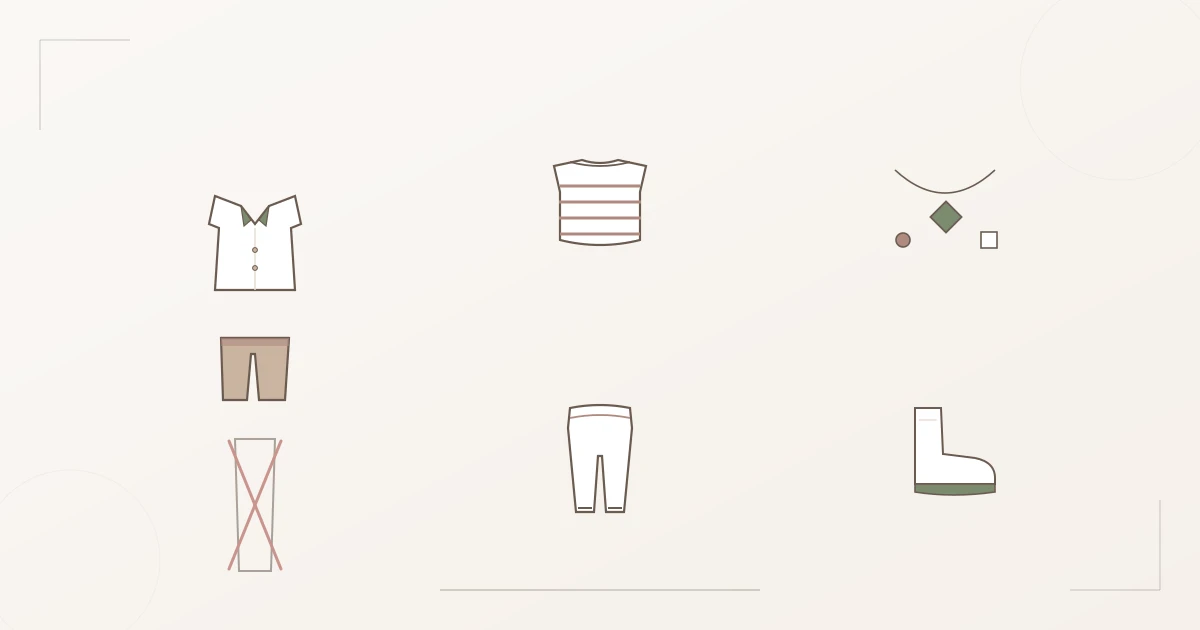
The Separates Combination — The Main Event
The signature principle of this line isn’t a single piece but the combination: two (or more) clearly separate pieces that play off each other — a short structured jacket over a contrasting top, a skirt in a different color from the blouse, a visible break at the waist. Exactly where other types seek the continuous look, the Gamine wins through the visible break.
Tops
Short, cleanly cut tops with an edge: boat-neck shirts (the horizontal line is a plus here, not a mistake), cropped sweaters, structured blouses, Breton-stripe tops. Small graphic patterns work where they would disappear on tall types. To avoid: long, flowing tunics that smooth the line out.
Skirts & Pants
Skirts: short to knee-length, with a clear edge — A-line, pleated skirt, structured shapes. Pants: cropped cigarette pants that show the ankle (the visible break at the leg is intentional), slim 7/8-length cuts, culottes in a compact length. The rule: the pants may — indeed should — end at a visible point instead of carrying the line all the way to the floor.
Jackets & Dresses
Jackets: short and structured — boleros, cropped blazers, biker jackets, all with clear edges. Dresses work best when they mimic the break: with a belt, contrast panels, two-tone, or with a marked break at the waist. The long, unbroken column dress — the favorite of the tall types — is the weakest choice here (deliberately crossed out in the diagram above).
Fabrics, Patterns & Colors
| Category | Ideal | Avoid |
|---|---|---|
| Fabrics | Crisp and structured with a bit of body: firm cotton, denim, textured knits, lightweight wool — fabrics that hold an edge | Heavy, flowing, draping fabrics (pull the line smooth) and bulky, thick materials (overload the compact stature) |
| Patterns | Small, graphic, high-contrast: stripes, small checks, polka dots, color-blocking, clean geometric prints | Large, soft, washed-out patterns (they call for the Natural’s large, relaxed surface) |
| Color logic | Contrast instead of tone-on-tone: clear color combinations, light-dark breaks, jaunty accents | Continuous monochrome columns (they lengthen but take away the lively break) |
Which specific colors suit you is, as always, determined not by your Kibbe type but by color analysis — more on that in Color Analysis or Style Consultation.
Jewelry & Accessories
- Jewelry: small in scale, but graphic and jaunty — geometric stud earrings, clean small shapes, playful statement pieces in a compact size. The Gamine may mix and set accents; it just doesn’t need the large, sweeping necklace (that belongs to the tall types) or the uniformly delicate little chain (which disappears without contrast).
- Scale: small, but with a kick — a snappy graphic detail beats both the huge piece and the invisibly fine one.
- Bags: compact and clearly shaped — structured small styles, crossbody bags, anything with an edge rather than soft and floppy.
- Shoes: with an edge and a compact shape — ankle boots, loafers, ballet flats with a clean line, Mary Janes. The visible break at the ankle is welcome; the endlessly lengthening line over the foot is not.
- Accessories in general: hats, scarves, belts as contrast-setters — the Gamine is the type that makes rather than breaks an outfit with a jaunty accessory.
The 5 Biggest Styling Mistakes for Gamine
1. Wearing the Long, Unbroken Line
The continuous maxi dress, the tone-on-tone column, the long flowing coat: what flatters almost every other type makes the Gamine look compressed and expressionless. Lengthening the compact stature with an unbroken line takes away the very liveliness that is its strength. The broken line beats the smooth one, every time.
2. Betting Everything on One Card (Only Soft or Only Sharp)
Anyone who treats the Gamine as a “little Romantic” and dresses it in pure ruffled softness loses the sharp half of its structure — and, conversely, pure hard severity comes across as too severe. The art is the mix: soft and sharp in the same look, just as in the body itself.
3. Too Large in Scale
Sweeping statement necklaces, huge patterns, oversized volume: anything made for the tall types overwhelms the compact Gamine stature. The scale has to stay small — but small here doesn’t mean timid, it means precise and pointed.
4. Fear of Contrast and Color
Many Gamines are trained for years toward “slimming” tone-on-tone and don’t dare to try color blocks and pattern mixing. Yet that’s exactly their territory: the Gamine is one of the few types on which bold contrast is not only allowed but structurally correct.
5. Apologizing for the Playful Effect
The cheeky, lively Gamine presence is often felt to be “not serious enough” and overcompensated with pointedly grown-up, severe clothing — which then looks foreign. The solution isn’t to suppress the playfulness but to translate it into high-quality, clean cuts: lively and self-assured at once.
Gamine at Work & in Everyday Life
Direct Answer
The Gamine becomes business-ready through broken tailoring instead of the continuous column: a short, structured blazer over cropped cigarette pants, contrasting separates in clear colors, a snappy little accessory. Instead of the long tone-on-tone suit (which compresses the stature), the deliberate break creates presence — professional, but lively.
The complete office translation for all five families is in Business Looks by Kibbe Type. For building your wardrobe as a system: the Capsule Wardrobe by Kibbe Type shows how the Gamine builds an especially large number of looks from a few pieces with mix-and-match separates — its combination principle is tailor-made for capsule logic.
Famous Gamine Examples
The most famous Gamine face in fashion history is Audrey Hepburn — small and compact, with the signature blend of sharp features (defined cheekbones, a clear jawline) and soft, large doe eyes. Her iconic looks — cropped cigarette pants plus a slim turtleneck, ballet flats, jaunty separates instead of lavish gowns — remain a Gamine textbook to this day. In the community, she’s mostly classified as Flamboyant Gamine (the sharper subtype). As an example of the softer side, Zooey Deschanel is often named: small, with large eyes and a playful retro styling, often typed as Soft Gamine.
Important as always with celebrity examples: such attributions are community consensus, not documented official typings by David Kibbe — typing from a distance remains inherently uncertain. For your own, reliable determination, what matters isn’t the comparison to a star but your own structure — when in doubt, via professional analysis.
The Gamine Self-Check: 5 Questions
Before you commit, answer these five questions honestly:
- The height question: Are you (measured) at most about 165 cm? If you’re clearly taller, look instead at the Natural or Dramatic family — the Gamine needs the compact stature.
- The contrast question: Do you find on yourself at the same time clearly sharp features (angular shoulders, a defined chin) and clearly soft ones (large eyes, round cheeks, soft fullness) — without either side clearly dominating? This very contradiction is the Gamine signature.
- The box question: In earlier analyses, did you feel that you fit no type because you look “sometimes sharp, sometimes soft”? This not-fitting-in is often the clue itself.
- The line question (the practical test): Put on, one after the other, a long, unbroken column dress and a combination of a short jacket plus contrasting cropped pants. If the column looks dull and the broken combination lively and coherent, your body confirms the Gamine line.
- The impression question: Do strangers describe you more as “lively, cheeky, youthfully energetic” — and not as “sensually soft” (Romantic) or “calm and even” (Classic)?
Four to five yes answers are a strong signal. If uncertainty persists between two neighboring types, the methodical route through the Kibbe Test Guide helps — or the trained outside eye of a professional analysis.
The softer, Yin-dominant branch of the family now has its own full deep-dive: the Soft Gamine Kibbe type — Gamine contrast, but with rounded edges, sweet details, and a visible small curve.
The sharper, Yang-dominant half of the family now has its own full deep-dive: the Flamboyant Gamine Kibbe type — Gamine contrast, but with angular cheekbones, a wiry structure, and geometric-precise details instead of soft rounded ones.
Frequently Asked Questions (FAQ)
What is the Gamine type in the Kibbe system?
The contrast type: small and compact, with sharp Yang bones and soft Yin flesh side by side rather than blended. These opposites in a small space produce a lively, cheeky, playful appearance. The styling logic is the broken line — contrasts, separates, and breaks instead of the unbroken lines of all other types.
How tall is a Gamine?
Small — up to about 165 cm. The short, compact vertical is a hard criterion of the Gamine. Taller women with mixed sharp-soft features usually belong to the Natural or Dramatic family, not the Gamine.
What does “broken line” mean for the Gamine?
That the silhouette is deliberately interrupted instead of running through: combined separates instead of one-pieces, contrast colors instead of tone-on-tone, a visible break at the waist, cropped lengths. The Gamine is the only Kibbe type that lives on breaks — all other families want unbroken lines.
What is the difference between Gamine and Romantic?
The structure: the Romantic is uniformly soft and round (an even hourglass without an edge). The Gamine has sharp Yang points in the midst of the softness — angular shoulders, a defined chin. In clothing, the Romantic wears unbroken curves, the Gamine broken lines and contrast.
What is the difference between Gamine and Natural?
Height and edges: the Natural is blurred and relaxed with blunt, broad bones and mostly moderate to tall stature. The Gamine is compact and sharply outlined with a small stature and clear contrasts. The Natural needs long, relaxed lines, the Gamine short, jaunty breaks.
What is the difference between Gamine, Soft Gamine, and Flamboyant Gamine?
The direction of the blend: the pure Gamine has equal parts Yin and Yang (the theoretical middle). The Soft Gamine has more soft Yin (rounder features), the Flamboyant Gamine more sharp Yang (a more angular structure). All three share the core: small, compact, high-contrast with a broken line.
Does the pure Gamine even exist?
Hardly in pure form. Perfectly equal parts Yin and Yang without any tendency at all is extremely rare; David Kibbe set aside the pure Gamine (like the pure Classic) as a standalone recommendation. Almost all Gamines are in truth Soft Gamine or Flamboyant Gamine — the scale tips slightly in one direction.
What clothing suits the Gamine type?
Combined separates instead of one-pieces, high-contrast colors and patterns, short and crisply cut pieces: cropped jackets, boat-neck tops, cropped cigarette pants, A-line skirts, small graphic accessories. Always with a visible break, never as a long, unbroken line.
What fabrics should a Gamine wear?
Crisp and structured with a bit of body: firm cotton, denim, textured knits, lightweight wool — fabrics that hold an edge. Avoid: heavy, flowing, draping fabrics that smooth the line out, and bulky, thick materials that overload the compact stature.
Can a Gamine wear maxi dresses or long coats?
They’re the weakest choice. The long, unbroken line compresses the compact stature and takes away its liveliness. If you love the length, break it: with a belt, contrast layers, or clear color blocks — so that even the long piece shows a broken line.
How does a Gamine dress for the office?
With broken tailoring: a short structured blazer over cropped cigarette pants, contrasting separates in clear colors, a snappy little accessory. Instead of the long tone-on-tone suit, the deliberate break creates presence — professional and lively at once.
Which celebrities are Gamine types?
The most famous example is Audrey Hepburn — small, with sharp features and large soft eyes, mostly classified in the community as Flamboyant Gamine. For the softer side, Zooey Deschanel is often named as Soft Gamine. Such attributions are community consensus, not official typings; typing from a distance remains uncertain.
Are You Gamine — or Actually Romantic or Natural?
The free Kibbe test gives you a structure-based assessment in just a few minutes — and the professional analysis delivers the reasoned answer, complete with your personal style dossier.