
TL;DR — Which jeans suit my body?
- The right jeans for your body shape come down to three dials you set separately: rise, leg shape and length. It isn't one single "body type" that decides — it's the combination of these three.
- High-waist flatters almost every figure — the high rise sets the waist up top and visually lengthens the legs.
- The leg shape controls the balance: straight and wide cuts balance the hips, bootcut and flare offset fuller thighs, and skinny emphasises the line of the leg.
- More important than any rule is the fit: the best jeans are the ones that truly sit right at the waist, hips and length — not the ones in the trendiest cut.
- Which silhouette carries you depends on your body line — pinned down precisely through your Kibbe type, not just an apple or pear shape.
Which jeans suit my body? The right pair comes down to three independent factors: the rise (how high the waistband sits), the leg shape (skinny, straight, bootcut, wide, mom or flare) and the length. A high rise suits almost every figure because it defines the waist and visually lengthens the legs. You then choose the leg shape according to whether you want to emphasise or balance your hips.
Contents
- The core principle: the three dials
- Rise: the most important factor
- The leg shapes at a glance
- Jeans by body line (Kibbe)
- Jeans by proportion: petite & tall
- Jeans by concern: tummy, bottom & legs
- Step by step: finding the right jeans
- Wash, colour & details
- The most common jeans mistakes & myths
- Fit check & tailoring
- FAQ — Frequently asked questions
The core principle: the three dials
Most guides sort women into figure types — apple, pear, hourglass, rectangle — and hand out blanket jeans recommendations. That falls short. A pair of jeans isn't determined by a single type but by three factors you set independently of one another: rise, leg shape and length.
That is the decisive shift in perspective. Two women with the same "figure" can need completely different jeans because their proportions, their leg length and their body line differ. Anyone who thinks of the three dials separately will find the right jeans with confidence — instead of navigating by a fruit category.
There is no such thing as a "slimming pair of jeans" or a "figure-flattering" pair in and of itself. There is only the right combination of rise, leg shape and length for your proportions. Fit beats cut trend — every time.
Human body measurements vary largely independently of one another — torso length, leg length and hip width follow no fixed formula, as anthropometry shows. That is exactly why a single "body type" works so poorly as a buying rule — and why looking at the three dials separately works so well.
Rise: the most important factor
The rise is the distance from the crotch to the top of the waistband. It determines where the jeans sit on the body and is the most powerful of the three factors. There are broadly three levels: low (low rise, on the hips), mid (mid rise, below the navel) and high (high rise, at the natural waist).
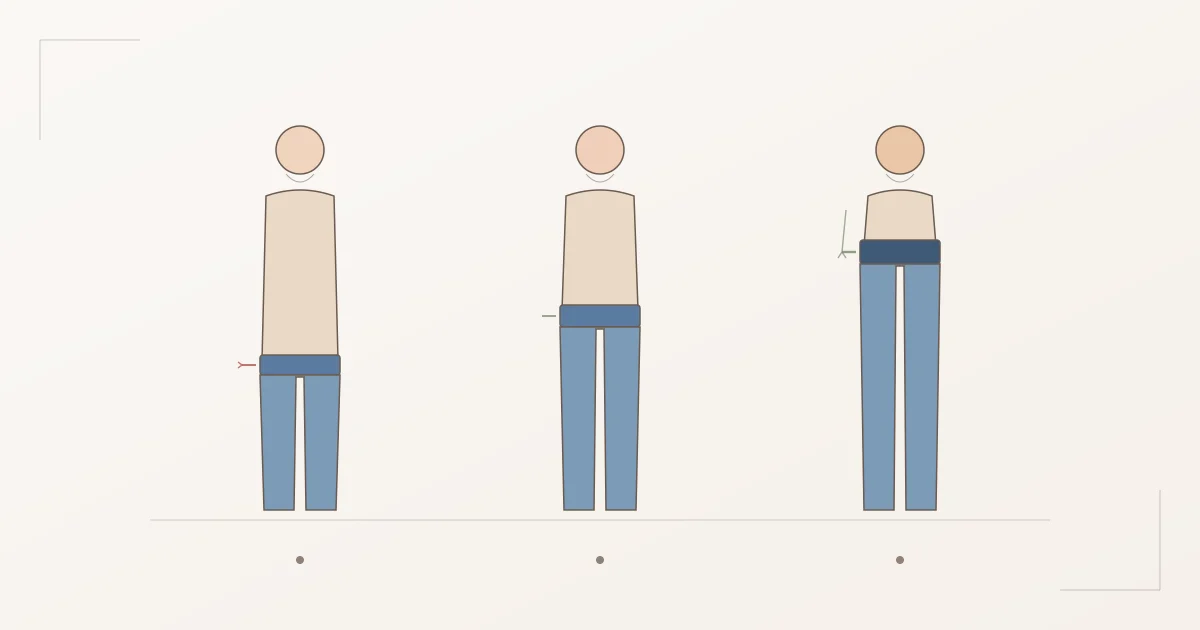
The high rise is the great all-rounder. Because it defines the waist at its narrowest point and sets the line of the leg up high, it visually lengthens the legs and shapes a clear silhouette. It flatters almost every figure and is especially ideal for petite women — more on that in the guide Styling for petite women.
The mid rise is the comfortable compromise: understated, everyday-friendly, neutral for most figures. The low rise visually shortens the legs and demands very balanced proportions to be flattering — it's the most demanding rise to wear and, right now, rarely the best choice.
The leg shapes at a glance
The leg shape is the silhouette of the trouser leg. It governs whether a pair of jeans emphasises the hips, balances them or lengthens the line of the leg. These six basic shapes cover nearly everything on offer.
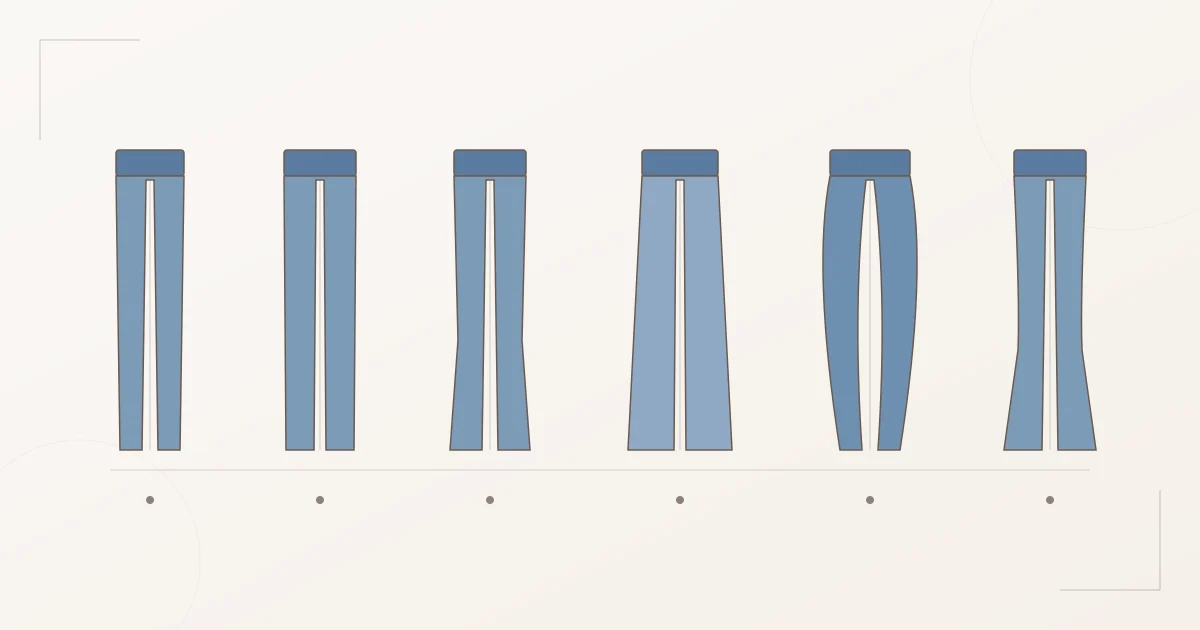
| Leg shape | Effect | Best suited to |
|---|---|---|
| Skinny | Emphasises the leg line, an unbroken line | Slim legs, playing up curves, with a high rise |
| Straight | Straight, classic, universally balanced | Almost every figure — the safe all-rounder |
| Bootcut | Slightly flared from the knee, balances the hips | Fuller thighs, a curvy silhouette |
| Wide leg | Wide, elegant, lengthening at full length | With a high rise; taller and balanced figures |
| Mom / Barrel | Loose at the hips, narrower at the hem | A narrow waist, rounder hips, a relaxed look |
| Flare | Fitted to the knee, then flared; lengthens the leg | Balancing the hips, lengthening the legs, with a heel |
Keep in mind: the leg shape always works together with the rise. A wide-leg pair with a high waistband lengthens; the same width with a low waistband shortens. So never look at the leg shape in isolation.
Jeans by body line (Kibbe)
Whether a pair of jeans truly suits you depends not only on your hip width but on your whole body line. The Kibbe system describes that line more precisely than the classic apple-and-pear categories. Here are the basic tendencies of the five Kibbe families.
| Kibbe family | Jeans that suit | Better to avoid |
|---|---|---|
| Dramatic | Straight, long, clean line; straight, wide leg | Faded, heavily distressed details |
| Natural | Relaxed straight, boyfriend, wide; texture | Stiff, tightly body-hugging cuts |
| Classic | Well-cut straight, a timeless wash | Extreme cuts in any direction |
| Gamine | Cropped, ankle, contrast details, shorter lengths | Very long, uniform wide-leg silhouettes |
| Romantic | Curve-hugging high-waist skinny, bootcut | Straight, boxy, shapeless cuts |
If you don't know your type yet, the Kibbe quiz gives you a first indication. The in-depth guide to all 13 Kibbe types explains the system behind it.
Jeans by proportion: petite & tall
Your height mainly affects the length and the rise — not the leg shape. It pays to choose deliberately here.
For petite women
Go for a high waistband and full length to the ankle, or a clean cropped hem that ends exactly at the narrowest point. Avoid fabric that pools at the floor. A continuous colour from jeans to shoe adds extra length. More on this in the petite guide.
For tall women
Tall women can be bolder: wide leg and flare at full length look elegant, and mid to low rises work too. Watch for enough inseam length — with many brands the standard length is too short. Seek out "tall" sizes or longer cuts specifically.
Jeans by concern: tummy, bottom & legs
Often it isn't about a figure type but about a specific concern. Here are the most effective solutions.
Comfortably smoothing the tummy
A high-waist waistband with a little stretch and a firm, wide band supports gently and shapes a smooth line. Straight and bootcut leg shapes keep the silhouette balanced. Avoid waistbands that sit too low and cut in exactly at the sensitive spot.
Emphasising or balancing the bottom & hips
To emphasise: a high-waist skinny with a little stretch that follows the curve. To balance fuller hips: bootcut or straight, whose width down the leg visually offsets the hip width. A slightly flared line creates balance against the midsection.
Short or long legs
To visually lengthen short legs: a high waistband, full length, monochrome down to the shoes, and gladly a flare with a heel. To emphasise long legs: skinny or straight cuts with a high rise. The most common mistake with short legs is a cropped hem at the widest part of the calf — it shortens them further.
Step by step: finding the right jeans
These six steps lead you systematically to the right pair — in the order in which the decisions build on one another.
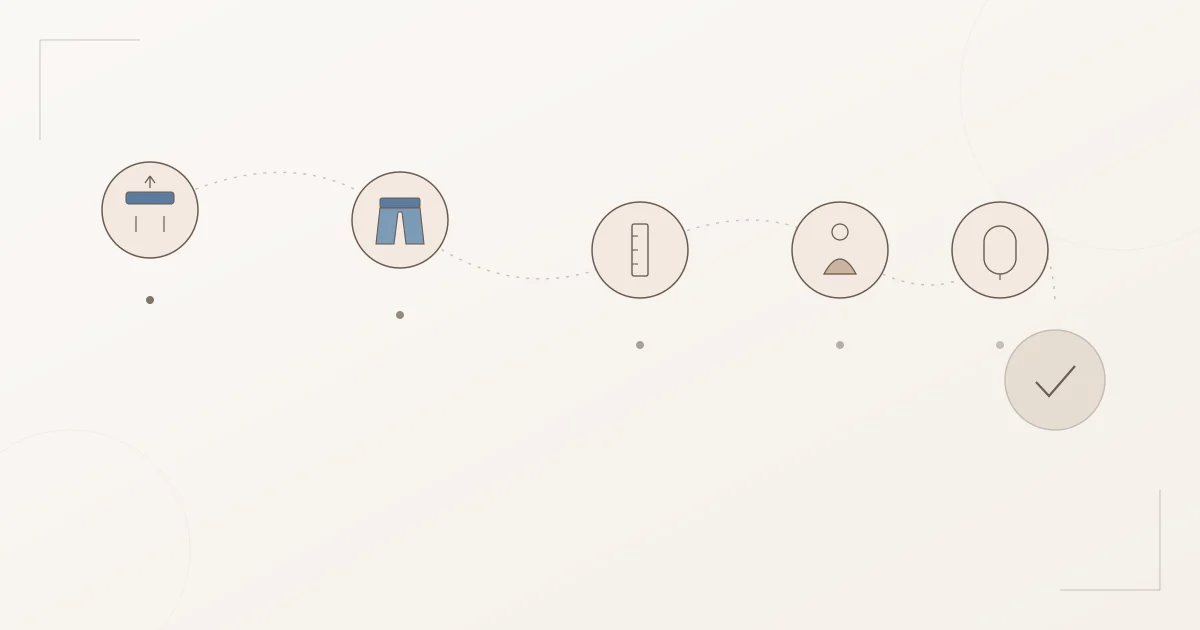
- Set the rise. Start with the waistband. For most figures, and especially for petite women, a high rise is the safest choice. Only with very balanced proportions is it worth experimenting with a mid rise.
- Choose the leg shape. Decide by goal: emphasising the legs (skinny), balancing them out (bootcut, flare), universal (straight) or relaxed (wide, mom). Length adds the finishing touch later.
- Set the length. Full length to the ankle, or a clean cropped hem at a narrow point. Never let it end at the widest part of the calf.
- Factor in the body line. Match your choice against your Kibbe type — sharp lines carry clean, straight cuts, soft lines carry curve-hugging ones.
- Try on — and move. Sit down, take a few steps, bend over. A pair of jeans has to sit while you move, not just standing in front of the mirror.
- Check the fit. Watch for a waist gap at the back, folds at the crotch and the length. Anything that's only off on length is solved by tailoring — the rest has to be right off the rack.
Never buy the wrong jeans again
Once you know your body line, you make every cut decision with confidence — with jeans just as with everything else. A Kibbe analysis hands you your personal rulebook in a dossier that makes every shopping trip easier.
My Kibbe analysis with style dossier costs €150 — a colour analysis can be added (price on request). Free initial chat via WhatsApp — 30 minutes, no obligation.
Wash, colour & details
Beyond cut and fit, the wash and the details strongly shape how a pair of jeans reads. As a rule of thumb: dark, even washes lengthen and look slimmer because they form an unbroken line. Light washes and strong contrasts (lightened thighs, used effects) draw the eye to the highlighted spot — useful for emphasising, unhelpful for smoothing.
Vertical details support the line: a centre crease or a subtle vertical wash adds extra length. Which shades of blue and indigo suit you best also depends on your color type — cool types wear clear, bluish indigos, warm types tend towards soft, slightly greyed or brownish-toned washes. The same principle applies to seams and hardware: contrast stitching emphasises, tonal stitching calms.
The most common jeans mistakes & myths
These are the mistakes I see most often in consultations — and all of them are easy to avoid.
Mistake 1: Buying by size instead of by fit
Off-the-rack sizes vary considerably between brands. Anyone who stubbornly reaches for their "number" often misses the better-fitting pair one size over. Always try several sizes and judge by the fit, not the label.
Mistake 2: Ignoring the waist gap
If the waistband gapes at the back while the hips sit well, that's no reason to give up — this waist gap is easily closed by tailoring. Many people abandon the perfectly fitting pair over this small detail. Needlessly.
Myth: "Skinny always slims"
Not automatically. A skinny emphasises the line of the leg — that flatters slim legs but can further accentuate fuller calves. Lengthening comes not from tightness but from the unbroken line and the high rise. Straight or bootcut look more balanced on many figures.
Myth: "Wide leg only suits tall women"
Wrong, when the proportions are right. A wide-leg pair with a high rise and full length to just above the floor lengthens petite women too — what matters is that the hem doesn't pool and the waist sits high.
Fit check & tailoring
Fit decides how a pair of jeans sits more than the cut does. Four points to check at every try-on: the waistband (does it sit with no waist gap?), the hips (does it strain or throw folds?), the crotch (smooth, or little creases?) and the length (does the hem end at a narrow point?).
A pair of jeans that pinches when you sit, or whose waistband slips down with every movement, is the wrong pair — no matter how good it looks standing in front of the mirror. How it sits in motion is the most honest test.
The underrated lever is tailoring. A shortened hem, a closed waist gap or legs taken in slightly turn an "almost fits" into a "fits perfectly" — for a few euros. With jeans in particular it's worth it, because a cleanly shortened hem changes the entire proportion. A quality pair of jeans that's been altered perfectly beats any expensive off-the-rack pair that only fits roughly. Anyone who buys by fit and has pieces altered deliberately makes far fewer bad buys — and wears every pair longer and more happily.
FAQ — Frequently asked questions
Which jeans suit my body?
The right pair comes down to three factors: rise, leg shape and length. A high rise suits almost every figure because it defines the waist and lengthens the legs. You then choose the leg shape according to whether you want to emphasise your hips (skinny) or balance them (bootcut, straight).
Which rise suits me best?
For most figures, a high rise is the best choice because it defines the waist at its narrowest point and visually lengthens the legs. A mid rise is a comfortable, neutral compromise. A low rise shortens the legs and demands very balanced proportions.
Does high-waist really suit everyone?
Nearly everyone, yes. High rise sets the waist up top and creates a clean, lengthening silhouette. With a very short torso, an extremely high waistband can tip the proportions — then a moderately high band is the better choice. For petite women, high rise is almost always ideal.
Which jeans smooth a tummy?
A high-waist waistband with a little stretch and a firm, wide band supports gently and shapes a smooth line. Straight and bootcut leg shapes keep the silhouette balanced. You should avoid waistbands that sit too low and cut in at the sensitive spot.
Which jeans make short legs look longer?
A high waistband combined with full length to the ankle, ideally monochrome down to the shoes. A flare with a heel lengthens the line of the leg especially well. Avoid cropped hems at the widest part of the calf, because they shorten the leg further.
What's the difference between mom jeans and straight jeans?
Mom jeans sit high, are looser at the hips and thighs and taper towards the hem — a retro, relaxed look. Straight jeans run straight from thigh to hem. Mom flatters a narrow waist with rounder hips, while straight is the universal all-rounder.
Which jeans suit fuller thighs?
Bootcut and slightly flared cuts offset fuller thighs, because the width at the lower leg balances the silhouette. A slightly firmer fabric with little stretch holds the shape. Very tight skinny styles, by contrast, emphasise the thighs more.
Does a dark wash really look slimmer?
Yes, generally. Dark, even washes form an unbroken line and therefore look slimmer and lengthening. Light washes and strong contrasts draw the eye to the highlighted spot — useful for emphasising, less so for smoothing.
What do I do if the waistband gapes at the back?
This waist gap appears when the hips and waist are differently pronounced. It's no reason to give up on the jeans — tailoring closes it for a few euros. Otherwise, look for styles with a slightly higher, contoured waistband.
Which jeans suit my Kibbe type?
Sharp, straight body lines (Dramatic) carry clean straight and wide-leg cuts, while soft, curvy lines (Romantic) carry curve-hugging high-waist styles. Natural types suit relaxed, textured cuts, and Gamine types suit shorter lengths with contrast. The Kibbe quiz gives you a first read on your line.
How many pairs of jeans does a good wardrobe need?
For most people, three to four well-fitting pairs are enough: a dark straight or skinny for versatile occasions, a more casual pair for everyday, and, depending on preference, a wide leg or bootcut. What matters isn't the quantity but that every single pair truly fits.
Is tailoring worth it for jeans?
Yes, especially for jeans. A shortened hem changes the entire proportion, and a closed waist gap turns a bad buy into a favourite pair. The cost is small relative to the effect — the best investment in an already good pair of jeans.
From the rule to your personal result
Find the cuts that carry your line
This guide gives you the tools for the right jeans. A professional Kibbe analysis gives you your personal result — which silhouettes, cuts and colours truly carry your structure, in an individual dossier. A free initial chat is always included.