
TL;DR — Washing and caring for clothes the right way
- Caring for clothes properly isn’t just “the right cycle” — it’s preserving shape, colour and fit, so the pieces that suit you keep suiting you.
- Read the care label first: five symbols (washtub, triangle, square, iron, circle) tell you everything about washing, bleaching, drying, ironing and dry cleaning.
- Care by fabric: cotton takes 40°C, wool and silk only cool and gentle, synthetics at low heat.
- Dry knitwear flat, never hanging — or it stretches out. Wash dark clothes inside out and cool to keep the colour rich.
- Wash less: wool, jeans and blazers rarely need the machine — airing freshens them and extends their life.
You wash clothes correctly by reading the care label, sorting by colour and fabric, not overfilling the drum, and washing as cool and gently as possible. For most textiles 30 to 40°C is enough; wool and silk need a gentle cycle. What matters is more than cleanliness: the right care preserves shape, colour and fit — and with them the value of your wardrobe.
Most laundry guides explain how the machine works. That’s useful, but it’s only half the story. A well-chosen garment is only beautiful for as long as it keeps its shape and its colour. So this isn’t just about getting things clean — it’s about preserving them.
Contents
- Why “washing right” is more than the right cycle
- Reading the care label: the five symbol groups
- The most important laundry symbols at a glance
- Care by fabric: wool, cotton, silk & co
- The right wash temperature and cycle
- Keeping colour: so dark stays dark
- Keeping shape: drying without deforming
- Ironing and steam: what each fabric needs
- Wash less, wear longer
- Storing: folding, hanging, moths
- Step by step: sorting the laundry right
- The most common care mistakes
- FAQ — Frequently asked questions
Why “washing right” is more than the right cycle
“What temperature do I wash this at?” — that’s how almost every laundry guide begins, and the answer is rarely wrong. But it falls short. Caring for clothes properly means preserving their shape, their colour and their fit — not just getting them clean. Because a piece that suits you only suits you for as long as it holds its shape and its colour stays rich.
This is exactly where the value of your wardrobe is decided. A considered wardrobe of a few good pieces only pays off if those pieces last for years. Wrong washing and drying ruins faster than any wearing: a stretched-out jumper, a discoloured shirt, a shrunk dress are rarely worn out — they’re washed out. This guide shows how to bring both together: clean and preserved.
Reading the care label: the five symbol groups
The care label is your clothing’s instruction manual — five symbols govern everything. They always appear in the same order: washing (washtub), bleaching (triangle), drying (square), ironing (iron) and professional cleaning (circle). The system is internationally standardised through the care label, so the symbols mean the same everywhere.
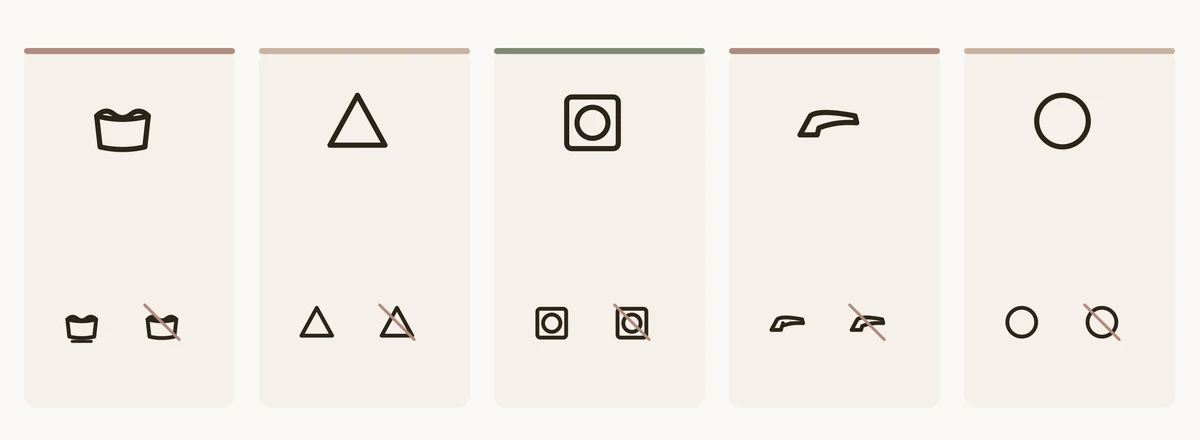
Two additions you must know: dots and numbers give the temperature (more dots = hotter), and a line or double line under the symbol stands for a gentle or delicate process. A crossed-out symbol always means: this is not allowed. With these three rules you can read any label.
The most important laundry symbols at a glance
This table sums up the five symbol groups and their most common variants — the laundry symbols at a glance:
| Symbol | Meaning | Variants |
|---|---|---|
| Washtub | Washing | number = max. temperature · hand = hand wash · line = gentle cycle · crossed out = do not wash |
| Triangle | Bleaching | empty = bleaching allowed · crossed out = do not bleach |
| Square | Drying | circle inside = tumble dry allowed · dots = temperature · crossed out = do not tumble dry |
| Iron | Ironing | dots = temperature (1 low to 3 high) · crossed out = do not iron |
| Circle | Dry cleaning | letter = solvent · line = gentle · crossed out = do not dry clean |
When in doubt, follow the label: it’s set to the most delicate component of the garment.
Care by fabric: wool, cotton, silk & co
Every fabric has its own care needs — the fabric decides how gently you have to wash. Natural fibres and synthetics behave completely differently, and knowing the fabric prevents the typical damage.

- Cotton and linen are robust: 40°C, normal detergent. Linen creases and likes air-drying.
- Wool and cashmere only cool, on the wool cycle or by hand with wool detergent, without rubbing — and dry flat.
- Silk is delicate: hand-wash cold with a mild detergent or dry clean, no softener, dry in the shade.
- Viscose and modal lose strength when wet: 30°C gentle cycle, don’t wring, dry in shape.
- Synthetics (polyester, elastane) wash at low heat, as heat damages the fibres and the fit.
- Denim inside out, cool and rarely — that preserves colour and shape longest.
The right wash temperature and cycle
For most everyday textiles, 30 to 40°C is ideal — it cleans reliably and spares fibres, colours and energy. Modern detergents already work at low temperatures. You only need 60°C for heavily soiled laundry, bedding and towels for hygienic reasons.
Just as important as the temperature are the cycle and the load: a gentle or delicate cycle moves the laundry more softly, and a drum that isn’t packed full lets pieces float freely, which reduces friction and therefore pilling. Less detergent than you think is usually enough — overdosing leaves residue. And a wash bag protects delicate pieces from snags and friction.
Keeping colour: so dark stays dark
Colours stay rich when you wash cool, inside out and separately. Dark and intense colours fade mainly through frequent hot washing and through friction on the fabric surface. A special detergent for dark or coloured laundry, and skipping softener, keep the colour deep for longer.
Faded black is almost always the result of washing too hot and too often — not of wearing too much.
This is more than cosmetic: your clothes only work when the colours suit your colour type — and they only do that while they’re true. A washed-out navy that tips towards grey loses exactly the effect you bought it for. Also dry coloured pieces in the shade, because direct sun bleaches them out.
Keeping shape: drying without deforming
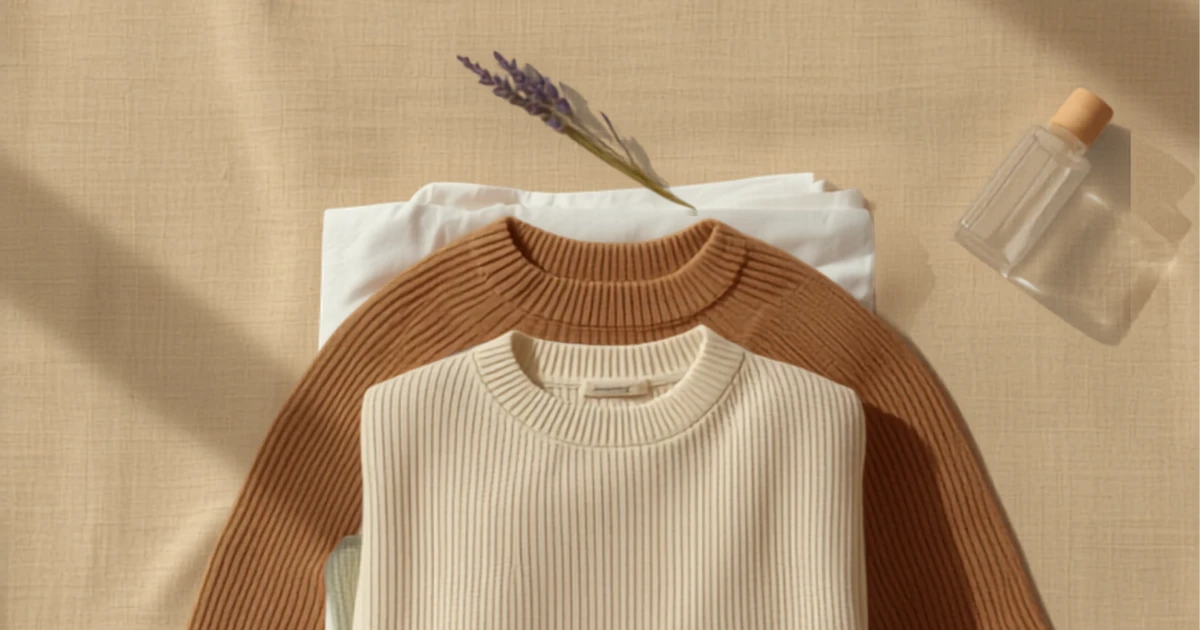
A garment’s shape is decided when it dries, not when it’s washed. Wet fibres are heavy and stretchy — hang up a wet jumper and its own weight pulls it long, and it stretches out. Knitwear and heavy wet pieces therefore belong flat on a towel, pulled into shape.
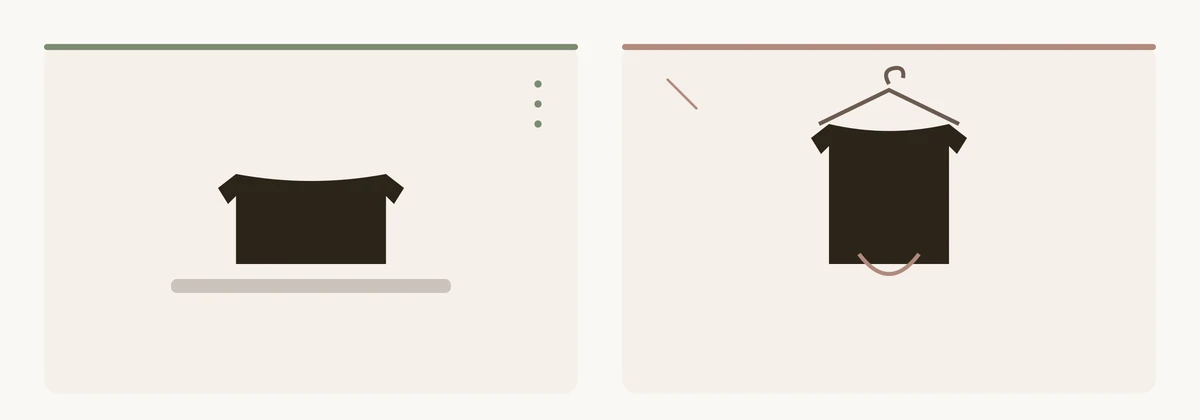
The dryer is the second shape-killer: heat shrinks cotton and wool and damages elastane. Check the square symbol — many good pieces don’t belong in the dryer at all. Where you use it, choose a low setting. Shape-stable woven fabrics like shirts and blouses, on the other hand, dry best on a hanger so they fall smooth. The same care you put into choosing your basics is needed when drying — otherwise the fit is gone.
Ironing and steam: what each fabric needs
The ironing temperature follows the fabric — the dots in the iron symbol set it. One dot means low heat (synthetics, silk), two medium (wool, viscose), three high (cotton, linen). Ironed too hot, delicate fabric goes shiny or scorches — when in doubt, iron inside out or use a pressing cloth.
Often steam is the gentler choice: a steamer or hanging the piece in a steamy bathroom relaxes creases without pressing the fabric. Knitwear you don’t iron at all — you pull it into shape while damp. And a crossed-out iron means: don’t iron — then only steam and correct drying help.
Wash less, wear longer
The gentlest wash is the one you skip. Many pieces are washed out of habit, not necessity. Jeans, jumpers, blazers and wool rarely need the machine — usually airing overnight, brushing out a stain or a quick freshen in the air is enough. Wool even has a self-cleaning quality and freshens by airing.
Only body-close pieces need frequent washing: underwear, socks and shirts. Everything else gains from being washed less often — the fibres stay firmer, the colours richer, the shape lasts longer. It also spares water and energy. Washing less clearly extends the life of your clothes and means buying less.
Storing: folding, hanging, moths
The right storage preserves shape just as much as the right drying. The basic rule: heavy and knitted is folded, structured and draping is hung. A jumper on a hanger gets “bumps” at the shoulders and stretches out — so fold it. Blouses, shirts, blazers and dresses, on the other hand, hang so they stay smooth.
Wool and cashmere also need protection from moths: store clean (moths love skin flakes and stains), airy, and with cedar or lavender rather than chemicals. Put summer and winter wardrobes away cleanly washed when the season ends — so they survive the break unharmed and you keep an overview when decluttering.
Step by step: sorting the laundry right
This is how to prepare a wash that spares rather than harms:
- Check the labels. Sort by wash symbol — what’s allowed together goes into the drum together.
- Separate by colour. White, dark and coloured apart; new items separately at first, as they can bleed.
- Group by fabric and delicacy. Coarse not with fine, delicate pieces into the wash bag.
- Prepare. Close zips, open buttons, turn delicate pieces inside out.
- Choose cycle and temperature. As cool and gentle as possible, set to the most delicate piece.
- Dose and load correctly. Less detergent than you think, don’t overfill the drum.
- Dry promptly and correctly. Don’t leave wet; knitwear flat, woven fabric on the hanger.
The most common care mistakes
Most ruined favourites aren’t worn out but washed out. Care is the cheapest route to a wardrobe that lasts.
- Washing too hot. Heat shrinks and fades — 30 to 40°C is almost always enough.
- Drying knitwear hanging. The water’s weight stretches it out; drying flat preserves the shape.
- Overfilling the drum. Too much friction creates pilling and cleans worse.
- Ignoring the label. “Dry clean only” or “do not spin” aren’t there for nothing.
- Overdosing and softener on everything. Residue and fibre damage instead of freshness; softener harms wool and technical fabrics.
- Washing everything too often. Airing is enough for many pieces and spares fibre, colour and shape.
Buy what lasts
A wardrobe that suits you — and lasts
Good care pays off most on pieces that truly suit you. A professional Kibbe and colour analysis shows which cuts and tones your structure carries — so you invest in quality you’ll wear for years. A free initial consultation is always included.
One material needs particular care, because chlorine, salt and sunscreen attack its elastane — and it is exactly that recovery which holds the shape. How to handle it is in the guide swimwear by body shape.
The biggest care mistake happens not in the wash but in storage: wool put away unwashed is the most common cause of moth holes in spring. The routine for the seasonal changeover is in the guide to organising a wardrobe.
FAQ — Frequently asked questions
How do I wash clothes correctly?
You wash clothes correctly by first reading the care label, sorting by colour and fabric, and not overfilling the drum. For most textiles 30 to 40°C and a suitable detergent are enough; delicate fabrics like wool and silk need a gentle cycle or hand washing. Washed less, cooler and more gently, clothes stay beautiful longer and keep their shape and colour.
What do the laundry symbols mean?
The five basic symbols stand for the five care steps: the washtub for washing, the triangle for bleaching, the square for drying, the iron for ironing and the circle for dry cleaning. Numbers and dots give the temperature, a line under the symbol a gentle process, and a crossed-out symbol means: not allowed. The system is internationally standardised.
At what temperature do you wash clothes?
For most everyday textiles, 30 or 40°C is enough — it spares fibres, colours and energy. 60°C is only needed for heavily soiled laundry, bedding or towels, for example for hygienic reasons. Wool, silk and delicate fabrics you wash cold to lukewarm on the wool or hand-wash cycle. The exact maximum temperature is the number in the washtub on the label.
How do you wash wool and cashmere?
Wash wool and cashmere rarely, cool and gently: on the machine’s wool cycle or by hand in lukewarm water with wool detergent, without rubbing or wringing. To dry, press the water out carefully and lay the piece flat on a towel — never hanging, or it warps. Often airing is enough instead of washing, because wool freshens itself.
How does black and dark clothing stay black?
Dark clothing stays saturated longer if you turn it inside out and wash it cool (30°C) with a special detergent for dark laundry. Wash dark separately, avoid softener and direct sunlight when drying. The less often and more gently you wash, the longer the colour lasts — frequent hot washing is the main reason for faded black.
How do I avoid pilling?
Pilling comes from friction, so it helps to: wash inside out, use a gentle cycle, not overfill the drum and not mix coarse with fine. A wash bag additionally protects delicate pieces. Existing pills you remove carefully with a fabric shaver or cashmere comb — not with scissors. High-quality, tightly woven fabrics pill less by nature.
How do I dry a jumper without deforming it?
Dry a jumper flat: after washing, press the water out carefully (don’t wring), pull the jumper into shape and lay it flat on a dry towel. Knitwear never dries hanging, because the weight of the water pulls it long and stretches it out. Keep delicate fibres away from the radiator and direct sun.
How often do you need to wash clothes?
Far less often than most people wash. Jeans, jumpers, blazers and wool rarely need the machine — often airing overnight or brushing out a stain is enough. Only body-close pieces like underwear, socks and shirts need frequent washing. Washing less spares the fibres, the colours and the environment — and your clothes last considerably longer.
What does the circle on the care label mean?
The circle stands for professional dry cleaning. A letter inside the circle (P or F) tells the cleaner which solvent is allowed; a line underneath means a gentle process. A crossed-out circle means: do not dry clean. For you as the wearer, it’s enough to know whether a piece has to go to the cleaner or not.