
TL;DR — What body shape do I have?
- Your body shape comes from the ratio of shoulders, waist and hips — not from your weight or height.
- There are five basic shapes: hourglass, pear, apple, rectangle and inverted triangle. Measure the three girths and compare the widths.
- Surprising: only about 8% of women are a true hourglass — the most common shape is the rectangle at 46%.
- The styling principle is always balance, not hiding: even out the proportions visually instead of concealing something.
- Body shape is the entry point. What truly suits you is settled by your Kibbe type — it also reads bone structure and line.
You determine your body shape from the ratios of three measurements: shoulders, waist and hips. If shoulders and hips are about the same width and the waist is clearly narrower, you have an hourglass. If the hips are wider, a pear; if the shoulders are wider, an inverted triangle. If all three are similar and the waist is barely defined, a rectangle; if the volume sits in the middle, an apple. What counts is the proportions to each other, not the absolute centimetres.
It sounds simple — and the first look in the mirror is often enough for a tendency. In this guide you measure cleanly, place yourself in one of the five shapes, and learn where body shape reaches its limit and which step tells you more than any tape measure.
Contents
- What a body shape is — and what it isn’t
- How to determine your body shape in 4 steps
- The five body shapes at a glance
- How common is each shape? (The numbers surprise)
- The core principle: balance, not hiding
- Where body shape reaches its limit
- The next step: from body shape to Kibbe
- Common mistakes when determining your body shape
- FAQ — Frequently asked questions
What a body shape is — and what it isn’t
A body shape describes the silhouette of your upper body: the width ratio of shoulders, waist and hips to each other. It says nothing about your weight, your dress size or your fitness. Two women with very different measurements can have the same shape — and two women of the same weight, two quite different ones.
The shape arises from your bone structure and the personal distribution of muscle and fat. That is exactly what makes it so stable: it is not a state you “train away”, but a blueprint. The English Wikipedia puts it well — the female body shape is the result of bone structure plus muscle and fat distribution. That is why the basic shape usually changes less with weight fluctuations than people think.
It is also important what a body shape is not: not a value judgement. There is no “good” or “bad” shape. The goal is not to imitate a particular silhouette, but to know your own — because only then do you make choices while shopping that flatter you.
How to determine your body shape in 4 steps
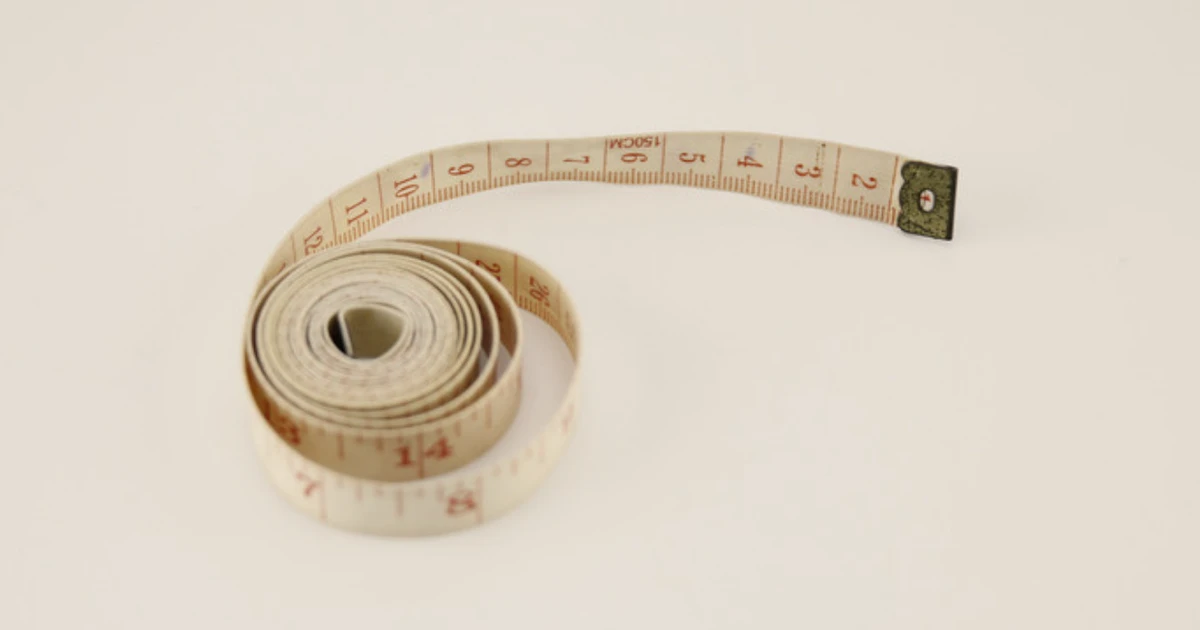
You only need a tape measure, a mirror and two minutes. Measure over your underwear, keep the tape horizontal and don’t pull it too tight.
- Measure shoulders and bust. Place the tape at the fullest point of the bust and note the girth. Also notice how wide your shoulders look in the mirror compared with the hips.
- Measure the waist. Measure at the narrowest point, usually just above the navel. When you lean to the side, a small crease forms there — that is your natural waist.
- Measure the hips. Measure at the widest point of seat and hips, typically about 20 cm below the waist. Stand with your legs closed.
- Compare the ratios. Now it is not the numbers that matter, but the ratio. Divide the waist girth by the hip girth: that is your waist–hip ratio. A value around 0.75 or below with similarly wide shoulders and hips points to an hourglass.
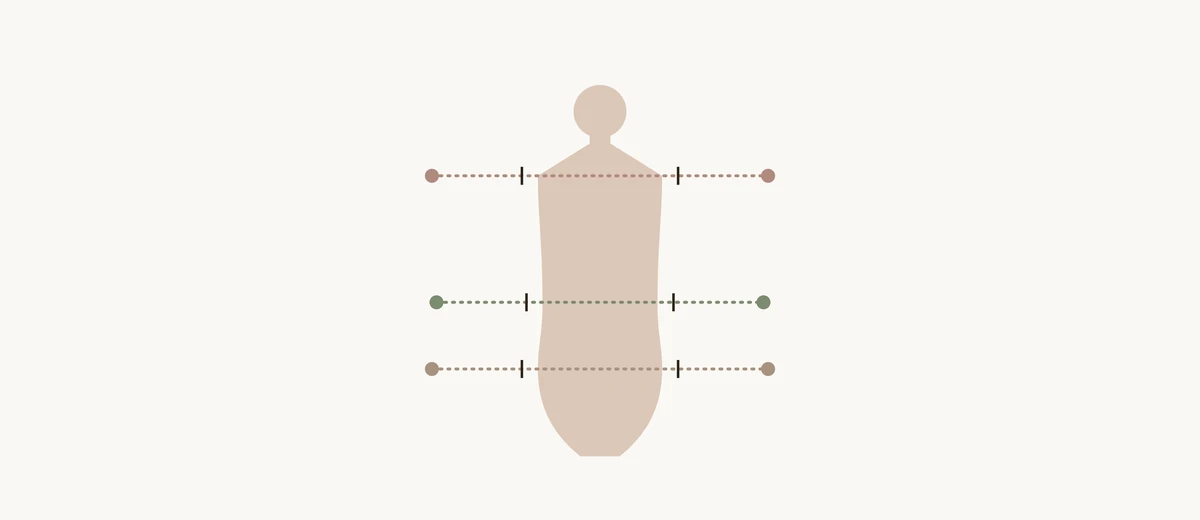
Remember above all three relationships: shoulder to hip width (wider on top, wider at the bottom, or equal?) and how strongly the waist cuts in between. From these three relationships your basic shape almost emerges on its own.
The five body shapes at a glance
The common systems group the female silhouette into five basic shapes, often named after letters or objects. Here you see them as geometry — from the hourglass (X) through pear (A), apple (O) and rectangle (H) to the inverted triangle.
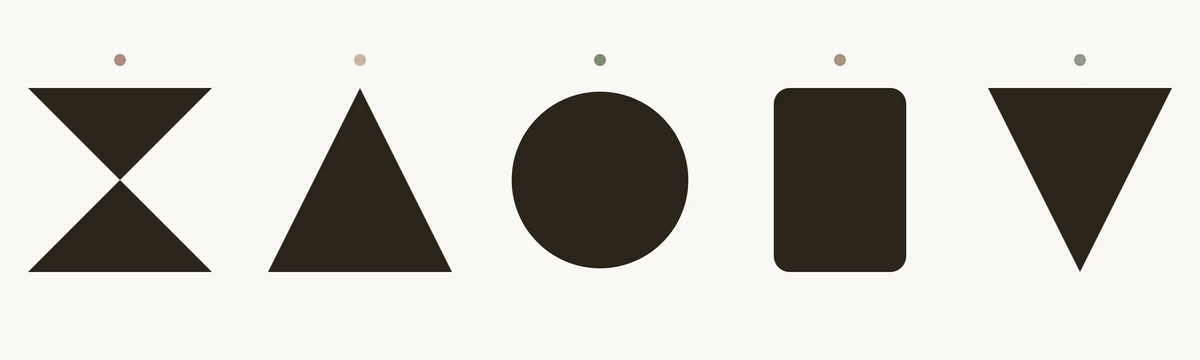
| Body shape | How to recognise it | Cuts that flatter |
|---|---|---|
| Hourglass (X) | Shoulders ≈ hips, waist clearly narrower | Define the waist, close-fitting cuts, wrap dresses |
| Pear (A) | Hips wider than shoulders, defined waist | Emphasise the upper body, A-line skirts, wide necklines |
| Apple (O) | Volume in the mid-section, little waist, slim legs | Vertical lines, lengthening tops, show the legs |
| Rectangle (H) | Shoulders ≈ waist ≈ hips, little waist | Create a waist, belts, layers, structure |
| Inverted triangle | Shoulders wider than hips, athletic | Volume at the bottom, wide trousers, A-line skirts |
Hourglass (X-type)
The hourglass has roughly equally wide shoulders and hips with a clearly nipped-in waist. Upper and lower body are balanced, the waist is the narrowest point. A tell-tale sign: a belt sits as if it were natural, and straight-cut dresses “give away” your shape. Cuts that follow the waist underline the natural balance — more on this in the guide to the right dress.
Pear (A-type, triangle)
With the pear, the hips are wider than the shoulders and the waist is usually clearly visible. The volume is at the bottom. The aim is to make the upper body look a touch wider — with light tops, interesting necklines and details at the shoulders and décolleté. Below you choose calmer, straight or slightly flared lines. Which trouser cuts do that is shown in the jeans-by-figure guide.
Apple (O-type, round)
With the apple, the volume sits in the mid-section, the waist is little defined, and legs and décolleté are often slim. Vertical lines lengthen and create height; tops that fall loosely over the middle rather than cinching work best. You may deliberately show your slim legs. A V-neckline opens the upper body and draws the eye upward.
Rectangle (H-type)
With the rectangle, shoulders, waist and hips are similarly wide and the waist is barely nipped in. The silhouette is straight and athletic. Here it is about creating a waist: with belts, fitted cuts, layers and structures that suggest curves. It is the most common shape — and one that gains enormously with the right cuts.
Inverted triangle
The inverted triangle has wider shoulders than hips, often with an athletic upper body. Balance comes from adding volume below: wide trousers, flared skirts, lighter bottoms. On top you choose clean, plain lines without extra shoulder emphasis. That way the eye travels downward and the silhouette looks balanced.
How common is each shape? (The numbers surprise)
The hourglass is treated as the ideal — yet it is the rarest shape. A much-cited study by North Carolina State University measured over 6,000 women with the “Female Figure Identification Technique”. The result: around 46% rectangle, about 20% pear, 14% apple, 12% inverted triangle — and only about 8% true hourglass.
Almost all style advice is oriented to the hourglass — the shape fewer than one in ten women even have. Whoever measures herself against it works against her own silhouette instead of with it.
The consequence is freeing: if you don’t recognise yourself in any “hourglass rule”, that is completely normal — you belong to the majority. Instead of imitating a foreign shape, you dress your own. That is the whole trick, and it works equally well for each of the five shapes.
The core principle: balance, not hiding
Good styling by body shape follows a single principle: balance. You even out the proportions visually so the silhouette looks harmonious — you hide nothing. The word “conceal” misleads, because it turns every body part into a problem. It is about proportion, not camouflage.
In practice: where there is less width, you add volume visually; where there is more width, you keep the lines calm. A pear brings a little more attention up top, an inverted triangle down below. A rectangle suggests a waist, an apple relies on length. The tools are always the same: cut, line, contrast and the targeted use of details. How to turn that into a whole style is shown in the guide Which clothing style suits me.
Where body shape reaches its limit
Body shape measures only one thing: the width of your silhouette. It ignores three things that are decisive for what truly suits you — the bone structure, the overall scale of the effect (petite or bold) and the vertical line of your body. That is why two women with an identical hourglass shape often arrive at completely different results when they wear the same dress.
An example: a petite woman with fine bones and a tall one with a strong frame can both be an “hourglass”. The tightly fitted blazer that gives the one structure overwhelms the other. Body shape does not see this difference — it knows only width ratios. This is exactly where the honest comparison of Kibbe and body-shape type comes in and explains why apple, pear and hourglass are not the whole truth.
That doesn’t mean body shape is useless — on the contrary, it is the fastest entry point. But it answers only half the question. The other half lies in the bone structure.
The next step: from body shape to Kibbe
The Kibbe type reads exactly what body shape leaves out: your bone structure, your overall impression and your vertical line. The system sorts women by the ratio of yin (soft, round, delicate) and yang (sharp, straight, bold) into 13 types. Instead of only asking “how wide?”, it asks “how is the frame built, and which lines does it need?”.
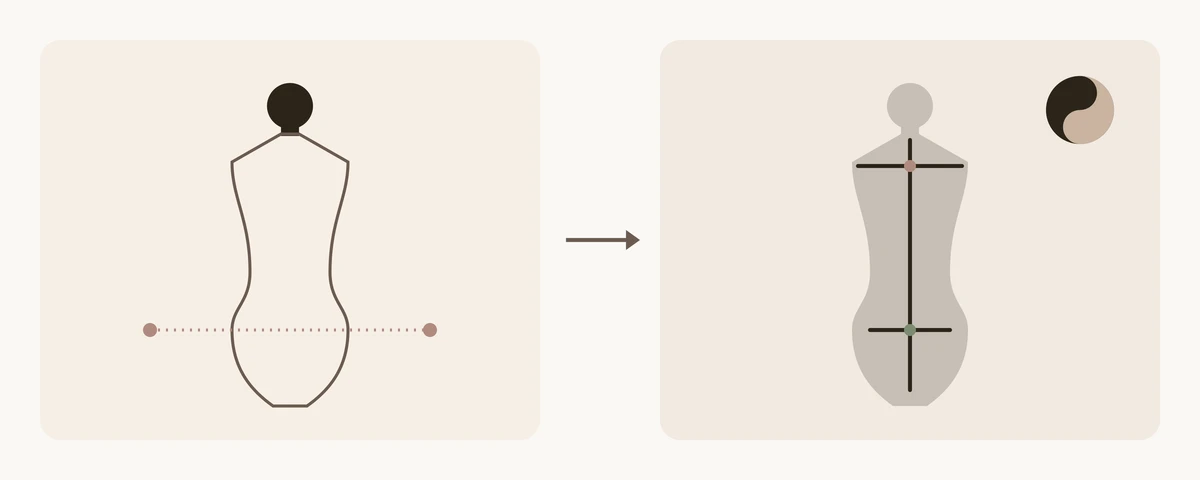
The path is logical: you now know your body shape — that is the foundation. The next step determines your Kibbe type and turns “roughly hourglass” into a precise profile with clear cut recommendations. The fastest way is the Kibbe test; a full overview of all types is given in the guide to the 13 Kibbe types. How to translate the insights into concrete outfits is in the Kibbe styling guide.
Common mistakes when determining your body shape
The most common mistake is not the wrong measurement — it is the wish to be a certain shape instead of recognising your own.
- Confusing it with weight. Body shape is a ratio, not a dress size. Losing or gaining changes the girths, rarely the basic shape.
- Measuring too tight. A tape pulled too firmly distorts the waist and turns a rectangle into an apparent hourglass. Measure loosely and horizontally.
- Forcing yourself into an hourglass. Because it counts as the ideal, many wrongly assign themselves to the hourglass. Measure honestly — the majority are not.
- Ignoring mixed shapes. Many lie between two shapes. Take the clearer one as the base and note the tendency.
- Stopping at the silhouette. The shape is the beginning, not the end. Bone structure and line co-decide what suits you (see Kibbe vs. body-shape type).
From body shape to your type
You know your shape — now comes the precision
Body shape is the entry point. A professional Kibbe analysis reads your bone structure, your line and your overall impression — and translates that into concrete cuts that truly suit you. Online for €150 with a style dossier, free initial consultation included.
How far body shape carries you shows most clearly where there is little fabric involved. The allocation for all five shapes is in the guide which swimwear suits my figure.
The face has the same procedure with its own measurements: three widths, one length and the jaw angle. Covered in what face shape do I have.
With boots, body shape only comes second — three measurements on the leg come first. Why that is, is explained in which boots suit my figure.
FAQ — Frequently asked questions
What body shape do I have?
Measure shoulders, waist and hips and compare the ratios: if shoulders and hips are equally wide and the waist clearly narrower, it is an hourglass. If the hips are wider, a pear; if the shoulders are wider, an inverted triangle. If all three are similar with no defined waist, it is a rectangle; if the volume sits in the middle, an apple. What matters is the proportions to each other, not the absolute numbers.
How do I measure my body shape correctly?
You only need a tape measure and a mirror. Measure the bust at its fullest point, the waist at its narrowest above the navel, and the hips at their widest. Keep the tape horizontal and not too tight. From the ratio of waist to hips you get your basic shape — a value around 0.75 or below usually means an hourglass.
What is the most common body shape in women?
The rectangle is the most common body shape. A study by North Carolina State University with over 6,000 women assigned about 46 percent to the rectangle, around 20 percent to the pear, 14 percent to the apple and 12 percent to the inverted triangle. The hourglass, which nearly all styling tips are based on, was the rarest at only about 8 percent.
Does my body shape change with weight?
The basic shape usually stays, because it is strongly determined by bone structure and personal fat distribution. If you gain or lose, the girths change, but the ratios to each other often stay similar. A pear generally stays a pear, even if the absolute measurements change. That is exactly why a system that does not only measure current girths makes sense.
Body shape or Kibbe — which is more accurate?
Body shape describes the outer silhouette, that is the width ratios of shoulders, waist and hips. Kibbe goes deeper and also reads the bone structure, the overall impression and the vertical line. Two women with the same hourglass shape can look very different and need different cuts. Body shape is the quick entry point, Kibbe the more precise answer to what really suits you.
Can I have several body shapes at once?
Yes, mixed shapes are the rule rather than the exception. Many women fall between two shapes — for example between hourglass and pear, or between rectangle and inverted triangle. Assign yourself to the shape that is most clearly pronounced and note the tendency toward the second. It is precisely in such borderline cases that a professional analysis helps.
Which clothes suit my body shape?
The core principle is balance: you even out the proportions visually instead of hiding something. A pear emphasises the upper body and chooses simpler lines below; an inverted triangle does the opposite. A rectangle creates shape with a defined waist, an apple relies on vertical lines. Which concrete cuts these are additionally depends on your Kibbe type.
Is one body shape better than another?
No. No body shape is better or worse — each has its own strengths. The goal is not to emulate an hourglass, but to know your own shape and dress it well. The widespread idea that the hourglass is the ideal is questionable already because it is by far the rarest shape. Good styling works with your shape, not against it.