
TL;DR — boots by body shape in short
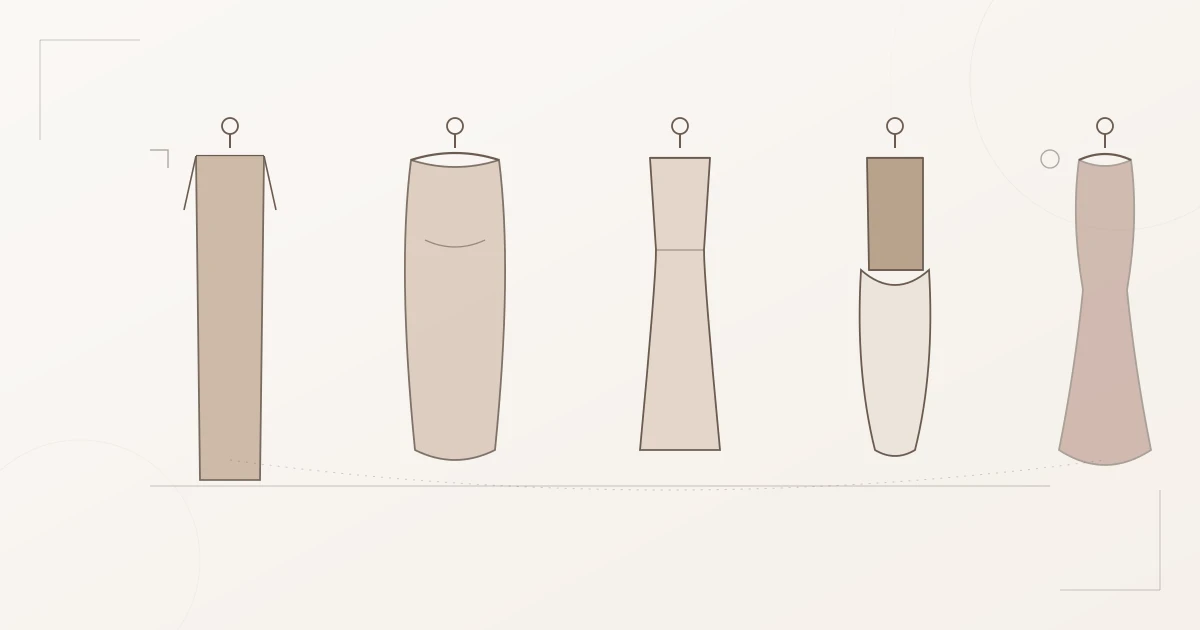
Which boots suit your figure is not decided by your body type but by three measurements on the leg: your calf circumference, the height of the widest point of your calf, and your leg length relative to your torso. From those follows which shaft height lengthens your leg rather than cutting it — and which shaft width will actually close.
- The shaft must never end at the widest point of your calf. That is exactly where it divides the leg at its least flattering spot.
- Shaft width is the most underrated measurement. Off-the-peg boots are cut for roughly 36 to 38 cm of calf — above that you need wide-calf styles.
- With trousers there is a volume rule: narrow shaft with a wide leg, wide shaft with a narrow leg. Never both wide.
- With a skirt, the gap decides between hem and shaft rim. The smaller it is, the longer the leg reads.
- The sole lengthens more than the heel. A continuous platform extends the line; a thin heel alone barely does.

Contents
- What actually decides with boots
- Three measurements on the leg
- Shaft height: where the shaft may end
- Shaft width and wide-calf boots
- The boot shapes at a glance
- Boots by body shape
- Boots with trousers: the volume rule
- Boots with skirts and dresses: the gap rule
- Heel, sole and the leg line
- Colour and material
- The most common mistakes
- Frequently asked questions
What actually decides with boots — and why it is not your figure alone
Almost every guide to which boots suit your figure sorts by body type: pear, apple, hourglass. That is right for dresses and blazers and largely useless for boots — because a boot does not sit on the torso. It sits on the leg, on its lower forty centimetres. For shoes in general other rules apply; those are in which shoes suit my figure.
So three other quantities decide:
- Your calf circumference — it determines whether the shaft closes at all.
- The height of the widest point of your calf — it determines where the shaft may end without cutting the leg.
- Your leg length relative to your torso — it determines which shaft height lengthens and which compresses.
Your figure comes after that, not before. It answers how much weight the boot may carry in the overall picture — whether it should be a quiet finish or the piece that balances the proportion. If you do not know yours yet, what body shape do I have takes you there in four steps.
A boot that does not work is almost never the wrong shoe size. It is too tight or too short at the shaft — and that is on no box.
Three measurements on the leg that decide the fit
Three minutes, a tape measure, ideally standing up in the evening — the calf is half a centimetre to one and a half centimetres larger in the afternoon than in the morning, and that is exactly what sinks online orders.
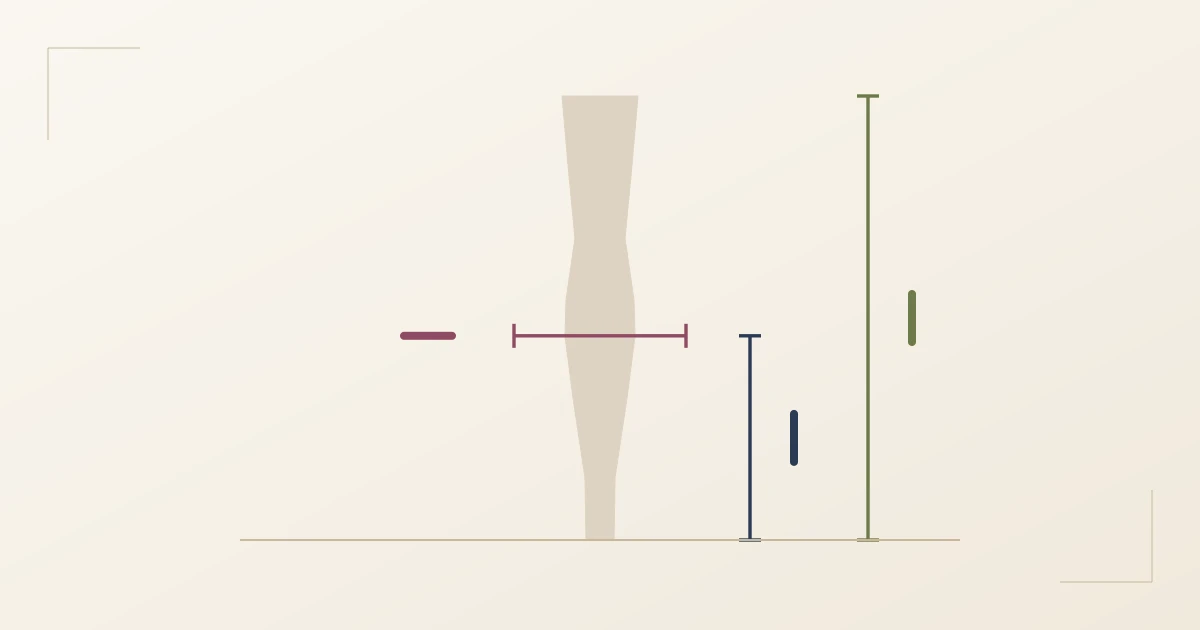
- Calf circumference. Standing, weight on both legs, at the widest point of the calf. The tape lies flat without cutting in. Note the larger of your two legs — legs are almost never identical.
- Height of the widest point. Measure from the floor to exactly that point. For most people it falls somewhere around 28 to 35 centimetres. This number is the most important one in this guide, and hardly anyone knows theirs.
- Leg length in proportion. Measure from the hip bone to the floor and compare with your overall height. If the leg is more than half, you have a long leg line; less, a short one. That decides whether you want to gain length or already have it.
With these three numbers you can judge any boot before trying it on — reputable makers state shaft height and shaft width in centimetres. Where no measurements are given, that is information in itself.
Shaft height: where the shaft may end
Here lies the mistake that ruins most boot purchases, and it has nothing to do with taste: the shaft rim must not end at the widest point of your calf.
The reason is simple optics. A horizontal edge divides the leg into two sections. If it sits at the widest point, that point is emphasised and both sections look shorter. Above or below it, the eye reads one continuous line.
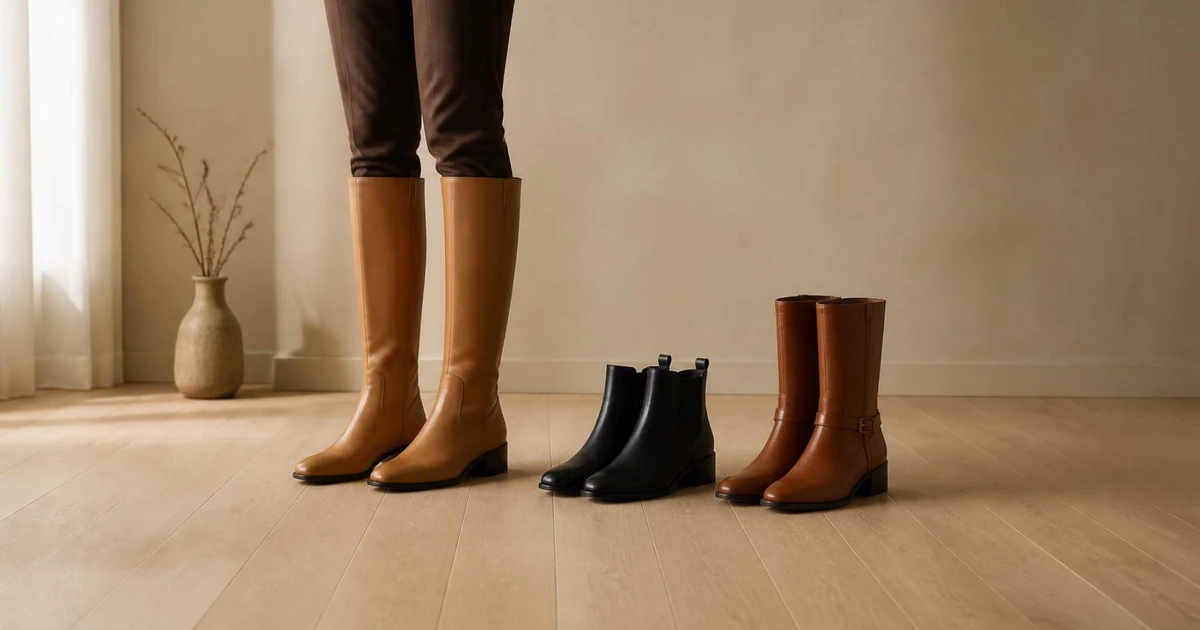
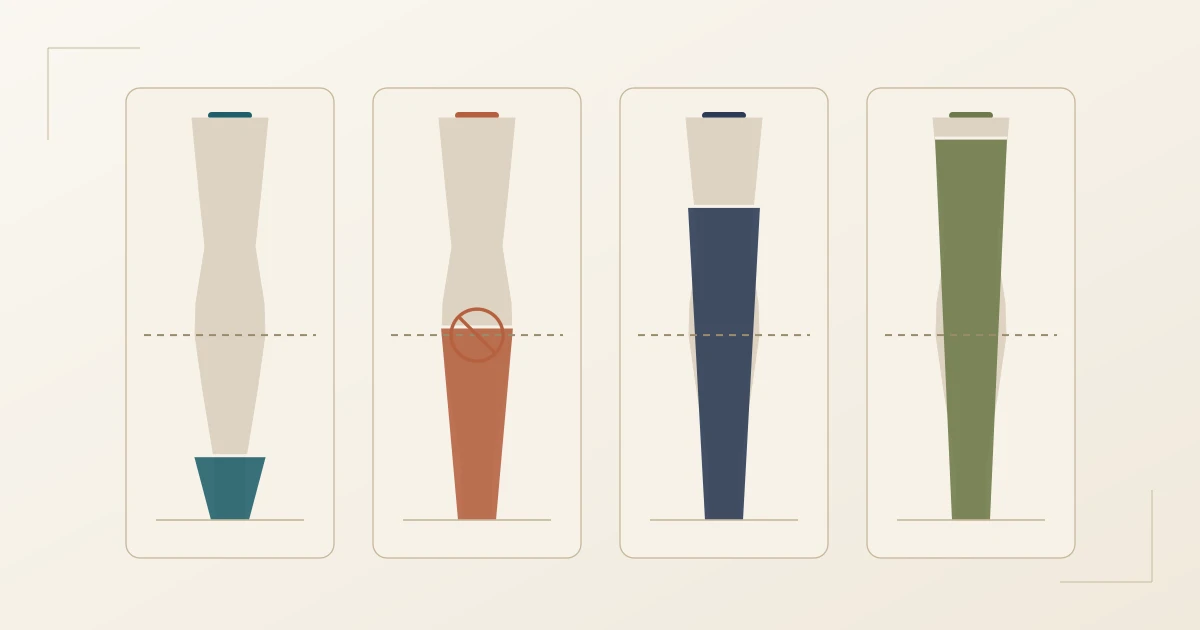
- Well below the widest point: ankle boots, shaft height roughly 10 to 16 centimetres. They end at the narrow ankle and leave the calf free.
- The danger zone: shaft heights between roughly 25 and 35 centimetres hit the widest point on many people. This is where measuring pays off most.
- Well above it: knee-high boots ending just under the kneecap, and over-the-knee styles. They skip the calf line entirely.
There is one exception: a shaft that fits closely and tapers with the calf forgives more than a straight one, because it sets no hard edge. Conversely, a soft, slouching shaft falls into folds — and those act like several small edges and compress further.
Shaft width and wide-calf boots
The second number almost nobody mentions — retailers call it shaft width or calf width. Off-the-peg boots are mostly cut for a calf circumference of roughly 36 to 38 centimetres. Anyone above that cannot close the zip — and that is not a body problem but a sizing decision by the manufacturer. Most people search for this as boots for wide calves or wide-calf boots — it always means the same thing: a shaft width above the standard.
- Wide-calf boots. A product category of their own with noticeably larger shaft widths. It is worth searching for them specifically rather than ordering standard widths again and again and sending them back.
- An elastic panel or lacing at the back. Gives several centimetres and adapts. Visually unobtrusive when the panel matches the shaft colour.
- The cobbler. Taking a too-wide shaft in is routine and costs little. The other way round works only within limits: having a shaft stretched gains one to two centimetres in real leather and almost nothing in synthetics.
The opposite case — slim, narrow calves in a shaft that is too wide — is rarer but just as distracting: the shaft tips sideways as you walk and folds at the ankle. Lace-up boots, styles with straps or a shaft in firmer leather that holds its shape all help.
The boot shapes at a glance
| Shape | Shaft height | What it does | Particularly suits |
|---|---|---|---|
| Chelsea boot | about 12 cm | ends at the ankle, elastic panel at the side | fuller calves, narrow trousers |
| Sock boot | about 14 cm | close sock-like shaft with no hard edge | slim ankles, wide trousers |
| Chunky boot | 12–18 cm | heavy sole, weight low down | stronger stature, angular line |
| Cowboy boot | 25–30 cm | firm shaft, diagonally cut rim | slim calves, skirts and dresses |
| Knee-high boot | 35–42 cm | skips the calf line, lengthens | almost everyone — if the width is right |
| Riding boot | 38–42 cm | straight firm shaft, flat sole | long leg line, classic style |
| Slouchy boot | 35–45 cm | soft shaft, falls into folds | long legs, relaxed style |
| Over-the-knee | from about 50 cm | ends above the knee, maximum length | smaller stature with a slim leg |
The shapes are not purely a style question but a question of edges: Chelsea and chunky boots set a clear horizontal line at the ankle, sock boots almost none, cowboy boots a diagonal one, knee-high styles a high one. That is what decides whether your leg reads as divided or continuous.
Boots by body shape and figure
Now that the measurements are settled, the figure comes into play. As always it is about balance, not concealment.
Hourglass
Shoulders and hips equal, waist clearly narrower. Almost any shaft height works here as long as the width is right. A knee-high boot with a close shaft carries the line on cleanly. Take care with a very heavy sole: it brings weight low down, which can tip an otherwise balanced proportion.
Pear
Hips and thighs fuller than the shoulders. The eye should travel upwards rather than get stuck below. So prefer slim shafts and restrained soles, with boots in the same colour family as your trousers or tights — that extends the lower half instead of cutting it off. Over-the-knee styles and very heavy chunky boots work against the proportion here.
Apple
Width through the middle of the body, often with slim legs. This is the shape that may show the most leg. Knee-high and over-the-knee boots sit well here, as do ankle boots with shorter skirts. The more continuous leg line is visible, the more balanced the whole figure reads.
Rectangle
Shoulders, waist and hips roughly equal. Here the boot may bring contour: a shaft with lacing, straps or visible structure sets the accent the silhouette otherwise lacks. Chunky boots work better on this shape than on any other.
Inverted triangle
Shoulders wider than the hips. Weight may be added below: heavy soles, wider shafts, lighter boot colours. Anything that makes the lower body more present balances the shoulder line — on this figure the most effective lever there is.
If you are notably short or tall, a second layer comes in: at a smaller stature the continuity of the line matters more than the shape — covered in styling for petite women. At a taller stature the boot carries more volume without looking clumsy; that is in fashion for tall women.
Boots with trousers: the volume rule
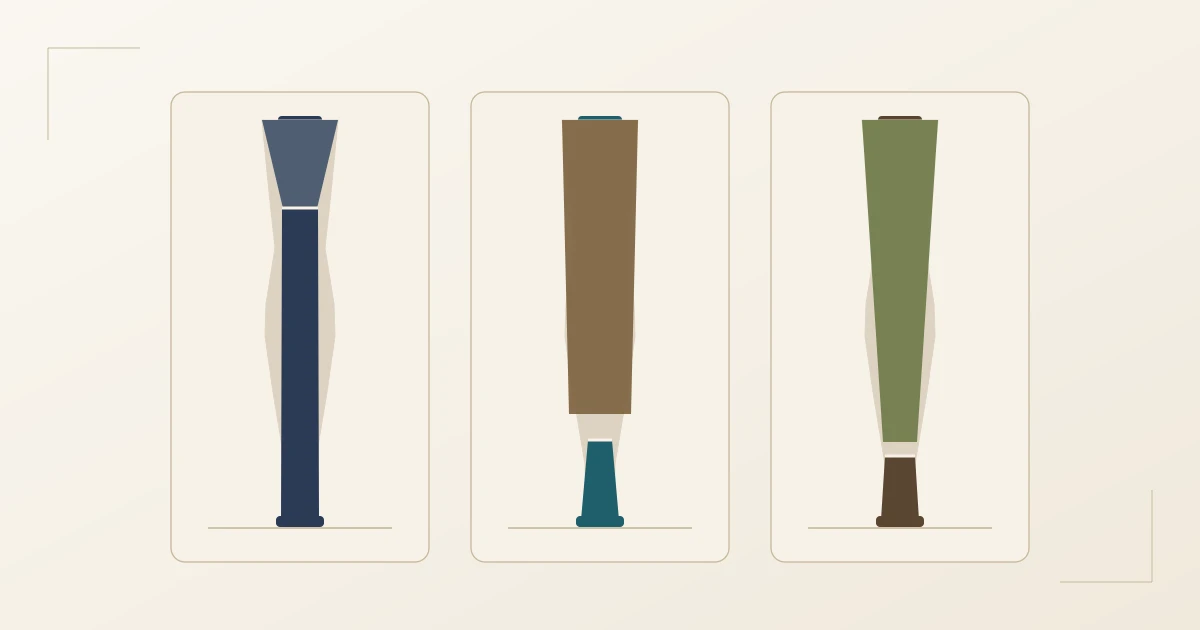
For combining there is a single rule from which everything else follows: shaft and trouser leg must not both be wide. Where two volumes meet, you get a kink instead of a line.
- Narrow trousers, high shaft: the trouser disappears into the boot without folds. This is the most lengthening combination there is, because the line runs unbroken from hip to floor.
- Narrow trousers, ankle boot: the trouser ends just above the shaft rim or is turned up slightly. What matters is that no bulk of fabric rests on the shaft.
- Wide trousers, narrow shaft: sock boots or slim ankle boots under a wide cropped trouser, a culotte or wide-leg jeans. The fabric falls over, the shoe stays slim — the volume stays on one level.
- Wide trousers, wide shaft: the one combination that reliably does not work. The fabric bunches at the shaft rim and creates exactly the horizontal fold that divides the leg.
On tucking in or leaving out: tucking in only works with narrow trousers in thin fabric and a shaft with room at the top. As soon as a noticeable bulk forms inside the shaft, over the boot is the better choice — the bulk does not only press, it visibly widens the calf. The same holds for rounded barrel jeans: the hem belongs over a narrow shaft, not inside it. Which trouser cut belongs to your figure is in which trousers suit my figure.
Boots with skirts and dresses: the gap rule
With a skirt or dress a gap appears between hem and shaft rim — bare leg or tights. That gap is the whole design tool.
- Small gap, continuous colour: midi skirt plus knee-high boot plus opaque tights in the boot colour. The line runs through and the leg reads longest. The safest winter combination there is.
- Large gap with contrast: short skirt plus ankle boot plus bare skin or light tights. It looks fresh and young, but visibly shortens the leg because it falls into three sections.
- Medium gap — the problem case: calf-length skirt plus mid-height boot. Here two horizontal edges land close together. Either the skirt gets longer or the boot gets shorter.
Tights are not a detail here but the connector: they decide whether three sections become one line. Which opacity suits which dress is in which tights with which dress. For skirt length itself, which skirt suits my figure helps; for dresses, which dress suits my figure.
Two horizontal edges close together are the most reliable way to make a leg look short. One edge is no problem. Two are.
Heel, sole and the leg line
The common assumption is that heels make legs long. That is only half true. What matters is not heel height alone but how far the sole lifts the whole foot off the ground, and how continuous the line stays while doing it.
- A block heel can be worn all day and gives height without breaking the line. For most people the best everyday choice.
- A continuous platform sole lifts at the front too. The foot stays at a flatter angle, so the line kinks less — which often lengthens more than a higher thin heel.
- A thin high heel sets a strong contrast between shaft and ground. It lengthens the leg less than people expect, because the narrow heel does not read as part of the leg line.
- A flat sole is not a poor choice — with a high, close-fitting shaft the length comes from the shaft, not the heel.
One point that is rarely mentioned: a very heavy, light-coloured sole on a dark boot sets an extra horizontal line right above the ground. On short legs that visibly costs length. Sole and shaft in the same colour avoid it. Why continuous lines lengthen at all is covered at length in looking slimmer through clothing.
Colour and material
With boots, colour matters less for your complexion than anything worn at the face — and all the more for the leg line.
- Tonal with trousers or tights is the strongest lengthening effect there is. Dark brown with camel reads calmer than black with camel.
- A light boot with dark trousers sets a hard cut at the ankle. It can be a deliberate accent, but it shortens.
- Material sets the volume: smooth leather is quiet, suede softer and quieter still, patent loud. The closer the boot sits to the focal point of an outfit, the more restrained it may be.
On the colour itself: which browns and greys belong to your colour family is settled by finding your colour type or directly by the colour type test. And how much structure your boot can carry depends on your body line — the free online Kibbe analysis is the quickest way in, the system is explained in the 13 Kibbe types explained.
The most common mistakes when buying boots
- Checking only the shoe size. The foot usually fits. Shaft height and shaft width decide whether the boot works — and neither is on the front of the box.
- Trying on in the morning and wearing in the evening. The calf grows by up to one and a half centimetres over the day. A boot that just closes in the morning will not close at night.
- Letting the shaft end at the widest point of the calf. The one mistake that costs more than all the others together.
- Wide trousers in a wide shaft. The fabric bunches and lays a horizontal fold exactly where the leg should run through.
- Two edges close together. A calf-length skirt over a mid-height boot divides the leg twice.
- A light boot against a dark leg on a short leg line. The contrast at the ankle costs precisely the centimetres that are already scarce.
- Accepting a shaft that is too wide. A cobbler takes it in for little money. A tipping shaft makes any good boot look cheap.
Frequently asked questions
Which boots suit my figure?
Three measurements on the leg decide, not your body type: calf circumference, the height of the widest point of the calf, and leg length relative to the torso. From those follows the shaft height — the rim should sit clearly above or below the widest point of the calf, never exactly on it. Your figure then only decides how much weight the boot may carry in the overall picture.
Should I tuck trousers into boots or wear them over?
Tuck in only with narrow trousers in thin fabric and when the shaft has room at the top. As soon as a noticeable bulk forms inside the shaft, wear them over: the bulk does not only press, it visibly widens the calf. With wide trousers the fabric always falls over the shaft — and then the boot should be slim.
Which trousers go with ankle boots?
Either a narrow trouser ending just above the shaft rim or turned up slightly — or a wide cropped trouser with a slim sock boot or ankle boot underneath. What does not work is a wide trouser over a wide shaft: the fabric bunches and creates a horizontal fold that divides the leg.
Which boots go with wide trousers in winter?
Slim ones: sock boots, slim ankle boots, or a knee-high boot with a close shaft under which the trouser falls. The rule behind it is always the same — shaft and trouser leg must not both have volume. With very wide trousers, length matters too: the hem should just cover the shaft rim rather than land exactly on it.
Which boots work with fuller calves?
Either ending well below the calf — Chelsea boots, ankle boots, sock boots — or skipping it entirely with a knee-high wide-calf style. Anything in between emphasises the widest point. Above a calf circumference of roughly 38 centimetres it is worth searching specifically for wide-calf boots rather than ordering standard widths repeatedly; elastic panels and lacing at the back give extra room.
Which boots work with very slim legs?
Ones that hold their own shape: lace-up boots, styles with straps, or a shaft in firmer leather. A shaft that is too wide tips sideways as you walk and folds at the ankle — which makes even an expensive boot look cheap. A cobbler can take a too-wide shaft in for little money.
Which boots make legs look longer?
The ones with the fewest interruptions. Strongest is a knee-high boot with a close shaft worn with narrow trousers in the same colour family — the line then runs from hip to floor without a break. A continuous platform sole often lengthens more than a higher thin heel, because it keeps the foot at a flatter angle so the line kinks less.
Which boots suit short legs?
Anything that avoids edges: boots in the colour of your trousers or tights, a close high shaft rather than a mid-height one, sole and shaft in the same colour. Avoid a light boot with dark trousers and very heavy light-coloured soles — both add a horizontal line exactly where length is already scarce.
How do I measure shaft width correctly?
Shaft width and calf width are measured the same way: standing, weight on both legs, at the widest point of the calf. The tape lies flat without cutting in. Measure in the evening, not the morning — the calf grows by up to one and a half centimetres over the day. Take the larger of your two legs, since legs are rarely equal. Also measure the height of that point from the floor; you need it for shaft height.
Which boots go with a midi skirt?
Best are knee-high boots with opaque tights in the boot colour — the gap between hem and shaft rim is then small and closed in colour, and the leg reads longest. The difficult combination is a calf-length skirt with a mid-height boot: two horizontal edges land close together and divide the leg twice.
Do people still wear boots over jeans?
Yes, and it is not a question of season but of fit. What matters is not whether it is currently being shown, but whether the trouser leg is narrow enough to disappear into the shaft without folds. Where it is not, you wear the jeans over the boot — that was never wrong and will not become so.
Which boots are in right now, and which are out?
That question is worth less than it sounds. In 2026 as before, boot shapes run in long cycles, and almost every shape is available somewhere in any given season. More reliable than any trend list is the fit rule for your figure: a boot whose shaft ends at the right height and whose width is correct looks good in any season. A trend model in the wrong shaft height looks good in none.