
TL;DR — Which shoes suit my body?
- Which shoes suit your body is decided not by your dress size, but by three layers: the character of the shoe line, the scale relative to your bone structure and the length the shoe gives your leg line.
- The most important and most-skipped question is character: a shoe fits when its shape mirrors your body line — sharp and pointed, soft and round, or robust and relaxed.
- The familiar lengthening tricks — nude tone, deep vamp, pointed shape — work, but they are the second layer. They make a suitable shoe longer; they don't rescue an unsuitable one.
- “Chunky soles for fuller figures” confuses weight with scale: sole thickness follows your bone structure, not your dress size.
- When leg shape and body line disagree, the line wins for harmony — you recover length through colour and vamp, not through a contradicting heel.
Which shoes suit your body is decided not by your dress size, but by three things: the character line of your shoes, their scale relative to your bone structure, and the length they give your leg line. A shoe fits when its shape mirrors your body line — pointed for sharp lines, round for soft ones, robust for strong ones. Only then come the tricks that visually lengthen the leg.
Most guides start with “which shoe makes legs look slimmer”. That’s the wrong first question. It skips the step that decides harmony: whether the shape belongs to you at all. This guide flips the order — suitable first, then lengthen.
Contents
- Why “which shoe makes you look slim” is the wrong first question
- The three layers: line, scale, leg proportion
- Shoe character by body line
- Shoe scale: by bone structure, not foot size
- Choosing heel shape and height
- The main shoe types in a line check
- Lengthening the leg line: vamp, nude, point
- Boots by calf and ankle
- The conflict case: when leg and line disagree
- Step by step to the right shoe
- The same shoe type for day, office and evening
- The most common mistakes when buying shoes
- FAQ — Frequently asked questions
Why “which shoe makes you look slim” is the wrong first question
“Which shoe makes legs look slim” is the most-asked shoe question online — and the reason so many women own a wardrobe of shoes that are lovely on their own and still never quite work. The question optimises for one goal, lengthening, and ignores the real one: that a shoe has to belong to you before it’s allowed to lengthen you.
A shoe suits your body when its shape mirrors your body line. A woman with delicate, curved contours and fine joints looks costumed in an angular, heavy boot — even if that boot visually lengthens her legs. Conversely, a pointed, delicate sandal looks fragile under a strong, athletic bone structure. Both shoes “work” by the lengthening logic. Both are wrong.
So this guide works in two layers. First the fit: character, scale, proportion. Then the optics: the familiar tricks that lengthen an already suitable picture. Keep that order and you buy fewer mistakes — and need the tricks less often, because a shoe that suits your line already looks harmonious.
The three layers: line, scale, leg proportion
Three levers decide whether a shoe suits your body. They build on each other:
- The line (character). The shape of the toe, the shape of the heel and the edges of the shoe together make its character — sharp, soft or relaxed. That character has to match your body line. This is the first and most important layer.
- The scale. How much visual weight the shoe carries — thin or thick sole, delicate or massive heel — follows your bone structure, not your weight.
- The leg proportion. How the shoe affects the length of your leg — this is where vamp, colour and toe shape come in. It’s the fine-tuning, not the starting point.
Most mistakes happen because layer three comes first. We buy the shoe that “lengthens” and wonder why it still doesn’t sit right. Let’s reverse the order.
Shoe character by body line
The character of a shoe is the sum of its toe shape, heel shape and edges. Pointed, cut and narrow reads as sharp; round, curved and delicate reads as soft; robust, matte and unstructured reads as relaxed. These three characters correspond to the big body-line families in the Kibbe system — and this is exactly where almost every shoe guide stops, because it sorts by occasion or leg shape, never by bone structure.
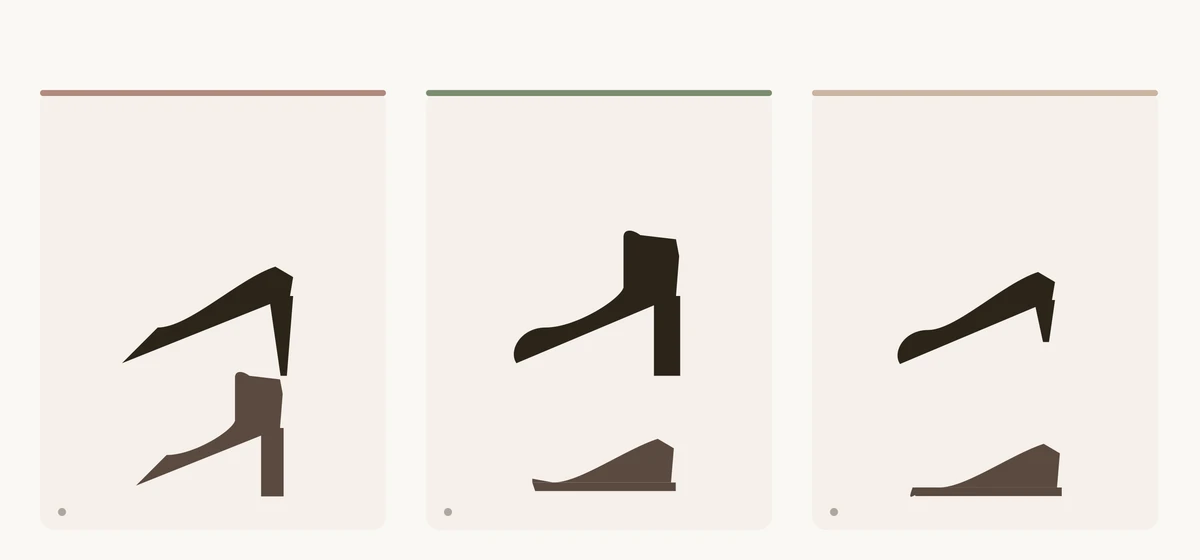
Sharp, clean lines (Dramatic family)
Long, straight, angular body lines wear shoes in the same language: pointed toes, narrow or architectural heels, clean edges, smooth surfaces. A pointed pump, a slim stiletto sandal, an angular ankle boot with a clean silhouette. Embellishments, round caps and soft ruffles dilute the effect. Less, but more precise — that’s the rule.
Strong, relaxed lines (Natural family)
Broader bones and relaxed contours wear shoes with substance and texture: block heels, robust soles, loafers, unstructured leather, suede, matte surfaces. A chunky sneaker, a Chelsea boot, a flat slingback with some volume. Shoes that are too delicate, glossy or strictly cut look costumed here — they fight the relaxed line.
Soft, round lines (Romantic family)
Curved, soft contours wear shoes that pick up the roundness: round or almond toes, curved heels, delicate straps, soft details. A round kitten heel, a ballet flat with a bow, a fine sandal with a curved line. Hard, angular shapes and heavy soles look foreign and too severe on soft lines.
Balanced and compact lines (Classic, Gamine)
Balanced lines (Classic) wear neat, symmetrical shapes with no extremes — the classic pump, the clean loafer, nothing too pointed and nothing too round. Compact, small-scale lines (Gamine) wear shorter, small-detailed shoes with personality: Mary Janes, playful straps, smaller heels. For both: medium scale, no single feature dominates.
Shoe scale: by bone structure, not foot size
The most common advice online is: fuller figure, chunkier sole. That confuses two things. The scale of a shoe follows your bone structure, not your body weight or dress size. A finely built woman with narrow wrists and ankles is visually swallowed by a massive lug sole — regardless of the size she wears. A large-framed woman with broad joints, by contrast, needs enough visual weight at the foot, or a too-delicate shoe looks like a toothpick under a column.
Check your scale at the wrist: wrap the thumb and middle finger of one hand around the other wrist. If they clearly overlap, you have fine bones and need more delicate shoes. If they barely touch, you have strong bones and carry more sole and heel volume.
In practice: sole thickness, heel diameter, lace width and buckle size should match your bone structure. Fine bones wear narrow heels, thin soles, delicate fastenings. Strong bones wear block heels, thicker soles, larger details. Scale is why the same trend shoe looks completely different on two women of the same size.
Choosing heel shape and height
The heel carries the character of the shoe most clearly. A high heel with a thin stiletto and the same shoe with a block heel send completely different signals, even when the toe and material are identical. Choose the heel shape by your line, the height by your everyday comfort.
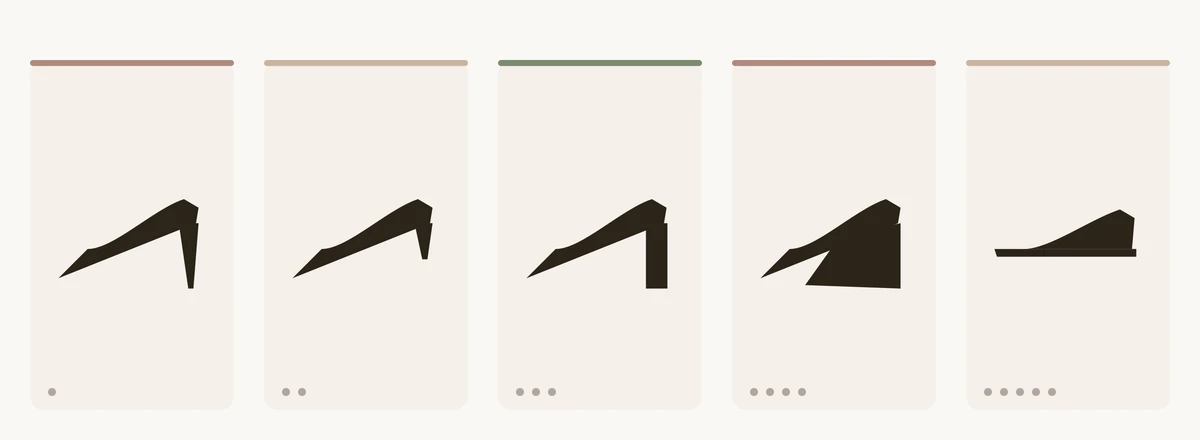
| Heel shape | Effect | Suits which line |
|---|---|---|
| Stiletto (thin, high) | lengthens strongly, reads sharp and formal | sharp, clean lines; fine scale |
| Kitten (thin, low) | lengthens gently, reads delicate and playful | soft, compact lines; fine scale |
| Block heel | stable, reads relaxed and modern | strong, relaxed lines; larger scale |
| Wedge | continuous surface, reads sporty and solid | relaxed lines; larger scale |
| Flat | reads calm, tends to shorten | all lines — the toe shape decides |
Height: for everyday wear, most women last longest between four and seven centimetres. What matters is not the number of centimetres but that you can roll through the step naturally and the heel doesn’t slip.
The main shoe types in a line check
Every category exists in every character language. Here are the most common types and the line they lean towards — as a starting point, not a law:
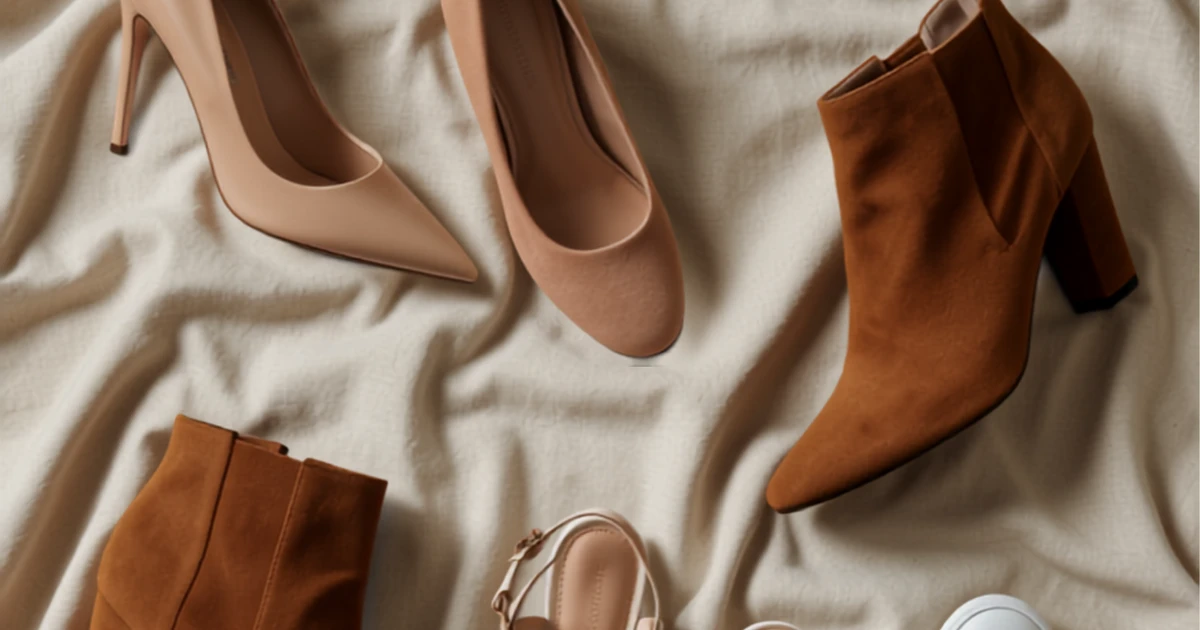
- Pumps: the shape-shifter. Pointed and narrow for sharp lines, round with a kitten heel for soft ones, classically medium-pointed for balanced ones. A court shoe adapts to almost any line through its toe and heel shape.
- Ballet flat: soft and round by nature — the home of Romantic and Gamine lines. On sharp lines it quickly reads demure, unless it has a pointed cap.
- Sneaker: the build decides. Minimal and flat with clean edges for clean and balanced lines, voluminous with a thick sole for relaxed, larger scales.
- Ankle boot: the cut carries the character. Pointed and narrow for sharp lines, Chelsea or round with a block heel for relaxed ones.
- Sandal: the strap play matters. A few clean straps for sharp lines, curved delicate straps for soft ones, more robust bands for relaxed ones.
- Loafer: relaxed and balanced by nature — ideal for Natural and Classic lines. In a slim shape with a metal detail it moves towards classic-sharp.
Once you know your basic shoes, you shop more precisely. The same logic applies to the rest of the wardrobe — for instance the question of which jeans suit your body or which dress your line carries.
Lengthening the leg line: vamp, nude, point
Now the second layer: visual lengthening. These tricks are well known and they work — they’re just not the starting point, but the fine-tuning of an already suitable shoe. Three levers do the most:
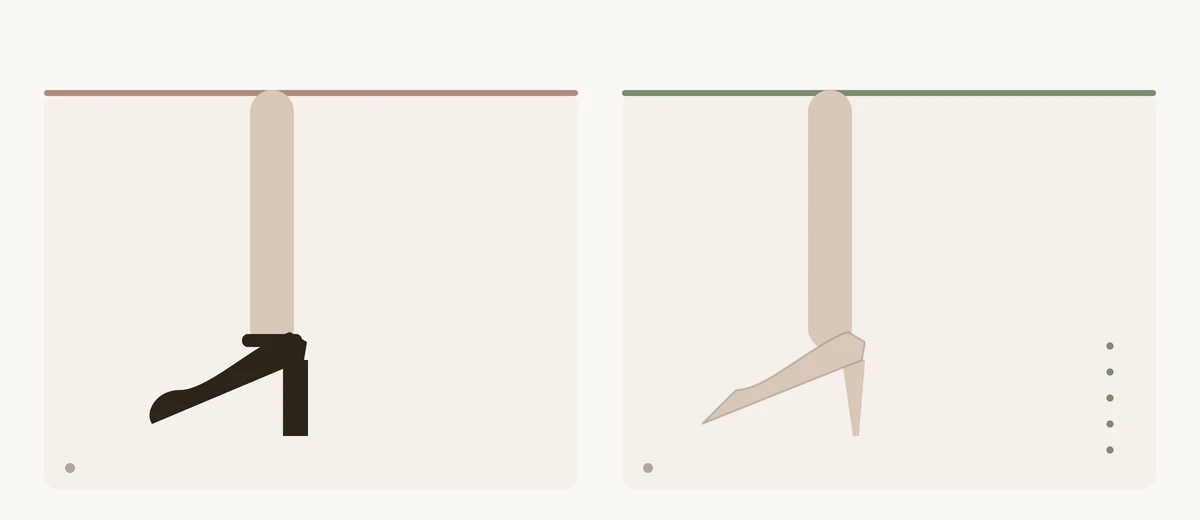
- The vamp (instep cut). The deeper the shoe is cut at the front, the more foot and leg visually merge. A deep, slightly V-shaped vamp lengthens; a high, closed instep cuts the line off.
- The nude tone. A shoe in the tone of your bare leg lengthens the line, because no colour break interrupts it. Important: nude is not a universal beige but your skin undertone. Fair skin lengthens with a soft rosé nude, deeper skin with a rich caramel or espresso.
- The pointed toe. A slightly pointed shape extends the foot line and therefore the leg. With round shapes, which suit soft lines better, you recover the length through colour and vamp instead of the toe.
The opposite shortens: a strap across the instep, an ankle strap at the widest point, a hard colour contrast between shoe and leg. If you have short legs, you’ll find the full strategy in the guide Styling for petite women.
Boots by calf and ankle
Boots have an extra variable: the shaft. Here, alongside the line, the shape of calf and ankle also matters. The shaft should never end exactly at the widest point of the calf — there it sets a horizontal cut on the fullest point and makes the leg look shorter and wider. It’s better ending above (over the knee or at mid-calf) or well below at the slim ankle.
For strong calves, wide-shaft boots with a stretch panel solve the fit problem without the shaft gaping. A block heel balances strong calves better than a thin stiletto, because it carries the visual weight downward instead of setting a thin point beneath. Ankle boots are tricky for short and strong legs: if they end with bare leg above, they cut the line. A boot in the tone of the trousers or tights avoids this.
The ankle is the slimmest part of the leg — a strap right there emphasises delicacy, while a wide band just above it shortens. The same logic as with the coat by body line: the cut sets the accent, not the label.
The conflict case: when leg and line disagree
The interesting case — and the one no guide addresses — is the contradiction. What if your leg shape asks for one thing and your body line for another? A concrete example: you have short legs (proportion says: lengthen, so a pointed stiletto) and at the same time soft, round contours (line says: round and delicate). The pointed stiletto lengthens — but looks hard and foreign on a soft line.
In a conflict, the line wins for harmony, the proportion for length. Translated: take the shape that suits your line — and recover the length through the second layer, not through a heel that works against you.
In the example that means: not a hard stiletto but a round or almond nude pump with a curved kitten or medium heel. The roundness honours your line, the nude tone and deep vamp bring back the length. You get both — harmony and lengthening — without one fighting the other. This order is the whole trick: fit first, optics as a tool afterwards.
Step by step to the right shoe
Here’s how to proceed at your next purchase — in exactly this order:
- Determine your body line. Sharp, soft, relaxed, balanced or compact? The Kibbe test gives you the direction.
- Check your scale at the wrist. Fine or strong bones? That sets sole thickness and heel volume.
- Choose toe and heel shape by the line. Pointed/narrow, round/curved or robust/block — mirror your character.
- Adjust the scale. Fine bones: thin sole, narrow heel. Strong bones: more volume.
- Only now lengthen. If the length isn’t enough, reach for nude tone, deep vamp and a slightly pointed shape — in that priority.
- Do the walk-and-roll test. If the shoe only fits sitting down, it doesn’t fit. The heel must not slip, the forefoot must not pinch.
- Check the shoe in the whole picture. Stand in front of the mirror with the planned outfit — the shoe alone doesn’t decide, the line from hem to toe does.
The same shoe type for day, office and evening
An occasion rarely calls for a particular shoe — it calls for a particular level of formality. And that can be expressed in any line. Take the ankle boot: for everyday in suede with a block heel, for the office in smooth leather with a clean edge, for the evening in a slim shape with a little shine. The same base type, three levels of formality — and at each level you choose the variant that suits your line.
That saves you a wardrobe full of single-occasion pieces. Three to four basic types in your character language — a pump, a boot, a flat, a sandal — cover most situations, as long as material and heel match the formality. It’s the same capsule logic that works for clothing.
The most common mistakes when buying shoes
The most expensive shoe is not the one that costs a lot, but the one that stays on the shelf — because it was lovely on its own and never belonged to you.
- Buying by trend instead of by line. The shoe of the season only suits you if its shape mirrors your line. Otherwise you wear it twice.
- Confusing scale with weight. Sole thickness is set by bone structure, not by dress size.
- Optimising only for “makes you look slim”. A lengthening shoe that fights your line looks worse than a suitable one that doesn’t lengthen at all.
- Letting the shaft end at the widest calf. The most common boot mistake — it cuts and widens the leg.
- Treating nude as a single beige. Nude only lengthens in the tone of your own skin.
- Checking the fit sitting down. A shoe has to sit while walking and rolling through the step, not on the stool in the shop.
From trend shoe to the right shoe
Find the shoes that carry your line
This guide gives you the tools. A professional Kibbe and colour analysis gives you your personal result: which shapes, heels and tones your structure really carries — from your shoes to your whole silhouette. A free initial consultation is always included.
Boots follow their own rules, because they do not end at the foot but on the leg: there, calf circumference and shaft height decide more than body shape. That is covered in which boots suit my figure.
FAQ — Frequently asked questions
Which shoes suit my body?
The shoe that suits you is the one whose character line mirrors your body line: sharp, clean lines wear pointed shapes with a narrow heel, soft, round lines wear round toes and curved heels, strong, relaxed lines wear robust soles and block heels. Only then come the lengthening tricks like nude tone and deep vamp. Your dress size says nothing about it.
Which shoes make legs look slim and long?
Three things lengthen reliably: a skin-tone shoe in the tone of your leg, a deep vamp at the instep that lets foot and leg merge, and a slightly pointed toe. A strap across the instep or a hard colour contrast to the leg interrupts the line and shortens it. But these tricks are the second layer — first the shoe shape has to suit your line.
Which heel suits which figure?
It’s not the figure that decides the heel, but your bone scale and your line. Fine bones and soft lines wear narrow, curved heels like kitten or fine stiletto heels; strong bones and relaxed lines wear block and wedge heels that carry enough visual weight. A too-delicate heel under strong bones looks fragile, a chunky block heel under fine bones overwhelms.
Which boots work with strong calves?
Wide-shaft boots with an elastic stretch panel that adapts to the calf, plus styles whose shaft ends above or below the widest point of the calf — not exactly on it. A block heel balances strong calves better than a thin stiletto because it carries the visual weight downward. Straps at the slimmest point of the ankle place the accent where the leg is most delicate.
Do sneakers suit every body?
Sneakers suit every body, but not every build suits every line. A minimal, flat leather sneaker with clean edges suits clean and balanced lines; a voluminous sneaker with a thick sole suits strong, relaxed lines and quickly looks oversized on very fine bones. So the question is not whether, but which sole thickness and shape suit your scale.
Which shoes suit my Kibbe type?
Sharp, long lines (Dramatic family) wear pointed, architectural shoes with clean edges and a narrow heel. Strong, relaxed lines (Natural family) wear unstructured, robust shapes — loafers, block heels, matte surfaces. Soft, round lines (Romantic family) wear round toes, curved heels and delicate details. Balanced and compact lines (Classic, Gamine) wear neat, medium-sized shapes without extremes.
How do I find the right heel height?
The right height is the highest one in which you can still roll through the step naturally, without the heel slipping or standing on your forefoot. For everyday wear, most women last longest between four and seven centimetres. More important than the number of centimetres is that the heel matches the heel shape of your line — a high block heel and a high stiletto look completely different.
Do pointed or round shoes look slimmer?
Pointed shoes extend the foot line and therefore visually the leg — they look slimmer. Round shoes look softer and shorter, but suit soft, round body lines far better. So slimmer isn’t automatically better: a round shoe that suits your line looks more harmonious than a pointed one that works against it. With round shapes, you recover length through the nude tone.
Which shoe colour lengthens the most?
The tone closest to your bare leg or tights lengthens the most — not a universal beige. If you have fair skin, a soft nude lengthens; if you have deeper skin, a rich caramel or espresso does. This is a colour-type matter: the nude shoe should match your skin undertone, otherwise it reads like a foreign object instead of an extension.