
TL;DR — What trousers suit my figure?
- Decide on three levels: cut (leg shape), fabric (drape) and length — not just the size.
- The principle is balance: add volume where there is less width, keep the line calm where there is more.
- The fabric often matters more than the cut: fluid (viscose, crêpe) follows the line, structured (gabardine, wool) holds shape.
- Length counts: the hem should never end at the widest point of the calf — just above it or down to the floor.
- Beyond body shape, your body line (Kibbe) matters — it decides whether clean or soft cuts suit you.
Which trousers suit your figure is decided on three levels: the cut (the leg shape), the fabric (the drape) and the length. As a rule of thumb you balance proportions — wider hips carry straight or slightly flared legs, wider shoulders can take width below, a straight figure gains from pleats and structure. Beyond the pure body shape, your body line matters: whether clean or soft cuts suit you.
This guide covers fabric trousers of every kind — from the Marlene through the culotte to the slim cigarette trouser. If you specifically mean denim, you’ll find the details in the jeans-by-figure guide; here it is about cut, fabric and length across all trouser types.
Contents
- The core principle: cut, fabric and length
- The trouser shapes at a glance
- Trousers by body shape
- Trousers by body line (Kibbe)
- The fabric decides too: drape and structure
- Rise and pleats: for whom?
- The right length: where trousers should end
- Fabric trousers in daily life: business to casual
- Step by step: finding the right trousers
- Common trouser mistakes and myths
- FAQ — Frequently asked questions
The core principle: cut, fabric and length
The right pair of trousers comes from three levels: cut, fabric and length. The cut sets the leg shape — slim, straight or flared. The fabric decides whether the trouser follows the line or holds shape. The length sets where the hem ends and thus how long the leg looks. Only together do the three create the effect.
Above all stands a single principle: balance. You even out proportions visually instead of hiding something. Where there is less width, you add volume; where there is more, you keep the line calm. It is the same idea as determining your body shape — only translated to trousers.
The trouser shapes at a glance
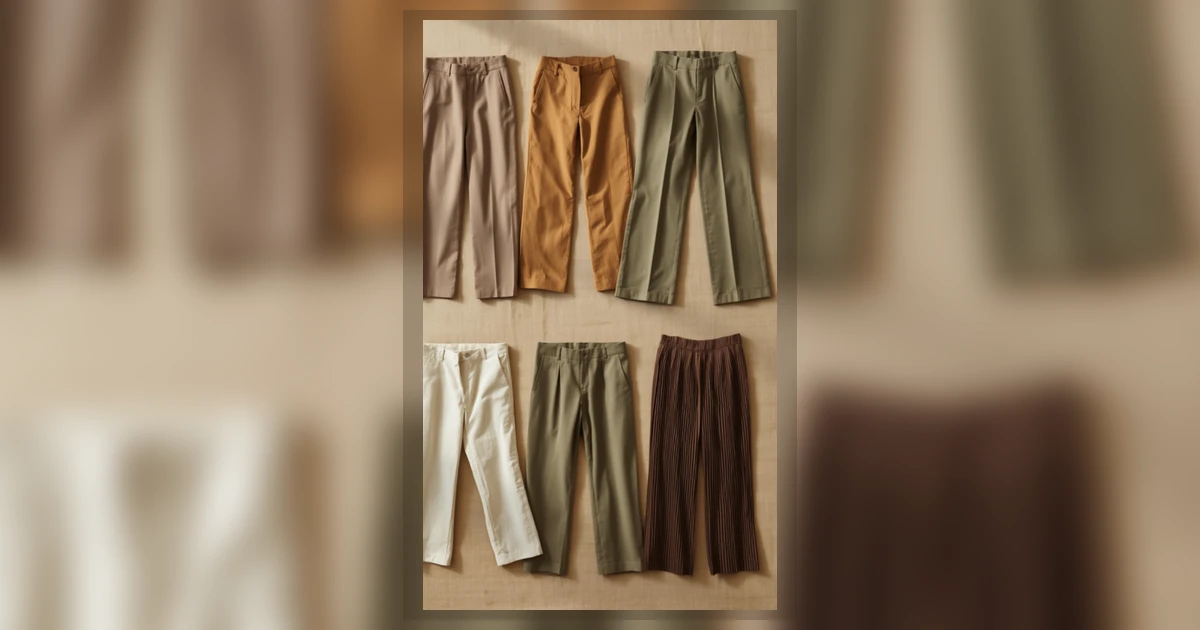
The main cuts differ above all in leg shape and width. This overview shows which shape flatters which figure:
| Trouser shape | Feature | Flatters |
|---|---|---|
| Cigarette trouser | slim, straight, ankle-length | straight and slim figures, rectangle |
| Straight fabric trouser | continuously straight leg line | almost any figure, balancing |
| Bootcut | slightly flared from the knee | pear, wider hips (balances out) |
| Wide leg / palazzo | very wide, fluid | inverted triangle, tall women, long legs |
| Culotte | ankle-length, wide | slim calves, hourglass with a high shoe |
| Marlene trouser | high waist, wide, pressed crease | inverted triangle, rectangle, lengthens |
The table is a starting point by body shape. It gets finer as soon as body line and fabric come in — more on that shortly.
A classic among the cuts is the Marlene trouser: wide, straight-falling and high-waisted, named after Marlene Dietrich and in fashion since the 1930s — its leg width reaches up to 54 cm. It shows how strongly a cut alone can shape the silhouette.
Trousers by body shape
By body shape, the trouser choice follows the balance rule: you add width where it is missing and calm it where it is there. If you don’t yet know your shape, determine it first in the guide What body shape do I have. Then:
The pear (wider hips) wears straight or knee-flared legs that skim the hips evenly, with a focal point on top. The inverted triangle (wider shoulders) may deliberately show width below: palazzo, Marlene and wide leg create balance. The rectangle gains shape through pleats, a high waist and structure. The apple relies on a high rise, a smooth waistband and a calm, vertical line. The hourglass keeps the waist visible — a high rise and close to straight cuts underline the natural balance.
Trousers by body line (Kibbe)
The body shape says where width sits — your body line says what character the cut should have. Two women with the same pear shape often need different trousers: the one with clean, straight bones wears structured, sharply cut models; the other with soft, round lines wears fluid, soft shapes. This is exactly what the Kibbe system captures through the bone structure.
The cut decides the width, the character of the cut decides the harmony. A perfectly fitting trouser in the wrong character still looks foreign.
In practice: clean, straight lines wear sharp, unbroken cuts like the cigarette or straight suit trouser. Soft, round lines wear fluid fabrics and soft shapes like the palazzo. Strong, relaxed lines wear unstructured, casual models with movement. Which line is yours is clarified by the Kibbe styling guide — turning “roughly right” into a clear yes.
The fabric decides too: drape and structure
The fabric often decides more about the effect than the cut alone. Fluid fabrics like viscose, crêpe and Tencel fall softly and follow the body line — they flatter soft, round figures and look casual. Structured fabrics like gabardine, wool blends and firm cotton twill hold shape and create clean edges — ideal for straight cuts and the business look.
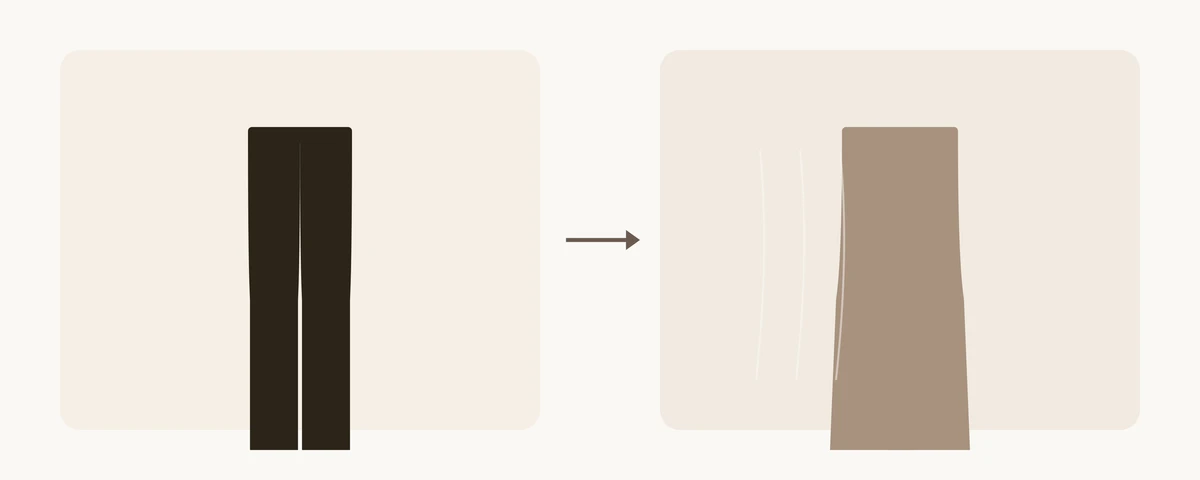
The rule behind it: a smooth, matte fabric adds less bulk than a shiny or stiff one. And the stronger the desired line, the firmer the fabric. If you waver between two models, decide by the hand of the fabric — not by the label.
Rise and pleats: for whom?
The rise sets where the trouser sits — and thus the visible leg length. A high waistband lengthens the leg visually and creates a clear waist; a low rise shortens and looks more casual. For most figures a mid to high rise lengthens most reliably. How strongly the rise works specifically with denim is shown in detail in the jeans guide.
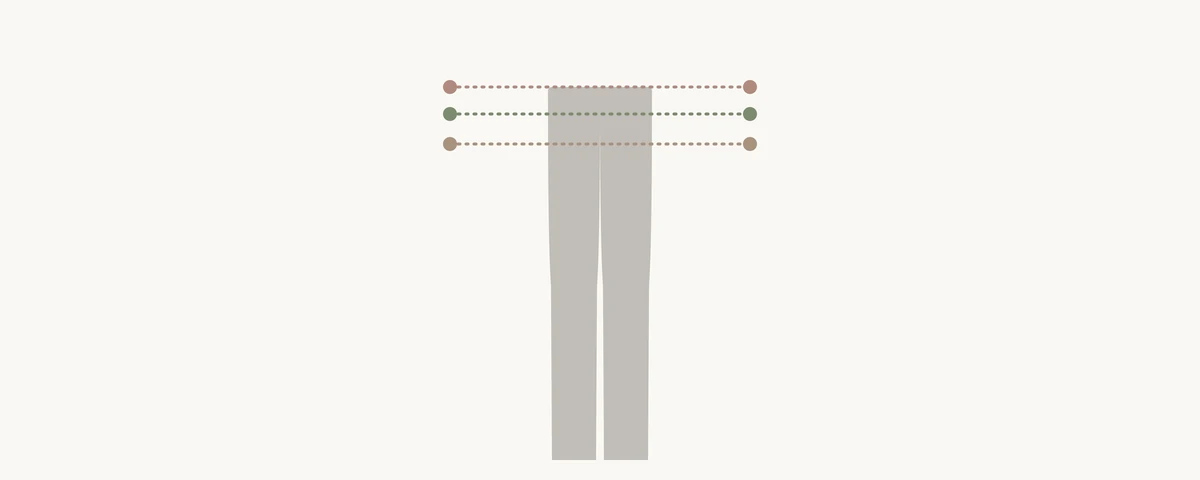
Pleats are one to four folds set below the waistband; the classic pleated trouser carries two to four of them. They give width and freedom of movement at the hip and belly — but also add a little bulk there. On a flat stomach they set a relaxed accent; if the volume already sits in the middle, you better choose a smooth waistband without pleats.
The right length: where trousers should end
The most important length rule is: the hem should never end at the widest point of the calf. Exactly there it cuts the leg off visually and makes it look shorter and heavier. Better the trouser ends just above the ankle (7/8), at the ankle or — at full length — just above the floor.

That is why the culotte is a special case: it deliberately ends at calf height and looks best on slim calves and ankles. On heavier calves or at a short height you balance it with a high shoe and a high rise. At full length: better have it shortened once than let the trouser stack up — you know the same hem logic from skirts.
Fabric trousers in daily life: business to casual
The same trouser looks formal or casual depending on fabric, colour and combination. For the business look you choose a straight or slightly flared fabric trouser in a structured fabric and a muted colour, with a pressed crease and a clean fall. It replaces the skirt if in doubt and looks instantly dressed — more on the effect of cuts in daily life in the guide Which clothing style suits me.
For casual, a softer fabric, a lighter colour or a more relaxed cut like paperbag or a wide culotte is enough. The trick is to own the same well-fitting base shape in two fabrics: a structured one for the office, a fluid one for free time. That way two trousers cover almost any occasion — in the spirit of timeless basics.
Step by step: finding the right trousers
Here is how to proceed at your next purchase or in your own wardrobe:
- Determine body shape. Compare shoulders, waist and hips — that shows where you add or calm width.
- Clarify body line. Do you need clean, straight or soft, fluid cuts? That decides the character.
- Choose the leg shape. Straight as a safe base, flared to balance wider hips, wide to balance wider shoulders.
- Check the fabric. Fluid for soft lines and casual, structured for clean lines and business. Decide by the hand, not the label.
- Test the rise. Mid to high lengthens most reliably and creates a visible waist.
- Set the length. Hem just above the ankle or down to the floor — never on the widest calf.
- Check the fit while moving. Sit, walk, bend. If it pinches or creases, the fit is wrong — or an alteration helps.
Common trouser mistakes and myths
Most trousers don’t fit wrong because the size is off — but because cut, fabric or length don’t match the figure.
- Buying by size alone. Two trousers in the same size fit completely differently. Cut and fabric count more than the label.
- “Wide trousers add bulk.” A myth: fluid wide cuts lengthen when rise and length are right — they create a long line.
- Letting the hem end on the calf. The most common length mistake — it shortens the leg. Choose just above or floor-length.
- Only minding the body shape. Without the body line the choice stays rough. The character of the cut decides the harmony.
- Accepting fit problems. Waist in, length up, legs narrower — a good alteration turns an almost-right trouser into the right one.
No more guessing in the fitting-room light
Your cuts, your line, your colours
A professional style and Kibbe analysis translates your body line into concrete cuts — which trousers, fabrics and lengths your structure really carries. So every purchase fits. Free initial consultation included.
In winter a second factor comes in: with boots, shaft and trouser leg must never both be wide. Which combination works is in which boots suit my figure.
FAQ — Frequently asked questions
What trousers suit my figure?
Choose trousers on three levels: cut (leg shape), fabric (drape) and length. As a rule of thumb you balance proportions — a pear wears straight or slightly flared legs with a calm drape, an inverted triangle may go wide below, a rectangle gains with pleats and structure. Your body line matters too: whether clean, straight or soft, fluid cuts suit you.
Which trousers make you look slimmer?
Visually, a trouser with a high rise, a straight or slightly flared leg and a continuous crease lengthens, because it creates a long, vertical line. A fluid, matte fabric that does not add bulk helps too. Length matters: the hem should not end at the widest point of the calf, but just above it or down to the floor.
Which trousers work for strong thighs?
For strong thighs, straight and flared cuts work best, because they fall evenly from the hip and do not cling to the leg. A slightly firmer, structured fabric holds the shape instead of resting on it. Avoid very tight, elastic skinnies and go for a mid to high rise — that creates a calm, long line over the whole leg length.
Is a culotte suitable for every figure?
The culotte is an ankle-length, wide fabric trouser and suits many figures, but ends exactly at the widest point of the calf — which can look shorter and wider. On petite or shorter women it stacks up quickly; a high shoe and a high rise help here. It looks best on slim ankles, because it emphasises them.
Which trousers are best for a short height?
At a short height, a high rise, straight or slim leg shapes and a length reaching the floor or ending just above the ankle lengthen. A continuous colour of trouser and shoe extends the leg line further. Very wide palazzo or Marlene cuts can stack up — if so, balance them with a high shoe and a slim top.
What is the difference between Marlene and palazzo trousers?
The Marlene trouser is a wide, straight-falling fabric trouser with a high waist and a pressed crease, named after Marlene Dietrich and in fashion since the 1930s. The palazzo trouser is similarly wide, but without a crease and in a more fluid fabric, which makes it more casual and more flared. Both create a long line — the Marlene looks more structured, the palazzo softer.
Do pleats suit every figure?
Pleats give more width and freedom of movement at the hip and belly, but also add a little bulk there. On a flat stomach and a straight build they set a relaxed accent. If the volume already sits in the mid-section, you better choose a smooth waistband without pleats so the line stays calm.
Which trouser fabric drapes best?
Fluid fabrics like viscose, crêpe and Tencel fall softly and follow the body line — ideal for soft, round figures and casual looks. Structured fabrics like gabardine, wool blends and firm cotton twill hold shape and create clean lines — right for straight cuts and business. The fabric often decides more about the effect than the cut alone.