
TL;DR — Looking slimmer through clothing
- It is about proportion, not concealing: you balance lines instead of hiding something.
- The strongest lever is an unbroken vertical line — one tone across several pieces, few horizontal breaks.
- Horizontal stripes do not make you look wider. A 2011 study shows the opposite — the best-known styling tip is wrong.
- Fit beats colour: clothing that is too tight creates pulling creases and reads as wider, not slimmer.
- A high rise plus the right length lengthen the leg line — a hem never ends at the widest point.
You look slimmer not through a particular colour, but through the way lines are led. Four levers decide it: an unbroken vertical line without horizontal breaks, a high waist for a long leg line, a fit that falls instead of clinging, and a hem length that does not end at the widest point. Colour works — but only in fifth place.
The rest of this guide explains why that is, which of the most commonly given tips is demonstrably wrong, and how to apply the rules to your own figure. One thing first: this is not about losing weight. No body shape is a problem that needs solving. It is about proportion — and about how the eye reads lines.
Contents
- The principle: proportion, not concealing
- The stripe myth — what the research shows
- The unbroken vertical line
- Colour and contrast: why dark works
- Fit beats size
- Waist and rise: lengthening the leg line
- Length and landing point
- What “lengthening” means depends on your line
- Step by step: an outfit that lengthens
- The most common misconceptions
- FAQ — Frequently asked questions
The principle: proportion, not concealing
Looking slimmer means leading lines so the silhouette appears longer and calmer. It is an effect of perception, not a change of the body. The eye reads edges, contrasts and interruptions — and infers height and width from them. These are exactly the signals you steer with clothing.
The word “conceal” misleads here. It turns every body part into a problem and almost always ends in clothing so loose and shapeless that it adds bulk. The better term is balance: you add volume where there is little width and keep lines calm where there is more. The same principle sits behind determining your body shape.
Two effects carry nearly everything that follows: the optical illusion created by line direction, and the contrast between surfaces. Both are measurable — and both are reported incorrectly in the usual style advice.
The stripe myth — what the research shows
The most commonly given styling tip says: vertical stripes lengthen, horizontal stripes widen. The research says the opposite. The perception psychologist Peter Thompson investigated this with Kyriaki Mikellidou. Their paper “Applying the Helmholtz illusion to fashion: horizontal stripes won’t make you look fatter” appeared in 2011 in the journal i-Perception.
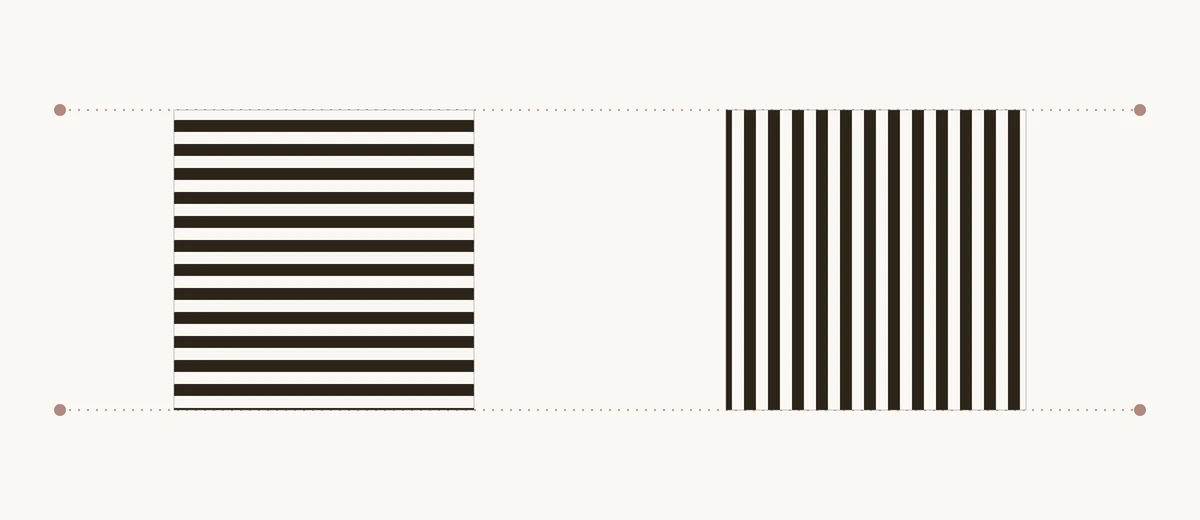
The numbers are clear: a vertically striped rectangle must be 7.1 percent taller to look as tall as a horizontally striped square. Conversely, a horizontally striped rectangle must be made 4.5 percent wider to look as wide as a vertically striped one. The effect held across flat drawings, three-dimensional cylinders and stereoscopic images of mannequins. The authors found no evidence for the widespread belief that horizontal stripes make the human form appear wider.
The best-known fashion tip of all does not survive testing. Avoiding horizontal stripes avoids nothing — except perhaps a favourite piece.
The effect is named after Hermann von Helmholtz, who noted as early as the 19th century that horizontally striped dresses make the figure look taller. In practice: decide on stripes by taste, scale and your type — not by a rule that was never true. Which pattern scale suits you is covered in the guide Which pattern suits my figure.
The unbroken vertical line
The most effective lever is an uninterrupted vertical line: the fewer horizontal breaks a silhouette has, the longer it looks. Every strong light-dark change, every waistband, every hem sets a horizontal edge — and each of these edges visually divides the figure into two shorter sections.
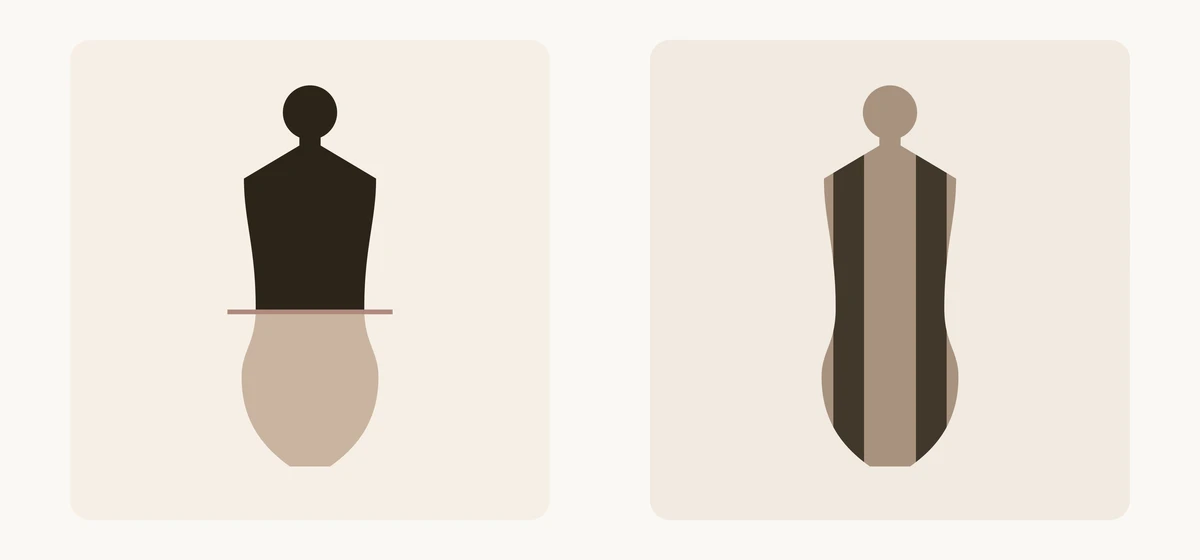
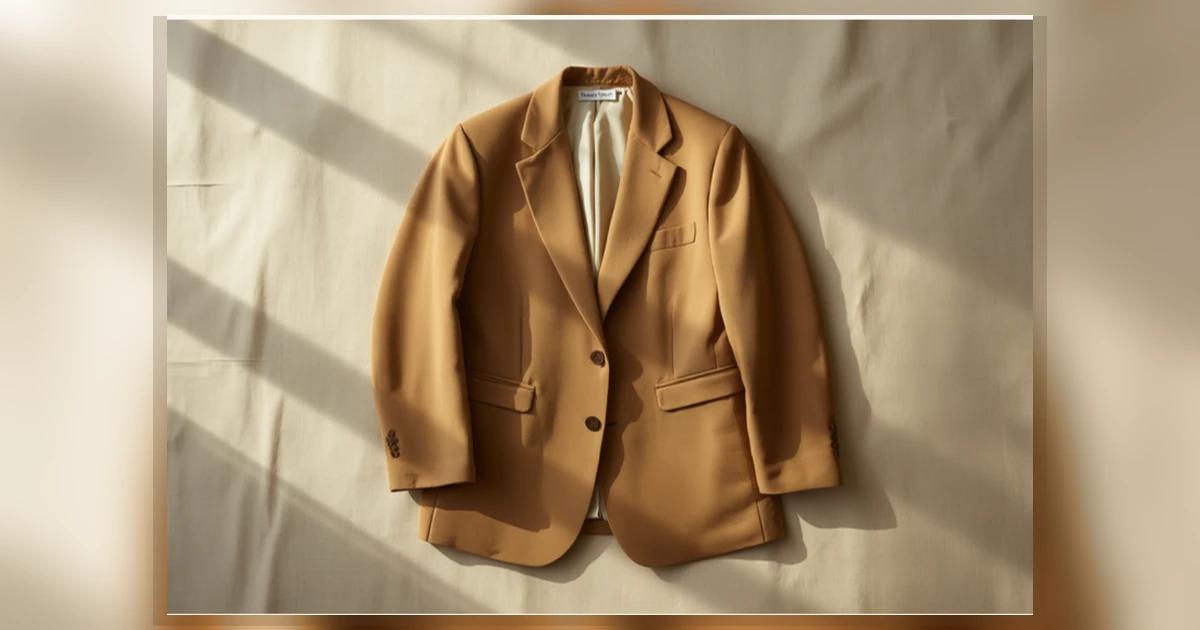
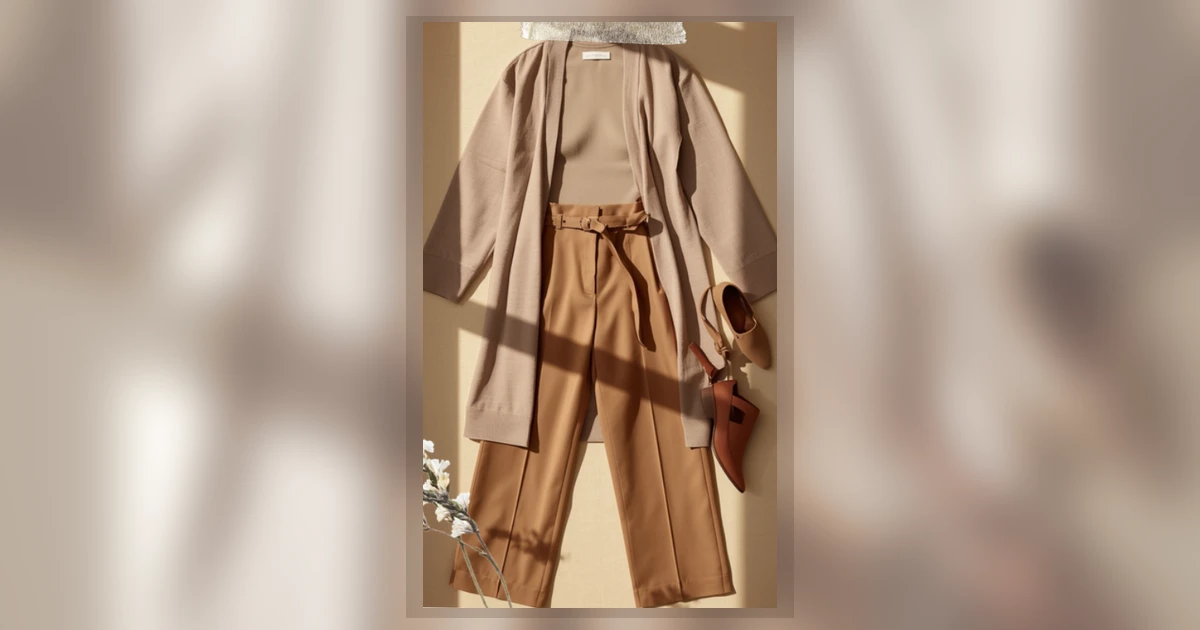
Three means create this line reliably. First tonal dressing: top and bottom in the same or a closely related tone, so no hard change occurs. Second a long open layer — cardigan, blazer, coat or waistcoat running as two vertical panels past the hip. Third vertical details such as a pressed crease, a continuous button placket or a long necklace.
Tonal does not mean plain and dull. Different materials in the same tone — knit, twill, silk — bring depth without breaking the line. How to bring tones together deliberately is shown in the guide Combining colours in clothing.
Colour and contrast: why dark works
“Black is slimming” is true — but not because black is a special colour. Behind it sits an optical effect called irradiation, also described by Helmholtz: light objects on a dark ground appear larger, and dark objects on a light ground appear smaller, than they actually are. It is a well-documented Helmholtz observation.
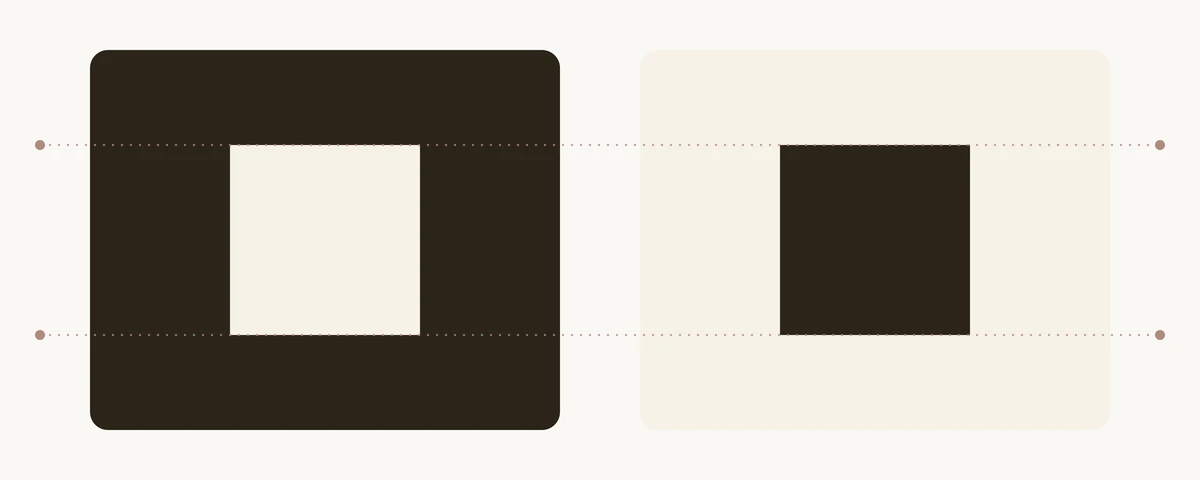
For clothing that means two things. Dark tones read as more compact — and they blur contours: folds, seams and shadows stand out less, so the silhouette becomes calmer. That is exactly why a dark suit looks more closed than the same cut in white.
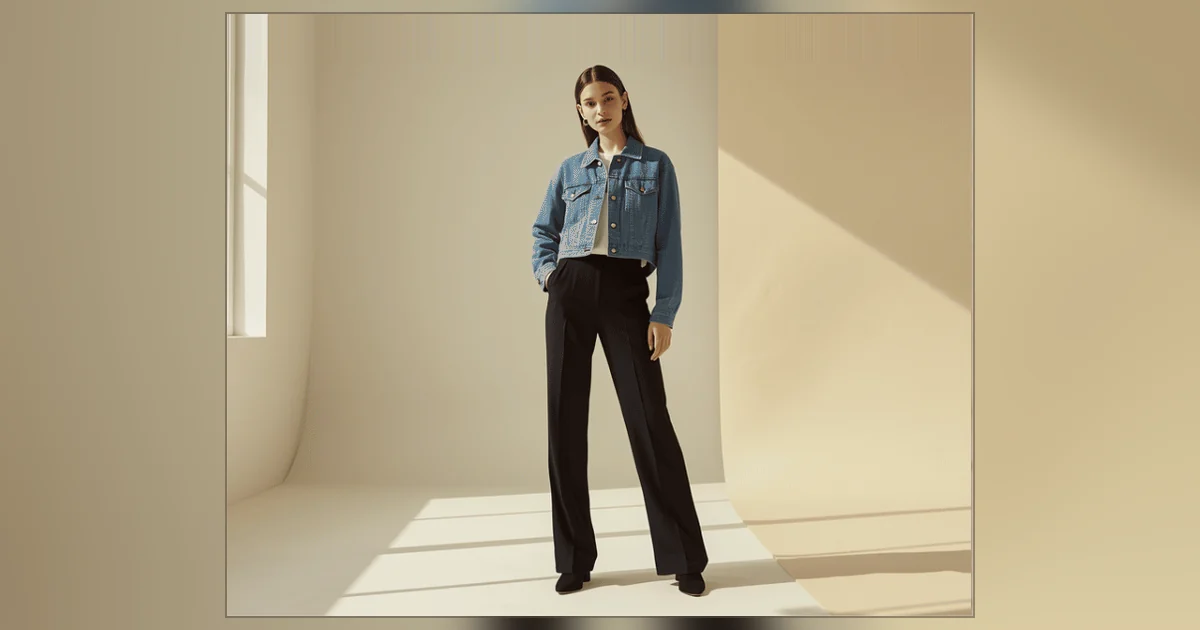
More important than the colour itself is the contrast between the pieces. A light top with dark trousers sets a hard edge at the waist and divides the figure — no matter how dark the trousers are. Two mid tones close together lengthen more than black and white. And which tones flatter you at all is settled by your colour type: a tone that makes your skin look dull gains nothing just by being dark.
Fit beats size
Clothing that is too tight does not make you look slimmer, but wider. It traces every contour, throws horizontal pulling creases and creates visible constrictions at waistband, sleeve and neckline. The eye reads exactly these horizontal lines as width — the effect reverses.
The opposite helps just as little. Very wide, shapeless clothing hides the waist completely and lets the silhouette read as one broad block. What works lies in between: clothing that falls just over the body, suggests shape at one point and otherwise hangs smoothly.
One size too small costs you more visual length than any colour can give back. The right size is the cheapest lengthening trick there is.
A practical test in front of the mirror: sit down, walk a few steps, raise your arms. If horizontal pulling creases remain, the piece is too tight — regardless of the label. Small alterations often solve this better than buying new, see Avoiding wrong buys.
Waist and rise: lengthening the leg line
The rise decides where the leg visually begins — and therefore most of the perceived body length. A high waistband moves this starting point upward and noticeably lengthens the visible leg line. A low rise shortens it.
The second lever is waist emphasis in the right place: at the narrowest point, not on the hip. A belt in the colour of the top underlines the shape without setting a hard horizontal stroke. A strongly contrasting belt does the opposite.
Especially effective is the combination of a high rise and a continuous tone from the waist down — trousers and shoe in the same colour range let the leg line run out without interruption. Which trouser cuts do that is in the guide What trousers suit my figure. Petite women gain the most here: Styling for petite women goes into more detail.
Length and landing point
Every hem sets a horizontal line — and that line draws the eye to exactly the place where it ends. From that follows the most important length rule: a hem should never end at the widest point of the body part beneath it.
Concretely: trouser hems end just above the ankle or floor-length, not on the widest calf. Skirt hems end at the narrowest point of the leg, usually just below or well above the knee. Tops and jackets do not end exactly on the widest part of the hip, but above or below it. The same logic applies to sleeves: a sleeve ending at the widest point of the upper arm emphasises it.
A long open layer elegantly sidesteps the problem, because its vertical edges read more strongly than its horizontal finish. That is why the long cardigan works over almost any figure — it delivers two continuous verticals.
What “lengthening” means depends on your line
The optical rules are universal, their execution is not. How much structure, width or flow suits you depends on your bone structure and your body line. The same wide palazzo trouser lengthens one woman and overwhelms another.
Roughly: clean, straight lines gain from structured fabrics and sharp cuts — soft, flowing volume looks shapeless on them. Soft, round lines gain from fluid materials — stiff structures look like a box on them. Strong, relaxed lines carry unstructured, generous shapes, while tight waist definition constricts them. Which line is yours is clarified by the Kibbe styling guide.
For taller women the scale shifts as well: details, patterns and accessories may be larger without looking restless — more on that in Fashion for tall women.
Step by step: an outfit that lengthens
This is how you build an outfit that reliably reads longer:
- Set one colour range. Choose a tone as the base and keep top and bottom close together — no hard light-dark change at the waist.
- Put the rise high. A mid to high rise moves the visual start of the leg upward.
- Add a long layer. Wear a cardigan, blazer or coat open — two continuous verticals appear.
- Check the fit. Nothing may pull across. Sit, walk, raise your arms — if creases remain, it is too tight.
- Place the hems. No finish on the widest point: trousers just above the ankle, jacket above or below the widest hip.
- Connect the shoe. A shoe in the tone of the trousers or tights lets the leg line run out instead of cutting it off.
- Set a focal point up top. Earrings, a neckline or a necklace draw the eye upward and extend the line further.
The most common misconceptions
This overview puts the usual advice next to what actually works:
| Common advice | What actually works |
|---|---|
| “Horizontal stripes make you look fat” | Disproven — horizontally striped surfaces look taller and narrower |
| “Always wear black” | Tonal dressing in any colour; the contrast between pieces is what counts |
| “Buy one size tighter” | The right size — tight pieces throw horizontal pulling creases |
| “Loose clothing hides everything” | Width at one point only, otherwise the silhouette reads as a block |
| “Heels are mandatory” | A high rise and a continuous tone work more strongly than heel height |
| “Avoid patterns” | Choose pattern scale by bone structure instead of dropping patterns entirely |
Most “slimming tips” are prohibitions. What actually works are decisions about line, fit and length — and those do not restrict you.
From the rule to your own line
What lengthens you?
The optical rules apply to everyone — which of them work for you depends on bone structure, line and colour type. A professional style and Kibbe analysis translates that into concrete cuts, lengths and tones. Free initial consultation included.
This principle shows most clearly where the least fabric is there to help. What ruching, elastane and a second layer actually achieve is covered in the guide which swimwear suits my figure.
FAQ — Frequently asked questions
Which clothing makes you look slimmer?
An unbroken vertical line works most reliably: one tone across several pieces, a high waist and a long open layer such as a cardigan or coat. Add a length that does not end at the widest point, and a fabric that falls instead of clinging. What matters is not a single garment but that the silhouette has few horizontal breaks.
Do horizontal stripes really make you look fatter?
No — that is the most persistent styling myth. A study by Peter Thompson and Kyriaki Mikellidou (i-Perception, 2011) shows the opposite: a horizontally striped square looks taller and narrower than a vertically striped one. A vertically striped rectangle must be 7.1 percent taller to look equally tall. The researchers found no evidence that horizontal stripes make you look wider.
Does black really make you look slimmer?
Partly — and the reason is an optical effect called irradiation. Light surfaces on a dark ground visually spread and appear larger, dark surfaces on a light ground appear smaller. Dark tones also blur contours and shadows, so the silhouette reads calmer. More important than the colour itself is the fit: black in a badly fitting cut does not lengthen.
Does tight clothing make you look slimmer?
No, usually the opposite. Clothing that is too tight traces every contour, throws horizontal pulling creases and creates constrictions — and the eye reads exactly those lines as width. Clothing that falls just over the body without clinging creates a calmer silhouette. The correct size almost always looks slimmer than one size too small.
Which colours make you look slimmer?
Less the single colour, more the contrast: when top and bottom are in the same or a similar tone, a continuous line without a horizontal break appears. A strong light-dark change at the waist visibly divides the figure. Tonal dressing therefore lengthens more than any individual “slimming” colour.
How do I look taller?
Lengthen the visible leg line: a high rise, a hem just above the ankle or floor-length, and shoes in the tone of the trousers or tights. Long unbroken layers such as an open coat draw the eye vertically. Avoid horizontal finishes at the widest point — they interrupt the line and visually compress.
Conceal or emphasise — which is better?
Emphasise. “Concealing” turns every body part into a problem and usually leads to clothing so loose and shapeless that it adds bulk. Balance is more effective: evening out proportions so the silhouette looks harmonious. The result reads slimmer without anything having been hidden.
Does this apply to every figure equally?
The basic optical rules are universal, their execution is not. How much structure, width or flow you need depends on your body line and bone structure. A petite woman is overwhelmed by stiff, large volumes; a stronger structure looks shapeless in fabrics that are too soft. That is why the same rule plays out differently by type.