
TL;DR — Job interview outfit for women
- Wear a polished, well-fitting outfit that is one step more formal than the everyday look of the industry — classically a blazer, blouse and trousers or skirt in muted tones.
- Guides say “dark blazer, white blouse”. That’s half the answer. Whether it carries you depends on your body line and your colour type.
- The first impression forms in seconds: structure, clean fit and a tone that suits you signal competence — without looking stiff.
- Calibrate by industry: bank/law formal, office business, agency/startup polished-casual. Orient on the team look.
- The aim is competent and authentic, not costumed. Polished and true to you beats expensive and stiff.
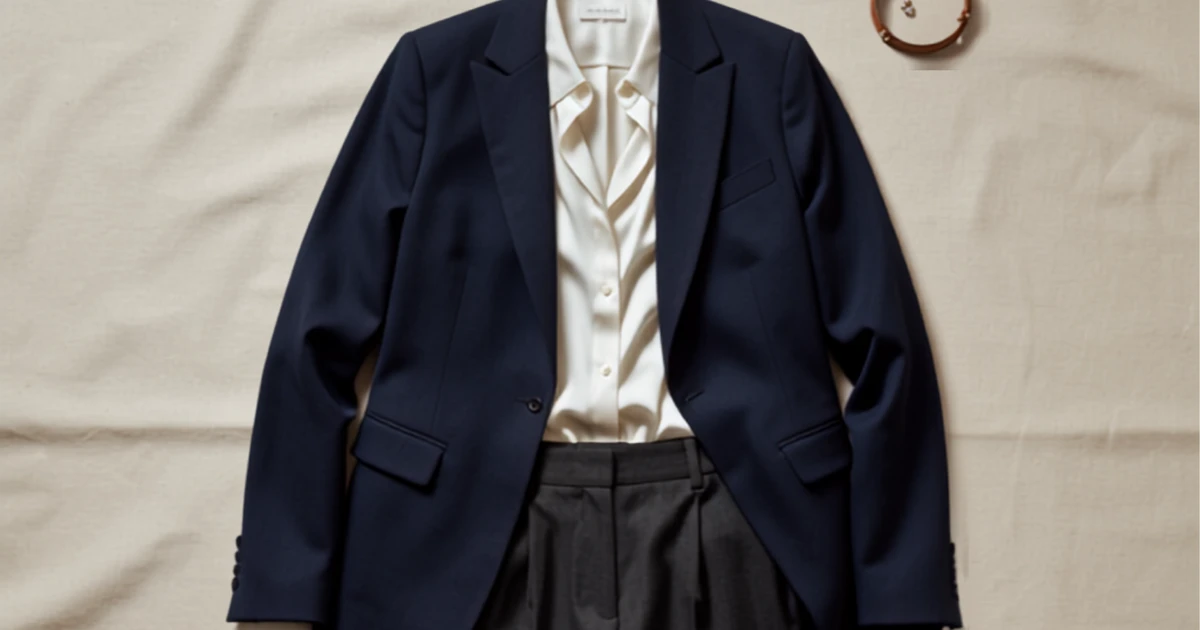
For a job interview, wear a polished, well-fitting outfit that is one step more formal than the industry’s everyday look — classically a blazer with a blouse and trousers or a knee-length skirt in muted tones. What matters is not one “safe” uniform, but that the cut and colour suit your figure and colour type. That way you look competent and, at the same time, like yourself.
The usual career guides give a universal answer: dark blazer, white blouse, muted grey. That’s not wrong — but it’s half the answer. It doesn’t explain why the same grey suit looks assured on one woman and costumed on another. The difference lies in fit, colour and industry. That’s what this guide is about.
Contents
- Why “dark blazer, white blouse” is only half the answer
- The first impression: what clothing signals in seconds
- The building blocks of the interview outfit
- The outfit by industry and role
- The interview outfit by your figure
- Colour that reads competent and suits you
- Competent, not distracting: structure, fit, contrast
- The video interview: an outfit for the camera
- Accessories, shoes and details
- Step by step to your interview outfit
- Do’s and don’ts at a glance
- The most common mistakes
- FAQ — Frequently asked questions
Why “dark blazer, white blouse” is only half the answer
“Dark blazer, white blouse, muted grey” — that’s the standard answer in almost every career guide. It isn’t wrong, but it treats every candidate the same. The right outfit for a job interview is not a uniform, but a polished, well-fitting picture that suits the industry, your figure and your colour type. The generic answer overlooks exactly the three factors that decide the effect.
Because the same grey suit looks assured on one woman and costumed on another. The reason isn’t the suit but the fit: the cut relative to her body line, the shade of grey relative to her colour type, the formality relative to the industry. Bring these three layers together and you look competent and authentic — which is exactly the goal in the room.
The first impression: what clothing signals in seconds
The first impression forms in the first seconds of an encounter — long before you’ve said a word. Clothing is the first thing the other person reads: structure signals order and competence, clean fit signals care, a healthy tone at the face signals alertness. The first impression is stable and colours the rest of the conversation.
You don’t get a second chance at a first impression. Your clothing speaks before you do — it should say: prepared, competent, herself.
That doesn’t mean you should disguise yourself. On the contrary: an outfit that obviously doesn’t suit you creates a discomfort that shows. The strongest effect comes when competence signals (structure, fit, muted colour) meet authenticity — when you wear the right formality in your form language.
The building blocks of the interview outfit
A safe interview outfit is built from a few coordinated pieces. Choose them in muted tones and in cuts that suit you:
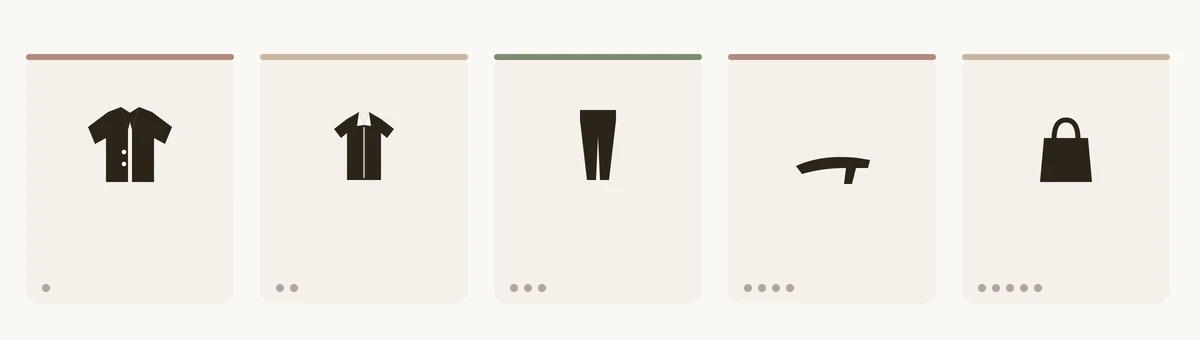
- The blazer gives structure and an official character — the most important piece. In very casual fields, a structured cardigan replaces it.
- The blouse or a fine top — the neckline frames your face, so choose it by your line and not too deep.
- The tailored trousers or knee-length skirt — well-fitting, in a tone that harmonises with the blazer.
- The closed shoe with a low to medium heel, comfortable and broken in.
- The structured bag, big enough for documents — it completes the polished picture.
The outfit by industry and role
The formality of your outfit follows the industry and the role — not a general rule. The most reliable yardstick is the company’s team look: dress one step more formal than the everyday there. Look at the company’s website and social channels and you quickly see where things sit. The general formality scale is in the guide Dress codes for women.
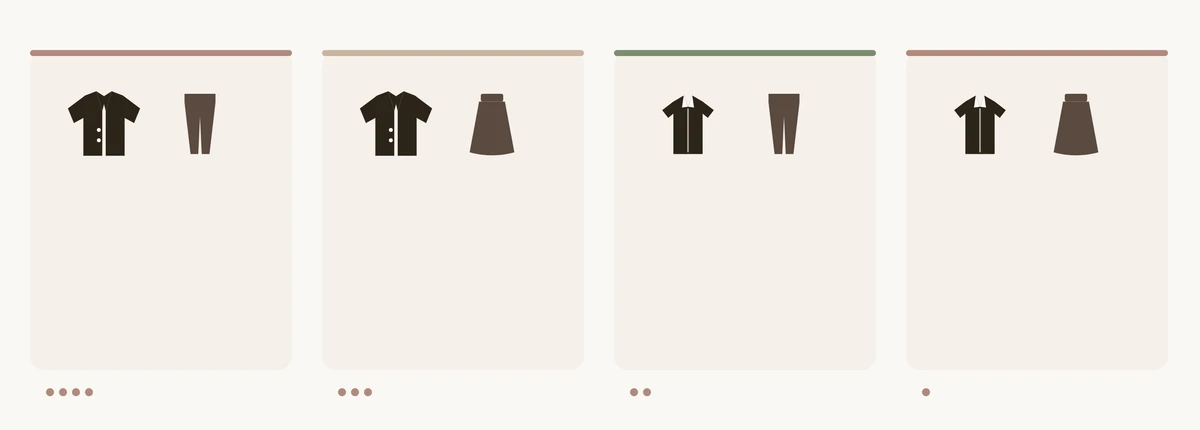
| Industry | Formality | Outfit |
|---|---|---|
| Bank, law, insurance | formal | blazer + trousers/skirt in a suit look, muted tones |
| Corporate, admin, office | business | blazer + blouse + trousers or a sheath dress |
| Agency, media, creative | polished-casual | blouse/fine knit + trousers, one colour accent allowed |
| Care, trades, startup | practical-polished | clean, well-fitting basics, discreet and tidy |
When in doubt, one step more formal: overdressed reads respectful, underdressed quickly reads careless.
The interview outfit by your figure
This is where an assured outfit separates from a generic recommendation. A blazer only reads competent when its cut suits your body line — otherwise it sits like a borrowed one. Clean, sharp lines wear structured, straight blazers with clean shoulders; soft, round lines wear a softer-constructed blazer without strict edges; strong, relaxed lines wear unstructured, loose shapes.
The same applies to blouse and trousers: the cut should mirror your line, not fight it. Which shapes belong to you is clarified by the Kibbe styling guide. Anyone who already builds their business look by body line has done half the work for the interview — more in the guide Business look by Kibbe type. A blazer in your line feels right, and that feeling shows: it reads as confidence.
Colour that reads competent and suits you
Muted colours read competent — but the most flattering one is the one that suits your colour type and makes your face look awake. Navy, charcoal, grey, camel and muted burgundy are safe interview tones. More important than the “right” universal colour is the tone right at the face: a grey that looks sallow on you sends the wrong signal, however serious it’s meant to be.
So it’s worth looking at your own colour type: warm types look lively in camel, cream and warm navy, cool types in grey, cool navy and berry. A muted colour accent — a blouse, a scarf — makes you memorable and human; the “only grey” rule is outdated. The accent just has to stay calm and mustn’t distract from the conversation.
Competent, not distracting: structure, fit, contrast
Competence reads through three signals: structure, clean fit and a calm overall impression. A structured blazer, straight lines and a well-fitting cut say “prepared”. Anything that pulls the eye away from the conversation — loud colours, busy patterns, jangling jewellery, a too-deep neckline — works against you, because it binds attention that belongs to your words.
Your outfit’s contrast should also match your own contrast: a naturally low-contrast person looks overpowered in hard black-and-white, a high-contrast person carries clear opposites effortlessly. A matched contrast makes you present but not loud. Fit is non-negotiable here: a perfectly chosen but badly fitting blazer loses all its effect.
The video interview: an outfit for the camera
In a video interview, the upper half of the frame counts most — top, neckline and colour at the face. The camera emphasises what sits close to the face, so choose a tone that makes you glow and stands out from the background. Very small, tight patterns flicker on camera, bright white right at the face overexposes — solid, medium-strength tones read the calmest.
A practical tip: get fully dressed, not just on top. A complete outfit changes your posture and confidence — the camera transmits both. Before the appointment, check your image in the camera light, not just the mirror: daylight from the front, a calm background and a top in your colour do more than any expensive garment.
Accessories, shoes and details
Accessories support the polished picture — a few, calm ones that take nothing away. Fine jewellery in one metal, a simple watch, a structured bag for the documents. Anything that jangles, glints or clatters distracts. With shoes: closed, clean, comfortable and broken in, with a low to medium heel, matching the outfit in colour.
The details decide the overall impression: neat nails, tidy hair off the face, discreet make-up and a restrained perfume. None of it has to be expensive — it just has to be clean, coherent and unobtrusive. A polished detail reads stronger than a flashy statement.
Step by step to your interview outfit
This is how to put your outfit together — in this order:
- Research the industry. The company’s website and social media show the team look; dress one step more formal.
- Set the formality level. Suit look, business or polished-casual — by industry and role.
- Choose the cuts by your body line. Structure for clean, softer for round, unstructured for relaxed lines.
- Choose the colour by your colour type. Muted, but flattering at the face; a calm accent is allowed.
- Check the fit. Shoulder seam on the shoulder edge, clean length, nothing pulling or slipping.
- Set the details. Closed shoes, a little calm jewellery, a structured bag, polished grooming.
- Do the sit-and-move test. Sit down, stand up, take a few steps — the evening before, not on the day.
Do’s and don’ts at a glance
Polished, well-fitting and true to you beats expensive and stiff. The outfit should support you, not play the lead.
- Do: one step more formal than the industry’s everyday.
- Do: cut by your line, colour by your colour type.
- Do: try everything on the evening before and check the fit.
- Don’t: loud colours, busy patterns, deep necklines.
- Don’t: new, un-broken-in shoes or a new, untested piece.
- Don’t: a suit you feel costumed in — that shows.
The most common mistakes
- Following only the generic rule. “Dark blazer, white blouse” without a fit to figure, colour and industry looks arbitrary.
- Neglecting the fit. A badly fitting blazer robs any outfit of its assurance.
- Wearing the wrong colour at the face. A sallow tone makes you look tired, however serious it’s meant.
- Disguising yourself. A look that obviously doesn’t suit you creates visible discomfort.
- Overlooking details. Scuffed shoes, jangling jewellery or too much perfume distract.
- Trying on only on the day. Without a fit test, the problem shows at the worst moment.
Competent and yourself
An appearance that suits you
A professional Kibbe and colour analysis gives you your personal result: which cuts and tones your structure really carries — the basis for an assured appearance in the interview and beyond. A free initial consultation is always included.
FAQ — Frequently asked questions
What should I wear to a job interview?
For a job interview, wear a polished, well-fitting outfit that is one step more formal than the industry’s everyday look — classically a blazer with a blouse and trousers or a skirt in muted tones. What matters is that the cut and colour suit your figure and colour type, so you look competent and at the same time authentic. Choose calm over distraction: clean lines, a clean fit, discreet accessories.
Which colour should I wear to an interview?
Muted, calm colours read competent: navy, charcoal, grey, camel, cream and muted burgundy. More important than a “safe” universal colour is the tone at the face — it should suit your colour type so you look awake and healthy. A colour accent is allowed and makes you memorable, as long as it stays muted and doesn’t distract from the conversation.
Do I have to wear a blazer?
A blazer is the most reliable choice, because it instantly gives the outfit structure and an official character. In very creative or casual fields, a polished cardigan or a structured knit jacket is enough. The rule of thumb: the more conservative the field, the more the blazer — when in doubt, one step more formal.
Skirt or trousers for a job interview?
Both are correct — decide by industry, comfort and your figure. Well-fitting trousers read safe and comfortable in most fields; a knee-length skirt or a sheath dress with a blazer is equally appropriate if the length is right. Choose what you move confidently in and can sit down in without tugging.
What should I wear to a video interview?
In a video interview, the upper half of the frame counts most: a top in a tone that makes your face glow without blending into the background. Avoid very small, flickering patterns and bright white right at the face; solid, medium-strength tones read the calmest on camera. Get fully dressed, not just on top — it gives you posture and confidence.
How formal does the interview outfit need to be?
Formality follows the industry and the role: banks, law firms and administration expect the formal suit look, corporates and offices a business look with a blazer, agencies and startups a polished but more relaxed look. The reliable rule: orient on the company’s team look and dress one step more formal than the everyday there.
Which shoes should I wear to an interview?
Closed, clean shoes with a low to medium heel are the safe choice — a classic pump, an elegant loafer or a simple heeled shoe. They should be comfortable and broken in so you walk confidently, and match the outfit in colour. Open toes, very high heels and worn soles are better avoided.
May I wear patterns or colour?
Yes, discreetly. A muted colour accent or a fine, calm pattern makes you memorable and human — the “only grey” rule is outdated. Just avoid anything distracting: large, loud patterns, hard contrasts and anything that pulls the eye away from the conversation. The colour should suit your colour type and match the occasion’s formality.
What are no-gos for an interview outfit?
No-gos are a badly fitting or unkempt outfit, too much casual look (sneakers, ripped jeans, a hoodie) and anything distracting: loud colours, busy patterns, jangling jewellery, too much perfume. Equally unfavourable is a “costumed” feeling in a suit that doesn’t suit you. Polished, well-fitting and true to you beats expensive and stiff.