
TL;DR — Christmas party & New Year's Eve
- Three occasions, three logics. The office party, the family evening and New Year's Eve each demand something different — one outfit does not cover all three.
- The office Christmas party is a work event in party clothing. The rule: one step above your everyday look, never two.
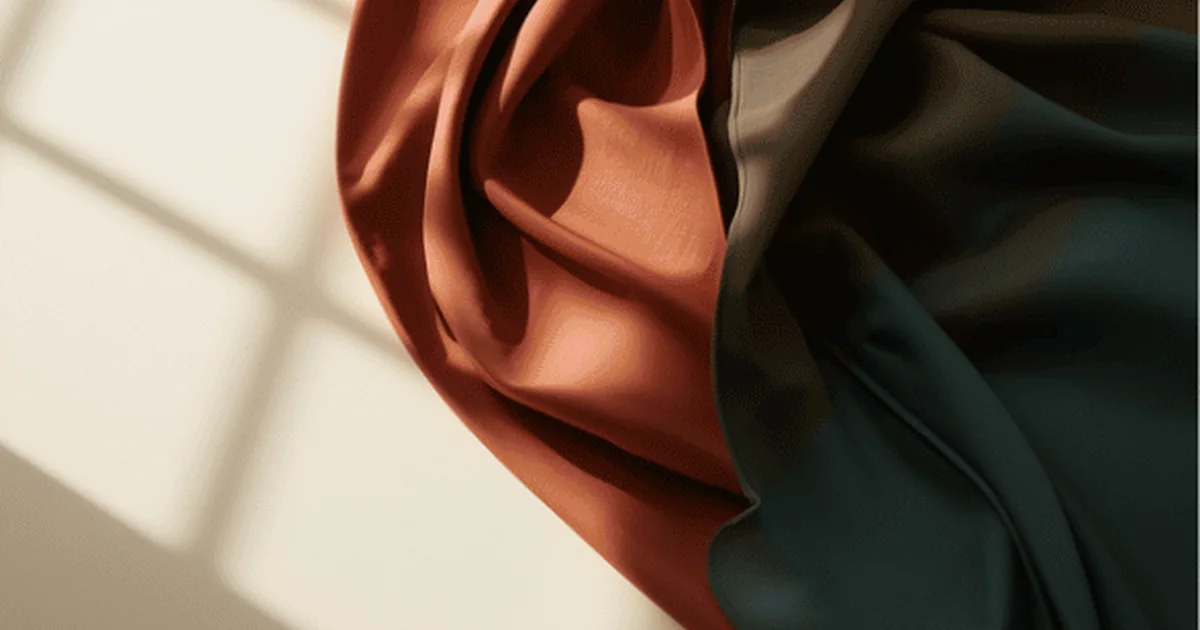
- Fabrics are light tools. Velvet absorbs light, satin returns it in one direction, sequins scatter it. That changes your perceived width.
- December events happen under warm artificial light. Cool colours lose brilliance there, warm ones gain.
- Shine belongs where you want attention — not on your widest point.
For the Christmas party and for New Year's Eve you do not need one festive outfit but three separate decisions. The office party is a work event, the family evening a sitting marathon, New Year's Eve the only genuine party occasion. Treat all three the same and you will be overdressed once, out of place once and uncomfortable once.
Almost every guide on the subject recommends the same thing: "take your everyday dress code and add an elegant upgrade." That is true — but only for one of the three occasions. This guide separates them, works with what fabrics actually do under artificial light, and tells you where shine belongs on your figure.
If you are looking for an evening dress for a formal occasion or are invited as a wedding guest, those have their own guides — this one is explicitly about December.
Contents
- Three occasions, three rules
- The office Christmas party
- Christmas Eve and family
- Fabrics as light tools
- Warm light shifts your colours
- The photo factor
- New Year's Eve: the real party occasion
- Where the shine belongs
- Festive by body shape
- The formula in six steps
- The most common mistakes
- FAQ — Common questions
Three occasions, three rules
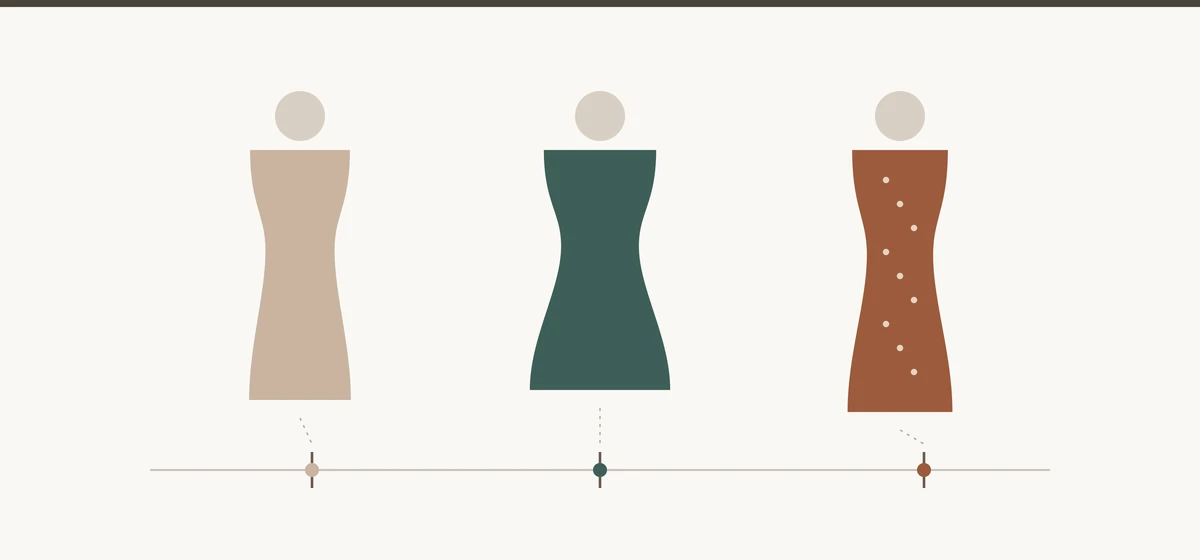
A festive occasion is not one category but a question of audience, duration and consequence. Those three vary sharply in December — and they decide before any fabric or colour does.
The audience determines how much latitude you have. Colleagues and managers still assess you on Monday; family does not. The duration determines how much discomfort you can afford — three hours at a dinner table is not four hours standing. And the consequence separates the work event from the private evening.
The office Christmas party is the only occasion of the year where an outfit can damage your career. Treat it accordingly.
From this follows a simple ranking: at the office, appropriateness decides; at the family evening, comfort; on New Year's Eve, expression. Reverse that order and you will reliably get it wrong.
The office Christmas party
The office Christmas party is a work event in festive packaging. That is not pedantry: same people, same hierarchies, same judgements as on Tuesday morning — only with a drink in hand.
The most useful rule is this: one step above your everyday look, never two. If you normally wear a blouse and tailored trousers, it becomes a silk blouse and tailored trousers, perhaps with a different shoe. If you normally wear knitwear and jeans, it becomes fine knit and dark trousers. Jump two steps and you do not look festive, you look costumed.
What reliably works in this frame:
- The dark suit or trouser suit with a more festive blouse underneath. Highest hit rate, lowest risk.
- Fine knit in a saturated colour with well-fitting trousers — warm, unfussy, unassailable.
- The knee-length sheath dress with a blazer or cardigan over it. The blazer can come off later, the dress carries the evening.
- Skirt and blouse if the company is more formal. Midi rather than short.
What to avoid in the office context: anything showing skin in areas that would be covered on a working day, very short lengths, and sheer fabrics without a lining. Not out of prudishness — but because a photo from that evening can end up in the company chat. Which codes apply in which setting is covered in the guide to dress codes for women.
One practical point almost nobody mentions: check in advance whether it is a standing reception or a seated dinner. At a standing reception, shoes matter more than anything else — four hours in high heels on parquet is not feasible for most people. A flat, elegant shoe is not a defeat.
Christmas Eve and family
The family evening has the longest sitting time and the least judgement. That reverses the priorities: comfort before effect, without looking like the sofa.
Three constraints shape the choice:
- You sit for a long time. A tight waistband that fits perfectly standing becomes a problem after the third course. A soft waistband, a dress with fluid drape or trousers with a little elastane solve it.
- The temperature swings. Overheated living rooms, cold hallways, often a trip outside. That is exactly the case for layers — how to do it without adding bulk is under layering.
- There is eating and unwrapping. Wide sleeves over candles and pale silk over red cabbage are predictable risks.
At the family table it is not the most beautiful outfit that wins, but the one you still hold the same posture in after three hours.
The principle that works is "one festive piece, the rest quiet": velvet trousers with plain knitwear, a silk top with dark trousers, a dress in soft jersey with good drape. The evening reads as festive without you feeling costumed.
Fabrics as light tools
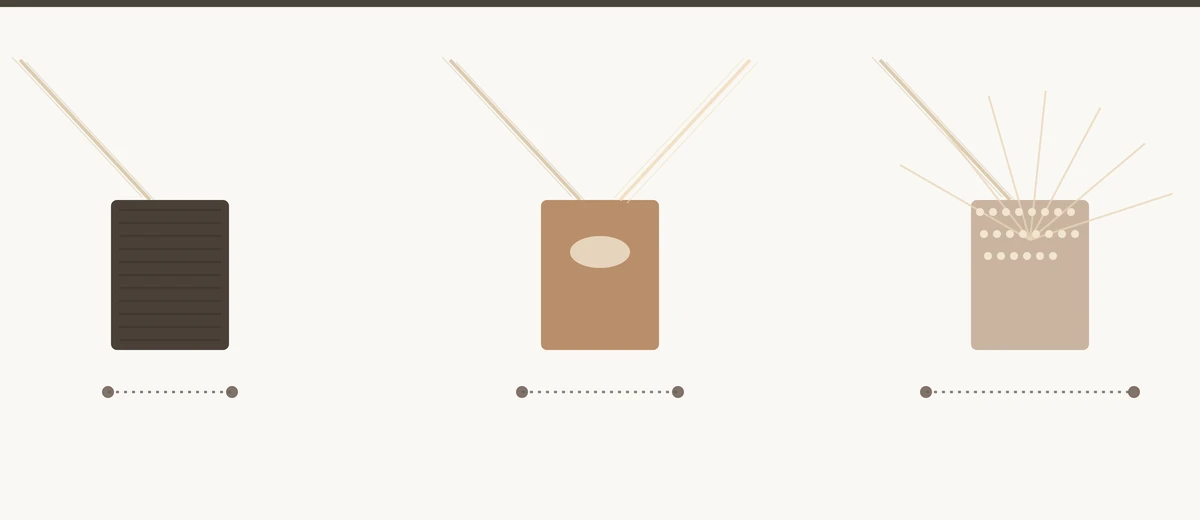
Festive fabrics differ not by their colour but by what they do with light. That is what decides whether a piece flatters or adds bulk — and it is the point inspiration lists skip.
Three behaviours cover every decision:
| Fabric | What it does with light | Effect on the silhouette |
|---|---|---|
| Velvet | absorbs light in the pile, returns almost none | reads narrower, but heavier and denser |
| Satin, silk | returns it directionally, one bright highlight strip | emphasises exactly where the highlight runs |
| Sequins | scatters in many directions at once | noticeably enlarges the perceived scale |
| Crêpe, matte jersey | diffuse, without direction | neutral — the quiet partner to anything shiny |
| Brocade, jacquard | structure creates micro-shadows | adds bulk like a pattern, not like shine |
| Lace over a lining | breaks light into fine detail | reads more delicate, but only over a quiet lining |
From this follows the most important rule of the evening: one shiny piece per outfit. Satin skirt with a matte top, sequin top with quiet trousers, velvet dress with no further shine. Two light-active surfaces compete, and the eye finds no fixed point.
Velvet has one property that surprises people: it reads narrower than satin because it returns no light — but at the same time heavier, because the pile has volume. For petite figures a floor-length velvet dress can therefore feel overwhelming even though the colour is slimming.
Warm light shifts your colours
December occasions happen almost exclusively under warm artificial light — and artificial light does not render colours neutrally. How much is measurable: the colour rendering index Ra describes on a scale up to 100 how faithfully a light source shows colours.
This is not fashion theory but a standard. The German workplace rule ASR A3.4 "Lighting and visual connection" from the Federal Institute for Occupational Safety and Health sets minimum values for work areas; for offices, the DGUV IFA report on indoor workplaces gives a minimum of Ra 80.
In practice this means two things. First: in restaurants, bars and private homes the value is often below the office standard — colours are rendered less accurately there than at your desk. Second: warm light with a low colour temperature strengthens yellow and red components and weakens blue.
What looks brilliant in the daylight of a fitting room can read dull under warm light — and the other way round.
Two usable rules of thumb follow:
- Warm colours gain: rust, burgundy, gold, camel, warm green. They become richer under warm light.
- Cool colours lose: ice blue, silver, cool pink, pure white. They quickly read grey or creamy rather than clear.
For cool colour types this means no sacrifice, only a shift: deep teal instead of ice blue, a light grey with sheen instead of silver, a berry tone instead of cool pink. Which range applies to you is covered in which colour type am I.
The test takes ten seconds: hold the piece under your warm-white living room lamp at home, not up to the window. What looks alive there works in the evening.
The photo factor
Every one of these evenings gets photographed — and flash treats festive fabrics completely differently from room light. This is where many outfits fail that convinced in the mirror.
The reason lies in the direction of the light. Room light usually comes from above and from several sides; a flash comes frontally and from a point. That amplifies every directional return:
- Sequins throw the flash back as hard white points. What sparkles finely in the room becomes a broad bright zone in the photo — and bright surfaces read wider.
- Satin shows a sharp highlight exactly where the fabric runs over a curve. In the room that is a soft gradient; with flash it is a hard edge.
- Velvet and matte crêpe stay almost unchanged under flash. They are the most reliable fabrics when a lot of photographs are taken.
If you know there will be group photos, place the shine deliberately small and high — near the face rather than over the middle of the body.
This is not a call to give up shine. It is an argument for dosage: a shiny detail at the neckline or the ear survives any flash; a shiny surface over stomach and hips rarely does.
New Year's Eve: the real party occasion
New Year's Eve is the only December occasion without an etiquette risk. Here you may wear what would be too much at the office party — the setting is private, the audience well disposed, the consequence nil.
Two constraints still apply:
- You go outside at midnight. An outfit that only works indoors does not work on New Year's Eve. Plan the coat in, do not improvise it.
- You stand and move. Narrow skirts that look good seated restrict you when dancing.
What carries here: the sequin piece that would otherwise be too much — but as one element, not as the whole outfit. A sequin skirt with a plain cashmere jumper is stronger than the fully shining dress, because the eye gets a resting point. Equally: a velvet suit, a metallic skirt with black, a satin dress with good drape.
If you are unsure how much shine suits you, read the placement section below — and the guide to looking visually slimmer, which explains why light-active surfaces enlarge the scale.
Where the shine belongs
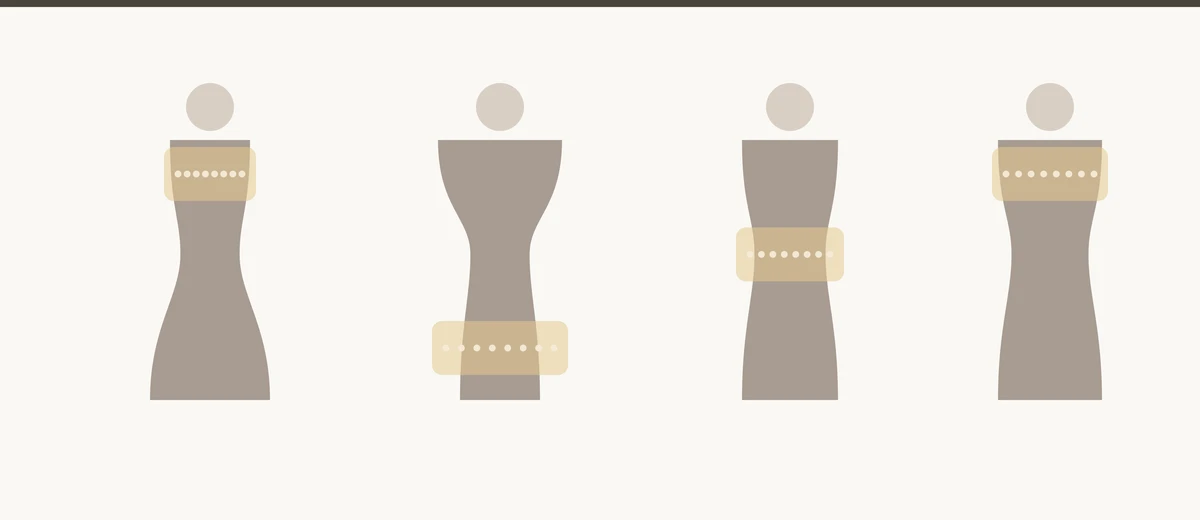
A shiny surface works like a spotlight: it pulls the eye exactly to where it sits. Placement is therefore not a matter of taste but a decision about what should be emphasised.
The rule is unspectacular and effective: shine belongs where you want to be seen — and not on your widest point. If you do not yet know your starting point, what body shape do I have settles it in four measurements.
Three placements cover almost everything:
- High — sequin top, satin blouse, a shining neckline. Pulls the eye to the face. Good when you want to balance volume below.
- Middle — metallic belt, shining waistband. Sets a waist where there is no pronounced one.
- Low — sequin skirt, satin trousers. Shifts attention downward. Good with broader shoulders.
Which neckline carries shine up high without shortening the neck is covered in which neckline suits me.
Festive by body shape
Body shape says where shine and volume belong. The occasion says how much. Together they make the decision.
| Body shape | Festive strategy | Avoid |
|---|---|---|
| A / pear | Shine up top: satin blouse, sequin top. Matte and fluid below. | sequin skirts, shiny trousers |
| V / inverted triangle | Shift shine downward, matte fabric and a quiet line up top. | shining shoulder areas, broad strap details |
| H / rectangle | Shine in the middle: a metallic belt or waistband sets a waist. | an unbroken straight shining surface |
| X / hourglass | One close-fitting piece in velvet or crêpe; leave the waist visible. | wide sequin dresses that swallow the waist |
| O / round | Matte base, shine as an accent at the neckline or shoe; open long line. | broad sequin surfaces over the middle of the body |
The formula in six steps
If you are short on time, work through this order. It leads to a workable decision at any of the three occasions.
- Classify the occasion. Office, family or New Year's Eve — that sets whether appropriateness, comfort or expression leads.
- Set the step. At the office: one step above your everyday look. Privately: as festive as you feel comfortable.
- Choose one shiny piece — and only one. The rest stays matte.
- Place the shine zone according to your body shape, not the trend.
- Check it under warm light. Hold it under the living room lamp at home, not up to the window.
- Do the practical test. Sit down, raise your arms, wear it for ten minutes. Whatever pinches will not last the evening.
The most common mistakes
Two steps too high at the office. The floor-length dress at the company party does not read festive, it reads misplaced. One step is enough.
Two shiny surfaces. Sequin top and satin skirt together — the eye finds no resting point and both pieces lose.
Forgetting the coat. Especially on New Year's Eve. An outfit that only works as far as the cloakroom is not an outfit.
Only tried on in daylight. The most common reason a piece looks brilliant in the shop and dull in the evening.
New shoes. An evening on your feet is the wrong moment for a premiere. Break them in at home for two hours first.
Ignoring seated comfort. At the family dinner the waistband decides the evening, not the colour.
The other big winter occasion happens outdoors rather than indoors and follows its own rules: after the slopes, layers, boots with grip and a windproof outer shell count for more than shine. All of that is in the guide to the après-ski outfit.
FAQ — Common questions
What do you wear to an office Christmas party?
One step above your usual work outfit, never two. A blouse and tailored trousers become a silk blouse and tailored trousers; knitwear and jeans become fine knit and dark trousers. The dark trouser suit with a more festive blouse has the highest hit rate at the lowest risk.
What is the difference between a Christmas party and a New Year's Eve outfit?
The office Christmas party is a work event with judgement on Monday; New Year's Eve is a private occasion with no consequence. That is why New Year's Eve allows what would be too much at the company party — broad shine, deeper necklines, more expression.
Which colours work for a Christmas party?
Under warm light, warm tones gain: burgundy, rust, gold, camel, rich green. Cool colours such as ice blue, silver or pure white quickly read dull. For cool colour types, deep teal, berry tones or a light grey with sheen are the better translation.
Are sequins too much for a company party?
Broadly yes, as an accent no. A sequin top with quiet trousers works in most offices; a fully covered dress rarely does. The rule of thumb stands: one shiny piece per outfit, the rest matte.
What do I wear at home on Christmas Eve?
Something you can sit in for three hours without changing posture. What works is one festive piece with a quiet rest — velvet trousers with plain knitwear, or a soft jersey dress with good drape. A tight waistband is the most common mistake.
Does velvet make you look bigger?
Velvet reads narrower than satin because its pile absorbs light rather than returning it. At the same time the pile adds physical bulk and makes the fabric look heavier. For petite figures a floor-length velvet dress can therefore feel overwhelming even though the colour is slimming.
Which fabric is the safest for festive occasions?
Matte crêpe or jersey with good drape. Both return light diffusely, so they emphasise no particular spot, which makes them the quiet partner to one shiny piece. They are also friendly to sitting and moving.
Where should the shine sit on my figure?
Where you want attention — and not on your widest point. With broader hips, shift it upward; with broader shoulders, downward; with a straight figure, into the middle as a waist marker.
Why does my outfit look different in the evening than in the shop?
Because artificial light does not render colours neutrally. The colour rendering index Ra measures this; offices require a minimum of Ra 80, while restaurants and private homes are often below that. Warm light strengthens yellow and red components and weakens blue.
Can I wear one outfit to all three occasions?
Only with adjustment. A dark base of trousers and a matte top carries all three — what changes is the single festive element: a blazer for the office, soft knitwear for the family, a shiny piece for New Year's Eve. One finished outfit for all three does not exist.