TL;DR — Which autumn outfit suits me?
- An autumn outfit is built from four building blocks: base, structure layer, outer layer and a closed shoe. Once you know the formula, you don't need a trend list.
- Temperature sets the number of layers: September 13.8 °C, October 9.4 °C, November 4.8 °C on average in Germany, according to the German Weather Service.
- Your body shape decides lengths and volume, not the season. Only one piece per outfit carries visible volume.
- The autumn colours of 2026 range from chocolate brown to aubergine. Which of them suit you depends on your colour season.
- An autumn capsule of 12 pieces adds up to 40 combinations.
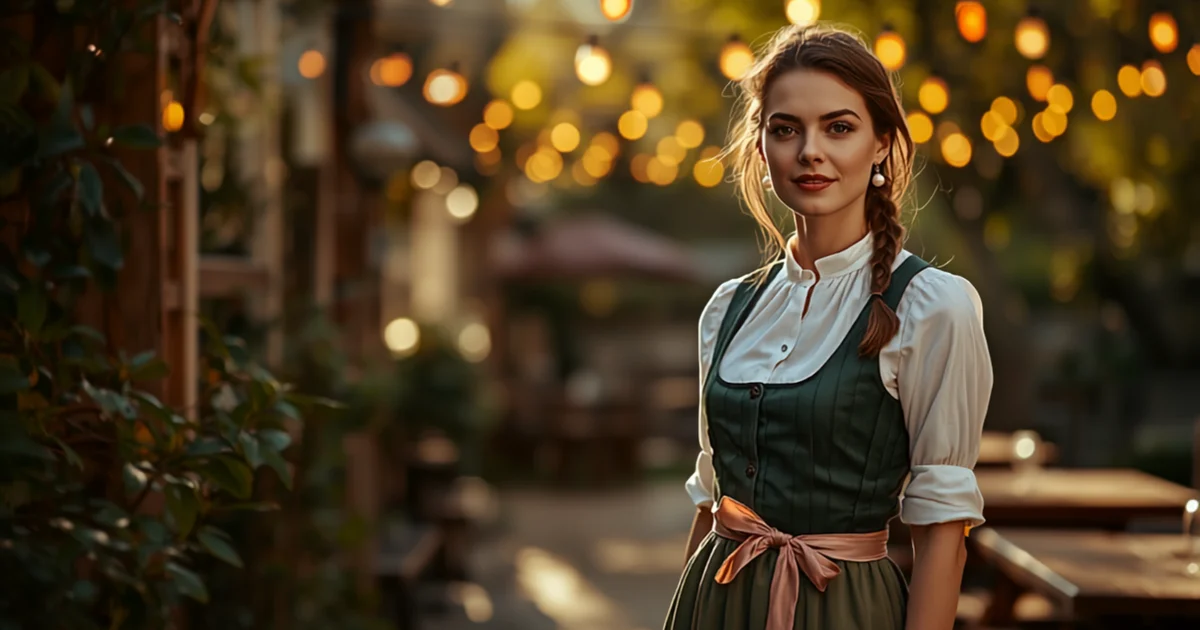
A good autumn outfit for women consists of a base made of a bottom and a top, a structure layer such as a blazer or cardigan, an outer layer such as a trench coat or wool coat, and a closed shoe. The temperature decides how many of these layers you need. Your body shape decides lengths and volume, and your colour season decides the colours. That way you get an outfit that suits you rather than just the season.
Most autumn guides show finished looks: a suede jacket here, a knitted dress there. That looks good on the model and helps you very little in front of your wardrobe in the morning. This guide gives you a formula instead, one that works with real temperatures, adapts to your body shape and body line, and turns a few pieces into many outfits.
Contents
- The autumn formula: four building blocks, one line
- Autumn outfits by temperature: September to November
- 7 autumn outfits almost anyone can wear
- Autumn outfits by body shape
- Autumn outfits by body line
- Autumn colours 2026 — and which ones suit you
- Fabrics for autumn: wool, corduroy, suede
- The autumn capsule: 12 pieces, 40 combinations
- Autumn outfits for the office, the weekend and the evening
- The most common autumn outfit mistakes
- FAQ — Frequently asked questions
- Next steps
The autumn formula: four building blocks, one line
An autumn outfit is a layered outfit that responds to changing temperatures and still keeps a clear silhouette. In summer two pieces are enough, in winter the coat dominates. Autumn sits in between, and that is exactly why so many outfits fail in it: it is cold in the morning, warm at midday, and the outfit has to handle both.
The solution is a fixed order of four building blocks:
- Base: a bottom and a top that already make a complete outfit on their own. For example tailored trousers and fine knitwear.
- Structure layer: a blazer, cardigan or shirt jacket. It gives the outfit shape and is the piece you take off at midday.
- Outer layer: a trench coat, wool coat or short jacket. It protects against wind and rain and sets the overall length.
- Shoe and bag: closed, weatherproof and in the same colour family as the outer layer.
How many layers your silhouette can carry and how much warmth each one provides is worked out in detail in the guide Layering for transitional weather. For the autumn outfit, one rule from it is enough: only one piece per outfit carries visible volume. If the jumper is chunky, the trousers stay slim. If the coat is wide, the knit stays fine.
An autumn outfit doesn't work because of one special piece, but because of the order in which the pieces lie on top of each other.
Your autumn outfit in 5 steps
- Check the temperature, and check the morning value. The daytime high tells you which layer you can take off. The morning value tells you which one you need.
- Choose the bottom to suit your line. Tailored trousers, jeans, a midi skirt or a knitted dress, in the length that suits your body shape.
- Keep the top fine. Fine knit, a blouse or a slim roll neck. Chunky knit only comes in when bottom and outer layer stay slim.
- Choose the outer layer by the length of the bottom. The coat hem ends clearly above or clearly below the skirt hem, never at the same height.
- Match shoe and bag to the colour family of the outer layer. Camel coat, cognac ankle boots, brown bag: the outfit looks planned, even if it came together in five minutes.

Autumn outfits by temperature: September to November
Meteorological autumn covers September, October and November, and over these three months the average temperature in Germany drops by around nine degrees. For the 1991 to 2020 reference period, the German Weather Service gives these means: 13.8 °C in September, 9.4 °C in October and 4.8 °C in November.
These values are monthly means across day and night. On the way to work in the morning it is colder, in the afternoon warmer. That range is exactly what an autumn outfit has to cover, and that is why the formula works with one layer you can take off.
| Month | Mean 1991–2020 (DWD) | Building blocks | Outer layer | Shoe |
|---|---|---|---|---|
| September | 13.8 °C | Base + light structure layer | Often none, otherwise a light trench coat | Loafers, ballet flats, leather trainers |
| October | 9.4 °C | Base with fine knit + structure layer | Trench coat or transitional coat | Ankle boots, Chelsea boots |
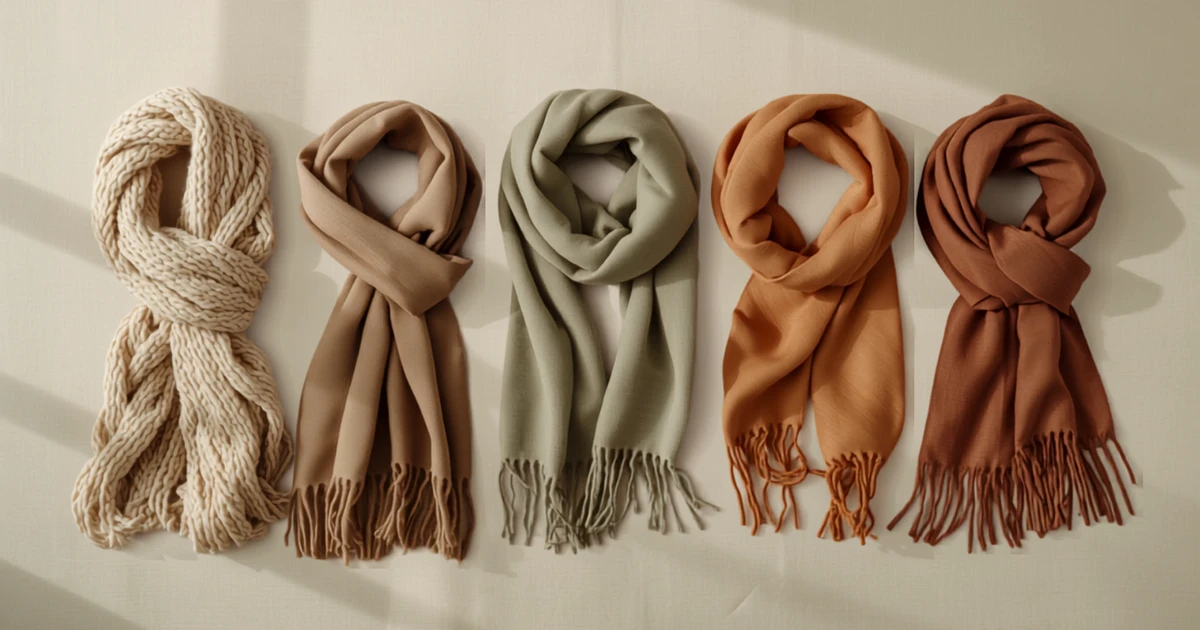
| November | 4.8 °C | Base with knitwear + structure layer | Wool coat, plus a scarf | Lined ankle boots or boots |
The table shows a relationship most outfit features skip: September is closer to summer than to November. Between September and November there are nine degrees on average, between August and September considerably fewer. If you wear your wool coat in September, you'll overheat at midday. If you still wear loafers in November, you'll freeze in the morning.

7 autumn outfits almost anyone can wear
These seven autumn outfits all follow the four-building-block formula. Each can be adapted to your body shape and colour season; the adjustments are in the following sections.
1. Fine-knit roll neck, midi skirt and boots
A slim roll-neck jumper, a midi skirt in wool or suede and boots whose shaft disappears under the skirt hem. The leg looks continuous and the silhouette stays calm. The gap matters: there should be no skin showing between skirt hem and boot shaft, otherwise the outfit cuts the leg in two. Which skirt length suits you is shown in the guide Which skirt suits my body shape?.
2. Blazer, straight jeans and loafers
The most reliable autumn outfit for September and mild October days. Straight or slightly flared dark jeans, fine knit or a T-shirt in firm cotton, and a blazer that ends just above the widest point of the hips. Add leather loafers. The blazer is the structure layer and takes over the role the blouse played in summer.
3. Trench coat, fine knit and wide tailored trousers
The trench coat is the classic outer layer for October. It is weatherproof but light, and it can be worn open or belted. Under a belted trench you need flowing wide trousers, so the waist remains the only emphasised element. How wide the trousers can be is covered in the guide Which trousers suit my body shape?.
4. Knitted dress, belt and ankle boots
A knitted dress in fine rib knit is a complete autumn outfit in one piece. A slim belt defines the waist, and ankle boots or boots finish the outfit at the bottom. With chunky knit the belt is left out, because the fabric itself carries enough volume. More on dress shapes is in the guide Which dress suits my body shape?.
5. Cardigan as a top and pleated trousers
A buttoned-up cardigan replaces the blouse and turns from a cover-up into a top. Add high-waisted pleated trousers and tuck the cardigan in slightly at the front. The outfit is comfortable but looks dressed thanks to the pleat. Why knit thickness matters more than the cut is explained in the guide Which jumper suits my body shape?.
6. Suede jacket, blouse and dark jeans
According to the autumn 2026 trend reports, suede is one of the key materials of the season. A short suede jacket in cognac or chocolate brown over a light blouse, with dark jeans and Chelsea boots. The short jacket ends at the waist and therefore works especially well with high waistbands. Which jacket length suits your body shape is shown in the guide Which jacket suits my body shape?.
7. Tonal outfit with a wool coat
An outfit in a single colour family, for example camel, beige and brown, finished with a wool coat. A tonal outfit lengthens the silhouette because no colour edge divides it, and it looks high-end without effort. What matters is that the shades differ slightly in lightness. How that works is shown in the guide Combining colours. You'll find the right coat in the guide Which coat suits me?.
Autumn outfits by body shape
Body shape describes the relationship between shoulders, waist and hips. For autumn outfits it matters more than in summer, because more layers create more edges, and every edge lands somewhere on the body. If you don't know your body shape yet, the guide What body shape do I have? helps.
| Body shape | Top | Bottom | Outer layer | Shoe |
|---|---|---|---|---|
| X shape (hourglass) | Fine knit, wrap knit | Midi skirt, high-waisted trousers | Belted trench or coat | Boots with a slim shaft |
| A shape | Structured blazer, light knit | Dark straight trousers, A-line skirt | Coat ending below the hips | Ankle boots in the trouser colour |
| V shape | V-neck, dark fine knit | Wide trousers, midi skirt with volume | Straight coat without shoulder pads | Boots with some volume |
| H shape | Belted cardigan, blouse | Pleated trousers, skirt with movement | Belted trench | Loafers, Chelsea boots |
| O shape | Flowing fine knit, open cardigan | Straight trousers in a dark colour | Long straight coat worn open | Ankle boots with a slight heel |
The table follows a single logic: volume where the body is narrower, calm where it is wider. The A shape wears structure on top and darkness below, the V shape exactly the other way round. The X shape shows the waist, the H shape creates it with a belt, and the O shape draws the eye away with a long vertical line.
Autumn outfits by body line
Body line describes whether your appearance reads as straight, angular, balanced, petite or soft. It decides materials and cut details, while body shape only decides lengths and volume. The Kibbe method distinguishes 13 types in five families for this, summarised in the overview of the 13 Kibbe types.
Dramatic family, long straight line: a long wool coat with a clear shoulder, slim trousers, boots with a pointed toe. Smooth, firm fabrics and graphic patterns or none at all.
Natural family, relaxed line: chunky knit, corduroy, a soft suede jacket, wide trousers. Here the autumn outfit may look casual; overly strict cuts look like a costume.
Classic family, balanced line: trench coat, fine knit, tailored trousers with a crease, loafers. Symmetry and clean proportions, no exaggeration in any direction.
Gamine family, petite graphic line: a short jacket, slim trousers, contrasts within the outfit, Chelsea boots. Long, wide coats swallow this line.
Romantic family, soft curved line: wrap knit, a flowing midi skirt, a coat with a waist, soft suede. Stiff, boxy cuts look borrowed on this line.
For an autumn wardrobe that lastingly suits your line, the guide Capsule wardrobe by Kibbe type is worth a look.
Autumn colours 2026 — and which ones suit you
Autumn colours are warm, muted and deep shades that harmonise with the light of the season. For 2026 the autumn trend reports mainly name chocolate brown, camel and taupe, plus grey and anthracite, butter yellow and rosé, as well as aubergine, port wine, cognac and jade. That is a wide palette, and that is exactly the problem: not every one of these colours suits every woman.
Whether a colour suits you depends on your colour season, meaning the undertone, depth and contrast of your appearance. The name "autumn colours" does not mean they only suit the Autumn type. Each of the four colour seasons finds its shades in the 2026 trend palette:
- Autumn type: chocolate brown, camel, cognac, butterscotch. Season and colour type overlap most here. The full palette is in the guide Autumn type.
- Winter type: anthracite, aubergine, port wine, jade. Deep, clear shades without a yellow cast.
- Summer type: grey, taupe, rosé, muted mauve. Cool, soft shades instead of warm earth tones.
- Spring type: butter yellow, light camel, warm cognac. Light, warm shades, with dark chocolate brown better kept away from the face.
If you don't know your colour season yet, the guide Which colour season am I? is the right place to start. And if a trend colour isn't part of your palette, wear it lower down, as trousers, skirt or shoes, and put one of your own colours near your face.
Trend colours tell you what is hanging in the shops. Your colour season tells you which of them you should actually buy.
Fabrics for autumn: wool, corduroy, suede
Autumn fabrics are materials that keep you warm without adding unnecessary bulk and that stand up to damp air. They often decide more about an autumn outfit than the cut, because the same garment looks like summer in cotton and like autumn in wool.
Merino wool is fine, keeps you warm with little volume and is therefore ideal for tops under a blazer and coat. Cashmere is even finer and softer, but more delicate. Which fibre names may appear on the label is regulated in the EU by the Textile Labelling Regulation. Checking the percentage is worthwhile, because "with cashmere" can mean a very small share.
Corduroy brings structure and some volume; the wider the wale, the more. Needlecord suits almost every body shape, wide-wale corduroy tends to suit the Natural family. Suede looks warm and matt, but is sensitive to rain and needs waterproofing. Tweed and flannel are classic fabrics for blazers and skirts that show their strengths from October onwards.
To make wool and cashmere last several autumns, care is what counts. The most important rules are in the guide Washing and caring for clothes properly.
The autumn capsule: 12 pieces, 40 combinations
An autumn capsule is a small selection of coordinated garments that can be combined with each other for the whole season. It solves the morning problem not with more clothes, but with pieces that go together.
These twelve pieces make a complete autumn capsule:
- Bottoms (3): dark straight jeans, tailored trousers, midi skirt
- Tops (3): fine-knit roll neck, blouse, cardigan
- Dress (1): knitted dress
- Structure layer (1): blazer
- Outer layers (2): trench coat, wool coat
- Shoes (2): ankle boots, loafers
The maths behind it: three bottoms times three tops give nine base outfits. Each of them can be finished in four ways: without an outer layer, with the blazer, with the trench coat or with the wool coat. That makes 36 combinations. Add the knitted dress with the same four variations, and you get 40 combinations from 12 pieces. The condition is a shared colour family; otherwise the pieces suit the season but not each other.

How to build a capsule all year round and to suit your body line is shown in the guide Capsule wardrobe by Kibbe type. The autumn capsule is the seasonal version of it.
Autumn outfits for the office, the weekend and the evening
The four-building-block formula stays the same for every occasion. What changes is the formality of the individual blocks.
Office: tailored trousers or a midi skirt, fine knit or a blouse, a blazer as the structure layer, a trench coat or wool coat, loafers or ankle boots in smooth leather. How formal it needs to be depends on the dress code. The levels from casual to business are explained in the guide Dress codes for women.
Weekend: jeans, chunky knit or a cardigan, a suede jacket or quilted jacket, Chelsea boots or leather trainers. Here the volume can sit in the knit, as long as trousers and jacket stay slim.
Evening: a knitted dress or a velvet midi skirt, fine knit, a wool coat and heeled boots. For the parties at the end of the year, the guide Christmas party and New Year's Eve: what to wear? helps.
The most common autumn outfit mistakes
Getting the wool coat out too early. September averages 13.8 °C. A trench coat or a blazer is usually enough; the wool coat belongs in November.
Wearing summer shoes for too long. From October, open shoes and thin trainers look out of place next to knitwear and coats, and they get wet. Which closed shoes suit your body shape is in the guide Which shoes suit my body shape?.
Coat hem and skirt hem at the same height. Two edges in the same place cut the leg in two. The coat ends clearly above or clearly below.
Two volume pieces in one outfit. Chunky knit with wide trousers, or an oversized coat with a ruffled wrap skirt. One volume piece per outfit is enough.
Buying trend colours against your own colour season. Chocolate brown is everywhere in 2026, but it doesn't suit everyone at the face. Trend colours that don't suit you belong lower down.
Washing wool like cotton. Washed too warm, wool felts and shrinks. One autumn of the wrong care can finish a good jumper.
FAQ — Frequently asked questions
What should a woman wear in autumn?
In autumn, women wear layered outfits: a base of trousers or a skirt and a top, a structure layer such as a blazer or cardigan on top, and an outer layer such as a trench coat or wool coat. Add closed shoes such as loafers or ankle boots. The number of layers depends on the temperature, which averages 9.4 °C in October in Germany.
Which colours are in for autumn 2026?
The autumn colours of 2026 are mainly chocolate brown, camel and taupe, plus grey and anthracite, butter yellow, aubergine, port wine, cognac and jade. Which of these colours suit you depends on your colour season. Warm types reach for brown and camel, cool types for anthracite, aubergine and taupe.
Which shoes go with autumn outfits?
In September loafers, ballet flats and leather trainers work, in October ankle boots and Chelsea boots, and in November lined ankle boots and boots. It matters that shoe and bag sit in the same colour family as the outer layer. That makes the outfit look planned.
How do I style a midi skirt in autumn?
With a slim fine knit or roll neck on top and boots whose shaft ends under the skirt hem. That way no gap of skin appears and the leg looks continuous. As an outer layer, a coat that is clearly longer or clearly shorter than the skirt works.
At what temperature do you wear a wool coat?
There is no fixed threshold; many people reach for a wool coat at around 10 degrees. October averages 9.4 °C in Germany and November 4.8 °C. In September, at 13.8 °C, a trench coat or blazer is usually enough.
What is the difference between an autumn outfit and the Autumn colour type?
An autumn outfit is clothing for the autumn season and suits every woman. The Autumn type is one of four colour seasons and describes people with a warm undertone who suit earthy, deep colours. An autumn outfit can therefore also be worn in the colours of a Winter, Summer or Spring type.
How many pieces does an autumn wardrobe need?
A working autumn capsule gets by with 12 pieces: three bottoms, three tops, a knitted dress, a blazer, two outer layers and two pairs of shoes. Mathematically they add up to 40 combinations. The condition is that all pieces sit in one colour family.
Which fabrics keep you warm in autumn without adding bulk?
Merino wool and cashmere keep you warm with little volume and are therefore ideal for tops under a blazer and coat. Needlecord and flannel add structure without looking thick. Chunky knit and wide-wale corduroy keep you warm too, but visibly add bulk.
Can I keep wearing summer dresses in autumn?
Yes, if you add autumn building blocks. A viscose midi dress becomes an autumn outfit with fine knit over it, opaque tights, ankle boots and a trench coat. Very light colours and thin spaghetti straps, on the other hand, are hard to carry into the season.
Next steps
Take three things with you into autumn: the formula of base, structure layer, outer layer and shoe, temperature as the guide for your layers, and the rule that only one piece per outfit carries volume. With that you build autumn outfits that suit you, even without a trend list.
Which of the 2026 autumn colours really suit your face is explained in the guide Which colour season am I? as a first orientation. A colour and style consultation gives you a definite answer, together with your body line. And if you're standing in front of your wardrobe and can't get any further, send me a photo on WhatsApp. I reply personally, usually on the same day.