
TL;DR — Which blouse suits my figure?
- Decide across three zones: shoulder seam, button placket at bust level, hem length — in that order.
- Buy for the shoulder, not the bust. The shoulder can hardly be altered, width can.
- Against straining at the bust, construction helps, not size: a princess seam, darts or a concealed placket.
- A sleeve emphasises where it ends — so don’t let it stop at the widest point of the upper arm.
- The fabric decides the effect: poplin reads crisp and businesslike, silk and viscose soft and fluid.
Which blouse suits your figure is decided in three zones: the shoulder seam must end on your shoulder edge, the button placket must not strain at bust level, and the hem should not sit exactly on the widest point of your hip. If these three work, almost any cut works. If they don’t, even the finest fabric won’t save the blouse.
This guide covers the blouse as a whole garment — cut, fit, sleeves, length and fabric. Which neckline and collar suit your face and neck is a separate question, answered in the guide Which neckline suits me. Here it is about everything below that.
Contents
- The three fit zones of a blouse
- The 5-point fit check
- The blouse cuts at a glance
- When the button placket strains
- When shoulder and bust don’t match
- Sleeves and cuffs: the overlooked lever
- Blouse length: tucked, untucked or half
- Fabric drape: poplin, silk, viscose, linen
- Blouse cut by your body line
- The most common blouse-buying mistakes
- FAQ — Frequently asked questions
The three fit zones of a blouse
A blouse fits or fails at three points: shoulder, bust and hem. These three zones decide the overall impression, and they differ in how well they can be corrected. That is why their order matters.
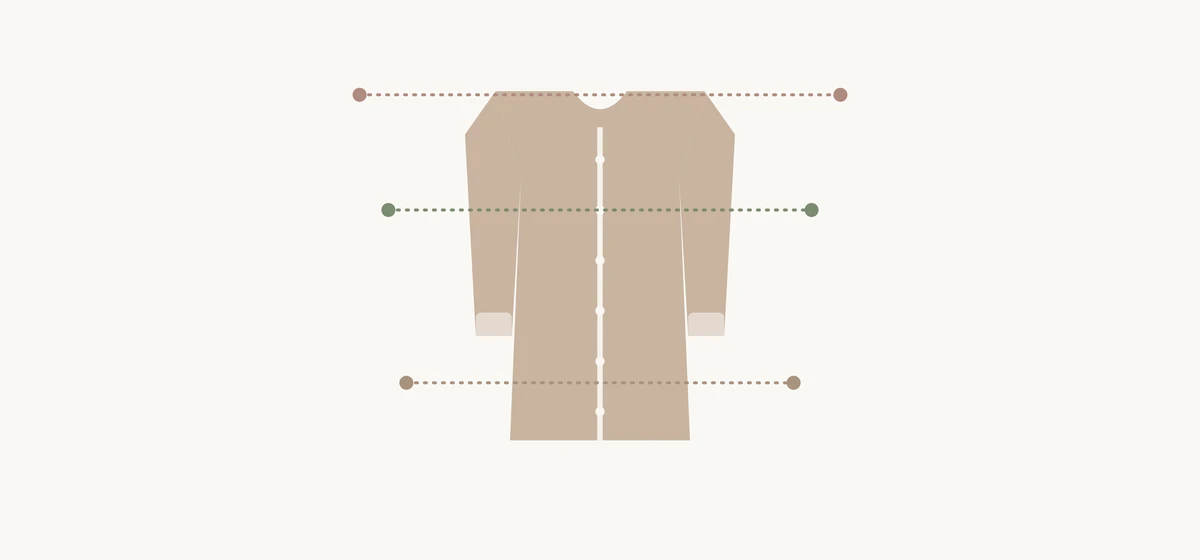
The shoulder is the only zone that can hardly be altered — armhole, sleeve cap and yoke construction all meet there. The bust width is solved through construction, not through size. The hem is the easiest zone: any alteration shop can shorten it.
From that follows this guide’s buying rule: check from top to bottom and buy for the zone that is hardest to correct.
The 5-point fit check
Check these five points in the fitting room — sitting down and with your arms raised, not just standing:
- Shoulder seam. It ends exactly on the edge of your shoulder. If it slips onto the upper arm, the blouse is too big; if it sits above, it cuts in.
- Armhole. It must not chafe and must allow movement. Raise your arms: if the whole blouse rides up, the armhole is cut too deep.
- Placket at bust level. It stays closed and smooth. If it gapes between two buttons, there is too little width at the widest point.
- Back and waist. Sit down. If horizontal pull creases remain, it strains; if the back throws loose vertical folds, there is too much width.
- Hem. It does not end on the widest point of the hip, but above or below — otherwise the horizontal edge draws the eye exactly there.
If only point 5 fails, buy the blouse anyway — that is an alteration costing a few euros. If point 1 fails, leave it on the rail.
The blouse cuts at a glance
The common cuts differ above all in where they give width and where they show shape:
| Blouse cut | Feature | Flatters |
|---|---|---|
| Shirt blouse | collar, full button placket, straight | almost any figure; clean, straight lines |
| Wrap blouse | crossed front, tie belt | a larger bust, hourglass — solves the button problem |
| Tunic | wide, A-shaped, often longer hem | apple, straight silhouettes, for a loose drape |
| Peplum blouse | flounce set at the waist | rectangle and inverted triangle — creates hip volume |
| Oversized blouse | deliberately wide, deep armhole | relaxed, strong lines; not for a petite frame |
| Pussy-bow blouse | bow or tie at the neck | narrow shoulders; mind the detail scale |
The table is a starting point. It gets finer once construction, sleeves and fabric come in.
When the button placket strains
The gaping placket is the most common blouse problem — and it is a construction problem, not a size problem. Two signals reveal it: horizontal pull creases running sideways from the placket, and an opening between two buttons at bust level. Both arise because a flat-cut front panel is pulled over a curved bust.
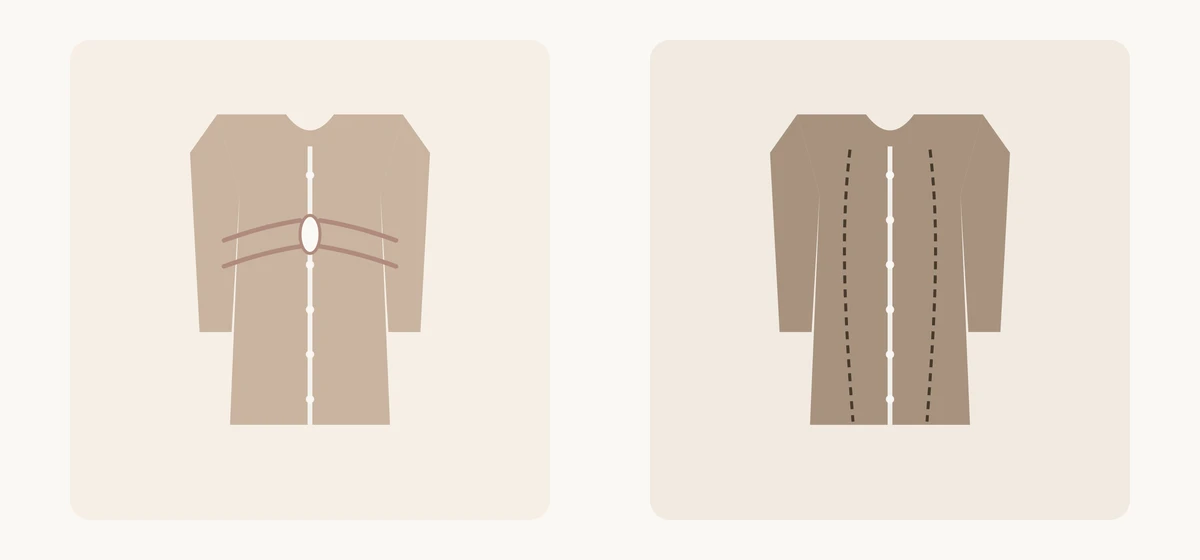
The most effective solution is a princess seam, in German a Wiener Naht: a vertical panel seam running over the bust point and curving into the armhole. It can absorb the bust and waist darts at once, so the blouse follows the body instead of straining flat across it. That is exactly why it is so common in women’s blouses.
One size up does not solve straining — it relocates it. Then the shoulder sits too wide and the bust is still tight. Construction decides, not the label.
Three further routes work: a real bust dart that absorbs the curve; a concealed placket where the buttons sit under a fabric flap and cannot pull open; or a wrap blouse, which sidesteps the problem entirely because it has no placket. On a favourite blouse, a small hidden press stud between the two critical buttons also helps.
When shoulder and bust don’t match
Ready-to-wear patterns assume a fixed relationship between shoulder width and bust girth — many bodies do not follow that relationship. Standard sizing is based on body measurements plus an ease allowance — but it scales all measurements together. If your shoulder width and bust girth are more than two sizes apart, a standard cut rarely hits both at once.
The decision is still clear: buy for the shoulder. The entire sleeve construction sits at the shoulder seam; moving it means re-setting the sleeve — expensive and rarely convincing. Width at bust, waist and hem, by contrast, is routine work for any alteration shop.
In practice: measure your shoulder width from shoulder point to shoulder point and your bust at its fullest. Buy the size in which the shoulder seam sits, and have the rest adjusted — or choose cuts that offer more room through the bust from the start. How to take your basic measurements correctly is in the guide What body shape do I have.
Sleeves and cuffs: the overlooked lever
A sleeve emphasises the place where it ends. That is the same mechanism as with a hem: the horizontal finishing edge draws the eye exactly there. So a sleeve should not end at the widest point of the upper arm, but above or well below it.
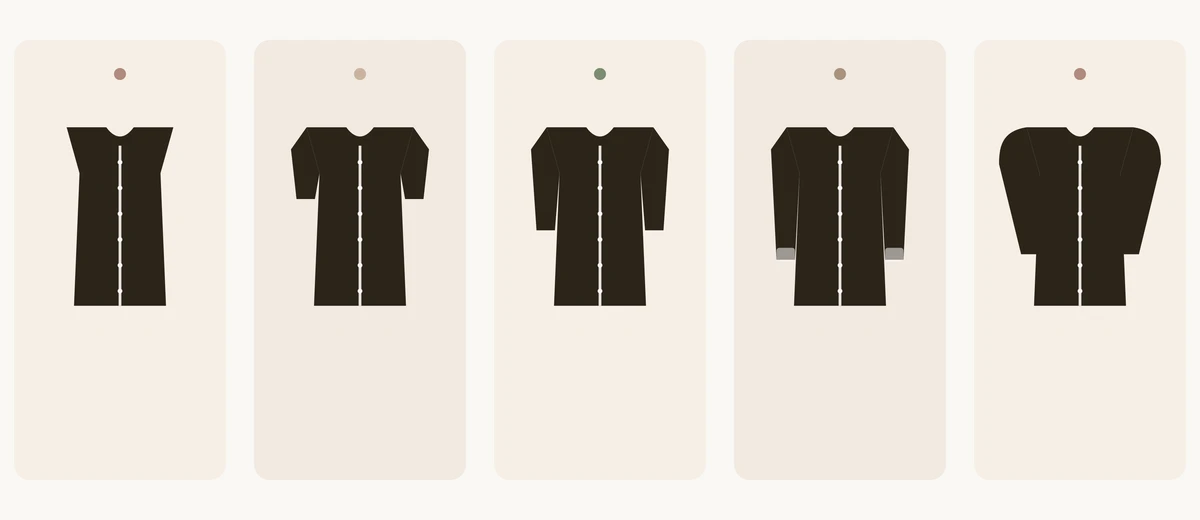
The two most reliable lengths are the long sleeve at the wrist bone and the three-quarter sleeve at the narrowest point of the forearm. Both leave the wrist and hand free — the narrowest visible points of the arm — and therefore read lighter. The short sleeve is the trickiest: if it ends mid upper arm, it emphasises it.
The cuff is the scaling lever. A narrow cuff reads fine and suits a delicate bone structure; a wide one gives the wrist weight and carries stronger structures. The same applies to the puff sleeve: its volume must match your overall scale — on delicate shoulders a large puff overwhelms, on strong ones a small puff looks lost.
Blouse length: tucked, untucked or half
Blouse length decides whether a waist is visible — and thus the proportion of the whole outfit. Tucked in, a clear waistline and a longer leg line appear. Worn out, the hem rule applies: do not end on the widest point of the hip.
The half-tucked front hem is the practical compromise when a blouse is too long to wear out and too short to tuck in fully. It shows the waist without bulk. Why an unbroken line reads slimmer is explained in the guide Looking slimmer through clothing.
In a business context, tucked in counts as the clearer option — it reads tidier and more formal. Which level of formality fits when is covered in the guide Job interview outfit for women.
Fabric drape: poplin, silk, viscose, linen
The fabric often decides the effect more than the cut. The same shirt-blouse pattern reads crisp and clear in cotton poplin, soft and fluid in silk. Structure holds shape and creates edges; fluid qualities follow the body line.
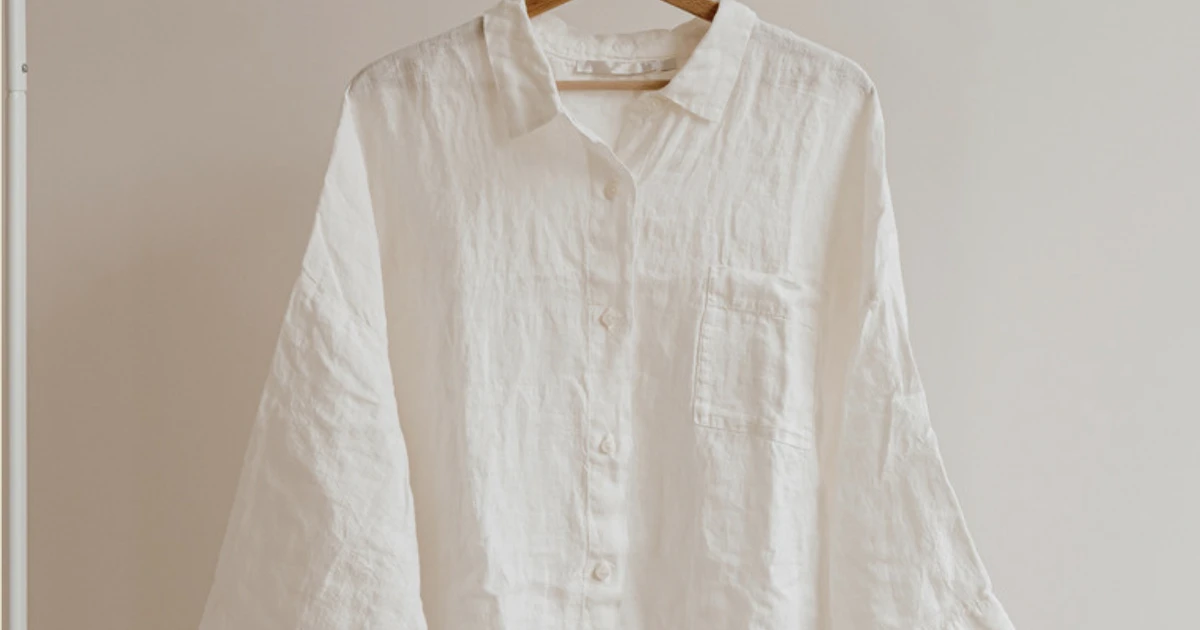
Cotton poplin and twill stand on their own, hold the collar upright and look assured at the office. Silk, viscose and Tencel fall softly, follow the silhouette and flatter round, soft lines. Linen creases deliberately and reads relaxed — that is part of the material, not a flaw. Crêpe sits in between: fluid, but with some body.
One practical note: the finer and lighter the fabric, the more visible everything underneath. With thin poplin and silk, a seamless skin-tone base layer works better than a white one. How to care for delicate blouses so they keep their shape is in the guide Washing and caring for clothes properly.
Blouse cut by your body line
Fit tells you whether a blouse sits — your body line tells you which character suits it. Two women with identical measurements often need different blouses: one looks assured in the sharply cut shirt blouse, the other looks severe in it.
Roughly: clean, straight lines wear structured shirt blouses with a precise collar. Soft, round lines wear fluid materials, wrap shapes and soft ties. Strong, relaxed lines wear unstructured, generous cuts — tight waist definition constricts them. Delicate structures need smaller details: narrow cuffs, fine buttons, smaller collars. Which line is yours is clarified by the Kibbe styling guide.
The most common blouse-buying mistakes
Most blouses are not bought because they fit — but because they looked good on the hanger. The difference only shows when you sit down.
- Buying for the bust instead of the shoulder. The shoulder is the only zone that can hardly be corrected.
- Only trying it on standing up. Pull creases and gaping plackets show when sitting and with raised arms.
- Trying to fix straining with one size up. That moves the problem to the shoulder instead of solving it.
- Ignoring the hem. If it ends on the widest point of the hip, the edge emphasises exactly that point.
- Leaving sleeve length to chance. A sleeve ending mid upper arm emphasises it.
- Skipping small alterations. Shortening, taking in, adding a press stud — that turns almost-right into right (see Avoiding wrong buys).
From fit to your own line
Which blouse carries your structure?
Fit you can measure — which character suits you, you cannot. A professional style and Kibbe analysis translates your bone structure into concrete cuts, collar shapes and materials. So you know what you are looking for in the fitting room. Free initial consultation included.
FAQ — Frequently asked questions
Which blouse suits my figure?
Decide across three zones: the shoulder seam must sit on your shoulder edge, the placket must not strain at bust level, and the hem should not end on the widest point of the hip. Only then do cut and fabric matter. A blouse that fits at the shoulder can be adjusted almost anywhere else — a tight shoulder cannot.
Why does my blouse strain at the bust?
Because the ready-to-wear pattern has too little width at the fullest point and the placket is pulled apart there. It shows as horizontal pull creases and a gaping opening between two buttons. Models with a princess seam or bust dart help, as does a concealed placket, or one size up adjusted at shoulder and waist.
What is a princess seam on a blouse?
A princess seam is a vertical panel seam that runs over the bust point and curves into the armhole. It can hold the bust and waist darts at once, so the blouse follows the body instead of lying flat across it. On a larger bust it is the most effective construction feature against straining.
Which blouse size should I buy with a full bust?
Buy for the shoulder, not the bust. The shoulder seam can hardly be altered, while width at bust and waist can. If shoulder width and bust girth are more than two standard sizes apart, a standard cut rarely hits both at once — then a small alteration is cheaper than a larger blouse.
Which sleeve length suits me?
A sleeve emphasises where it ends — so it should not stop exactly at the widest point of the upper arm. The classic long sleeve ends at the wrist bone, the three-quarter sleeve at the narrowest point of the forearm. Both leave the hand and wrist free and therefore read lighter.
Tuck the blouse in or not?
Both work; what matters is the transition. Tucked in creates a visible waist and a longer leg line — it reads tidier and lengthens. Worn out, the hem should end above or below the widest point of the hip, never exactly on it. A half-tucked front is the compromise when the blouse is too long to wear out and too short to tuck fully.
Which blouse fabric is best?
It depends on the effect you want. Cotton poplin and twill hold shape and read clear and businesslike — ideal for the office. Silk, viscose and Tencel fall softly and follow the body line — ideal for soft silhouettes and evenings. Linen creases deliberately and reads relaxed. The fabric often decides the effect more than the cut.
How do I know a blouse fits well?
At five points: the shoulder seam ends on the shoulder edge, the armhole does not chafe and allows movement, the placket stays closed and smooth at bust level, no horizontal pull creases remain at back and waist, and the hem does not end on the widest point. Check all of it sitting down and with raised arms, not just standing.