
TL;DR — Which Oktoberfest outfit suits me?
- An Oktoberfest outfit for women consists of a dirndl, dirndl blouse, apron, comfortable shoes and a warm layer for the evening.
- A dirndl length in centimetres says little on its own: the same skirt length ends about a hand's width lower on a woman who is 1.58 m tall than on one who is 1.78 m. Measure from your waist.
- Your body shape decides the bodice, skirt fullness and apron width; your body line decides fabric and details.
- Choose the dirndl colour by your colour season, not by the trend: forest green, burgundy and gentian blue don't suit everyone.
- Oktoberfest 2026 runs from 19 September to 4 October. Evenings get cool; in October the German monthly mean is 9.4 °C.
The right Oktoberfest outfit for women is a dirndl in a length that ends well for your height, with a bodice that supports your body shape and a colour that suits your colour season. Add a dirndl blouse, an apron, shoes with a flat or block heel and a cardigan for the evening. Traditional dress is not compulsory.
Most Wiesn guides come from dirndl shops. They explain lengths in centimetres, the bow rule and the season's trend colours. What they don't explain is why the same dirndl looks completely different on two women. That is what this guide is about: proportion, line and colour.
Contents
- What an Oktoberfest outfit includes
- Dirndl length: mini, midi or maxi
- Which dirndl suits your body shape
- Dirndl by body line
- The dirndl blouse: neckline and sleeves
- Dirndl colours by colour season
- The apron bow: left, right, front, back
- Shoes, bag and jewellery
- Wiesn weather: jackets and layers for late September
- No dirndl? Alternatives for the Wiesn
- The most common Oktoberfest outfit mistakes
- FAQ — Frequently asked questions
- Next steps
What an Oktoberfest outfit includes
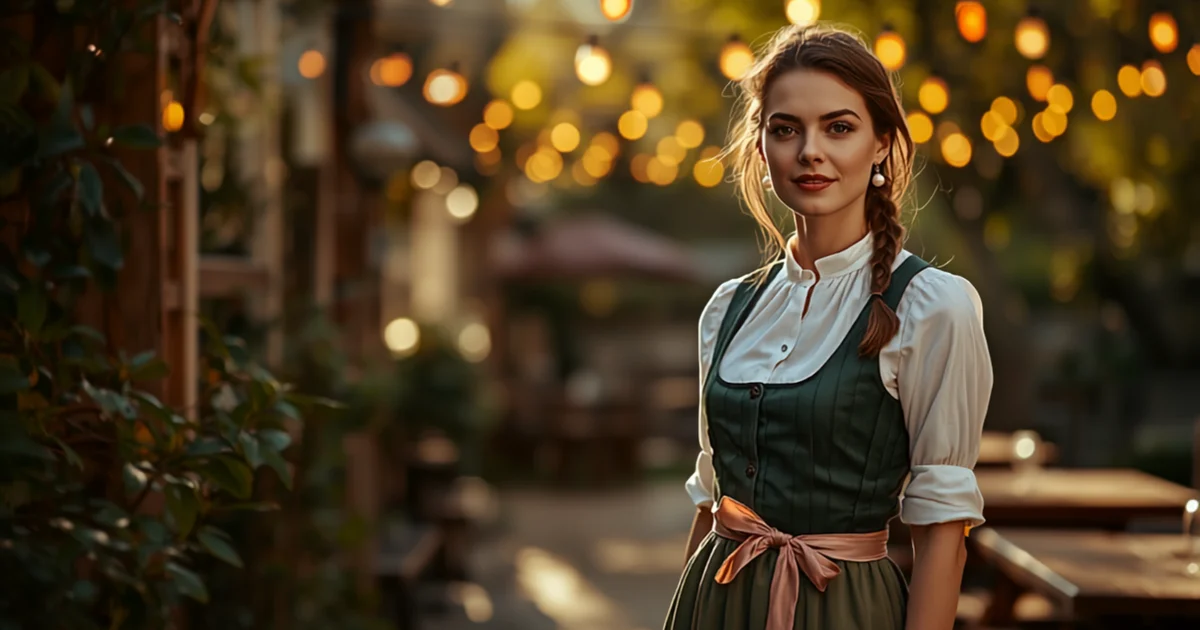
An Oktoberfest outfit for women is usually a dirndl with all its accompanying pieces, worn to a folk festival that lasts from midday until late in the evening. The dirndl itself is a dress made of a close-fitting top, the bodice, and a full skirt. It began as simple everyday and working clothing; today it is festive wear and fashion at the same time.
A complete Wiesn outfit consists of six pieces:
- Dirndl: bodice and skirt, usually joined as one dress.
- Dirndl blouse: short, ends below the bust and is worn under the bodice.
- Apron: in a lighter fabric, tied with a bow at the waist.
- Shoes: closed or ballet flats, with a flat or block heel.
- Bag: small, structured, cross-body.
- Warm layer: cardigan, traditional jacket or wool shawl for the evening.
According to oktoberfest.de, Oktoberfest 2026 takes place from 19 September to 4 October on the Theresienwiese in Munich. The outfit has to last for hours on the beer bench, in the crowds and outdoors. That is the benchmark for everything that follows: it's not just about how a dirndl looks in the mirror, but how it sits after six hours.
Dirndl length: mini, midi or maxi
Dirndl length is the skirt length, measured from the waist seam to the hem, and it sets the proportion of the entire Oktoberfest outfit. Three ranges have become standard in shops:
| Length | Skirt length in shops (approx.) | Effect | When it makes sense |
|---|---|---|---|
| Mini | 50–60 cm | Youthful, playful | Daytime, lots of movement, petite line |
| Midi | 60–75 cm | Classic, balanced | Almost every figure and occasion |
| Maxi | 80–100 cm | Elegant, festive | Evenings, long line, tall women |
Why centimetres are misleading
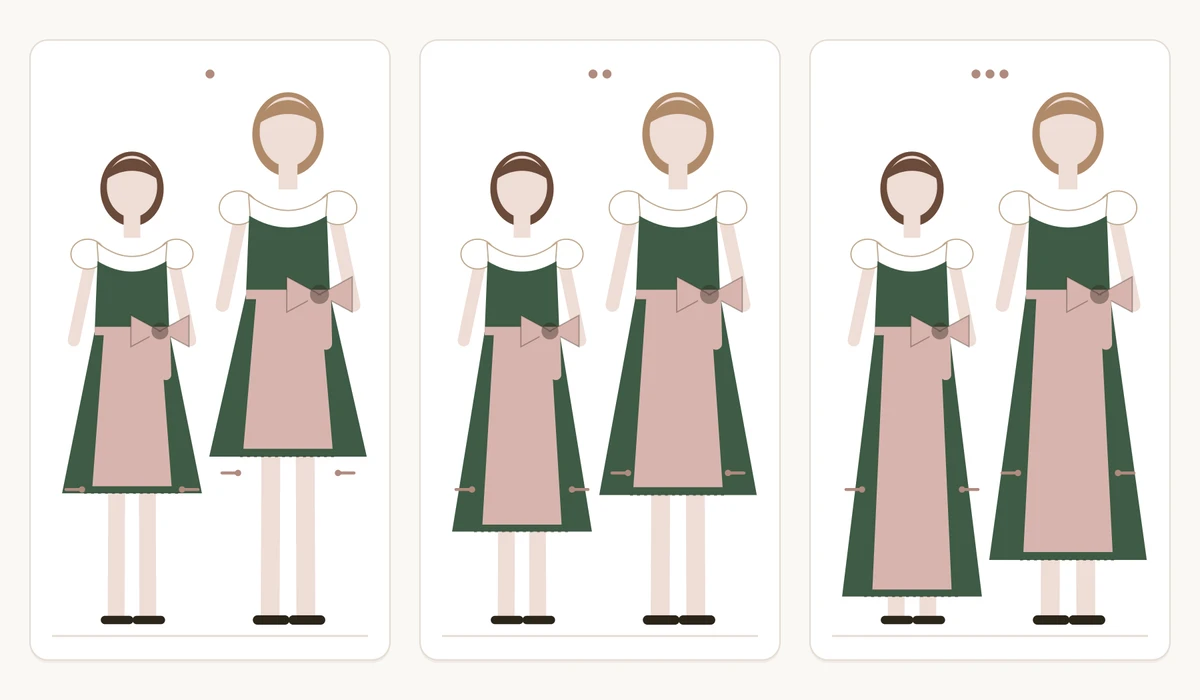
The table has a catch that hardly any shop mentions: a skirt length in centimetres tells you nothing about where the hem ends on you. The distance from waist to knee is longer on a tall woman than on a petite one. The same dirndl therefore ends at different points.
A worked example using rough average proportions, where the waist sits at around 62 % and the knee at around 28 % of body height:
| Height | Waist to knee (approx.) | Waist to mid-calf (approx.) | Waist to ankle (approx.) |
|---|---|---|---|
| 1.58 m | 54 cm | 66 cm | 91 cm |
| 1.68 m | 57 cm | 71 cm | 97 cm |
| 1.78 m | 61 cm | 75 cm | 102 cm |
So a 65 cm midi dirndl already ends just above mid-calf on a woman who is 1.58 m tall, and a hand's width higher, just below the knee, on a woman who is 1.78 m. The figures are approximations; leg length and waist height vary a lot. That's why the rule is: don't take the centimetres from the shop at face value, measure yourself.
You're not buying a dirndl that is 65 centimetres long. You're buying a dirndl that ends at a particular point on your leg.
Measure your dirndl length in 5 steps
- Put on the shoes you plan to wear at the Wiesn. A heel changes where the hem visually ends.
- Find the narrowest point of your waist. That's where the seam between bodice and skirt sits on a dirndl.
- Place the tape measure there and measure down to the hem height you want. Just below the knee, at the narrowest point of the calf or at the ankle.
- Compare the value with the skirt length in the shop. Check the size chart to see whether it is measured from the waist seam or as total length.
- Plan for the sitting test. On the beer bench the hem rides up. A mini becomes noticeably shorter when you sit than when you stand.
The safest hem height for most figures is the narrowest point of the calf, because the hem then ends on a narrow part of the leg. Why that is so is explained in detail in the guide Which skirt suits my body shape?. For petite women, Styling for petite women is worth a look; for tall women, Fashion for tall women.
Which dirndl suits your body shape
Body shape describes the relationship between shoulders, waist and hips. In an Oktoberfest outfit it has a stronger effect than on almost any other occasion, because the bodice firmly marks the waist and the skirt falls freely from there. If you don't know your body shape yet, the guide What body shape do I have? helps.
| Body shape | Bodice | Skirt | Apron | Colour distribution |
|---|---|---|---|---|
| X shape (hourglass) | Close-fitting, waist clearly defined | Medium fullness, midi | Narrow, plain | One shade for bodice and skirt |
| A shape | Lighter or patterned, details welcome | Dark, slightly flared instead of heavily gathered | Wide enough to cover the hips | Light on top, dark below |
| V shape | Dark and plain, V-shaped neckline | More fullness, patterns welcome | Coloured or patterned | Dark on top, accent below |
| H shape | With vertical seams or lacing | Heavily gathered for volume | Contrast colour, emphasises the waist | Apron as contrast |
| O shape | High-cut, good support, dark | Midi, soft drape, little gathering | Long and narrow, tonal | One shade throughout |
The logic is the same as for any dress: volume where the body is narrower, calm where it is wider. The dirndl adds one special feature: the apron is a design tool in its own right. A narrow, long apron in the skirt's shade creates a vertical line and lengthens. A wide contrast apron sets a horizontal accent and makes the waist visible. How clothing creates a slimming effect is explained in the guide Looking slimmer with clothing.
Dirndl by body line
Body line describes whether your appearance reads as straight, relaxed, balanced, petite or soft. With a dirndl it decides fabric, pattern and details, while body shape decides lengths and fullness. The Kibbe method sorts 13 types into five families for this, summarised in the overview of the 13 Kibbe types.
Dramatic family, long straight line: a maxi dirndl in a strong solid colour, a smooth bodice without ruffles, a narrow apron. Playful checks and lots of lace quickly look like a costume here.
Natural family, relaxed line: linen or cotton with visible texture, muted colours, a bodice without a rigid corset effect. A slightly relaxed dirndl looks more coherent on this line than a strictly tailored one.
Classic family, balanced line: a midi dirndl in silk or fine cotton, a subtle pattern, a classic white blouse. Symmetry and quality instead of eye-catching details.
Gamine family, petite graphic line: a mini or short midi dirndl, clear contrasts between bodice and apron, small checks or stripes. Large patterns and floor-length skirts swallow this line.
Romantic family, soft curved line: a softly draping skirt, a bodice with a sweetheart neckline, a lace blouse, floral patterns, a flowing silk apron. Ruffles and lace are welcome here; they belong to the line.
The dirndl blouse: neckline and sleeves
The dirndl blouse is a short blouse that ends below the bust and is worn under the bodice. It is the part of the Oktoberfest outfit that sits closest to the face. It lies directly against the face and décolleté, so it has a stronger effect than its small amount of fabric suggests.
The neckline follows the same rules as any other blouse. A round, deep neckline visually widens the shoulders, a V shape lengthens the neck, a high stand-up collar shortens it. Which neckline suits your figure is shown in the guide Which neckline suits me?.
The sleeves change the shoulder line. Puff sleeves add volume at the shoulder and balance wide hips. With broad shoulders, narrow short sleeves or an off-the-shoulder neckline look calmer. Long-sleeved blouses are the more practical choice in late September when evenings turn cool.
The colour: white is the classic. For warm colour seasons, cream or ecru often looks softer, because pure white next to warm skin can look glaring. A black blouse goes with dark dirndls and suits high-contrast types above all.
Dirndl colours by colour season
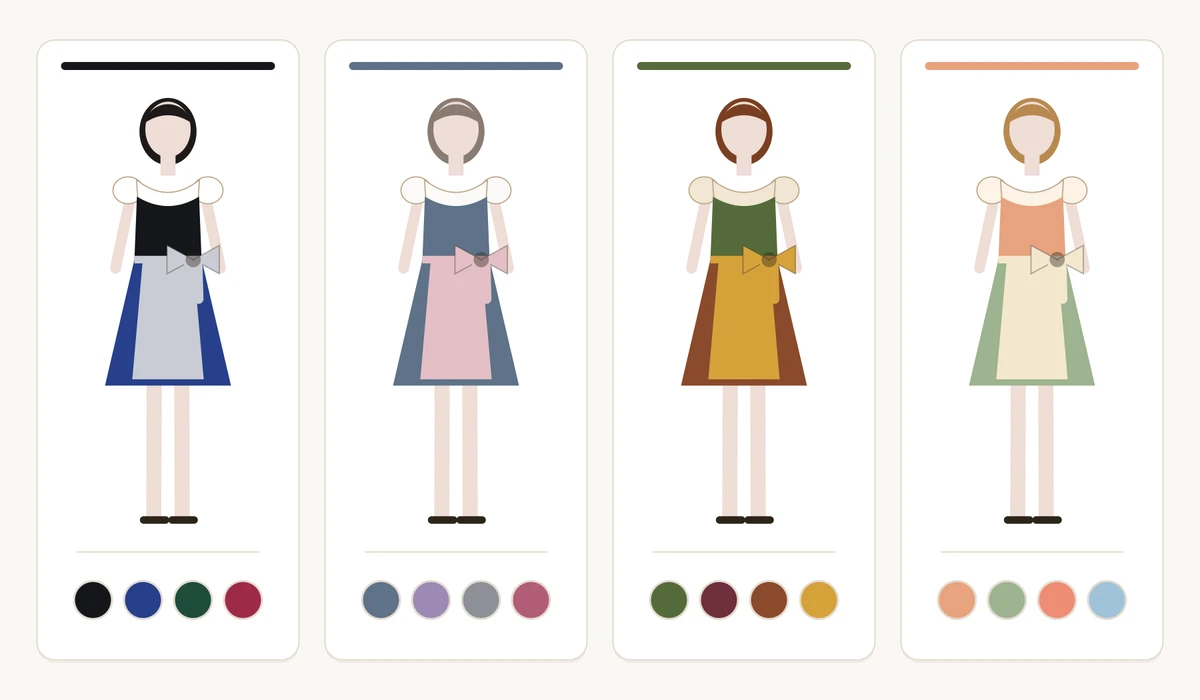
Dirndl colours are the colours of bodice, skirt and apron, and when worn they cover a large area close to the face. The classics are forest green, burgundy and gentian blue, plus black, grey, rosé, lilac and mustard yellow. Which of them suit you depends on your colour season, meaning the undertone, depth and contrast of your appearance. The guide Which colour season am I? is the place to start.
- Winter type: black, royal blue, cool forest green, berry red. Apron in silver grey, icy pink or clear white. Strong contrasts suit you. More in the guide Winter type.
- Summer type: smoky blue, lilac, dove grey, muted raspberry. Apron in rosé or light blue. Soft contrasts instead of black and white. More in the guide Summer type.
- Autumn type: moss green, brownish burgundy, rust, mustard yellow. Apron in terracotta, ochre or cream. The classic traditional palette is closest to you. More in the guide Autumn type.
- Spring type: apricot, light sage green, warm coral, warm light blue. Apron in cream, peach or vanilla. Light, clear shades instead of heavy dark fabrics. More in the guide Spring type.
In an Oktoberfest outfit, what matters is not the colour of the skirt, but the colour closest to your face.
A practical trick if your favourite dirndl doesn't fit your palette: the apron lies in front of the skirt, and the blouse sits right at your face. Choose these two pieces from your palette, and the skirt is allowed to differ.
The apron bow: left, right, front, back
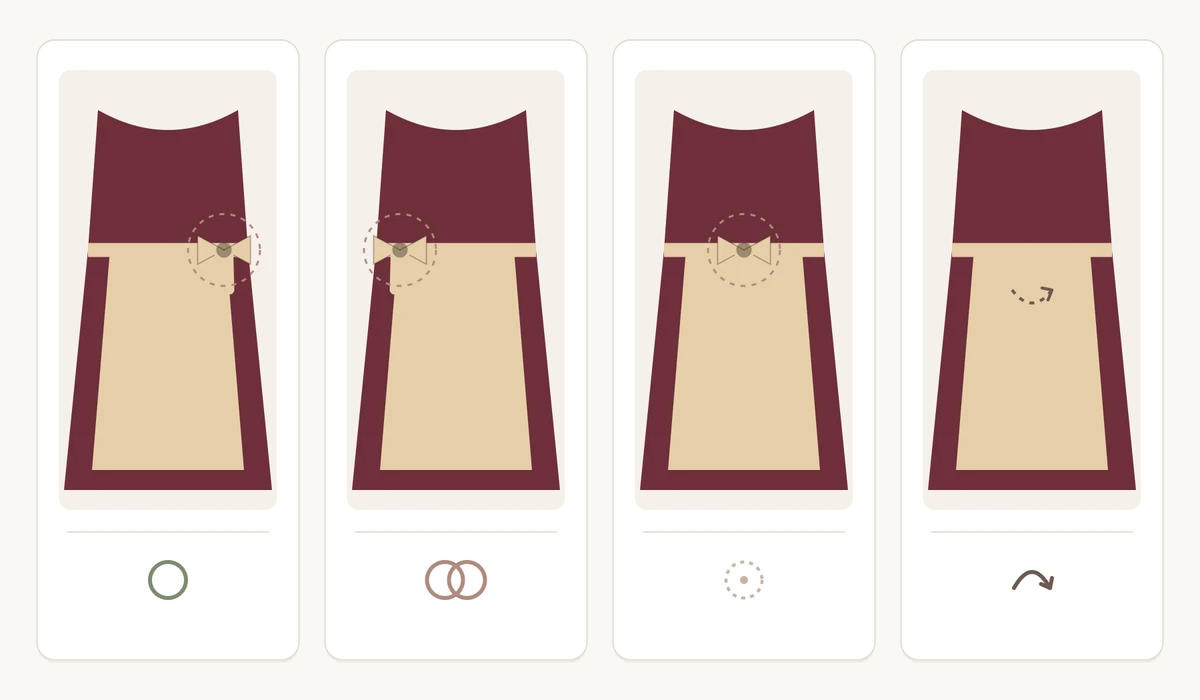
The apron bow is the bow used to tie the dirndl apron at the waist. According to widespread custom, its position signals relationship status. The interpretations vary by region and source; the following is the most common:
- Left, seen from the wearer's body: single or open to meeting someone.
- Right: taken, engaged or married.
- Front centre: depending on the interpretation, a sign of virginity or simply neutral.
- Back centre: traditionally worn by children, widows and waiting staff.
The viewing direction matters: left means left on your body. Anyone standing opposite you sees the bow on the right.
How the apron should sit
The apron should be the same length as the skirt or slightly shorter, never longer. The ties sit on the waist seam, not above or below it. An apron tied too loosely slides down and cuts the silhouette at the widest point of the hips. The bow itself should lie flat, with ends of roughly equal length, so it still looks neat after hours on the beer bench.
Shoes, bag and jewellery
Accessories complete an Oktoberfest outfit, and they have to do two things: suit the dirndl and survive a long day in the crowds.
Shoes: ballet flats, traditional shoes with a block heel or flat lace-ups. High, thin heels are a bad idea on cobblestones, grass and a sticky tent floor, and you will probably end up standing on the beer bench too. Which shoe shape suits your figure is shown in the guide Which shoes suit my body shape?.
Bag: small, structured and cross-body, so your hands stay free. Backpacks and large bags are impractical and don't go with traditional dress. More on bag size in the guide Which bag suits my body shape?.
Jewellery: one necklace, a charivari or a velvet ribbon with a pendant, plus small earrings. That's all it takes; the dirndl already carries enough detail. Whether gold or silver suits you depends on your colour season, as described in the guide Jewellery by colour season.
Wiesn weather: jackets and layers for late September
Wiesn weather is the weather of the transition from late summer to autumn, and it can show both in a single day. For the 1991 to 2020 reference period, the German Weather Service gives a nationwide mean of 13.8 °C in September and 9.4 °C in October. These are means across day and night: at midday it can be warm in a dirndl, after sunset it cools down noticeably.
So plan a layer for your Wiesn outfit from the start, one that goes with the dirndl:
- Cardigan: short, ending at the waist, so the bodice line stays visible.
- Traditional jacket: in boiled wool or loden, warmer and more structured.
- Wool shawl: draped over the shoulders, the lightest option to carry.
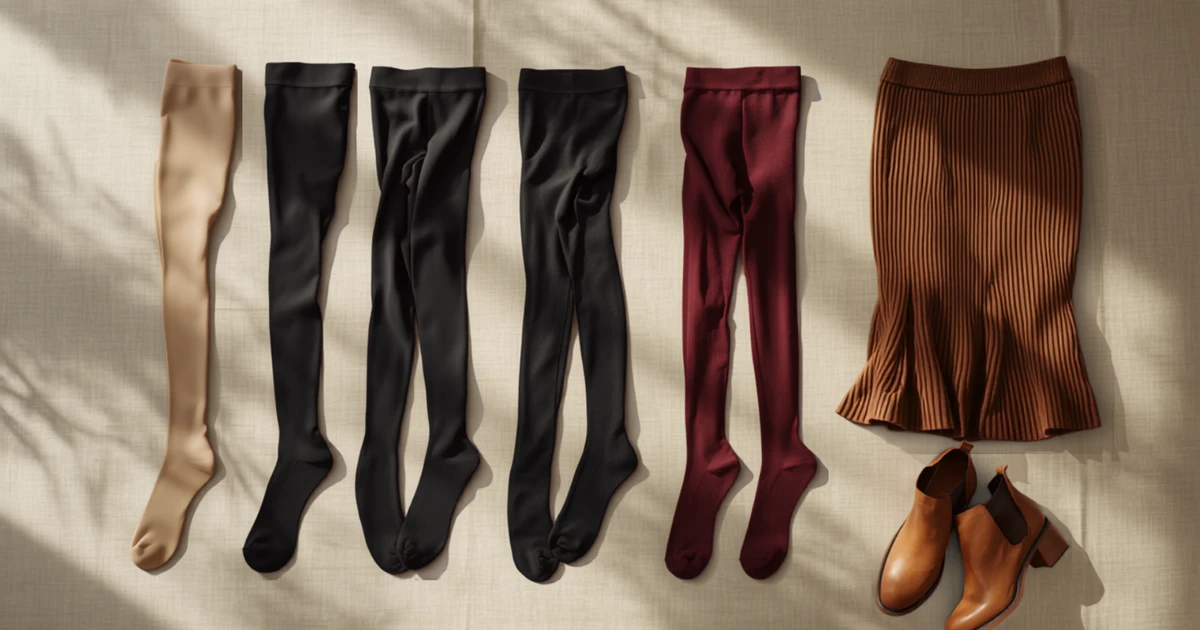
- Tights: opaque or skin-toned, especially with a mini dirndl and in the evening.
A jacket that extends past the waist covers the bodice and takes away the dirndl's shape. How layers work in autumn in general is shown in the guide Autumn outfits for women. Which jacket length suits your figure is covered in Which jacket suits my body shape?.
No dirndl? Alternatives for the Wiesn
Traditional dress is not compulsory at Oktoberfest. Many visitors wear everyday clothes, and that is completely fine. If you still want an Oktoberfest outfit with a traditional touch without buying a dirndl, you have three good options:
Traditional skirt and blouse: a skirt in linen or loden with a traditional blouse or a simple white blouse. It looks traditional but can also be worn after the Wiesn.
Women's lederhosen: short or knee-length, with a blouse or checked shirt and a cardigan. Especially practical for long days and cool weather.
Traditional jacket with jeans: dark jeans, a white blouse and a traditional jacket or a cardigan with horn buttons. The most understated option that still suits the occasion.
What you should avoid are costume dirndls in shiny polyester with a very short skirt and a deep neckline. At the Wiesn they look more like carnival costumes than traditional dress. If you are interested in the region's genuine clothing culture, the District of Upper Bavaria maintains a collection of historical garments and offers advice on traditional dress.
The most common Oktoberfest outfit mistakes
Buying the length by centimetres. Without your own measurement from the waist, the hem often lands on the widest part of the calf or right on the knee.
A bodice that's too loose. A dirndl depends on a bodice that fits closely and supports. A loosely fitting bodice makes the waist disappear and crumples the blouse.
An apron longer than the skirt. The apron should be the same length or slightly shorter. An apron that's too long looks borrowed.
A trend colour against your own colour season. Dark burgundy right at the face can make a light Spring type look pale. If the dirndl doesn't suit you, blouse and apron can balance it.
New shoes on the Wiesn day. If you stand, walk and dance for hours, you need shoes that are worn in.
Not planning a warm layer. After sunset in late September it gets cool quickly, and a long jacket over the dirndl ruins the silhouette. The short cardigan belongs to the outfit from the start.
The same principle — one strong piece per outfit, everything else restrained — carries the other great dressing-up occasion of the year: the après-ski outfit, somewhere between a lodge evening and a retro party.
FAQ — Frequently asked questions
What do women wear to Oktoberfest?
At Oktoberfest, women usually wear a dirndl with a dirndl blouse and apron, plus comfortable shoes with a flat or block heel and a small cross-body bag. For the evening, a short cardigan or traditional jacket is part of it. Traditional dress is not compulsory, though; everyday clothes are common at the Wiesn too.
Which dirndl length is right?
For most figures, a midi dirndl whose hem ends at the narrowest point of the calf is the safest choice. How many centimetres that is depends on your height. So measure yourself from the waist down to the hem height you want and compare the value with the skirt length in the shop.
Which side do I tie the dirndl bow on?
According to widespread custom, a bow on the left means single and on the right means taken, each seen from the wearer's body. Front centre is read either as a sign of virginity or as neutral, depending on the interpretation, and the back is traditionally worn by children, widows and waiting staff. Interpretations vary by region.
Which dirndl suits a fuller figure?
A midi dirndl with a well-supporting bodice, a softly draping skirt without heavy gathering and a long, narrow apron in the skirt's shade. Dark or uniform colours throughout create a vertical line. More important than the size is that the bodice fits closely and clearly marks the waist.
What colour should my dirndl be?
That depends on your colour season. Winter types suit black, royal blue and cool forest green, Summer types smoky blue and lilac, Autumn types moss green, rust and mustard, Spring types apricot and light sage green. If the dirndl doesn't fit your palette, at least choose blouse and apron to match.
Which shoes go with a dirndl?
Ballet flats, traditional shoes with a block heel or flat lace-ups work best. They are secure on grass, paving and tent floors and last through a long day. High, thin heels are impractical and sink into soft ground.
Do you have to wear traditional dress at Oktoberfest?
No, traditional dress is not compulsory at Oktoberfest. Many visitors come in everyday clothes. If you want a traditional touch without buying a dirndl, you can wear a traditional skirt with a blouse, women's lederhosen or a traditional jacket with jeans.
What do I wear if it's cold at the Wiesn?
A short cardigan, a traditional jacket or a wool shawl draped over the shoulders. The jacket should end at the waist so the bodice stays visible. Add opaque tights, especially with a mini dirndl.
How tight should a dirndl be?
The bodice should fit closely and clearly mark the waist without cutting in or making breathing difficult. You should be able to sit and move comfortably. If the bodice wrinkles or stands away from the body, it's too loose.
Next steps
Take three things with you for your Oktoberfest outfit: measure the dirndl length yourself from the waist, choose bodice and apron by your body shape, and take blouse and apron from your colour palette. That way your dirndl doesn't just look good on the hanger, it looks good on you.
Which colours really suit your face is explained in the guide Which colour season am I? as a first orientation. A colour and style consultation gives you a definite answer, together with your body line. And if you can't decide between two dirndls, send me a photo on WhatsApp. I reply personally, usually on the same day.