
TL;DR — the après-ski outfit in short
An après-ski outfit means two different things: the warm, practical look for an evening in the lodge, and the loud retro look for the party. Decide which of the two evenings you are facing first — fabrics, boots and colours follow from that. Either way you stay warm by working in layers.
- Lodge evening: thermal top, knitted jumper, water-resistant trousers, boots with grip. Anything that gets wet stays outside.
- Party: retro ski suit, bright Nordic jumper, headband. Loud is allowed here — but you still need a layer underneath.
- Boots decide the evening. Tread, waterproof, and never the ski boot you have been standing in for eight hours.
- Your body line decides the cut: the same puffer jacket reads completely differently on a soft line and on a sharp one.
- Snow is an enormous reflector. It lifts every undertone — which is why mountain colours are not city colours.

Contents
- Two meanings, two looks
- The lodge evening: warm and still dressed
- Layering from the inside out
- From the slope to the lodge in ten minutes
- Boots: where most evenings go wrong
- The party outfit: retro without costume
- Which cut suits your body line
- Colours in the snow: your season in the mountains
- For men
- The packing list for three evenings
- Seven mistakes you only make once
- Frequently asked questions
Après-ski outfit: two meanings, two looks
Search for an après-ski outfit and you land in two completely different worlds. One shows knitted jumpers, down gilets and lined boots. The other shows neon ski suits from the eighties, headbands and jumpers with a stag on the front. Both are correct — they simply answer different questions.
This is not an invention of the internet; it sits inside the word itself. The German dictionary Duden lists two meanings for the term: the casual sporty clothing worn by winter holidaymakers after skiing, and the entertainment and socialising that follows a day on the slopes. The word comes from French and simply means after skiing. Clothing and celebration carry the same name — and that is exactly where the confusion in search begins.
So this guide starts with a question nobody else asks you: which evening are you facing?
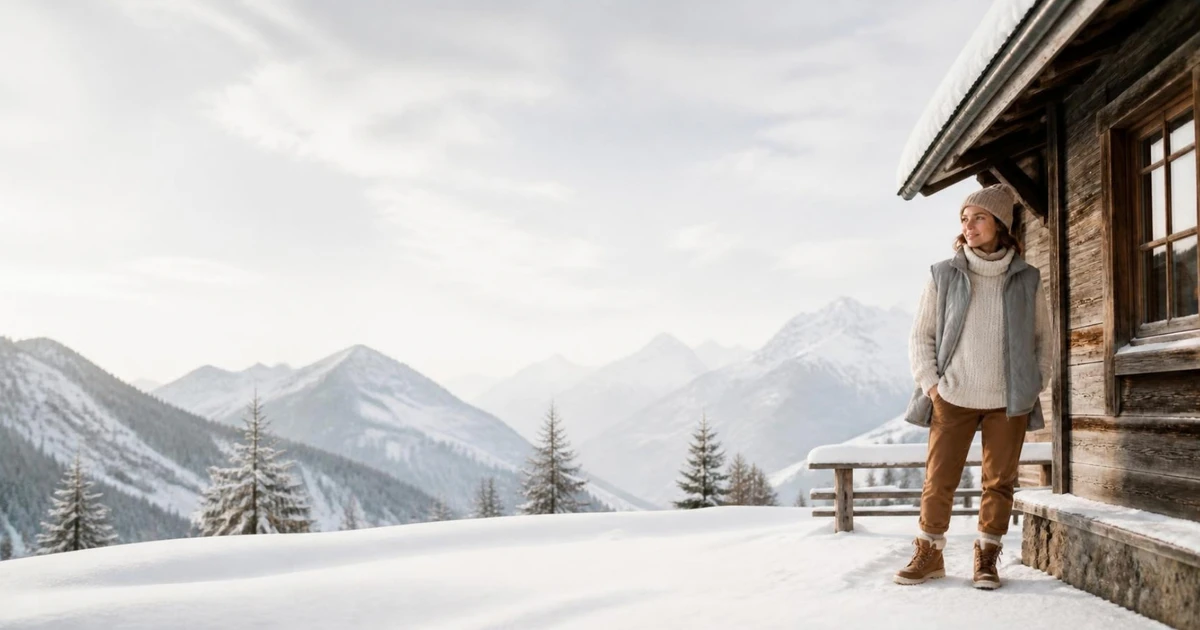
- The quiet lodge evening. Dinner, a seat by the fire, perhaps a walk back through the snow. What counts here is warmth, dry feet and a look you recognise yourself in on a photo.
- The loud party evening. Music, a packed terrace, dancing on benches. What counts here is being recognisable, being able to move, and a fabric that forgives a spilled drink.
In practice, perhaps three garments separate the two après-ski outfits. The base — thermal layer, warm trousers, good boots — is identical. What changes is the outermost layer and the volume of the colours.
The most common mistake is not the wrong jumper. It is dressing for the party evening and then getting the quiet one — or the other way round.
The lodge evening: warm and still dressed
The lodge evening is the normal case, and it has one quirk that sets it apart from every other occasion: you move repeatedly between minus ten degrees outside and twenty-five degrees inside. No single garment can do both. That is why every successful après-ski outfit is a system of pieces you can add and remove one at a time.
The tops
A chunky knitted jumper is not just cosy here, it is functional: the air trapped between the stitches insulates. Merino wool has the advantage over cotton that it still warms when slightly damp and barely holds odour. A roll neck closes the gap at the throat that otherwise costs the most heat. Which jumper shape suits your figure is covered in detail in which jumper suits my figure.
The trousers
Lined jeans, thermal corduroy or a warm wool trouser all work. What matters is that they stay dry: snow on a terrace bench soaks through unlined cotton in two minutes. If you sit outside a lot, choose a water-repellent finish. For the question of cut, see which trousers suit my figure.
The jacket
For the walk between lodge and accommodation a down or quilted jacket is usually enough; the ski jacket stays in the room because it is damp and smells of the day. A full buying guide is in which winter coat suits me.
The accessories that actually matter
Hat, scarf and gloves look like afterthoughts and still decide whether the evening gets too cold for you. The neck especially: a wide scarf or a snood closes the gap between jacket and chin. How to tie one without being swallowed by it is shown in how to tie a scarf.

Layering from the inside out
Layering is not a fashion term but the reason some people freeze on a terrace and others do not. Three layers, each with exactly one job:
- The transport layer against the skin. Merino or a synthetic technical shirt. Its job is not warmth but moving moisture outwards. Cotton does not belong here: it stores sweat and chills you the moment you stop moving.
- The insulating layer. Fleece, knit or a thin down gilet. It holds the air that keeps you warm. Two thin ones beat one thick one — two can be regulated separately.
- The weather layer. Windproof and water-repellent. It does not need to be thick. Its job is to keep wind and wet away from the two inner layers.
Why wind matters so much is shown by the wind chill data of the US National Weather Service: at roughly minus 18 degrees Celsius with about 24 kilometres of wind per hour, the apparent temperature is around minus 28 degrees, and exposed skin can freeze within 30 minutes. A lodge terrace rarely reaches those values — but the direction holds: wind decides more than the thermometer, and one windproof outer layer replaces two thick jumpers.
Layering carries every après-ski outfit, and it works the same way in the transitional seasons, only with different materials. If you want to understand the principle properly, it is explained at length in layering for the transitional season.
From the slope to the lodge in ten minutes
Many evenings fail not for lack of clothes but because nobody planned time to change. You come off the last run damp inside, snowy outside, and the group wants to leave. With a little preparation the change takes ten minutes.
- Swap the base layer. The damp technical shirt comes off, a dry one goes on. This single step does more than any extra garment — damp skin cools you all evening.
- Swap the socks. Ski socks are finished after a day in the boot. A fresh pair is the second biggest difference.
- Out of the ski trousers. They are wet outside and warm inside; both are wrong for an indoor room.
- Out of the ski boots. More on this in a moment — it is the single most important point.
- Add one deliberate accent. A scarf, earrings, a lipstick. After eight hours in a helmet and goggles, one conscious choice is the difference between changed and dressed.
If you are staying somewhere without a room of your own and change in the drying room, pack these five things in a small bag and save yourself the search.
Après-ski boots: where most evenings go wrong
The most common mistake in this whole subject has nothing to do with fashion: people stay in their ski boots. After eight hours that is no longer a pleasure, and on a smooth lodge floor a ski boot sole has roughly the grip of an ice rink.
What works instead comes down to three requirements:
- Tread. The path to the lodge is packed snow that turns to ice in the evening. A smooth leather sole is useless there, however beautiful the boot.
- Waterproof, or at least treated. Snow melts on a warm boot, and wet feet are the fastest route to being cold.
- Room for thick socks. A boot that fits perfectly with thin stockings pinches with wool socks — and a pinching boot gets cold, because circulation suffers.
Lined lace-up boots, winter boots with a coarse sole and the well-known chunky moon-boot styles all meet these three points. The last of those are a visual statement: they shorten the leg and quickly overwhelm a delicate frame. To balance that, wear a narrow trouser with them and keep the top short. Which shoe shape suits your proportions is covered in which shoes suit my figure.
No look rescues bad boots. But there are very simple après-ski outfits that look complete with the right ones.
The party outfit: retro without costume
Now the second meaning: the celebration. The expectation here is entirely different — loud, colourful, ideally with a wink. The neon retro ski suit, the Nordic jumper, the headband, the mirrored goggles. It works because it is worn collectively; worn alone, the same piece quickly reads as fancy dress.
Three levels to choose from:
- The accent. Everything stays normal, one piece is loud: a bright Nordic jumper, a headband, colourful knee socks. This level still works at dinner afterwards.
- The retro look. A vintage ski suit or an eighties one-piece with plain boots. One strong piece, everything else restrained.
- The group costume. Everyone in the same direction — this is no longer about style but about the shared entrance. Entirely legitimate, as long as you know you are committed for the evening.
What separates the retro après-ski outfit from fancy dress is the same principle as with an Oktoberfest outfit: one strong piece per outfit. Two loud pieces cancel each other out; three make a costume.
Practically, the party is still a winter evening. A thermal layer belongs under a vintage suit too, and firm boots belong with fancy dress as well. And a fabric that forgives a spilled beer is not a luxury here but experience.
Which après-ski outfit suits your body line
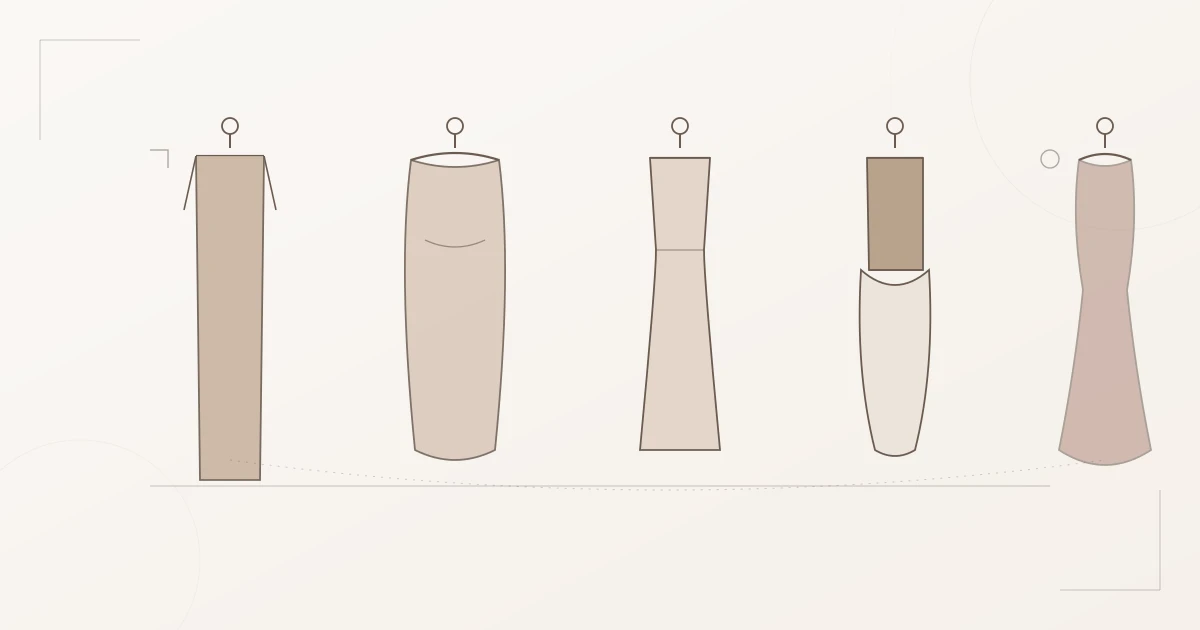
This is where most guides on the subject stop, and where the part that makes the difference begins. Winter clothing adds bulk — that is its purpose. Which is why the same volume reads completely differently on different figures, and why an outfit that looks wonderful on a friend looks like a sleeping bag on you.
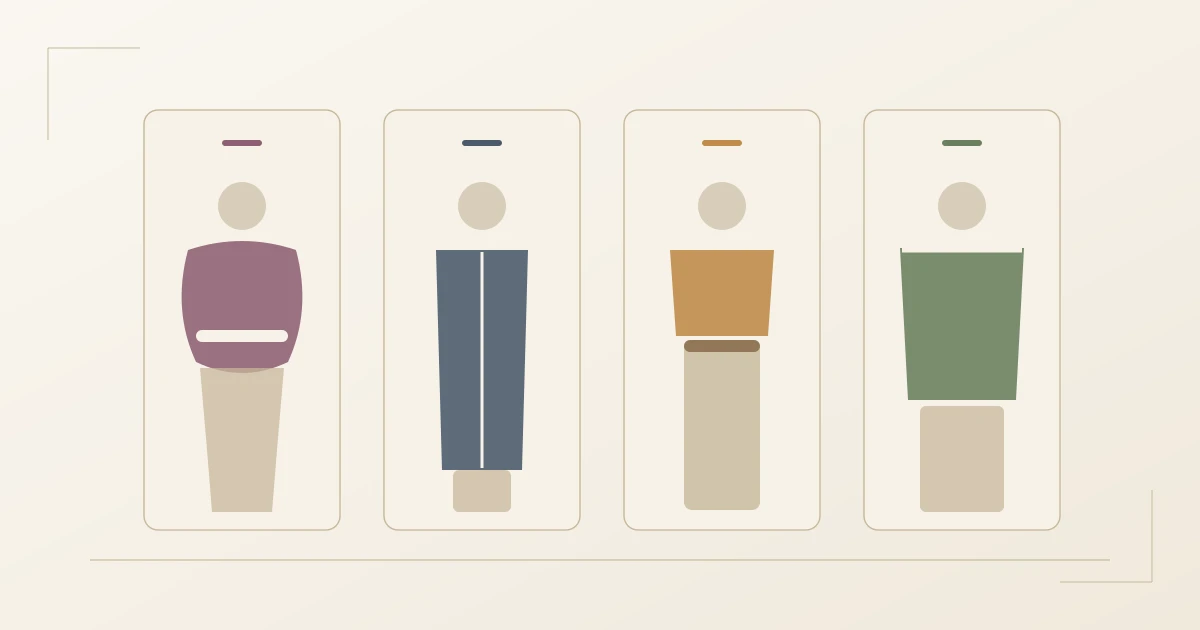
The Kibbe system sorts bodies by the relationship between bone structure, flesh and facial features. For an après-ski outfit, four practical directions follow from it:
Soft line (Romantic, Soft Natural, Soft Classic)
Curves dominate, the bone structure recedes. Quilted jackets with wide horizontal chambers are risky here: they add volume to existing volume. Narrow quilting or knitwear with soft drape works better, along with a defined waist — a belt over the down jacket or a jacket with a drawcord. Materials may be soft: bouclé, mohair, teddy fleece.
Long and lean line (Dramatic, Soft Dramatic)
Long lines, pronounced bone structure. What looks excessive on others works here: the long coat at the lodge, the oversized jumper, the tall shaft. What does not work are short, chopped shapes — a waist-length jacket breaks the very line that is the strength here.
Short and compact line (Gamine, Soft Gamine, Flamboyant Gamine)
Smaller stature, high-contrast proportions. The great winter danger is disappearing into the fabric. The answer is a clear break in the middle: a short jacket with a high-waisted trouser, or a striking top with something plain below. Small patterns and colourful details sit better here than on any other line — the Nordic jumper might have been made for it. See also styling for petite women.
Angular and athletic line (Natural, Flamboyant Natural, Classic, Dramatic Classic)
Broader shoulders, straight lines. The après-ski outfit almost falls into place here, because technical clothing speaks the same language. Chunky knit, shearling, substantial soles — anything with structure. Take care with added shoulder volume: a down jacket with a flared shoulder can push the silhouette too wide.
If you do not yet know your line, the free online Kibbe analysis is the quickest way in. The system behind it is explained in the 13 Kibbe types explained; if you prefer to start from body shape, begin with what body shape do I have.

Après-ski colours in the snow: your season in the mountains
The mountains add something no city does: snow is an enormous reflector. Light arrives not only from above but also from below, straight into your face. Every colour reads brighter and clearer than it does indoors — and every wrong decision about temperature shows more plainly.
Three rules follow that hold regardless of season type:
- The colour near the face is the one that counts. Hat, scarf and collar sit against the skin and are amplified by the snow light. The trousers are almost irrelevant.
- Pure white is especially difficult in the mountains. Against a white surrounding it loses its contrast, and near the face it reads even sharper than usual.
- Muted tones gain presence. What is almost too quiet in the city lands exactly right in bright snow light.
Cool types: summer and winter
Ice blue, slate, petrol, cool berry, navy and silver grey. A winter type can take the clear, strong versions as well — a vivid red or true black on the jacket. For a summer type the same colours work better muted. Both should avoid camel, rust and mustard right at the face. More in summer type colours and winter type colours.
Warm types: spring and autumn
Rust, camel, pine green, copper, warm cream and caramel. An autumn type wears the deep, muted versions, a spring type the light and clear ones — a warm coral red, for instance. Ice blue and pure white are the difficult ones here. Covered in autumn type colours and spring type colours.
In practice: buy the expensive jacket in your own colour family, because it stays for years. For the party jumper the colour is secondary — it is worn for one evening and lives off the effect. If you do not know your season yet, find your colour type takes you there in four steps, or go straight to the colour type test.
Après-ski outfit for men
The men's version is searched far less often than the women's, but follows the same rules with two differences. First, the range is narrower: a Nordic jumper, a flannel shirt over a thermal top, lined trousers and firm boots cover practically everything. Second, the party variant leans even more towards costume here; retro ski suits and traditional Alpine elements dominate.
The point where men most often go wrong is the same as for women: the footwear. A trainer in snow is neither warm nor safe. And the one-strong-piece rule applies here too — a bold jumper with plain trousers works; a bold jumper with bold trousers reads as fancy dress.
The après-ski packing list for three evenings
The following list covers three lodge evenings without needing more than a small suitcase. It assumes ski clothing is packed separately.
| Item | Quantity | Why |
|---|---|---|
| Long-sleeve technical top | 3 | One per evening, put on dry |
| Knitted jumper | 2 | One plain, one patterned |
| Warm trousers | 2 | One pair gets wet on the first evening |
| Wool socks | 4 | The most underrated item in the case |
| Winter boots with tread | 1 | One good pair beats two mediocre ones |
| Down or quilted jacket | 1 | Not the ski jacket, that is wet by evening |
| Hat and scarf | 1 each | In your colour family, they sit at the face |
| One loud piece | 1 | In case it turns into a party evening |
If you want to sort out suitcase logic in general, it is in what clothes to pack for a holiday.
Seven mistakes you only make once
- Cotton against the skin. It absorbs sweat and will not release it. The moment you stop moving, you cool down.
- Staying in ski boots. Uncomfortable, slippery, and the surest route to cold feet, because they are damp inside by evening.
- One layer too thick instead of one layer more. A very thick jumper cannot be regulated. Two thin ones can.
- Boots that are too tight. Where circulation stops, cold begins — however good the lining.
- Three loud pieces at once. A party look turns into a costume, and the evening is decided for you.
- Pure white at the face. In reflected snow light it reads harder than in any indoor room.
- No dry change of clothes. The difference between a lovely evening and a long one is often just a dry shirt and fresh socks.
Frequently asked questions
What do you wear for après-ski?
It depends which of the two evenings you mean. For the lodge: a thermal top, a knitted jumper, warm water-repellent trousers, lined boots with tread, plus a hat and scarf. For the party: the same as a base, with one striking piece on top such as a retro ski suit or a bright Nordic jumper. In both cases you work in layers, because you move between cold outside and heat inside.
Can I keep my ski clothes on in the evening?
Better not. After a day on the slopes a ski jacket and ski trousers are wet outside and sweated through inside; in a warm room both become unpleasant. In any case the layer underneath matters more than the outerwear: a dry technical shirt and fresh socks make the biggest difference.
Which shoes do you wear for après-ski?
Lined winter boots with a coarse tread, waterproof or well treated, with enough room for thick wool socks. Ski boots are unsuitable because their soles slip on lodge floors and your foot needs a break after eight hours. Smooth leather soles are also out on packed snow.
What do I wear to an après-ski party?
One strong piece and otherwise restrained: a vintage ski suit, a bright Nordic jumper or a headband in a bold colour. Two loud pieces cancel each other out; three make a costume. A thermal layer still belongs underneath, and firm shoes still belong on your feet — a party in the mountains also takes place below freezing.
How warm does a lodge outfit need to be?
Warm enough for the walk, not for sitting inside. Expect at least twenty degrees of difference between terrace and dining room. That is why you work in layers: the outer one comes off indoors, the middle one stays. More important than thickness is that the outer layer is windproof — wind lowers the apparent temperature more than a few degrees of air temperature do.
Which colours work for an après-ski outfit?
At the face, the colours of your own season, because snow reflects the light and amplifies every wrong decision. Cool types reach for ice blue, slate, petrol and berry; warm types for rust, camel, pine green and copper. Pure white is particularly difficult in the mountains, because it loses contrast against a white surrounding.
Is there a dress code for mountain lodges?
Nothing formal. What is expected is casual sporty clothing — exactly what the term originally describes. High heels, thin fabrics and delicate materials are not forbidden but impractical: wooden floors, snow on soles and narrow benches argue against them. In smarter mountain hotels the evening may be a touch more elegant; a knitted dress with opaque tights and flat boots is never wrong there.
What do I wear if I do not ski at all?
Exactly the same. The evening at the lodge works regardless of how you got there, and you even have an advantage: you are not sweaty and can skip the change. Put the budget into good boots and a warm jacket rather than ski clothing you will never need.
How much does a usable après-ski outfit cost?
That cannot be stated seriously, because prices vary enormously by brand and material. A different split is more useful: boots and jacket are the two pieces where quality pays off over years. Jumpers, hats and party pieces can be cheap — they are worn rarely and briefly.