
TL;DR — Which evening dress suits my figure?
- Which evening dress suits you is decided not by the A/V/X/H/O figure alone, but by three layers: the cut by your body line, the length by occasion and leg line and the fabric that drapes to your line.
- Guides sort evening dresses almost only by body shape. Whether the same dress carries you depends on your body line — a column for clean, draped for soft, an A-line for relaxed lines.
- The dress code sets the length: “festive” knee to calf, “cocktail” knee to midi, “black tie” floor or ankle length.
- The fabric matters too: satin and crêpe hold a shape (sharp lines), chiffon and silk flow (soft lines), velvet carries texture (relaxed lines).
- The aim is elegant, not costumed: in a conflict, the line wins for harmony, and you balance the figure through cut, colour and fabric.
Which evening dress suits your figure is decided through three things: the cut relative to your body line, the length by occasion and leg line, and the fabric that drapes to your line. An evening dress sits right when its shape mirrors your line, its length matches the dress code and its fabric carries you rather than adding bulk. The classic A/V/X/H/O figure rule is only one of these three layers.
Almost every evening-dress guide sorts by body shape: an A-figure emphasises the top, an X-figure wears it fitted. That’s right — and incomplete for a formal occasion. It doesn’t explain why the same satin dress looks completely different on two women with the same figure, and it says nothing about length, dress code and fabric. That’s what this guide is about. The everyday shapes are in the dress guide — this guide is for the festive evening dress.
Contents
- Why the figure-type rule falls short for evening dresses
- The three layers: line, length, occasion
- Evening dress by body line
- The length: cocktail, midi, tea, floor
- The dress code sets the length
- Evening fabrics by line: satin, chiffon, velvet
- Neckline and back for the evening dress
- Evening dress by classic body shape
- The conflict case: elegant, not costumed
- Step by step to the right evening dress
- Colour and accessories for the evening dress
- The most common mistakes when buying an evening dress
- FAQ — Frequently asked questions
Why the figure-type rule falls short for evening dresses
“An A-figure emphasises the top, an X-figure wears it fitted” — that’s the standard answer in almost every evening-dress guide. It isn’t wrong, but it only describes how a dress balances your silhouette. An evening dress suits you when three things come together: its cut mirrors your body line, its length matches the occasion and your leg line, and its fabric drapes to your line. Body shape is only the first of these three levers.
With a festive dress there’s an added factor: the occasion decides too. A floor-length gown in the afternoon looks as out of place as a short cocktail dress at a gala dinner. And evening fabrics like satin, chiffon and velvet behave completely differently. Buying by figure type alone overlooks exactly the factors that make an evening dress both festive and suitable. This guide takes all three layers together.
The three layers: line, length, occasion
Three levers decide whether an evening dress suits you and the occasion:
- The line (cut). Column, draped or A-line — the shape has to mirror your body line. This is the layer figure-type advice skips.
- The length. Cocktail, midi, calf-length or floor — the length follows the dress code and, within it, your leg line.
- The occasion (dress code). “Festive”, “cocktail”, “black tie” — the dress code sets formality, length and fabric level.
Classic body-shape advice covers part of the first layer. Length and occasion rarely come up — yet they decide whether a festive dress reads as harmonious. Let’s take the layers in order.
Evening dress by body line
Your body line describes whether your contours are sharp and straight, soft and round, or strong and relaxed — and it decides which evening-dress cut carries you. This is exactly where classic advice stops, sorting only by A/V/X/H/O. Two women with the same figure get the same dress recommended; the one with a sharp line suits a clean column, the one with a soft line a draped cut. The body line by Kibbe gives the direction.
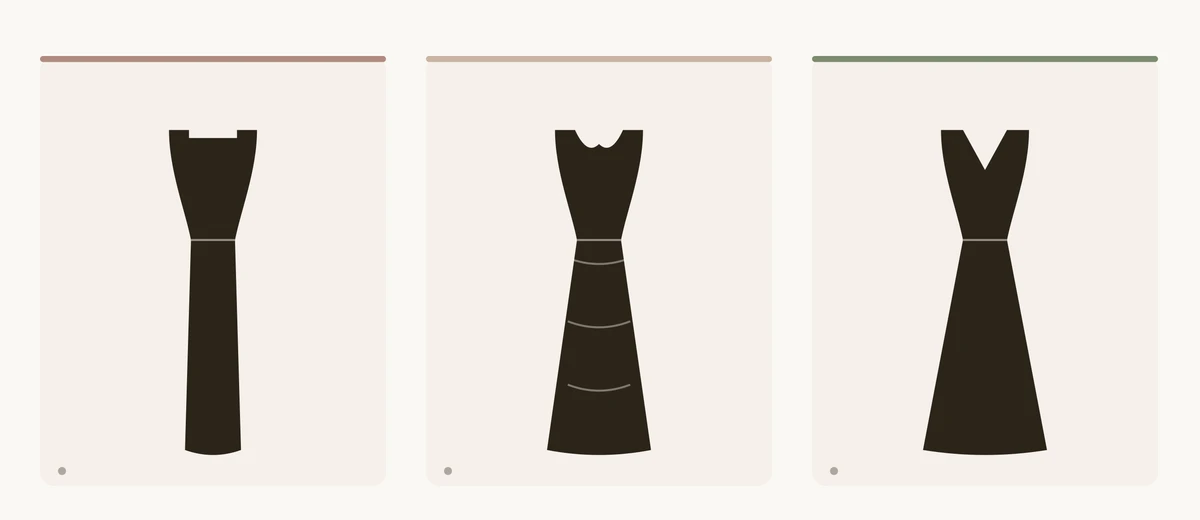
Sharp, clean lines (Dramatic family)
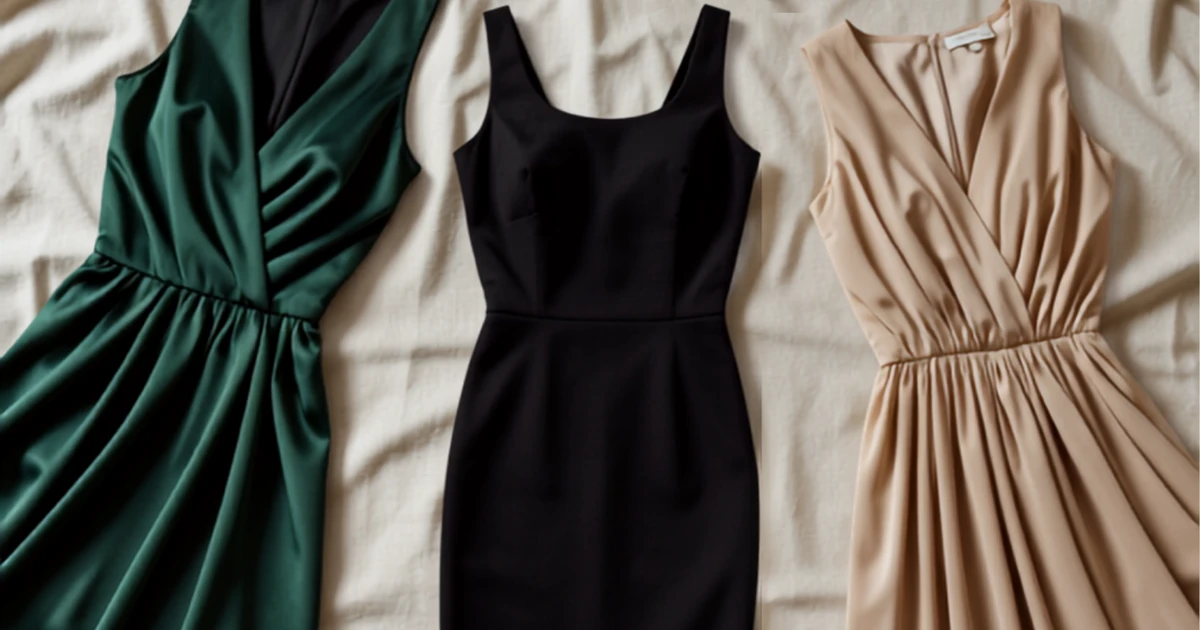
Long, straight, angular body lines wear evening dresses with the same clarity: straight column and sheath dresses, clean necklines, shape-holding fabrics like satin or mikado. Ruffles, volume and many drapings dilute the effect. A smooth, long column dress with a clean neckline looks most elegant here.
Strong, relaxed lines (Natural family)
Broader bones and relaxed contours wear unstructured, flowing evening dresses: soft A-lines, dresses with texture, understated cuts without a strict waist. Too tight, strictly waisted or very glossy styles look costumed here. The cut may fall lightly and casually.
Soft, round lines (Romantic family)
Curved, soft contours wear draped, flowing evening dresses: wrap and empire cuts, sweetheart and round necklines, soft-draping fabrics like chiffon and silk. Hard, straight column cuts in stiff material look severe on soft lines. The fabric should follow the silhouette.
Balanced and compact lines (Classic, Gamine)
Balanced lines (Classic) wear fitted, classic evening dresses without extremes. Compact, small-scale lines (Gamine) wear shorter lengths with small-scale detail — a cheeky cocktail dress often suits them better than the long gown. For both: a clean, medium shape, no single feature dominating.
The length: cocktail, midi, tea, floor
The evening-dress length follows the dress code first and, within it, your leg line. Four lengths cover almost every occasion: knee-length (cocktail), midi, calf-length (tea-length) and floor-length. Within the range the occasion allows, the same rule applies as with any dress: the hem should end at a slim part of the leg, not on the widest calf.
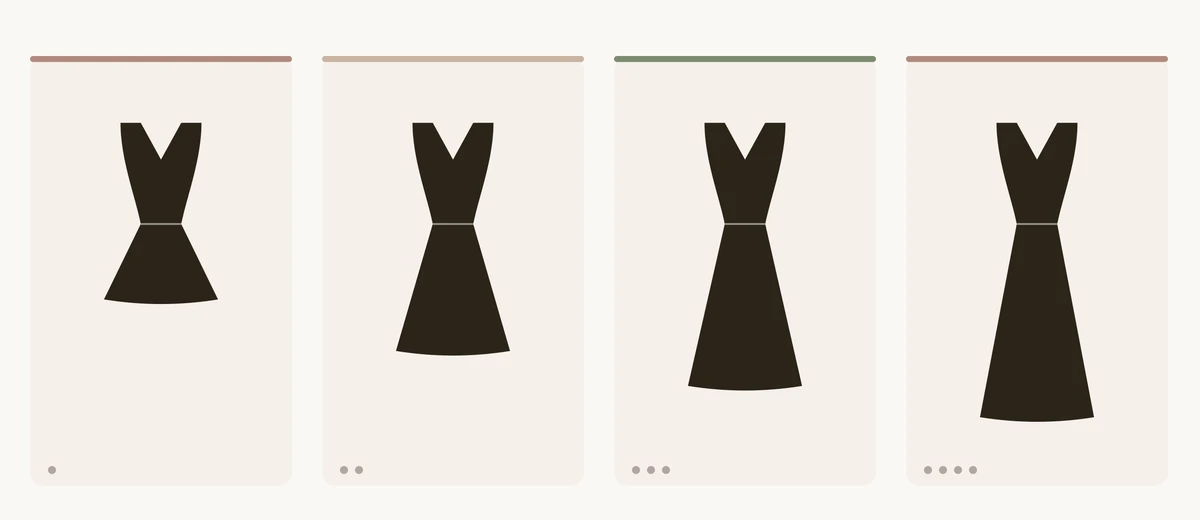
The floor-length gown lengthens most and reads most formal; it should hover just above the floor so you don’t step on the hem. The calf-length tea-length is elegant and versatile but demands attention to the hem — ending on the fullest calf shortens the leg. Midi and knee-length are the most flexible lengths for “festive” and “cocktail”. Petite women lengthen with knee-to-midi cuts and a high waist, as described in the guide Styling for petite women.
The dress code sets the length
The dress code is the signal of how formal the occasion is — and it sets length, fabric level and jewellery. Decode the dress code — from festive to black tie — and you know at once which length is appropriate. The general formality scale is in the guide Dress codes for women; here the levels specifically for the evening dress:
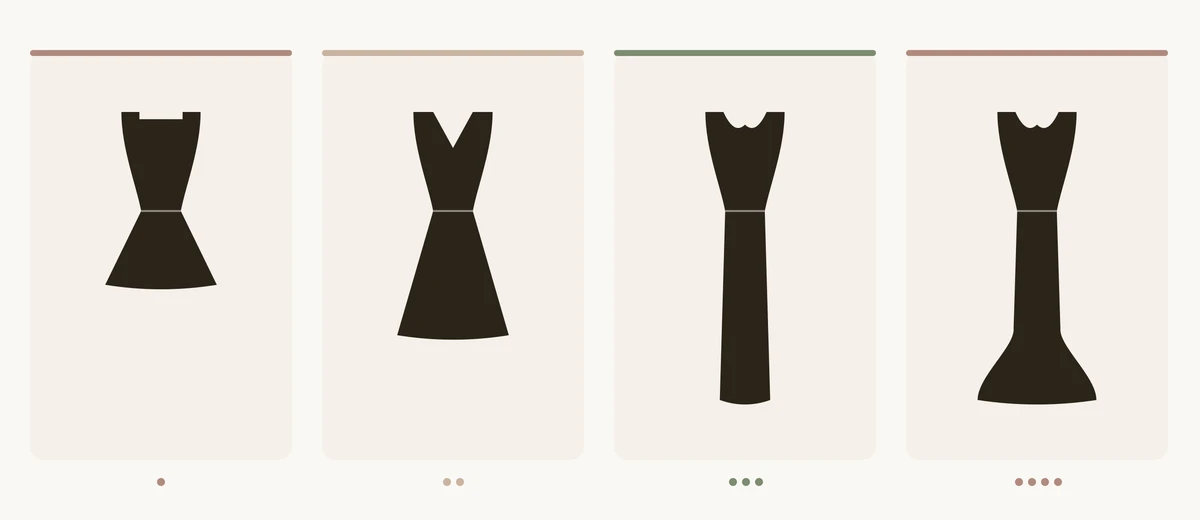
| Dress code | Length | Fabric & tone |
|---|---|---|
| Festive | knee to calf length | fine fabric, muted or rich tones |
| Cocktail | knee to midi length | crêpe, satin, fine lace; black too |
| Black Tie | floor or ankle length | satin, chiffon, velvet; an elegant gown |
| White Tie | floor-length evening gown | flowing, festive; the most formal frame |
Rule of thumb: the later the occasion, the more formal and longer. If no dress code is stated, the time and place give the hint.
Evening fabrics by line: satin, chiffon, velvet
The same evening-dress cut looks completely different in satin and in chiffon — the fabric should drape to your body line. Evening fabrics differ mainly in whether they hold a shape or follow it. This is the fine-tuning that turns a suitable cut into a truly flattering dress.
It’s not the price of the fabric that makes the evening dress, but its drape. A shape-holding satin on a soft line looks stiff, a flowing chiffon on a sharp line loses the clarity.
The rule of thumb follows the line: shape-holding fabrics like satin, mikado, taffeta and crêpe hold a constructed form and suit sharp, clean lines. Flowing fabrics like chiffon, silk, georgette and jersey follow the silhouette and suit soft, round lines. Textured fabrics like velvet, jacquard and coarse lace carry texture and suit strong, relaxed lines. Shine amplifies every effect — matte reads more restrained, high-gloss more festive and eye-catching.
Neckline and back for the evening dress
The neckline sits closest to your face and frames it — with an evening dress the back becomes a second stage. The shape follows the same logic as any neckline choice: clean, square and V-necklines suit sharp lines, round and sweetheart necklines suit soft lines. With a large bust, a deep, elongated neckline lengthens and divides the chest.
The back is often the most striking detail of an evening dress. A deep back reads elegant in the evening and draws the eye — but it needs a suitable bra or a built-in bustier. Choose the back line to match the front: a clean, straight back to a clean line, a draped or cascading fall to a soft one. A good fit at shoulder and back decides the whole effect.
Evening dress by classic body shape
The classic body shape stays a useful layer — as one of three levers. It helps balance proportions:
- A-figure (hips wider): dresses that emphasise the top and fall softly from the waist — empire, A-line, a striking neckline up top.
- V-figure (shoulders wider): a calm bodice, more movement in the skirt; a flowing skirt balances the shoulders.
- X-figure (hourglass): fitted cuts, wrap styles and figure-hugging columns emphasise the waist.
- H-figure (straight): draping, a belt or a flared skirt visually create a waist.
- O-figure (round middle): flowing empire and A-lines with a V-neckline and a lengthening silhouette.
What matters is combining this layer with line, length and fabric — not taking it as the only rule. That’s exactly where the next section comes in.
The conflict case: elegant, not costumed
The interesting case is the contradiction. What if your body shape asks for one thing and your line for another? Example: you have an X-figure (rule says: a tight, figure-hugging column) and at the same time a soft, round line (line says: draped, flowing, not strict). The tight column does emphasise the waist — but looks hard and costumed on a soft line.
In a conflict, the line wins for harmony, the cut for balancing the figure. Translated: take the form language of your line — and solve the balance through cut, fabric and colour, not through a shape that works against your line.
In the example that means: not a strict, tight column, but a draped wrap dress in a flowing fabric that softly emphasises the waist. The draping honours your line, the waist emphasis honours your figure. You get both — elegant and flattering — without one layer working against the other. That’s the difference between a dress that carries you and one you feel costumed in.
Step by step to the right evening dress
Here’s how to proceed for your next occasion — in this order:
- Clarify the dress code. Festive, cocktail or black tie? It sets length and fabric level. If none is stated, go by the time and place.
- Determine your body line. Sharp, soft, relaxed, balanced or compact? The Kibbe test gives the direction.
- Choose the cut by the line. Column for clean, draped for soft, A-line for relaxed lines.
- Set the length. Within the dress code, by your leg line — the hem at a slim part, never on the widest calf.
- Choose the fabric by drape. Shape-holding for sharp, flowing for soft, textured for relaxed lines.
- Balance the body shape. Only now: use neckline, draping and colour to balance proportions.
- Check fit, shoe and movement. Sit down, take a few steps, check shoulder, back and hem height with the planned heel.
Colour and accessories for the evening dress
The most flattering evening-dress colour is the one that makes your face glow — the one that suits your colour type. Warm types shine in burgundy, emerald, gold and champagne; cool types in navy, berry, silver and cool red. Black is timeless, but looks hard on very light, warm types — a deep teal or aubergine flatters more. Which tones carry you is clarified by the colour-type analysis.
With accessories: a few that carry the occasion. Fine jewellery in one metal, a small clutch and a heel whose colour doesn’t break the leg line — with floor-length dresses the heel sets the hem height. Which shoes suit your figure and which heel shape belongs to your line matters in the evening too. Fewer, but coordinated, reads more festive than a lot.
The most common mistakes when buying an evening dress
The most expensive evening dress is not the pricey one, but the one that hangs in the wardrobe after one wear — because it was bought by figure type, while line, length and occasion never matched.
- Buying by body shape only. The figure-type rule is one of three layers — line, length and fabric are missing otherwise.
- Ignoring the dress code. A too-short dress at black tie or a gown in the afternoon looks out of place, however lovely the dress.
- Overlooking the fabric. The same cut sits completely differently in stiff satin and flowing chiffon.
- Thinking of length in centimetres. What matters is where the hem lands on your calf, not the label.
- Buying against your own line. A strict column on a soft line looks costumed, a draped cascade on a sharp line looks busy.
- Buying without a shoe and a sitting test. Hem height, back fit and freedom of movement only show with a heel and when seated.
For the big evening
Find the evening dress that carries your line
A professional Kibbe and colour analysis gives you your personal result: which cuts, lengths, fabrics and tones your structure really carries — for the festive occasion and beyond. A free initial consultation is always included.
FAQ — Frequently asked questions
Which evening dress suits my figure?
The evening dress that suits you is the one whose cut mirrors your body line, whose length matches the occasion and your leg line, and whose fabric drapes to your line. Clean, straight lines wear column and sheath dresses, soft lines wear draped and flowing cuts, strong, relaxed lines wear structured A-lines. The classic A/V/X/H/O figure rule is only one layer — line, length and occasion decide too.
Which evening-dress length is appropriate?
The length follows the dress code: “festive” allows knee to calf length, “cocktail” means knee to midi, “black tie” calls for floor or ankle length, “white tie” the long evening gown. Within the allowed range, choose the length by your leg line — the hem should end at a slim part of the leg, not on the widest calf.
What do black tie and cocktail mean for women?
Black tie is a formal evening dress code: for women a floor- or ankle-length evening dress or a very elegant cocktail dress, with fine jewellery and heels. Cocktail is a step below: an elegant knee- to midi-length dress. “Festive” is the most flexible and ranges from an elevated dress to an elegant two-piece. When in doubt, the time gives a hint — the later the occasion, the more formal.
Which evening dress suits a large bust?
With a large bust, evening dresses with a deep, elongated neckline work best: a V or sweetheart neckline divides the chest and lengthens. A wrap or empire cut with soft-falling fabric from the waist flatters further. High, glossy or heavily gathered bodices make the bust look more massive. A good, supportive neckline matters more than any other detail.
Which evening dress hides a tummy?
An evening dress with a raised waist and soft-falling fabric from that seam — the empire line in a moderate form — leads slimly along the silhouette. What matters is a fabric that falls rather than stands away: chiffon, crêpe and jersey follow the contour, stiff taffeta adds bulk. Draping across the middle draws the eye and hides further; tight bands right at tummy height are unfavourable.
Which colour for an evening dress?
The most flattering evening-dress colour is the one that suits your colour type and makes your face glow. Warm types shine in burgundy, emerald, gold and champagne; cool types in navy, berry, silver and cool red. Black is timeless but looks hard on very light, warm types — a deep teal or aubergine flatters more then. What matters is the tone near the face.
Which fabric for an evening dress?
The fabric should drape to your body line: shape-holding fabrics like satin, mikado and crêpe hold a clean, constructed form and suit sharp lines. Flowing fabrics like chiffon, silk and jersey follow the silhouette and suit soft lines. Velvet and textured fabrics suit strong, relaxed lines. The same cut looks completely different in satin and in chiffon.
Which evening dress suits my Kibbe type?
Sharp, long lines (Dramatic family) wear straight column and sheath dresses in shape-holding fabric with a clean neckline. Strong, relaxed lines (Natural family) wear unstructured, flowing A-lines with texture. Soft, round lines (Romantic family) wear draped, flowing cuts with a sweetheart or round neckline. Balanced and compact lines (Classic, Gamine) wear fitted classics or shorter lengths with detail.
Which shoes go with an evening dress?
With a floor-length evening dress the heel sets the desired hem height — the hem should hover just above the floor. Keep shoe and hem in a similar tone so the leg line isn’t broken; a nude heel lengthens most at shorter lengths. The heel shape follows your line: narrow and pointed for sharp, curved for soft lines.