
TL;DR — Which bag suits my body?
- Which bag suits your body is decided not only by your height, but by three layers: the scale (size and bone structure), the shape relative to your body line, and the landing point on the body.
- Guides only say “tall woman, big bag”. That’s true for size — but says nothing about the shape, which has to match your body line.
- The scale follows your overall size and your bone structure — not your dress size. Fine bones carry more delicate bags, strong bones more volume.
- The landing point is the most-overlooked factor: where the bag ends draws the eye. At the widest hip it emphasises that; at the waist it lengthens.
- Five basic shapes are enough: tote/shopper, crossbody, hobo, clutch and bucket bag. Which one carries you follows from scale, shape and landing point.
Which bag suits your body is decided not only by your height, but by three things: the scale of the bag relative to your overall size and bone structure, its shape relative to your body line, and the point where it lands on your body. A bag fits when its size suits your frame, its shape mirrors your line, and its landing point sits at a slim part of you. Size alone is only one of three layers.
Almost every bag guide sorts by height: tall woman, big bag. That’s right — and incomplete. It doesn’t explain why the same large shopper looks completely different on two women of the same height. The reason is bone structure, body line and the landing point.
Contents
- Why “tall woman, big bag” is only half the story
- The three layers: scale, shape, landing point
- The five bag shapes at a glance
- Bag shape by body line
- The bag scale: size and bone structure
- The landing point: where the bag ends
- Balancing the bag to your body shape
- Carrying style and strap length
- The conflict case: when size and line disagree
- Step by step to the right bag
- The same bag for day, office and evening
- The most common mistakes when buying bags
- FAQ — Frequently asked questions
Why “tall woman, big bag” is only half the story
“The bigger the dress size, the bigger the bag” — that’s the golden rule in almost every bag guide. It isn’t wrong. A balanced ratio between bag and body size matters more than many think. But it only addresses one dimension: size. It says nothing about which shape belongs to you and where the bag lands.
A bag suits your body when three things come together: its scale suits your frame, its shape mirrors your body line, and its landing point sits at a slim part of you. Size is only the first of these three levers — and the only one most guides address. That’s exactly why a bag “in the right size” still often looks wrong: because its shape works against the line, or it sits at the wrong point.
This guide covers all three layers. It keeps the size logic — and adds shape and landing point, which make the difference between “suits me” and “only hangs in the wardrobe”.
The three layers: scale, shape, landing point
Three levers decide whether a bag suits your body:
- The scale. How big the bag reads follows your overall size and your bone structure — not your dress size.
- The shape (line). Structured or soft, angular or round — the silhouette of the bag has a character that has to match your body line.
- The landing point. Where the bag ends on the body draws the eye. This point decides which body zone is emphasised.
The size rule covers only the first layer — and even that only half, because it skips the bone structure. Shape and landing point almost never come up. Let’s take the layers in order.
The five bag shapes at a glance
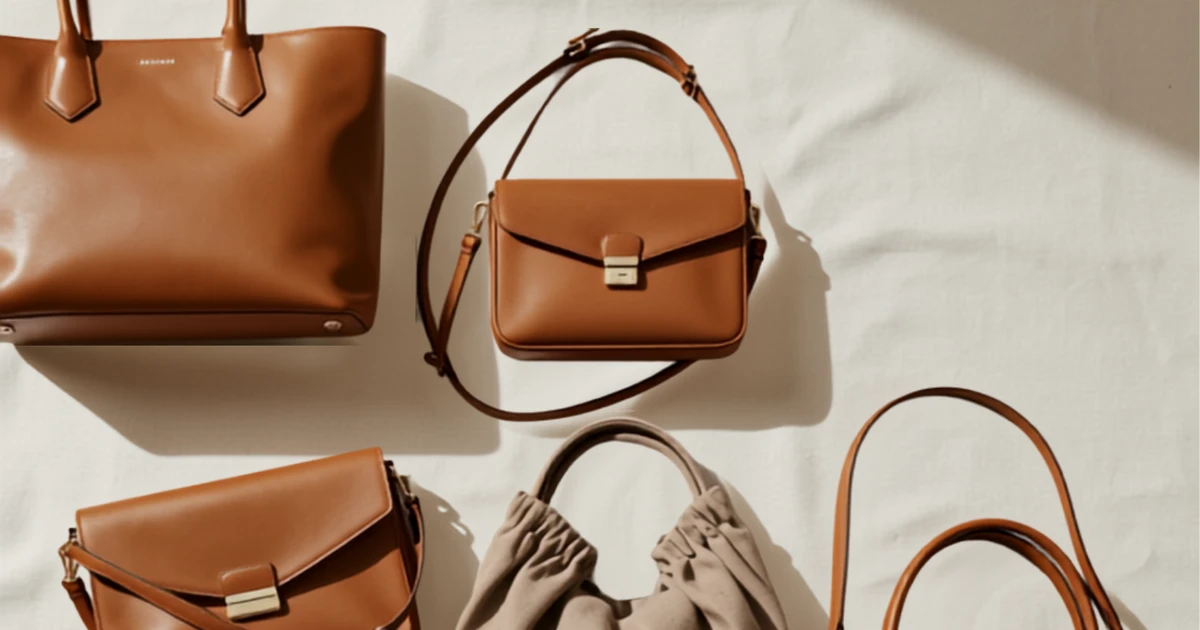
Five basic shapes cover almost every bag. Each has its own character and its own effect:
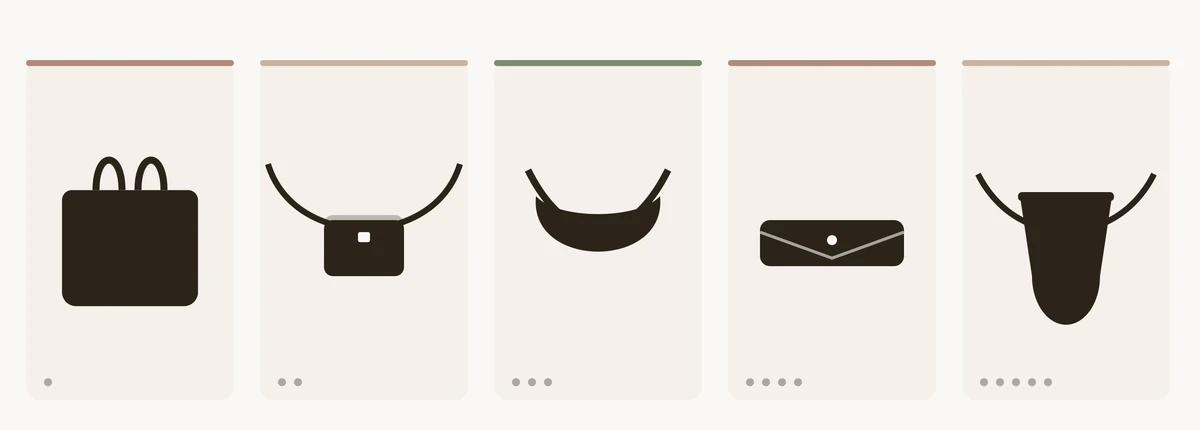
| Bag shape | Effect | Suits which line |
|---|---|---|
| Tote / shopper | structured, lots of volume, everyday | sharp, clean lines; larger scale |
| Crossbody | compact, adjustable landing point | balanced lines; all scales |
| Hobo (shoulder bag) | soft, unstructured, casual | strong, relaxed lines |
| Clutch | flat, delicate, formal | clean or soft lines; small scale |
| Bucket bag | rounded, medium volume, casual | relaxed, soft lines |
The “line” column is a starting point, not a law — scale and landing point shift the effect of every shape.
Bag shape by body line
The shape of a bag is the sum of its structure, its edges and its silhouette. Structured and angular reads as sharp; soft and unformed reads as relaxed; round and curved reads as gentle. These characters correspond to the big body-line families in the Kibbe system — and this is exactly where classic size advice stops.
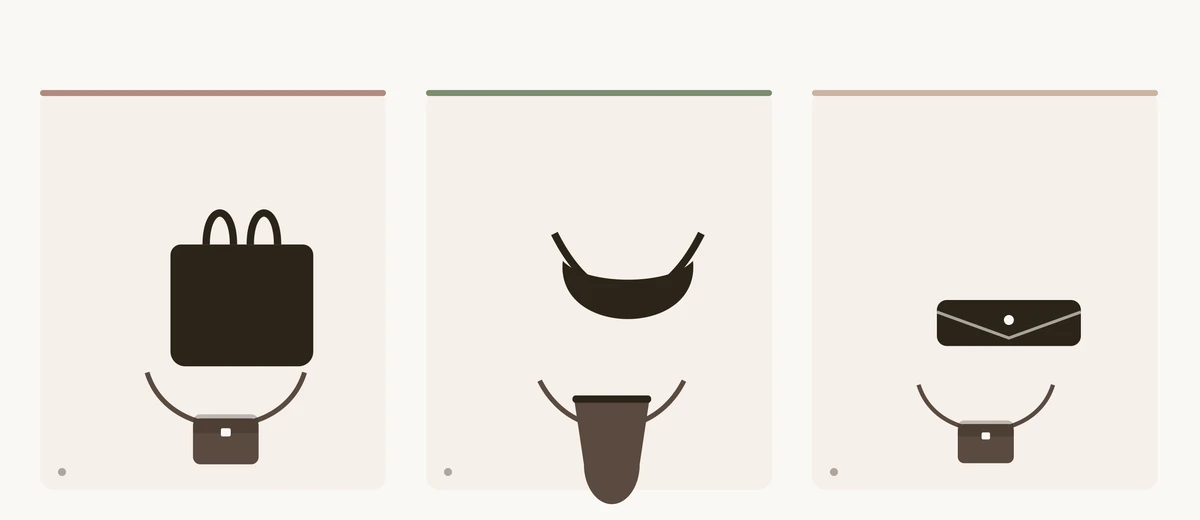
Sharp, clean lines (Dramatic family)
Long, straight, angular body lines wear bags with the same clarity: structured totes, box bags, strict clutches, smooth leather, clean edges. Soft, unformed pouches dilute the effect. A structured bag that holds its shape sits better here than a slouchy hobo.
Strong, relaxed lines (Natural family)
Broader bones and relaxed contours wear bags with substance and texture: hobo bags, bucket bags, canvas, unstructured and grained leather, fringe. Too strict, glossy or tightly formed bags look costumed here. A soft, casual shape with texture carries best.
Soft, round lines (Romantic family)
Curved, soft contours wear bags with round shapes: rounded pouches, curved silhouettes, delicate chain straps, soft details, gathers. Hard, strictly angular bags look foreign on soft lines. The shape should pick up the roundness.
Balanced and compact lines (Classic, Gamine)
Balanced lines (Classic) wear neat, medium-sized shapes with no extremes — the classic crossbody, the clean tote. Compact, small-scale lines (Gamine) wear smaller bags with detail: cheeky mini bags, small-scale fastenings. For both: medium scale, no single feature dominates.
The bag scale: size and bone structure
The common rule ties bag size to dress size. That falls short. The scale of a bag follows your overall scale — that is, height and bone structure — not your dress size. A tall, finely built woman is visually overwhelmed by a chunky XXL bag, even though she is “tall”. A strongly built woman carries the same volume effortlessly.
Check your scale not by dress size but by frame: height plus bone structure. Fine joints carry more delicate bags, strong joints more volume — regardless of the size on the label.
Two practical guides: the bag should not be wider than your torso, and it should not dominate your silhouette. Petite women hold the proportion with small to medium models — more in the guide Styling for petite women. The same scale logic applies to jewellery and glasses: accessories follow your bone structure, not your dress size.
The landing point: where the bag ends
The landing point is the spot where a crossbody or shoulder bag ends on the body — and this point draws the eye. It’s the most-overlooked factor when buying a bag. A bag that lands exactly on the widest point of the hip emphasises that zone; one that sits at the slimmer waist emphasises the slimmest point.
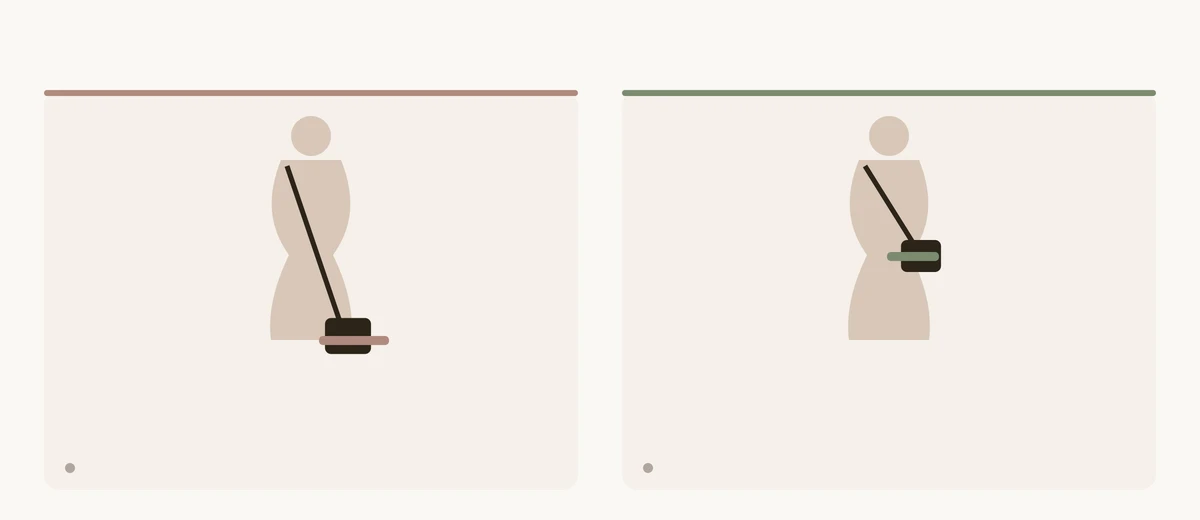
The rule is simple: the landing point belongs at a slim part — the waist or above the hip, not the fullest point. You control it directly through strap length. A long strap does lengthen the silhouette but lets the bag land low; an adjustable strap is therefore the most practical choice. The same logic as the hem of a skirt or dress: transitions and end points belong at slim spots.
Balancing the bag to your body shape
Classic body shape remains a useful layer — as one of several levers. The basic idea: a bag can balance a body zone by drawing visual weight toward or away from it.
- Wider hip: bags that land higher at the waist draw the eye up. Bags worn very low emphasise the hip.
- Fuller bust: crossbody bags whose strap runs across the chest visually divide the bust — a longer strap with the landing point at the hip is often more flattering here.
- Straight silhouette: a bag with a round, soft shape brings movement to the straight line.
- Very delicate silhouette: petite bags hold the proportion; large models quickly take over the whole picture.
What matters is combining this layer with scale and line — not taking it as the only rule. That’s exactly where the next section comes in.
Carrying style and strap length
How you carry a bag changes its effect as much as its shape. The carrying style determines the landing point and therefore the emphasised body zone. The same crossbody bag reads differently in three carrying styles:
- Short handle in the hand or on the forearm: draws the focus to the body centre, reads classic and tidy.
- On the shoulder: the bag lands at the hip — here the strap length decides the zone.
- Worn cross-body: the strap divides the torso diagonally and the landing point sits at the opposite hip.
Adjustable straps are therefore the most flexible choice: you can adapt the landing point to your proportion instead of accepting it. Long straps lengthen visually, short ones move the focus up.
The conflict case: when size and line disagree
The interesting case is the contradiction. What if your size asks for one thing and your line for another? Example: you are tall (the size rule says: a big XXL bag) and at the same time finely built with soft lines (line and bone structure say: more delicate and soft). The large structured shopper suits the height — but overwhelms the fine bone structure and looks hard on the soft line.
In a conflict, line and bone structure win for harmony, size for volume. Translated: choose the shape and scale of your structure — and get the volume you want through a softer, medium shape, not a chunky one that works against your build.
In the example that means: not a stiff, oversized box shopper, but a medium-sized, soft hobo or bucket bag in a calm tone. The soft shape honours your line, the medium scale the fine bone structure, and you still have room. You get both — harmony and function — without one fighting the other. The order is the core: structure first, volume as fine-tuning.
Step by step to the right bag
Here’s how to proceed at your next purchase — in this order:
- Determine your body line. Sharp, soft, relaxed, balanced or compact? The Kibbe test gives the direction.
- Check your scale. Height plus bone structure — fine or strong joints? That sets the bag volume.
- Choose the shape by the line. Structured and angular, soft and casual, or round and delicate.
- Set the size by your frame. Not wider than the torso, not dominating the silhouette.
- Set the landing point. Via strap length, to a slim spot — the waist or above the hip.
- Choose the colour. A tone that suits your colour type makes the bag more versatile.
- Check the bag in the whole picture. With the planned outfit in front of the mirror and worn, not just held in the hand.
The same bag for day, office and evening
An occasion rarely calls for a particular bag shape — it calls for a particular size and formality. And that can be expressed in any line. Everyday and travel need volume (tote, shopper, bucket), the office a structured medium bag, the evening a small clutch or mini bag. At each size you choose the shape that suits your line.
Three to four basic bags in your character language — a tote for everyday, a crossbody with an adjustable strap, a clutch for the evening — cover most situations. It’s the same capsule logic that works for shoes and clothing.
The most common mistakes when buying bags
The most expensive bag is not the pricey one, but the one that stays in the wardrobe — because it was bought by size, while shape and landing point were never checked.
- Buying by size only. The size rule is one of three layers — shape and landing point are missing otherwise.
- Confusing scale with dress size. Bag volume follows size and bone structure, not the label.
- Ignoring the landing point. A bag at the widest hip emphasises exactly that zone.
- Buying against your own line. A stiff box bag on a soft line looks hard, a slouchy hobo on a sharp line looks untidy.
- Not adjusting the strap. A fixed, too-long strap wastes the chance to control the landing point.
- Checking the bag only in the hand. Only worn does it show where it lands and whether the proportion works.
From the size rule to the right bag
Find the bags that carry your line
This guide gives you the tools. A professional Kibbe and colour analysis gives you your personal result: which shapes, scales and tones your structure really carries — from the bag to your whole silhouette. A free initial consultation is always included.
FAQ — Frequently asked questions
Which bag suits my body?
The bag that suits you is the one whose scale matches your overall size and bone structure, whose shape mirrors your body line, and whose landing point sits at a slim part of you. The common rule “tall woman, big bag” is only part of it — it addresses size, not shape and not carrying style. Only the interplay of scale, shape and landing point decides.
Which bag suits tall women?
Tall women carry larger bags more evenly than petite women — shoppers, totes and medium models don’t disturb the proportion. What matters is not only size but bone structure: a tall, finely built woman looks overloaded in a very chunky bag, while a strongly built woman carries the volume well. Very small mini bags quickly look lost on tall women.
Which bag suits petite women?
Petite women are usually better served by small to medium bags, because very large models visually shorten the figure. A bag barely wider than the body holds the proportion. A high landing point (short strap, bag at waist height) additionally lengthens the leg. More in the guide for petite women.
Which bag size suits me?
The right bag size follows your overall scale of height and bone structure, not your dress size. As a rule of thumb, the bag should not be wider than your torso and not so large that it dominates your silhouette. Fine bones carry more delicate bags, strong bones more volume — regardless of dress size.
Which bag suits my Kibbe type?
Sharp, clean lines (Dramatic family) wear structured, angular bags with clean edges — tote, box bag, strict clutch. Strong, relaxed lines (Natural family) wear soft, unstructured shapes — hobo, bucket, canvas, robust leather. Soft, round lines (Romantic family) wear round, curved bags with delicate details. Balanced and compact lines (Classic, Gamine) wear neat, medium-sized shapes without extremes.
How long should the bag strap be?
The strap length determines where the bag lands on the body — and that point draws the eye. A strap that lets the bag end at the widest hip emphasises exactly there; better it lands at the slimmer waist or above the hip. Long straps lengthen visually, short handles draw the focus to the body centre. Adjustable straps are therefore practical.
Which bag looks slimming?
A bag looks slimming when its scale suits you and its landing point sits at a slim spot — not automatically the smallest one. A too-tiny bag on a tall woman makes her look bigger, a too-large one on a petite woman shortens her. A strap that carries the bag at waist height emphasises the slimmest point and lengthens the silhouette.
Which bag is timeless and always wearable?
Three basic shapes in calm tones are timeless: a structured tote or shopper for everyday, a medium crossbody with an adjustable strap, and a simple clutch for the evening. In your character language and a colour that suits your colour type, they last for years. Trend shapes add to this base but don’t replace it.
Which bag suits which occasion?
The occasion mainly determines size and formality: everyday and travel need volume (tote, shopper, bucket), the office a structured medium bag, the evening a small clutch or mini bag. At each size you choose the shape that suits your line — so the bag stays coherent, however formal the occasion.