
TL;DR — Which pattern suits my figure?
- Which pattern suits you is decided not by “is it slimming”, but by three layers: the pattern character relative to your body line, the pattern scale by your bone structure, and the density and contrast by your colouring.
- Guides dismiss pattern scale with body height (“tall women wear big patterns”). That falls short: scale follows bone structure, not height.
- The character is the overlooked point: geometric patterns (stripes, check) suit sharp lines, organic ones (florals, dots) suit soft lines — regardless of size.
- Vertical stripes lengthen, horizontal stripes widen — but width, contrast and placement matter too.
- “Slimming” is the second layer: a lengthening pattern that doesn’t suit your line still looks wrong.
Which pattern suits your figure is decided not by “is it slimming”, but by three things: the character of the pattern relative to your body line, the size of the pattern relative to your bone structure, and how dense and high-contrast it is against your own colouring. A pattern sits right when its character mirrors your line and its scale matches your bones. The slimming effect is only one of these three layers.
Almost every pattern guide optimises one question: which pattern is slimming? That’s not wrong — but incomplete. It doesn’t explain why the same floral looks completely different on two women with the same figure. The reason is the body line and the bone structure.
Contents
- Why “which pattern is slimming” is only half the story
- The three layers: character, scale, density
- The main patterns at a glance
- Pattern character by body line
- Pattern scale: by bone structure, not body height
- Stripes: vertical lengthens, horizontal widens
- Pattern density and contrast by colouring
- Pattern by body zone: where it sits
- The conflict case: when “slimming” and line disagree
- Step by step to the right pattern
- Combining two patterns and colour
- The most common mistakes when buying patterns
- FAQ — Frequently asked questions
Why “which pattern is slimming” is only half the story
“Which pattern is slimming” is the most-asked pattern question — and the reason so many patterned pieces are lovely on their own and still never worn. The question optimises a single goal, lengthening, and skips the essential: a pattern has to belong to your line and your bone structure before it’s allowed to lengthen you.
A pattern suits you when its character mirrors your body line and its scale matches your bone structure. A big, playful floral on a sharp, straight line looks costumed; a strict, geometric check on a soft, round line looks hard. Both patterns can “slim” — both are still wrong, because they work against the person wearing them.
So this guide works in layers. First the fit: character and scale. Then the optics: the slimming effect through contrast, density and stripe direction. Keep that order and you buy fewer mistakes — and need the lengthening tricks less often, because a pattern that suits your line already looks harmonious.
The three layers: character, scale, density
Three levers decide whether a pattern suits you:
- The character. Whether the pattern is geometric (stripes, check) or organic (florals, dots) has to match your body line. This is the layer almost everyone skips.
- The scale. How big the pattern is follows your bone structure, not your body height.
- The density and contrast. How tight and how high-contrast the pattern is should match your own colouring. This is the fine-tuning.
Classic advice covers only the lengthening effect. Character, scale and contrast almost never come up — yet they decide whether a pattern belongs to you. Let’s take the layers in order.
The main patterns at a glance
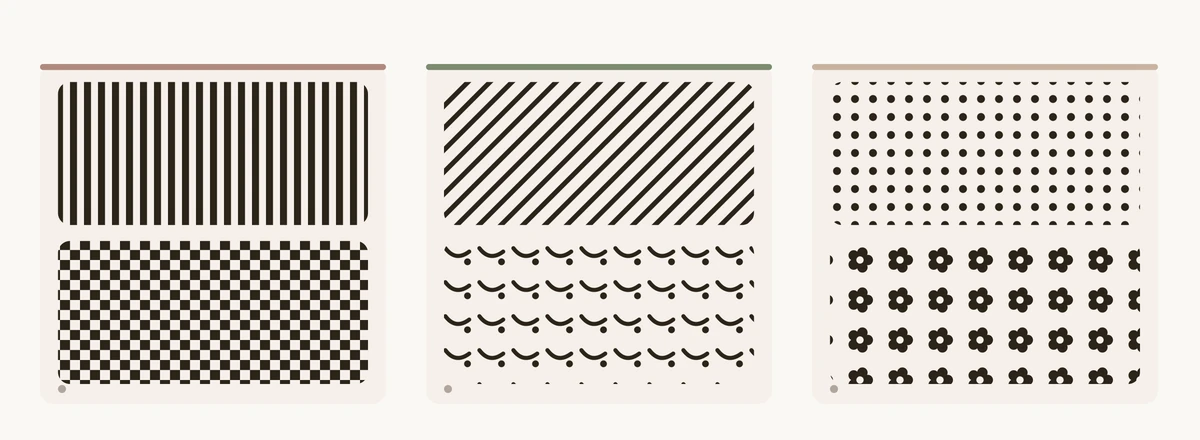
Patterns split into two big characters: geometric (clean, angular, constructed) and organic (soft, round, natural). Between them lie irregular, textured patterns. Here are the most common and their effect:
| Pattern | Character | Suits which line |
|---|---|---|
| Vertical stripes | geometric, lengthening | sharp, clean lines |
| Check / gingham | geometric, structured | sharp to balanced lines |
| Dots | organic, round, playful | soft, compact lines |
| Florals | organic, soft | soft, round lines |
| Animal / tie-dye | irregular, textured | strong, relaxed lines |
| Abstract / graphic | geometric or organic by shape | follows the form language |
The “line” column is the starting point — scale, density and contrast shift the effect of every pattern.
Pattern character by body line
The character of a pattern is its form language — geometric and angular, or organic and round. It has to mirror your body line, and this is exactly where classic pattern advice stops, sorting only by “slimming”. Two women with the same figure get the same pattern recommended; the one with a sharp line suits a clean check, the one with a soft line a watercolour floral. The body line by Kibbe gives the direction.
Sharp, clean lines (Dramatic family)
Long, straight, angular body lines wear geometric patterns with the same clarity: clean stripes, sharp checks, graphic shapes with clean edges. Playful, blurred florals dilute the effect. A precise stripe or a clean check sits better here than a watercolour print.
Strong, relaxed lines (Natural family)
Broader bones and relaxed contours wear irregular, textured patterns: animal print, tie-dye, abstract shapes, irregular stripes. Too strict, exact patterns look stiff here. The pattern may be lively and slightly disordered.
Soft, round lines (Romantic family)
Curved, soft contours wear organic, round patterns: watercolour florals, soft dots, winding floral shapes. Hard, exact geometry looks foreign on soft lines. The pattern should pick up the roundness of your contour.
Balanced and compact lines (Classic, Gamine)
Balanced lines (Classic) wear neat, medium-sized patterns without extremes — fine stripes, small checks. Compact, small-scale lines (Gamine) wear small-scale, cheeky patterns with contrast — small dots, graphic mini-prints. For both: medium scale, no single feature dominates.
Pattern scale: by bone structure, not body height
The most common advice is: tall women wear big patterns, petite women small ones. That confuses two things. The scale of a pattern follows your bone structure, not your body height. A tall woman with fine bones is visually overwhelmed by a large-scale floral; a petite woman with strong bones carries a larger pattern effortlessly. A person’s height says little — the size of her bones says everything.
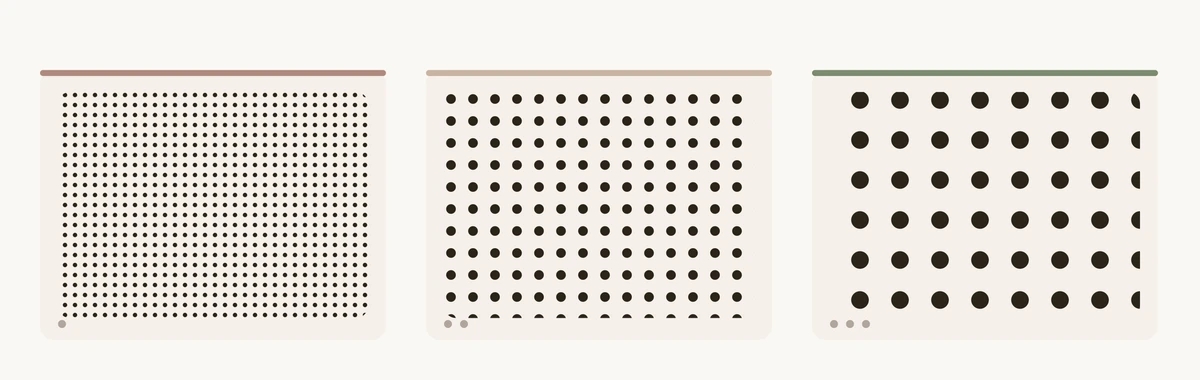
Check your scale at the wrist: if thumb and middle finger clearly overlap around the joint, you have fine bones and wear small, delicate patterns. If they barely touch, you have strong bones and wear larger, bold patterns.
In practice: fine bones wear small, delicate patterns; strong bones wear larger, bold patterns, or the pattern looks lost. Petite women with fine bones find the matching proportion strategy in the guide Styling for petite women — there too: scale follows the bone structure, not just the height.
Stripes: vertical lengthens, horizontal widens
Vertical stripes emphasise the vertical and lengthen, horizontal stripes emphasise the horizontal and widen. That’s the best-known pattern rule — and it holds, with three caveats: width, contrast and placement matter too. A narrow, low-contrast horizontal stripe barely adds bulk; a wide, high-contrast one does.
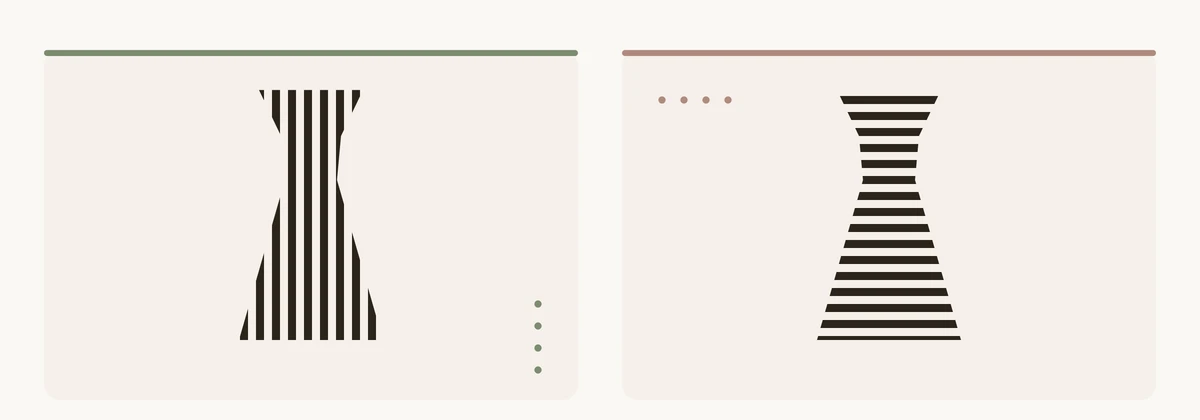
The same logic applies to stripe width: the finer the stripe, the more elegant and subtle the effect. Wide stripes are a graphic statement and suit strong lines better than fine ones. And diagonal stripes lengthen further, because they create a slanted, elongating line — a good choice when you want the lengthening of vertical stripes with a bit more movement.
Pattern density and contrast by colouring
The density of a pattern is how tightly the motifs sit; the contrast is the difference between light and dark parts. Both should match your own colouring. If you have low personal contrast — skin, hair and eyes sit close in colour — a high-contrast black-and-white pattern overpowers you. If you have high personal contrast, you carry high-contrast patterns effortlessly and look rather washed out in muted ones.
The rule: match the pattern contrast to your personal contrast. Whether you belong to the high- or low-contrast types is clarified by the colour-type analysis. Density also follows the scale: fine bones wear denser, small-scale patterns, strong bones airier, larger ones. A too-dense pattern on strong bones looks busy, a too-airy one on fine bones looks empty.
Pattern by body zone: where it sits
A pattern draws the eye to the zone it sits on. That’s a simple, powerful tool: wear the pattern where the eye should go, and solid where it should look away. A patterned top leads the eye up to the face; a patterned skirt emphasises the hip.
In practice: to emphasise the upper body, wear the pattern on top and solid below — it draws the eye to the face and is almost always flattering. To emphasise a slim spot, place the pattern exactly there. And an all-over pattern down the full length — a patterned dress — lengthens most when it is small-scale and low-contrast, because it doesn’t cut the silhouette. You use the same placement logic when choosing which dress suits your figure.
The conflict case: when “slimming” and line disagree
The interesting case is the contradiction. What if the lengthening rule asks for one thing and your line for another? Example: you want to lengthen (rule says: fine vertical stripe, small-scale, low-contrast) and at the same time have a strong, relaxed line (line says: larger, irregular, lively). The fine, exact stripe does lengthen — but looks dainty and foreign on a strong Natural line.
In a conflict, the line wins for harmony, the optics for lengthening. Translated: take the pattern character and scale of your line — and recover the lengthening through colour, contrast and placement, not through a pattern that works against your line.
In the example that means: not a fine exact pinstripe, but a slightly larger, irregular stripe or texture pattern in a muted, low-contrast tone. The lively character honours your line, the muted colour and the vertical direction still lengthen. You get both — harmony and lengthening — without one fighting the other.
Step by step to the right pattern
Here’s how to proceed at your next purchase — in this order:
- Determine your body line. Sharp, soft, relaxed, balanced or compact? The Kibbe test gives the direction.
- Choose the pattern character by the line. Geometric for sharp, organic for soft, irregular for relaxed lines.
- Check the scale at the wrist. Fine bones: small patterns. Strong bones: larger patterns.
- Match the contrast to your colouring. High personal contrast carries high-contrast patterns, low contrast muted ones.
- Use placement. Pattern on the zone that should get the eye — usually up top, towards the face.
- Only now lengthen. If it’s not enough, reach for vertical direction, a finer scale and a lower-contrast tone.
- Check the pattern in the whole picture. Next to the face and at full length in the mirror — character, scale and contrast together.
Combining two patterns and colour
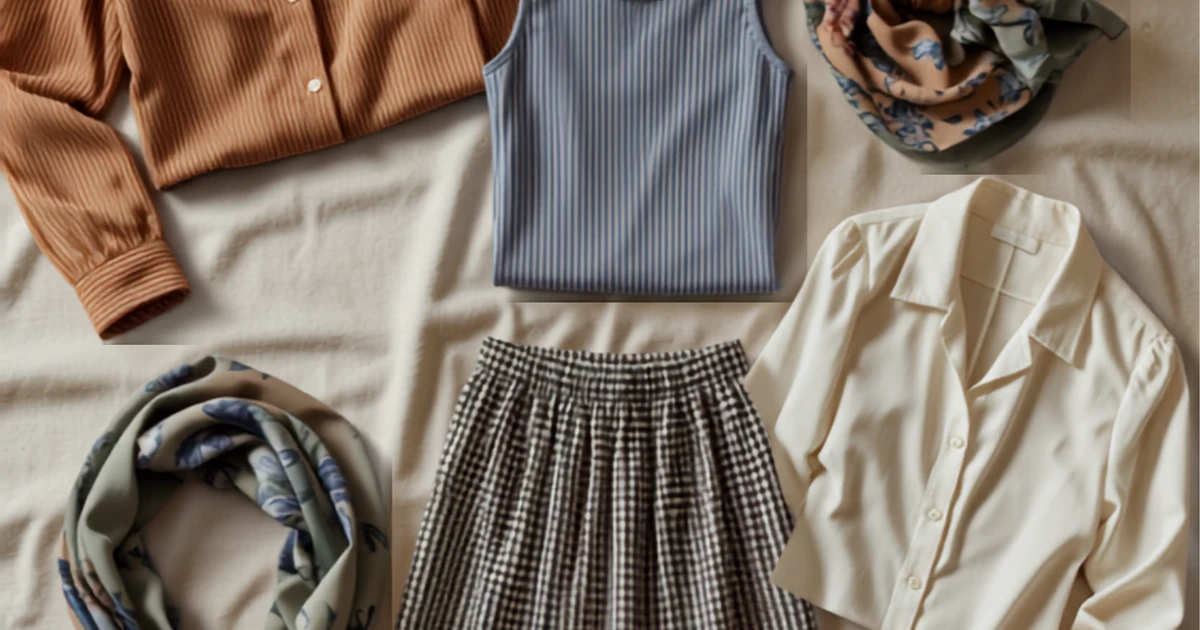
Two patterns work when they differ in scale and share a colour. A large and a small pattern in the same colour family look harmonious; two of the same size compete for attention. A safe start is mixing a geometric with an organic pattern — stripes with florals, check with dots — as long as the colour world holds together.
Colour is the glue: if both patterns share a tone, the eye tolerates two patterns in one outfit. How to bring colours and patterns together deliberately is shown in the guide Combining colours in clothing. To start, the rule is enough: different scale, shared colour, one pattern as the lead and one as the supporting role.
The most common mistakes when buying patterns
The most expensive pattern is not the pricey one, but the one that stays in the wardrobe — because it was bought by “slimming”, never by character and bone structure.
- Watching only for “slimming”. A lengthening pattern that works against your line looks worse than a suitable one that doesn’t lengthen at all.
- Confusing scale with body height. Pattern size follows the bone structure, not the height.
- Overlooking the character. Geometric or organic decides whether a pattern belongs to your line.
- Ignoring the contrast. A high-contrast pattern overpowers a low-contrast colouring.
- Combining two patterns of the same size. Without a scale difference and a shared colour, they compete.
- Checking only on the hanger. A pattern only reads next to your face and in movement — that’s where it shows whether it belongs to you.
From the pattern to the whole silhouette
Find the patterns that carry your line
This guide gives you the tools. A professional Kibbe and colour analysis gives you your personal result: which patterns, scales and tones your structure really carries — from the pattern to your whole silhouette. A free initial consultation is always included.
FAQ — Frequently asked questions
Which pattern suits my figure?
The pattern that suits you is the one whose character mirrors your body line and whose scale matches your bone structure: clean, sharp lines wear geometric patterns like stripes and check, soft lines wear organic patterns like florals and dots, strong, relaxed lines wear irregular, textured patterns. The question “is it slimming” is only one layer. First comes the fit to line and scale, then the slimming effect.
Which patterns are slimming?
The most reliably lengthening are fine vertical stripes and small-scale, dark, low-contrast patterns, because they lead the eye upward and don’t cut the silhouette. Large-scale, light and high-contrast patterns add bulk instead. Important: a slimming pattern that doesn’t suit your line still looks wrong — fit before lengthening.
Which pattern scale suits me?
The right pattern scale follows your bone structure, not your body height. Fine bones wear small, delicate patterns; strong bones wear larger, bold patterns, or the pattern looks lost. This is the most common confusion: not every tall woman wears big patterns — a tall woman with fine bones suits a delicate pattern better.
Do horizontal stripes really make you look wider?
Horizontal stripes widen visually, because they emphasise horizontal lines and pull the eye outward — but the effect depends on stripe width, contrast and placement. Narrow, low-contrast horizontal stripes barely add bulk; wide, high-contrast ones do. Vertical stripes lengthen instead and make you look slimmer and taller. The finer the stripe, the more elegant the effect.
Which patterns suit my Kibbe type?
Sharp, long lines (Dramatic family) wear clean, geometric patterns — narrow stripes, sharp checks, clean edges. Strong, relaxed lines (Natural family) wear irregular, textured patterns like tie-dye, animal print or abstract shapes. Soft, round lines (Romantic family) wear organic, round patterns like watercolour florals and dots. Balanced and compact lines (Classic, Gamine) wear neat, medium-sized patterns without extremes.
Which patterns for a fuller figure?
With a fuller figure, it depends less on the figure than on bone structure and line. Medium to larger patterns with a soft transition and muted contrast flatter, because they divide the surface without cutting it. Very small, dense patterns can look busy, very large and high-contrast ones add bulk. A muted, medium-sized pattern in your colour world is the safe choice.
How do I combine two patterns?
Two patterns succeed when they differ in scale and share a colour: a large and a small pattern of the same colour family look harmonious, two of the same size compete. An easy start is mixing a geometric with an organic pattern — stripes with florals. Keep the colour world together, and the eye tolerates two patterns in one outfit.
Do large florals suit every woman?
No. Large florals mainly suit stronger bones and soft to relaxed lines. Fine bones are visually overwhelmed by large-scale blooms; sharp, clean lines quickly look costumed in large, playful florals. For fine or sharp types, smaller, muted or graphically stylised florals are the better choice.
How do I find out whether a pattern suits me?
Hold the garment next to your face and at full length in the mirror and check three things: does the pattern character mirror your line (geometric or organic)? Does the pattern scale match your bone structure? Is the pattern’s contrast about as high as the contrast between your skin, hair and eyes? If all three match, the pattern belongs to you.