TL;DR — Which hat suits me?
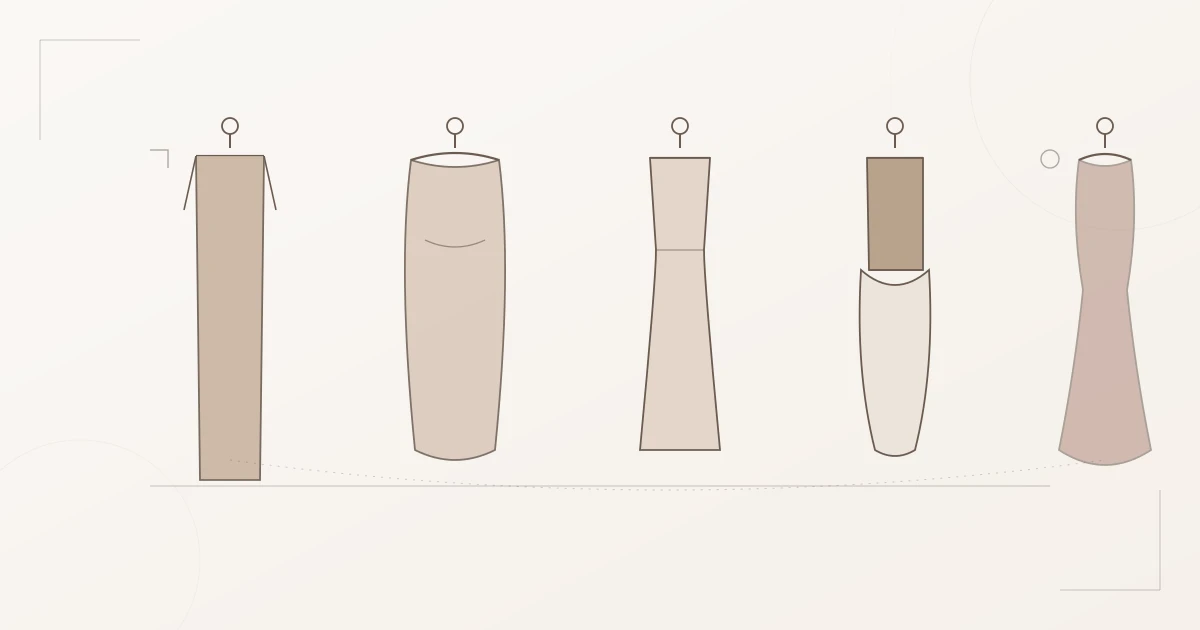
- Which hat suits you depends on three levels: your face shape sets the proportion, your bone structure the size and your body line the character.
- Round face: a taller, more angular crown. Long face: a low crown and a wider brim. Square face: soft, rounded shapes.
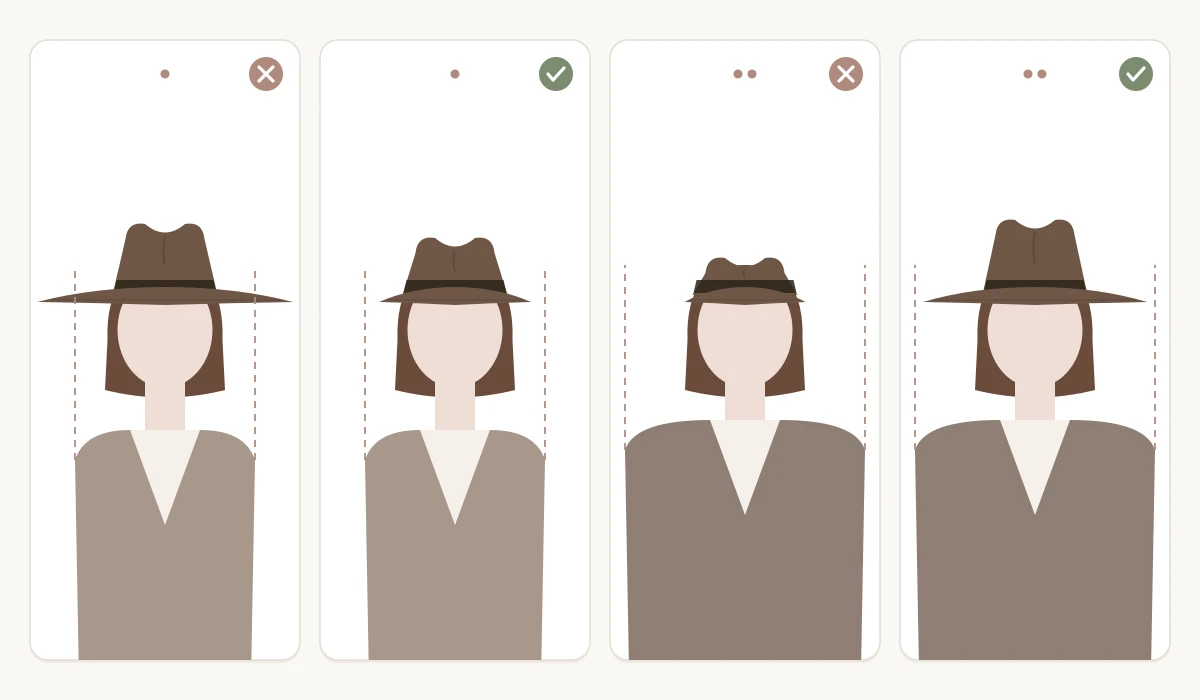
- As a rule of thumb, the brim does not extend beyond your shoulders. A petite frame disappears under a wide brim, while a strong frame makes a small hat look lost.
- Hat size is the circumference of your head, measured across the middle of the forehead and just above the ears.
- A hat frames your forehead and eyes. Choose its colour by your colour season and keep some contrast to your hair colour.
Which hat suits me? Three things decide it: your face shape sets the proportion of crown and brim, your bone structure sets the size of the brim, and your body line sets the character of the hat. A round face can carry a taller crown, a long face a wider brim. Choose the colour by your colour season.
Almost every guide on which hat suits you comes from a hat shop and stops at face shape: round face, tall crown. That is true, but it does not explain why two women with the same round face look completely different in the same fedora. The difference lies in bone structure, body line and colour. That is what this guide adds, for hats and for beanies.
Contents
- Hat, beanie, cap: the difference
- The three levels: face, bone structure, line
- Which hat suits me by face shape?
- Which beanie suits me?
- Brim and crown by bone structure
- Hats by body line
- Hat size: measuring your head correctly
- Hats with glasses, a fringe and long hair
- Hat colour by colour season
- Hats by season and occasion
- The most common mistakes when choosing a hat
- FAQ — Frequently asked questions
- Next steps
Hat, beanie, cap: the difference
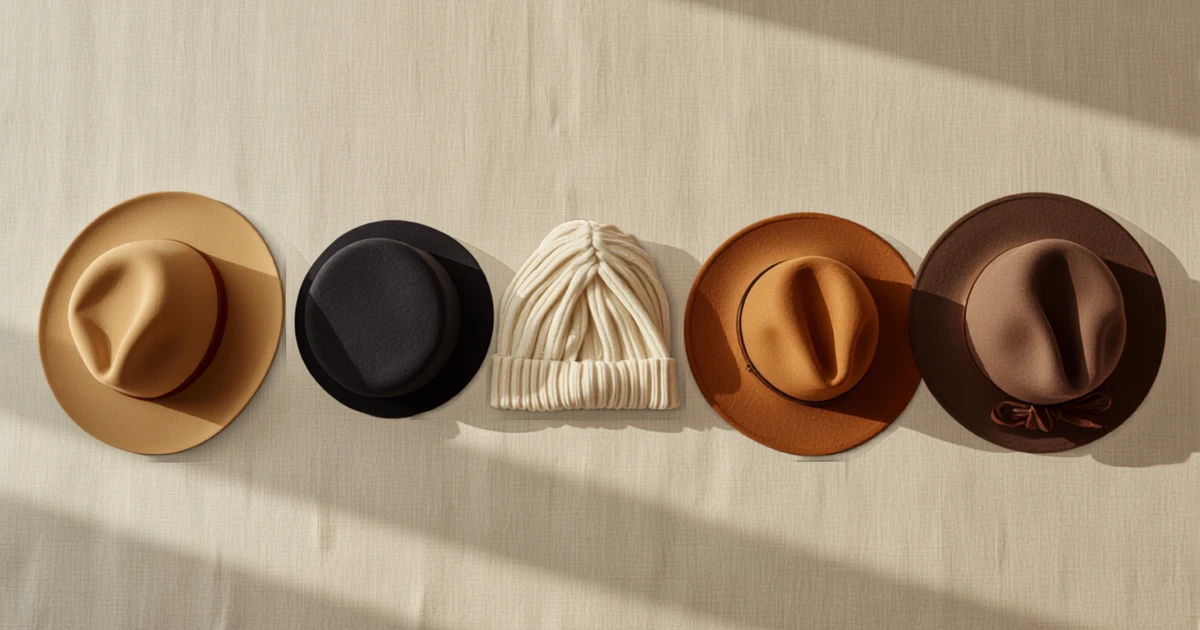
A hat is a head covering, and in German usage the word is reserved for a shaped head covering with a brim that runs all the way around. Wikipedia describes the hat as a head covering worn for protection, ceremony or as a fashion accessory. A soft knitted or felt head covering without a brim is a beanie or beret. If the brim only sits at the front, it is a cap, which is why a newsboy cap belongs in this group.
When it comes to what suits you, this difference is more than wordplay. Each of the three shapes affects your face differently:
| Head covering | Feature | Effect | Typical styles |
|---|---|---|---|
| Hat | fixed shape, brim all around | frames the face, sets a horizontal line | fedora, trilby, cloche, floppy hat, bucket hat |
| Beanie | soft, no brim | sits on the head, volume on top or at the back | beanie, beret, bobble hat |
| Cap | peak only at the front | draws the eye to forehead and eyes | newsboy cap, baseball cap |
The brim is the most important lever. It visually widens the head area and casts a shadow over the eyes. A beanie, on the other hand, mainly changes the height and outline of the head. That is why similar rules apply to both, but not identical ones.
The three levels: face, bone structure, line
So the question "Which hat suits me?" never has a single answer based on face shape. The right head covering comes from three levels that complement each other. The same principle applies to glasses, as the guide Glasses by face shape shows in detail:
- Face shape: sets the proportion, meaning how tall the crown is, how wide the brim is and how low the hat sits on the forehead.
- Bone structure: sets the size. A brim has to suit your shoulders and frame, not just your face.
- Body line: sets the character, meaning whether the hat is angular or round, structured or soft, plain or decorated.
Your face shape tells you what proportion a hat should have. Your bone structure tells you how big it can be.
If the levels contradict each other, the same decision rule applies as with glasses: body line wins on character, face shape wins on proportion. A woman with a round face and a sharp, straight body line wears a tall crown with a clean edge. A woman with a round face and a soft line also chooses a taller crown, but in soft felt with gently rounded edges.
Which hat suits me by face shape?
Face shape describes the relationship between forehead, cheekbones and jaw, and the length of the face relative to its width. For head coverings the balancing principle applies: the hat adds what the face lacks and takes back what it has in excess.
You can determine your face shape in two steps in front of the mirror. First compare the widths: if the forehead is widest, you are heading towards heart-shaped. If the cheekbones are widest, towards diamond or round. If all three are almost equal, towards square, long or oval. Then the length: if the face is clearly longer than it is wide, it is long or oval, otherwise round or square.
| Face shape | Goal | Hat | Beanie | Better avoid |
|---|---|---|---|---|
| Oval | keep the proportion | almost any shape, medium brim | almost any beanie | hats that slide low over the eyebrows |
| Round | add length and edges | taller, more angular crown: fedora, trilby, worn slightly tilted | beanie with volume on top, beret worn at an angle | round, flat shapes, tight round beanies |
| Square | soften the edges | round, soft shapes: cloche, floppy hat with a soft brim | slouchy beanie, soft knit hat | angular crowns, straight, stiff brims |
| Heart-shaped | calm a wide forehead | small to medium brim, medium crown | loosely fitting slouchy beanie | very wide brims, lots of volume on top |
| Long | shorten the length, add width | low crown, wider brim, worn a little lower on the forehead | cuffed beanie worn low over the forehead | tall crowns, beanies perched on the back of the head |
| Diamond | add width at forehead and chin | medium to wide brim, soft crown | cuffed beanie, slouchy | pointed, tall crowns |
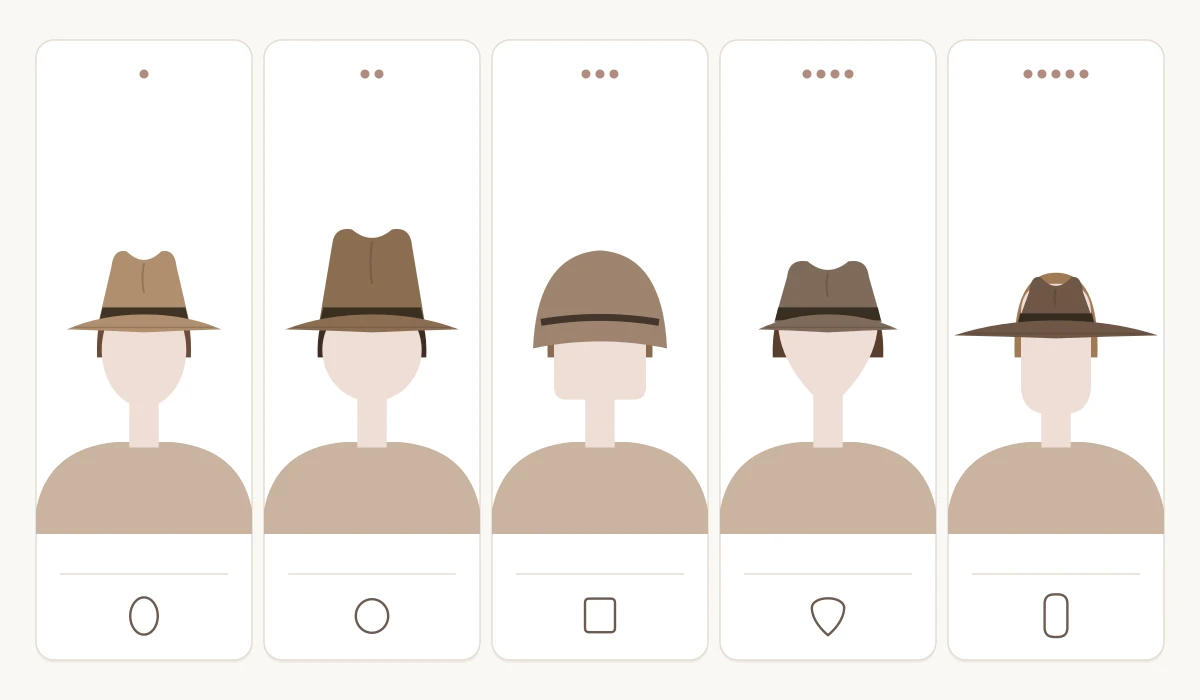
This table is the starting point, not the result. It tells you what proportion a hat should have. How big it can be and what character it needs are covered in the next sections.
Which beanie suits me?
A beanie is a soft head covering without a fixed shape and without a brim. Because it does not create a horizontal line, you control its effect with two things: where the volume sits and how low it comes down on the forehead. Then there is the knit weight, which follows your bone structure just as it does with a jumper. More on that in the guide Which jumper suits my figure?.
Cuffed beanie
The cuffed beanie sits close to the head and has a folded edge over the forehead. Worn low, it shortens a long face; worn further back, it gives a round face more height. It is the most versatile beanie and suits almost every face shape.
Slouchy beanie
The slouchy beanie is cut longer and falls loosely at the back of the head. The volume sits at the back and the outline becomes soft. It suits square and heart-shaped faces and soft, relaxed body lines.
Beret
The beret is a flat, round hat made of felt or wool. Worn at an angle, it creates a diagonal that lengthens a round face. It looks small and graphic, which is why it works especially well with a fine bone structure.
Bobble hat
The bobble hat has a pom-pom that adds extra height. With a round face this is an advantage; with a long face it makes the face look even longer. A large pom-pom on a fine frame quickly looks childlike.
Newsboy cap
The newsboy cap is a cap with a short peak and a soft, flat crown. The peak draws the eye forward to the eyes. It suits oval and long faces and small, geometric body lines.
For knit weight there is a simple rule: fine knit for a fine bone structure, chunky knit for a strong one. A chunky cable-knit beanie makes a petite head look larger than it is, and a thin fine-knit beanie looks lost on a strong frame.
Brim and crown by bone structure
Body scale describes how fine or strong your bone structure is, visible in your wrists, shoulders and facial features. It is not the same as height: a tall woman can have fine bones, a petite woman a strong bone structure. The guides Styling for petite women and Fashion for tall women explain the difference.
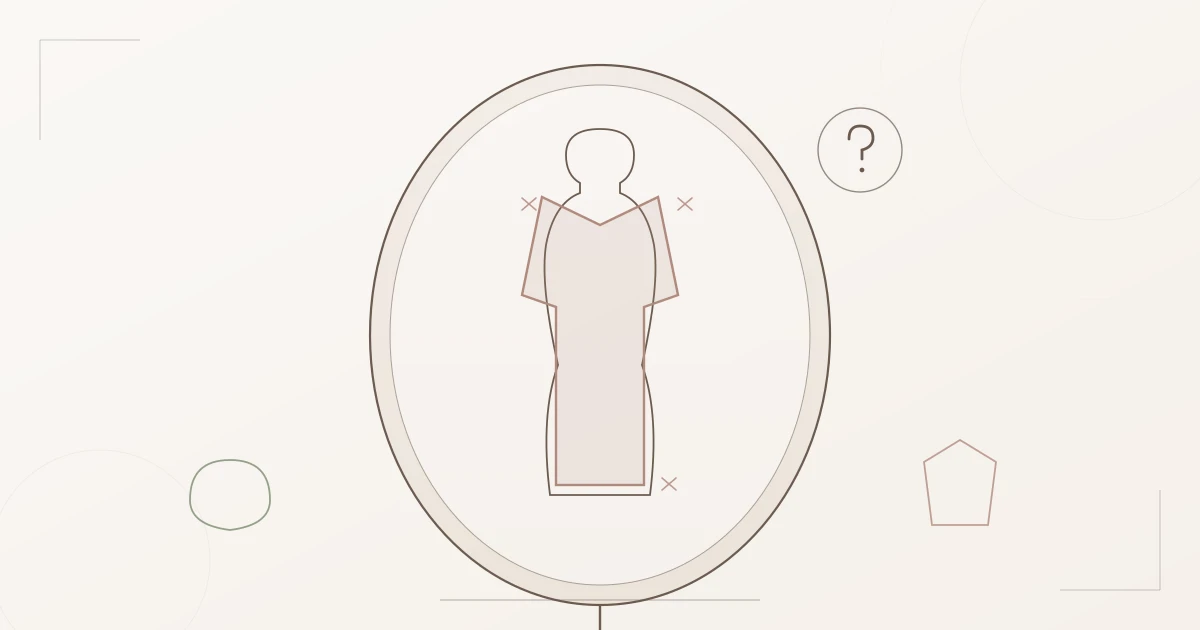
"Which hat suits me?" is therefore also a question for your shoulders: the brim has to suit your whole upper body, not just your face. As a rule of thumb, the brim does not extend beyond your shoulders. Stand facing the mirror and imagine two vertical lines running up from the edges of your shoulders. If the brim ends outside these lines, the hat is too big for you.
| Bone structure | Brim | Crown | Beanie |
|---|---|---|---|
| Fine, petite | narrow to medium, well inside the shoulders | low to medium | fine knit, close-fitting or slightly slouchy, small pom-pom |
| Medium | medium | medium | almost anything, medium knit weight |
| Strong | medium to wide, up to the shoulder line | medium to tall | chunky knit, volume allowed |
A hat is never just too big for a face. It is too big for a body.
The rule also works the other way round. A small hat with a narrow brim looks as if it sits a size too high on a woman with broad shoulders and a strong bone structure. Here the brim can make full use of the shoulder width.
Hats by body line
Body line describes whether your body is more straight and sharp, more soft and rounded, or a mix of both. The Kibbe system groups these lines into five families, explained in the guide Understanding the Kibbe body type system. For hats, the line decides the character:
- Dramatic (Dramatic, Soft Dramatic): large, clean shapes with a sharp outline. A wide-brimmed fedora with an angular crown, solid colour, no decoration. Soft Dramatics wear large brims with a soft sweep.
- Natural (Flamboyant Natural, Natural, Soft Natural): relaxed and unstructured, with texture. A wool bucket hat, soft felt with a slightly broken brim, a chunky knit beanie. Soft Naturals choose soft slouchy beanies and floppy hats.
- Classic (Dramatic Classic, Classic, Soft Classic): medium size, symmetrical and polished. A classic fedora with a medium brim, a beret worn straight. Soft Classics wear a classic cloche and elegant hats with a small brim.
- Gamine (Flamboyant Gamine, Gamine, Soft Gamine): small, geometric and cheeky. Beret, newsboy cap, geometric felt hats in a small format. Gamines like to use the hat as a contrast to the outfit.
- Romantic (Theatrical Romantic, Romantic): soft, round and decorated. A cloche with a bow, a round felt hat with a gently curved brim, a fine cashmere beanie. Hard edges and severe shapes look heavy on this line.
Body line also affects the hairstyle under the hat. Why the line matters even more than face shape there is explained in the guide Hairstyles by Kibbe type.
Hat size: measuring your head correctly
In Germany, hat size is the circumference of your head in centimetres. According to Wikipedia, hat sizes are determined by measuring the head circumference about one centimetre above the ears. The European sizing standard EN 13402 defines head girth as the maximum horizontal girth of the head measured above the ears. In the UK and the US, however, hat sizes are given in inches, and the two systems do not even match each other.
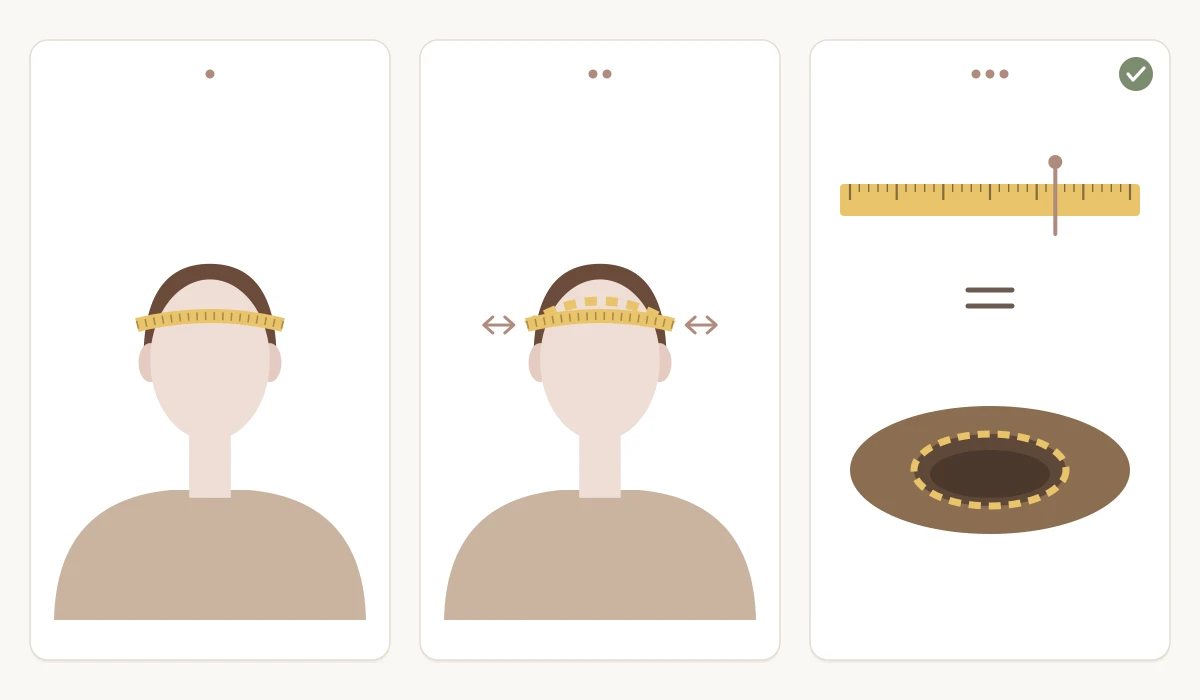
- Prepare: Take a flexible tape measure and wear your hair the way you will wear it under the hat.
- Position: Place the tape across the middle of your forehead, about a finger's width above your eyebrows.
- Go all the way round: Run it horizontally just above your ears and around the widest part of the back of your head.
- Read: The tape should lie flat without pressing. Read the value in centimetres; that is your hat size.
- Repeat: Measure two or three times and take the largest value. If you fall between two sizes, choose the larger one.
Fit also affects how a hat looks. A hat that is too small sits high on the head and makes any face look rounder. A hat that is too big slides over the eyebrows and pushes the face down. A slightly large hat can be reduced a little with a sizing tape inside the sweatband, whereas a hat that is too small can hardly be stretched.
Hats with glasses, a fringe and long hair
Glasses, hairstyle and hat all sit in the same small area around the face. They need to work together, otherwise they compete for attention.
Hats with glasses
Glasses and a brim both create a horizontal line. A strong, dark frame under a wide, dark brim results in two heavy bars on top of each other. In that case choose either a lighter frame or a narrower brim in a lighter shade. Which frame suits you is covered in the guide Glasses by face shape.
Hats with a fringe
A fringe already shortens the visible forehead. Under a low-worn beanie or cloche, almost the entire forehead disappears. With a fringe, wear the hat a little further back or let the fringe fall out to the side.
Hats with short hair
Short hair leaves neck and jaw exposed, which gives the hat more weight. Small, close-fitting shapes such as a beret, beanie or cloche look particularly harmonious. A very wide brim can look top-heavy with short hair.
Hats with long hair
Long, loose hair widens the head area at the sides. Under a wide-brimmed hat this quickly creates a triangle that is wide at the top. In that case wear your hair behind your shoulders or in a low ponytail. A low bun goes well with a beret or a fedora.
Hat colour by colour season
Hat colour is the colour that frames your forehead and eyes. It sits as close to your face as a scarf and has just as strong an effect on your skin: the right colour makes you look fresh, the wrong one tired. How this works with a scarf is shown in the guide How to tie a scarf. If you combine both, hat and scarf should come from the same palette.
- Winter: black, royal blue, emerald and, for beanies, pure white. Avoid camel and mustard. More in the guide Winter colours.
- Summer: dove grey, cool navy, dusty rose and mauve. Avoid pure black and rust. More in the guide Summer colours.
- Autumn: camel, chocolate brown, olive, rust and forest green. Avoid pure white and cool grey. More in the guide Autumn colours.
- Spring: camel, caramel, warm beige, cream white and, for beanies, coral. Avoid black and burgundy. More in the guide Spring colours.
Besides your colour season, the contrast to your hair colour counts. A black hat on black hair blurs the outline of the head, and so does a camel hat on dark blonde hair. Choose a shade at least one step lighter or darker than your hair. How hair colour and colour season relate is explained in the guide Hair colour by colour season. You can find your colour season in the guide What colour season am I?.
A hat in the right colour works like good light on your face. In the wrong colour it casts a shadow that does not come from the brim.
Hats by season and occasion
The material of a hat follows the season, and with the material the effect changes. Felt and wool are firmer and look more structured, knit is soft and relaxed, straw is light and summery.
In autumn and winter, felt hats and beanies are the obvious choice. For the reference period 1991 to 2020, the German Weather Service (DWD) gives monthly means of 9.4 °C in October and 4.8 °C in November for Germany. In October a felt hat or a thin beanie is usually enough; from November a wool or cashmere beanie keeps you warmer. Which outfits go with it is shown in the guide Autumn outfits for women.
For festive occasions: a large hat is a statement and needs calm around it. Combined with a striking dress, statement jewellery and eye-catching shoes, it looks restless. More on that in the guide Wedding guest outfits. With a coat, choose a hat whose character the coat repeats: structured felt with a clean wool coat, a soft beanie with a relaxed knit coat. Which coat suits you is explained in the guide Which coat suits me?.
The most common mistakes when choosing a hat
- Choosing by face shape alone: the proportion is right, but the brim is too big or too small for the bone structure.
- A brim wider than the shoulders: on a petite frame, the hat looks as if it is wearing the woman.
- Guessing the hat size instead of measuring: a hat that is too small sits high and makes the face rounder, one that is too big slides over the eyes.
- Hat colour the same as hair colour: the outline of the head blurs and the hat looks like part of the hairstyle.
- Strong glasses and a wide dark brim: two heavy horizontal lines on top of each other compress the face.
- Too many statements at once: a large hat, a striking scarf and statement earrings compete for the same area.
FAQ — Frequently asked questions
Which hat suits me?
Which hat suits you depends on three things: face shape determines crown and brim, your bone structure the size, your body line the character. As a rule of thumb, the brim does not extend beyond your shoulders. Choose the colour by your colour season.
Which hat suits a round face?
A round face suits hats with a taller, more angular crown such as a fedora or trilby, ideally worn slightly tilted. They give the face length and definition. Round, flat shapes and tight round beanies, on the other hand, emphasise the roundness even more.
Which beanie suits me?
With beanies, the position of the volume and the knit weight matter. A round face can take volume on top, a long face a beanie worn low over the forehead, a square face a soft slouchy beanie. Fine knit suits a fine bone structure, chunky knit a strong one.
How do I find out my hat size?
Your hat size is your head circumference in centimetres. Place a flexible tape measure across the middle of your forehead and run it horizontally just above your ears around your head. Measure several times and, if the value falls between two sizes, choose the larger one.
Which hat suits petite women?
Petite women with a fine bone structure wear hats with a narrow to medium brim and a low to medium crown. The brim should stay well inside the shoulder width. If a petite woman has a strong bone structure, the brim can be wider.
Can I wear a hat with glasses?
Yes, as long as frame and brim are not both heavy. A strong, dark frame works with a narrower or lighter brim, a light frame even with a wide hat. That way you avoid two dark horizontal bars on top of each other.
Which beanie suits short hair?
Short hair suits close-fitting styles such as a cuffed beanie, a beret or a fine knit hat. They pick up the compact shape of the haircut. Very voluminous beanies with a large pom-pom quickly look top-heavy with short hair.
Which hat colour suits me?
Choose your hat colour by your colour season, because the hat sits directly above your face. Winters wear black or royal blue, Summers dove grey or cool navy, Autumns camel or chocolate brown, Springs camel or warm beige. Also keep at least one shade of contrast to your hair colour.
What is the difference between a hat and a beanie?
A hat has a fixed shape and a brim that runs all around, a beanie is soft and has no brim. If the brim only sits at the front, it is a cap, as with a newsboy cap. That is why a hat creates a horizontal line, while a beanie mainly changes the height and outline of the head.
Next steps
The next time you wonder which hat suits you, check three things in front of the mirror: the proportion by your face shape, the brim relative to your shoulders and the colour by your colour season. And measure your head circumference before you buy, which saves you most bad purchases.
Which colours really suit your face is explained step by step in the guide What colour season am I?. A personal colour and style consultation clarifies it together with your body line. And if you are standing in a shop torn between two hats, send me a photo on WhatsApp. I reply personally, usually the same day.