
Table of Contents
- The Quick Answer
- What Defines the Classic Type?
- The Characteristics in Detail
- The Default Fallacy: “I Have No Extremes, So I Must Be Classic”
- Are You Really Classic? Telling the Types Apart
- The Styling Logic: Symmetry & Balance
- The Classic Wardrobe: Cuts & Pieces
- Fabrics, Patterns & Colors
- Jewelry & Accessories
- The 5 Biggest Styling Mistakes
- Classic at Work & in Everyday Life
- Famous Classic Examples
- The Classic Self-Check: 5 Questions
- Frequently Asked Questions (FAQ)
The Quick Answer
Quick Answer
The Classic is the balanced type of the Kibbe system: Yin and Yang stand in perfect equilibrium, with neither side dominating. The result is a moderate, symmetrical appearance — a medium bone structure, even proportions, a softly defined waist, harmonious facial features. Its styling logic is called symmetry and moderation: clean, tailored-elegant cuts, balanced proportions, timeless polish — nothing extreme, but nothing careless either. The biggest mistake: Classic is not “the type without characteristics.” True Classic balance is an active, moderate structure — and considerably rarer than the many self-diagnoses would suggest. This guide explains every characteristic, the default fallacy, how to tell Classic apart from Dramatic and Natural — and the complete wardrobe logic.
No Kibbe type is more often wrongly claimed for oneself than the Classic. “I don’t have especially sharp features or especially soft ones, so I’m probably Classic” — this sentence is the most common misdiagnosis in the entire system. The mistyping guide already touches on the thought; this article turns it right-side up. Because true Classic balance is not a lack of characteristics but a precise characteristic in its own right — and whoever understands it understands the whole Kibbe system better.
What Defines the Classic Type?
In the Kibbe Body Type System, the Classic stands for the golden mean: it is the only type in which Yin (soft, round) and Yang (sharp, straight) balance each other completely. Where the Dramatic is all Yang and the Romantic all Yin, the Classic sits exactly in between — not as a compromise, but as a quality in its own right: balance, symmetry, and moderation.
In concrete terms: the bone structure is moderate — neither narrow and sharp as in the Dramatic nor broad and blunt as in the Natural, but medium-sized, even, harmonious. The flesh is balanced, the proportions are even, the facial features symmetrical and regular. Nothing stands out, because everything is in balance:
- Bone structure: moderate and symmetrical — medium shoulders (neither pointed nor broad-set), even limbs, a harmonious bone frame without edges or breadth
- Body flesh: balanced — a softly defined waist, even distribution, neither a pronounced hourglass nor a straight column
- Face: regular and symmetrical — even features of moderate degree, often described as “classically beautiful” or “harmonious”
The Classic family comprises three variations: the pure Classic (perfect balance), the Soft Classic (with a slight Yin undertone, a touch more softness), and the Dramatic Classic (with a slight Yang undertone, a touch more sharpness). All three share the same foundation: moderate, symmetrical balance as the guiding principle.
The Characteristics in Detail
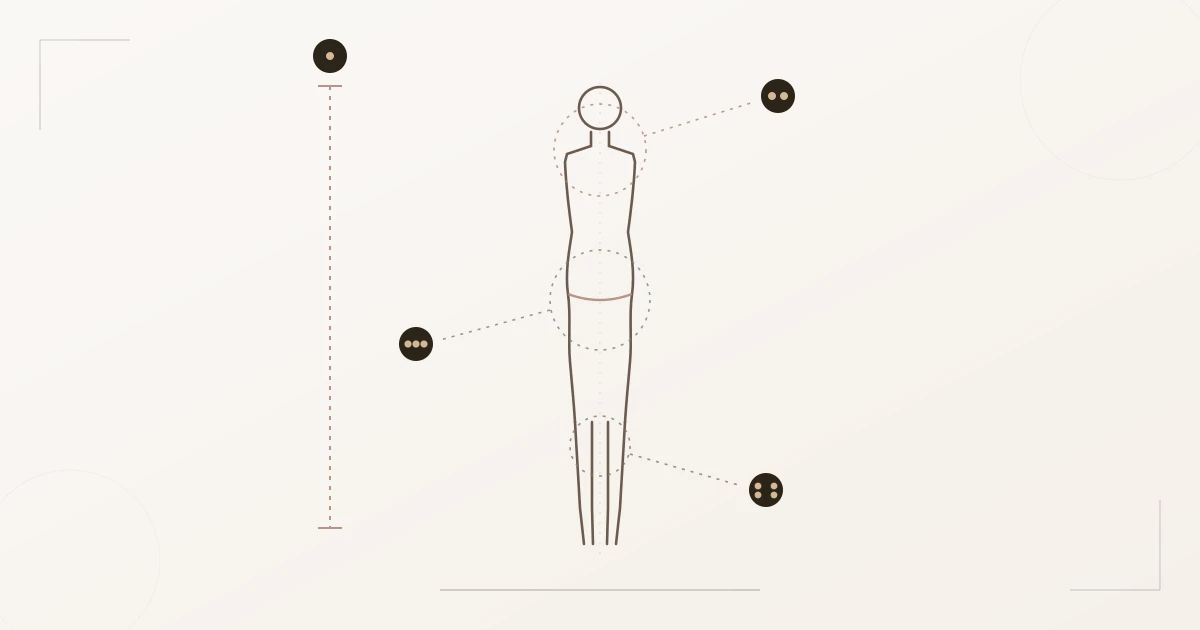
| Characteristic | The Classic | For Comparison |
|---|---|---|
| Vertical line / height | Moderate — mid-range, no hard height rule | Dramatic: emphatically long; Gamine: emphatically short |
| Shoulders & bones | Moderate, symmetrical — neither sharp nor broad | Dramatic: sharp, narrow; Natural: broad, blunt |
| Body flesh | Balanced — a soft, even waist | Romantic: lush curve; Natural: straight |
| Face | Symmetrical, regular, harmonious | Dramatic: striking; Gamine: high-contrast |
| Overall impression | Elegant, polished, timeless — quiet authority | Natural: casual; Romantic: sensual |
Unlike the Yang-dominant types, the Classic has no hard height rule: the balance is typically linked to a medium stature, but what matters is not the tape measure but the equilibrium of the structure. Conspicuous length shifts more toward Dramatic Classic, marked daintiness toward Soft Classic or Gamine. And as always: these characteristics describe structure, not weight — a Classic stays a Classic at every weight.
The Default Fallacy: “I Have No Extremes, So I Must Be Classic”
Direct Answer
Classic is not a residual category for “unremarkable” people. Anyone who calls themselves Classic because they don’t recognize any dominant characteristics is often confusing two completely different things: genuine structural balance (Classic) and the not-yet-recognizing of one’s own dominant line (every other type). True Classic balance is an active, visible symmetry — not the absence of information.
The reason so many people wrongly classify themselves as Classic lies in a thinking error: they treat “Classic” as the field left over once no extremes are found. But that’s not how the Kibbe system works. Every type has a dominant line — the Classic included. Its dominant is balance itself: a palpably even, symmetrical, moderate structure that you actively see, not one you guess at by elimination.
In practical terms, that means two things. First: someone who can’t yet read their dominant line is not therefore Classic — they simply haven’t recognized it yet. Very often, behind the feeling “I have no characteristics” lies a soft Natural, a Soft type, or a blended type whose signature is subtler than the textbook extremes. Second: the true Classic is rarer in the community than the number of self-diagnoses would suggest — precisely because perfect equilibrium without any undertone at all (neither Soft nor Dramatic Classic) is unusual.
David Kibbe himself set aside pure Classic as a standalone recommendation in his updated classification — for exactly this reason: true, perfect symmetry is so rare that the vast majority of “Classics” are actually Soft Classics or Dramatic Classics.
The reliable counter-test: a true Classic looks best in clean, tailored-symmetrical cuts — they flatter the balanced structure instantly. Anyone who instead looks “correct but lifeless” in exactly those cuts and only comes alive in softer, more relaxed, or more dramatic lines has their true dominant elsewhere. Clothing reveals the structure more reliably than a feeling does.
Are You Really Classic? Telling It Apart from the Neighboring Types
Beyond the default fallacy, there are three real distinctions that decide the right wardrobe:
Classic vs. Dramatic
Both come across as elegant and polished — but the Dramatic is sharp and extreme, the Classic moderate and balanced. The Dramatic has narrow, pointed shoulders, long lines, striking features; the Classic has medium shoulders, balanced proportions, symmetrical features. The practical check: do your bones and face read “drawn” and angular (Dramatic) or even and harmonious (Classic)? In clothing, the same question separates them: the Dramatic wears sharp, extreme statements that make the Classic look harsh and overloaded; the Classic wears clean moderation that leaves the Dramatic underwhelmed.
Classic vs. Natural
The subtlest and most common borderline case — both are moderate and inconspicuous at the extremes. The difference lies in symmetry and polish: the Natural has a slightly broad, blunt, “irregular” bone structure that needs ease and texture; the Classic has a symmetrical, even structure that needs structure and polish. The decisive test: does clean, tailored-symmetrical clothing look right on you (Classic), or does it feel stiff and “too much” next to relaxed, unconstructed cuts (Natural)? Whoever looks best in perfectly fitted tailoring is Classic; whoever looks constricted in it and comes alive in relaxed lines is Natural.
Classic vs. Its Own Subtypes
Is the structure perfectly balanced, or is there a slight undertone? A touch more softness (rounder features, a bit more curve) points to Soft Classic; a touch more sharpness (slightly more striking features, a longer line) to Dramatic Classic. The pure Classic without any undertone at all is the rarest of the three variations — and that’s exactly why, when in doubt, it’s worth checking whether one of the two nuances applies after all.
If uncertainty persists, follow the proven sequence: hard filters first, standardized photos instead of the mirror, judge structure before fullness. The free Kibbe test gives a first indication — the complete type profile lives on the Classic type page.
The Styling Logic: Symmetry & Balance
The Classic wardrobe follows a principle the community aptly calls “refined balance” — cultivated balance. Three rules together make up the line:
- Symmetry is the law. What the sharp line is for the Dramatic and the curve is for the Romantic, symmetry is for the Classic: the load-bearing principle. Balanced cuts, centered closures, paired details, clean vertical balance. Asymmetry and deconstruction work directly against the structure.
- Moderation in both directions. The Classic needs structure — but moderate structure. Enough tailoring for polish, but not the extreme sharpness of the Dramatic; enough softness for elegance, but not the lushness of the Romantic. The art lies in the middle: clean but not hard, elegant but not opulent.
- Polish beats statement. This type’s impact comes from quality, fit, and calm — not from conspicuous individual pieces. A perfectly fitted sheath dress, a cleanly cut blazer, a single fine strand of pearls: the elegance lies in restraint, not in quantity.
The difference from the neighbors in one sentence: where the Natural uses ease and the Dramatic uses sharpness as their means of expression, the Classic uses balance — the quiet, polished authority of the perfect middle.
The Classic Wardrobe: Cuts & Pieces
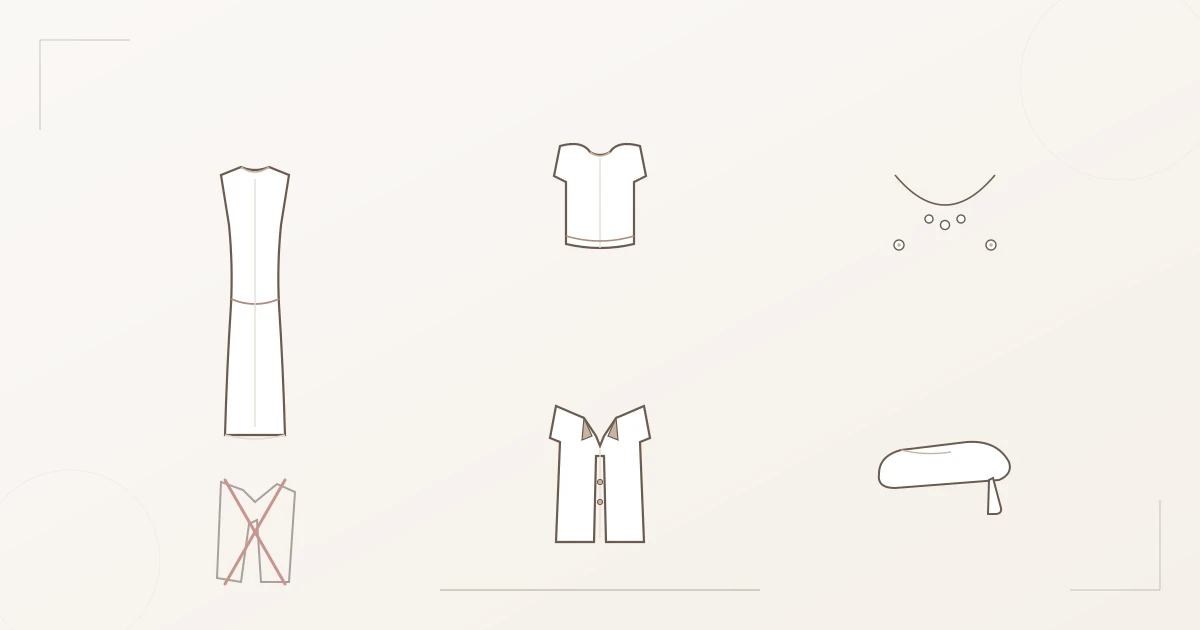
The Sheath Dress — The Main Event
The signature piece of this line: a tailored, cleanly cut knee-length sheath dress that traces the balanced silhouette without overstating it. Clean lines, a symmetrical cut, moderate emphasis on the soft waist — no extreme wiggle dress (that belongs to the Romantic), no straight column (that belongs to the Natural). The sheath dress is to the Classic what the wrap dress is to the Romantic.
Blouses & Tops
Cleanly cut blouses and shells with symmetrical necklines — round neck, moderate V, boat neck. Fine, clean finishing, understated button plackets, ideally in refined materials. Tucked into the skirt or pants, with a clear waistline. To avoid: overly playful ruffles (too Yin) and hard, boxy construction (too Yang).
Skirts & Pants
Skirts: straight or slightly flared pencil and A-line shapes in knee length, clean and symmetrical. Pants: cleanly cut, straight tailored styles with a crease — the tailored-elegant suit pant is ideal here. The rule of thumb: a clean line, a moderate fit, a symmetrical cut — nothing too wide, nothing too tight.
Jackets & Blazers
The cleanly cut, single-breasted blazer with a moderate lapel is the centerpiece of the Classic wardrobe — tailored enough for polish, but without an extreme shoulder or a sharp edge. Also: the classic trench coat, the structured skirt suit, the elegant sheath jacket. The Classic is one of the few types on which classic tailoring is truly at home.
Fabrics, Patterns & Colors
| Category | Ideal | Avoid |
|---|---|---|
| Fabrics | Refined and medium-weight with a clean drape: fine wool, gabardine, silk crepe, refined cotton, fine knits | Board-stiff fabrics (too hard) and heavily textured, coarse materials (too casual for the polish) |
| Patterns | Symmetrical and orderly: fine stripes, understated checks, even polka dots, classic designs in a medium scale | Asymmetrical, wild, or oversized prints that disrupt the balance |
| Color logic | Coordinated, harmonious palettes — elegant tone-on-tone combinations, classic contrasts of medium strength | Garish, hard color breaks and chaotic multicolor |
Which specific colors suit you is, as always, determined not by your Kibbe type but by color analysis — more on that in Color Analysis or Style Consultation.
Jewelry & Accessories
- Jewelry: fine, symmetrical, and timeless — a single strand of pearls, clean gold bangles, understated stud earrings, elegant classic shapes. The classic of classics: the single-strand pearl necklace. Order and evenness beat opulence and playfulness.
- Scale: moderate — nothing too large and bold (that tips toward Dramatic/Natural), nothing too small and playful (toward Romantic/Gamine). The golden mean applies to jewelry too.
- Bags: structured and classic — the clean top-handle bag, the elegant shoulder bag with a clean shape. Timeless styles beat it bags.
- Shoes: the elegant pump with a moderate heel is the Classic signature piece — along with classic loafers, clean slingbacks. Neither extremely pointed nor clunky, but evenly elegant.
- Accessories: the silk scarf, the narrow leather belt, the classic watch — cultivated, timeless details instead of fashion statements.
The 5 Biggest Styling Mistakes for Classic
1. Too Many Statements
Several eye-catching pieces at once — big jewelry, a wild print, a statement shoe — overload the balanced structure and destroy the very calm that makes up Classic elegance. This type’s strength is restraint; a single clean accent is enough.
2. Too Extreme and Angular
Hard, dramatic cuts, sharp shoulder lines, extreme silhouettes overwhelm the moderate structure — they read like borrowed harshness and make the even features look severe rather than elegant. Clarity yes, extremes no.
3. Too Casual and Unstructured
The completely relaxed, unconstructed Natural look — oversized, rumpled, pointedly careless — makes the Classic look unkempt and “underdone.” This line needs polish and fit; where the Natural comes alive in ease, the Classic just looks unfinished in it.
4. Asymmetry and Deconstruction
One-shoulder cuts, slanted hems, deconstructed fashion: anything that breaks the symmetry works against this type’s core principle. What looks avant-garde on others looks merely restless and incoherent on the Classic.
5. The “Boredom” Trap
The most dangerous mistake: confusing Classic with “boring, safe, invisible” and retreating into shapeless, cheap beige uniforms. Classic elegance is not the absence of effort but cultivated quality — high-quality fabrics, a perfect fit, thoughtful details. The difference between “timelessly elegant” and “unremarkably bland” lies precisely here.
Classic at Work & in Everyday Life
Direct Answer
The Classic is the born business type: the classic, tailored-symmetrical skirt suit, the clean blazer over a sheath dress, the elegant suit pants with a fine blouse — everything that has to be worked for on other types is the natural mother tongue here. Quality and a perfect fit turn simple cuts into quiet authority. For everyday life, it’s enough to translate the same clarity a shade softer and more casual.
The complete office translation for all five families is in Business Looks by Kibbe Type. For building your wardrobe as a system: the Capsule Wardrobe by Kibbe Type shows how many pieces, in what mix, are really enough — and no family benefits from a well-thought-out capsule as much as the Classic.
Famous Classic Examples
The archetypes of Classic elegance cited most often in the Kibbe community are Grace Kelly and Jacqueline Kennedy Onassis — both the very embodiment of the polished, symmetrical, timeless appearance that defines this type. Their famous looks — the clean sheath dress, the structured skirt suit, the single-strand pearl necklace, the calm, coordinated color palette — read like a Classic textbook: never extreme, never careless, always in perfect balance.
Important as always: in the community, both are sometimes assigned to Soft Classic (with a slight Yin undertone) rather than to pure Classic — a good example of how finely the three variations sit next to one another. And in general: celebrity attributions are community consensus, not documented official typings by David Kibbe; typing from a distance remains inherently uncertain. For your own, reliable determination, what matters isn’t the comparison to a style icon but your own structure — when in doubt, via professional analysis.
The Classic Self-Check: 5 Questions
Before you commit, answer these five questions honestly:
- The symmetry question: Do others describe your facial features and proportions as “even,” “harmonious,” or “classically beautiful” — as active symmetry, not as an absence of characteristics?
- The default question (the most important one): Do you call yourself Classic because you see a balanced structure — or only because you don’t recognize any dominant line? In the second case, your true dominant probably lies elsewhere and simply hasn’t been decoded yet.
- The tailoring question (the practical test): Does a perfectly fitted, tailored-symmetrical sheath dress or skirt suit look instantly right and elegant on you — or does it feel stiff, and you’re more comfortable in softer or more relaxed cuts?
- The moderation question: Do both extreme, sharp pieces and lush, playful ones look “too much” on you? The Classic can take both directions only in a moderate dose.
- The undertone question: Is your structure perfectly neutral — or do you sense a slight pull toward the soft (Soft Classic) or the sharp (Dramatic Classic)? The pure Classic is the rarest of the three variations.
Four to five yes answers are a strong signal — and question 2 is the linchpin. If uncertainty persists, the methodical route through the Kibbe Test Guide helps — or the trained outside eye of a professional analysis.
The softer, Yin-dominant half of the family now has its own full deep-dive: the Soft Classic Kibbe type — the same harmonious symmetry, but with softer cheeks, a subtly visible feminine curve, and softer details instead of the pure Classic's neutral balance.
Frequently Asked Questions (FAQ)
What is the Classic type in the Kibbe system?
The balanced type: Yin and Yang are in equilibrium, with neither side dominating. The result is a moderate, symmetrical appearance with a medium bone structure, even proportions, and harmonious features. Clothing follows the principle of symmetry and moderation — clean, tailored-elegant cuts on a balanced scale.
Is Classic the type without any special characteristics?
No — that’s the most common mistake. Classic is not a residual category for “unremarkable” people but has an active dominant line: balance and symmetry themselves. Someone who doesn’t recognize any dominant line is not therefore Classic but usually just hasn’t decoded their true dominant yet. A true Classic is rarer than the many self-diagnoses would suggest.
How tall is a Classic?
There is no hard height rule as there is for the Yang-dominant types. The balance is typically linked to a medium stature, but what’s decisive is the equilibrium of the structure, not the tape measure. Conspicuous length shifts more toward Dramatic Classic, marked daintiness toward Soft Classic.
What is the difference between Classic and Dramatic?
The degree: the Dramatic is sharp and extreme — narrow, pointed shoulders, long lines, striking features. The Classic is moderate and balanced — medium shoulders, symmetrical proportions, even features. The Classic wears moderation where the Dramatic wears sharpness.
What is the difference between Classic and Natural?
Symmetry and polish: the Natural has a slightly broad, blunt, irregular structure that needs ease and texture. The Classic has a symmetrical, even structure that needs structure and polish. Whoever looks best in perfectly fitted tailoring is Classic; whoever looks constricted in it and comes alive in relaxed cuts is Natural.
What is the difference between Classic, Soft Classic, and Dramatic Classic?
The undertone: the pure Classic is perfectly balanced. The Soft Classic has a slight Yin undertone (a bit more softness and curve), the Dramatic Classic a slight Yang undertone (a bit more sharpness and length). All three share the moderate, symmetrical guiding principle; the pure Classic without any undertone is the rarest variation.
What clothing suits the Classic type?
Clean, tailored-symmetrical cuts on a moderate scale: the sheath dress, the clean single-breasted blazer with a moderate lapel, the elegant suit pants with a crease, cleanly cut blouses, the trench coat. Always symmetrical, always polished, never extreme and never pointedly casual.
What fabrics should a Classic wear?
Refined, medium-weight fabrics with a clean drape: fine wool, gabardine, silk crepe, refined cotton, fine knits. Avoid: board-stiff fabrics (too hard) and coarse, heavily textured materials (too casual for the Classic polish).
Can a Classic wear trends?
Yes, but filtered: the Classic translates trends into its own language instead of adopting them raw. A trend element in a clean, symmetrical, moderate form works; the extreme or pointedly careless full version of a trend works against the balance. Timelessness with an understated current accent is the Classic formula.
How does a Classic dress for the office?
The Classic is the born business type: the tailored-symmetrical skirt suit, the clean blazer over a sheath dress, the elegant suit pants with a fine blouse. Quality and a perfect fit turn simple cuts into quiet authority — classic tailoring is the natural mother tongue here.
What jewelry suits the Classic?
Fine, symmetrical, and timeless: the single-strand pearl necklace, clean gold bangles, understated stud earrings, elegant classic shapes. The scale stays moderate — nothing too large and bold, nothing too small and playful. Order and evenness beat opulence.
Does my Classic type change if I lose or gain weight?
No. The type is based on the moderate, symmetrical bone structure and the fundamental balance of Yin and Yang — not on absolute weight. Both stay intact at every weight; only the fullness changes, not the structure.
Are You Really Classic — or Just Not Yet Decoded?
The free Kibbe test gives you a structure-based assessment in just a few minutes — and the professional analysis delivers the reasoned answer, complete with your personal style dossier.