
Table of Contents
- The Quick Answer
- What Defines the Theatrical Romantic Type?
- The Characteristics in Detail
- Are You Really Theatrical Romantic? Telling the Types Apart
- The Styling Logic: Soft Curve Plus Fine Sharpness
- The Theatrical Romantic Wardrobe: Cuts & Pieces
- Fabrics, Patterns & Colors
- Jewelry & Accessories
- The 5 Biggest Styling Mistakes
- Theatrical Romantic at Work & in Everyday Life
- Famous Theatrical Romantic Examples
- The Theatrical Romantic Self-Check: 5 Questions
- Frequently Asked Questions (FAQ)
The Quick Answer
Quick Answer
Theatrical Romantic is a Yin-dominant blended type: a small, petite stature (up to about 165 cm) with a full, soft hourglass — like the pure Romantic — but with a fine sharp undertone in the bones: slightly tapered facial features, defined cheekbones, a certain edge within the delicate structure. The styling logic: the soft, waist-defined Romantic base plus precise little accents of sharpness — pointed pumps, a small pointed lapel, sparkling details. The most common mistakes: oversized pieces that swallow the petite line, and pure ruffled romanticism that ignores the sharp accent and ends up doll-like. This guide covers every characteristic, how to tell Theatrical Romantic apart from Romantic, Soft Dramatic, and Soft Gamine — and the complete wardrobe logic.
Theatrical Romantic is the most cross-referenced and least understood type in this series: the Romantic guide sends readers with “too much edge for Romantic” here, the Soft Dramatic guide calls the TR/SD pair the most common mix-up in the entire Kibbe community — and until now, both references led nowhere. Time for its own complete guide.
What Defines the Theatrical Romantic Type?
In the Kibbe Body Type System, Theatrical Romantic belongs to the Romantic family: its foundation is unmistakably Yin — small, soft, curvy, delicate. But unlike the pure Romantic, the picture isn't soft all the way through. Within the delicate structure sits a fine Yang accent: slightly tapered facial features, visible cheekbones, a defined little chin, sometimes a narrow, slightly sharp shoulder line above the full curve.
This blend — lush softness with a fine blade inside it — gives the type its name: theatrical, because the effect is more dramatic, more glamorous, more pointed than the Romantic's pure softness. The community's classic shorthand: the Romantic is the soft rose, the Theatrical Romantic is the rose with thorns.
- Stature: small and petite — the short vertical line is a hard criterion, typically up to about 165 cm
- Body flesh: soft and full — a pronounced hourglass with a full bust and hips, a noticeably narrower waist, soft arms and legs
- Bone structure: delicate and narrow, but with a fine sharpness — narrow, slightly accented shoulders, dainty wrists and ankles, small hands and feet
- Face: soft fullness (full lips, large round eyes) over a slightly sharp base — defined cheekbones, a tapered chin, or a fine, prominent nose
As with all Yin-dominant types, the height rule is uncompromising: a woman of about 165–168 cm or taller with the same soft curves and sharp accents is not a Theatrical Romantic but, as a rule, Soft Dramatic — the same blend, different dominance, a completely different styling line. The mistyping guide explains why this rule is so strict.
The Characteristics in Detail
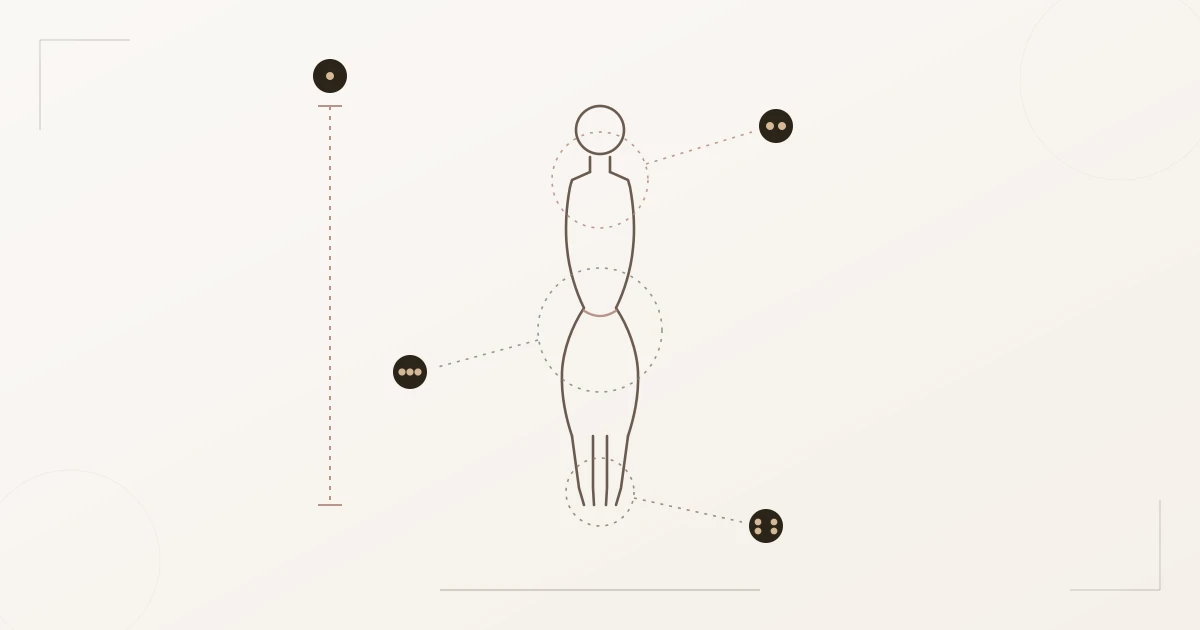
| Characteristic | The Theatrical Romantic | For Comparison |
|---|---|---|
| Vertical line / height | Short — up to about 165 cm, always reads petite | Soft Dramatic: long, from about 165–168 cm |
| Bone structure | Delicate and narrow with a fine sharpness — dainty, but not rounded | Romantic: soft and rounded throughout, without an edge |
| Body flesh | Soft, full, pronounced hourglass — distinct waist | Soft Gamine: more compact, less lush curve |
| Face | Soft fullness over sharp accents — cheekbones, pointed chin | Romantic: soft fullness without a sharp base |
| Overall impression | Sensual and glamorous with an edge — a “petite femme fatale” | Soft Gamine: playful and impish rather than sensual and glamorous |
Here too, the system's ground rule applies: these characteristics describe structure, not weight. A Theatrical Romantic stays a Theatrical Romantic at every weight — the petite bone base, the sharp undertone, and the underlying curve structure don't change, only their fullness.
Are You Really Theatrical Romantic? Telling It Apart from the Neighboring Types
Theatrical Romantic sits at the intersection of three confusion zones — and each one leads to a different wrong wardrobe. The key distinctions:
Theatrical Romantic vs. Romantic (Pure)
The difference lies entirely in the fine Yang accent: the pure Romantic is soft all the way through — rounded shoulders, soft facial features without any edge, everything flows. The Theatrical Romantic has visible sharp points within the delicate structure: defined cheekbones, a tapered chin, a fine edge along the shoulder line. The practical check: look at your face in a neutral photo. Do you find at least one clearly “etched,” sharp feature within the soft fullness? Then Theatrical Romantic. Is everything evenly soft and rounded? Then Romantic. The consequence for clothing is real: the TR wears small sharp details that would look harsh on the pure Romantic — and conversely, pure ruffled softness looks strangely incomplete on the TR.
Theatrical Romantic vs. Soft Dramatic
The most common mix-up in the entire community — both combine curves with sharpness. The difference is dominance: in Theatrical Romantic, Yin dominates — the base is small, delicate, soft, and the sharpness is only an accent on top. In Soft Dramatic, Yang dominates — the base is long and sharp, and the curve sits on top of it. The most reliable first filter is height: TR stays short (up to about 165 cm), SD needs length (from about 165–168 cm). The second filter is how the bones read: does the skeleton itself look dainty and small (TR) or long and commanding (SD)? That this boundary keeps even professionals busy shows in the best-known example: Selena Gomez was debated between both types for years before David Kibbe personally confirmed her as a Theatrical Romantic. The full counter-perspective is in the Soft Dramatic deep dive.
Theatrical Romantic vs. Soft Gamine
The subtlest distinction, because both are small, soft, and carry a share of Yang. The difference lies in how the blend works: in Soft Gamine, Yin and Yang stand side by side in contrast — compact, slightly angular bones with soft flesh over them, a juxtaposition that reads playful and impish. In Theatrical Romantic, Yin is clearly dominant and the sharpness is only a fine note — the curve is fuller, the effect sensual rather than impish. The practical check via the silhouette: the TR has a real, lush hourglass that stays visible in any clothing; the Soft Gamine is built more compactly, with a less dramatic difference between waist and hips.
If uncertainty persists, follow the proven sequence: hard filters first (measure your height), standardized photos instead of the mirror, judge structure before fullness. The free Kibbe test gives you a first indication — the complete type profile lives on the Theatrical Romantic type page.
The Styling Logic: Soft Curve Plus Fine Sharpness
The Theatrical Romantic wardrobe runs on three rules that add up to a principle the community aptly calls “ornate delicacy” — a lavish love of detail on a petite scale:
- The Romantic base remains the law. Soft, flowing fabrics, waist-defined cuts, draping that follows the curve instead of hiding it. As with the Romantic, the waist is the center of every outfit — never camouflage it, always frame it.
- The sharp accent is mandatory, not optional. What separates the TR from the Romantic: small, precise Yang details — pointed pumps instead of round ballet flats, a small pointed lapel instead of a ruffled collar, a clean line at the neckline, sparkling rather than matte jewelry. Without this edge the outfit reads doll-like; with it, it turns glamorous.
- Everything stays on a petite scale. Small prints, narrow silhouettes, short to knee-length hemlines, delicate accessories. Large, heavy, or overlong elements swallow the short vertical line — the most common source of mistakes for this type.
The decisive difference from Soft Dramatic in one sentence: both blend curve and sharpness — but the Soft Dramatic makes grand gestures on a long line, while the Theatrical Romantic makes fine, sparkling gestures on a small line.
The Theatrical Romantic Wardrobe: Cuts & Pieces
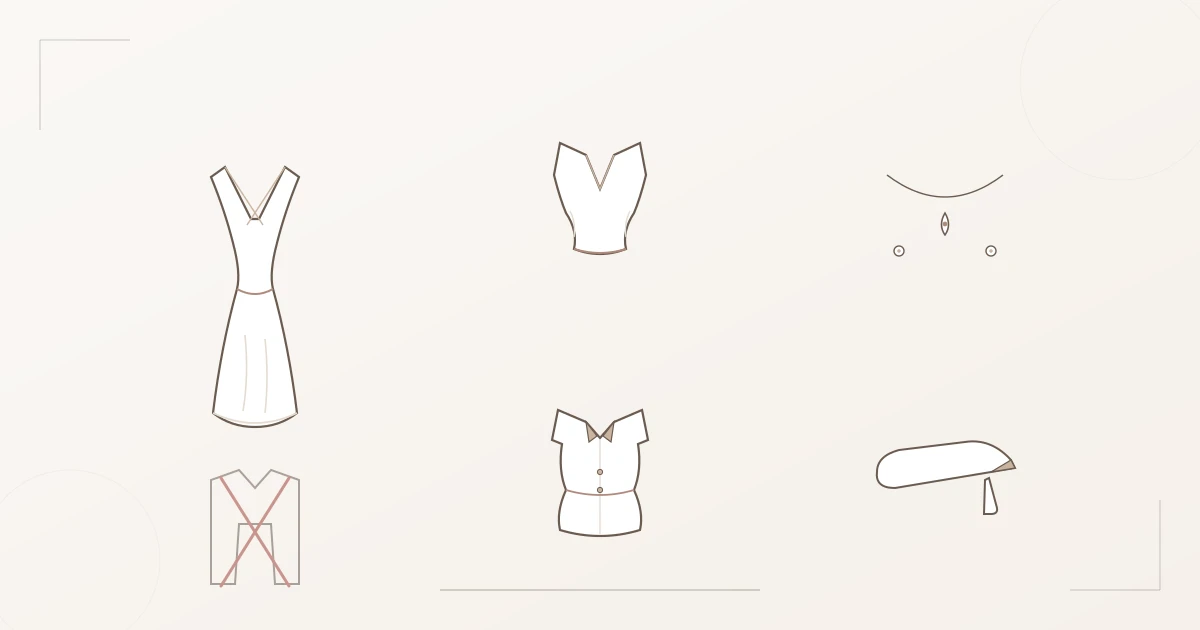
The Knee-Length Wrap Dress — The Main Event
The signature piece of this line: a wrap dress or waist-defined dress that frames the full curve and ends at or just above the knee. The deep V-neckline sets the vertical note of sharpness; the short length respects the petite stature. Floor-length gowns only work for special occasions — in everyday life, that length eats up the short vertical line.
Blouses & Tops
Softly draped blouses with a deep V- or sweetheart neckline, cap or small sleeves, always tied to the waist — tucked in or cut to end at the waist. Cowl necklines work as long as the fabric stays light and the waist stays visible. To avoid: boxy shirts that fall straight down and cover up the curve.
Skirts & Pants
Skirts: pencil or slightly flared shapes, knee-length, with a high waistband — the curve is traced, never hidden. Pants: slim-cut with a high waistband in softly draping fabric; culottes and wide palazzo shapes quickly overwhelm a small stature. The rule of thumb: the closer the fabric follows the body's line, the better.
Jackets
The fitted short jacket with a small, slightly pointed lapel is the TR answer to the blazer question — ideally with a peplum that gives the waist an extra frame. It delivers structure on a petite scale and comes with the sharp accent built in. The classic straight oversized blazer, by contrast, is the opposite of this line: it buries waist and stature at once — deliberately crossed out in the diagram above.
Fabrics, Patterns & Colors
| Category | Ideal | Avoid |
|---|---|---|
| Fabrics | Light and flowing with a fine sheen: silk, crepe de chine, soft velvet, fine jersey, delicate lace | Stiff, heavy fabrics (they fight the curve) and coarse, rustic textures (too earthy for the fine line) |
| Patterns | Small to medium-scale, curved, ornamental — fine florals, paisley, delicate animal prints | Large-scale block prints and wide stripes (they swallow the petite stature) |
| Color logic | Rich, sensual tones and fine contrasts — ideally with depth and a light shimmer | Pale, washed-out solids in heavy doses — they drain the line of its presence |
Which specific colors suit you is, as always, determined not by your Kibbe type but by color analysis — more on that in Color Analysis or Style Consultation.
Jewelry & Accessories
- Jewelry: fine, ornamental, and sparkling — delicate necklaces with a small pendant, filigree earrings with a stone, narrow gleaming bracelets. Unlike with the pure Romantic, sparkle is allowed and encouraged: the shine is the “theatrical” part.
- Scale decides: better two filigree pieces than one massive one — large, heavy statement necklaces belong to the Soft Dramatic, not here.
- Bags: small and structured — mini bags, dainty top-handle bags; large totes look like luggage on a small stature.
- Shoes: pointed pumps are the definitive TR signature piece — the pointed shape is the built-in Yang accent. Also: dainty heeled strappy sandals, pointed slingbacks. Heavy boots and chunky sneakers break the line.
- Belts: narrow and fine, ideally with shine — explicitly welcome as a frame for the waist.
The 5 Biggest Styling Mistakes for Theatrical Romantic
1. Wearing Oversized
By far the most common mistake: the wide boyfriend blazer, the long oversized shirt, the voluminous coat — on a petite, curvy stature, waist and vertical line vanish at once. What looks effortless on other types looks here as if you were wearing someone else's clothes.
2. Stiff, Straight Cuts
Board-like fabrics and straight column silhouettes fight the full curve — the fabric stands away from the body and produces exactly the “boxiness” this line never has. Soft and close to the body beats stiff and straight, every time.
3. Skipping the Sharp Accent
Pure ruffled romanticism — round collars, little bows, ballet flats, everything soft — ignores the Yang undertone and quickly tips into doll territory. This type's presence only emerges through contrast: at least one precise, sharp, or sparkling point per outfit.
4. Prints and Accessories That Are Too Big
Giant florals, wide belts, oversized bags: anything too big in scale makes the small stature look smaller instead of more present. The rule is the same as with jewelry — fine, small, but high-quality and rich in detail.
5. Understated Minimalism
The completely pared-down, matte minimal look (which reads elegant on a Classic or Dramatic) leaves the Theatrical Romantic looking strangely unfinished — this line calls for detail, shine, and a touch of opulence in miniature. Apologize for your own presence, and you lose it.
Theatrical Romantic at Work & in Everyday Life
Direct Answer
Theatrical Romantic becomes office-ready with a fitted short jacket with a small lapel over a knee-length pencil skirt or slim high-waisted pants — plus pointed pumps and a single fine piece of jewelry. The curve stays framed, the shine is reduced to one precise detail; the line reads professional without losing its substance.
The complete office translation for all five families is in Business Looks by Kibbe Type. For building your wardrobe as a system: the Capsule Wardrobe by Kibbe Type shows how many pieces, in what mix, are really enough.
Famous Theatrical Romantic Examples
The most prominent example is also a special case: Selena Gomez was confirmed as a Theatrical Romantic by David Kibbe personally — one of the few official, documented typings in existence. Her image shows the blend in exemplary form: a small, petite stature, soft, full facial features — and beneath them, the fine sharpness in the cheekbones and chin that separates her from the pure Romantic. As the classic example, Vivien Leigh is frequently cited: petite and curvy, with famously “etched” sharp features — the type's femme fatale effect in its purest form.
As always with celebrity examples: apart from the rare official confirmations, community attributions aren't documented consistently, and typing from a distance remains uncertain. For your own, reliable determination, what matters isn't the comparison to a star but your own structure — when in doubt, via professional analysis.
The Theatrical Romantic Self-Check: 5 Questions
Before you commit, answer these five questions honestly:
- The height question: Are you (actually measured) no taller than about 165 cm? If you're above that, look at Soft Dramatic instead — the same blend with Yang dominance and a completely different styling line.
- The sharpness question: In a neutral photo, do you find at least one clearly sharp feature in your soft face — cheekbones, a pointed chin, a fine prominent nose? Without any edge at all, everything points to the pure Romantic.
- The curve question: Do you have a real, full hourglass — bust and hips noticeably fuller than your narrow waist, at every weight? A more compact silhouette with less curve points to Soft Gamine instead.
- The presence question: Do strangers tend to describe you as “sensual, glamorous, feminine with an edge” — and not as “cute and impish” (Soft Gamine) or “tall and commanding” (Soft Dramatic)?
- The fabric question (the practical test): Try on a knee-length wrap dress with pointed pumps, then a straight oversized blazer. If the dress fits like it was made for you and the blazer feels borrowed, your body is confirming the Theatrical Romantic line.
Four to five yes answers are a strong signal. If uncertainty persists between two neighboring types, the methodical route through the Kibbe Test Guide helps — or the trained outside eye of a professional analysis.
The distinction leads on to the whole Gamine family: if you're petite and high-contrast but show less lush curve, look at the Gamine Kibbe type — the same petite stature, but a broken line instead of a soft curve.
The trickiest counter-pole is the Soft Gamine: the same petite stature with soft and sharp features — but more compact, with a smaller curve and a broken instead of unbroken line. If you're torn between TR and SG, the full distinction is there.
But if the sharp Yang accent is completely absent — no angular cheekbones, no small wiry shoulder line, no pointed chin — and you're medium-height rather than petite with a moderate symmetric curve rather than a lush compact hourglass? Then you're probably not a TR but a Soft Classic — the same softness without a Yang accent, in classically symmetric expression.
Frequently Asked Questions (FAQ)
What is the Theatrical Romantic type in the Kibbe system?
A Yin-dominant blended type in the Romantic family: a small, petite stature with a full, soft hourglass — plus a fine sharp undertone in the bones (defined cheekbones, a tapered chin). Clothing follows the soft, waist-defined Romantic base, completed by small precise accents of sharpness like pointed pumps or a small pointed lapel.
How tall is a Theatrical Romantic?
Short — up to about 165 cm. The short vertical line is a hard criterion of the Yin-dominant families. Taller women with the same curve-and-sharpness blend are, as a rule, Soft Dramatic, not Theatrical Romantic.
What is the difference between Theatrical Romantic and Romantic?
The fine Yang accent: the pure Romantic is soft and rounded throughout, without any edge. The Theatrical Romantic has visible sharp points within the delicate structure — defined cheekbones, a pointed chin, a fine shoulder edge. In clothing, the TR therefore wears small sharp details that would look harsh on the pure Romantic.
What is the difference between Theatrical Romantic and Soft Dramatic?
Dominance: in Theatrical Romantic, Yin dominates — a small, delicate base with sharpness as an accent. In Soft Dramatic, Yang dominates — a long, sharp base with curves on top. The fastest filter is height: TR stays short (up to about 165 cm), SD needs length (from about 165–168 cm).
What is the difference between Theatrical Romantic and Soft Gamine?
How the blend works: in Soft Gamine, Yin and Yang stand side by side in contrast — compact, slightly angular bones, a playful effect, a less lush curve. In Theatrical Romantic, Yin is clearly dominant — a full hourglass, a sensual, glamorous effect, the sharpness only a fine note.
What clothing suits the Theatrical Romantic type?
Waist-defined, body-skimming cuts on a petite scale: knee-length wrap dresses with a deep V, draped blouses, high-waisted pencil skirts, slim high-waisted pants, fitted short jackets with a small pointed lapel. Always with a visible waist, never oversized.
What fabrics should a Theatrical Romantic wear?
Light, flowing fabrics with a fine sheen: silk, crepe de chine, soft velvet, fine jersey, delicate lace. Avoid: stiff, heavy fabrics that work against the curve, and coarse, rustic textures that pull the fine line down to earth.
Can a Theatrical Romantic wear oversized pieces?
Not without a cost: wide, boxy pieces swallow the waist and the short vertical line at once — the most common styling mistake for this type. If you want volume, keep it to one piece and frame the waist all the more clearly in the rest of the outfit.
How does a Theatrical Romantic dress for the office?
With the fitted short jacket with a small lapel over a pencil skirt or slim high-waisted pants, pointed pumps, and a single fine piece of jewelry. The curve stays framed, the shine is reduced to one precise detail — professional without giving up the line.
What jewelry suits the Theatrical Romantic?
Fine, ornamental, and sparkling: delicate necklaces with a small pendant, filigree earrings with a stone, narrow gleaming bracelets. Sparkle is explicitly welcome — but always on a small scale, never as a massive statement piece.
Does my Theatrical Romantic type change if I lose or gain weight?
No. The type is based on the petite bone base, the fine sharp undertone, and the underlying curve structure — not on absolute weight. All of that stays intact at every weight; only the fullness changes, not the structure.
Which celebrities are Theatrical Romantic types?
Selena Gomez is the rare case of a typing confirmed by David Kibbe personally. Vivien Leigh is frequently cited as the classic example — petite, curvy, with sharply etched facial features. Beyond that, as always: celebrity attributions typed from a distance remain uncertain.
Are You Theatrical Romantic — or Romantic or Soft Dramatic After All?
The free Kibbe test gives you a structure-based assessment in just a few minutes — and the professional analysis delivers the reasoned answer, complete with your personal style dossier.