
TL;DR — the key points at a glance
- The Natural (Natural type) is the balanced middle of the Natural family: Yang-dominant, but with a soft, blunt edge rather than a sharp one — broad, blunt, relaxed.
- Styling principle: relaxed structure. Loose, unconstructed cuts, natural fabrics with texture, effortless layering — never stiffly tailored, never delicately playful.
- The distinction in one sentence: broader and blunter than any Classic, more relaxed than the Flamboyant Natural, straighter than the Soft Natural.
- Key pieces: a relaxed blazer with a soft shoulder, wide-leg trousers, soft knits, a shirtdress, ankle boots, bold natural jewelry.
- Biggest trap: styling yourself too stiffly or too delicately. Constructed suits and fine ruffles both come across as costume.
Table of contents
- The short answer
- What defines the Natural type?
- The traits in detail
- Natural vs. Flamboyant Natural vs. Soft Natural
- The styling logic: relaxed structure
- The Natural wardrobe
- Fabrics, patterns & colors
- Jewelry & accessories
- The 5 biggest styling mistakes
- Natural at work & every day
- Famous Natural examples
- The Natural self-check: 5 questions
- Frequently asked questions (FAQ)
The short answer
Short answer
The Natural (Natural type) is the Kibbe type with a broad, blunt bone structure and a relaxed, straight-lined body — Yang-dominant, but with a soft rather than sharp edge. It is the balanced middle of the Natural family, sitting between Flamboyant Natural and Soft Natural. The styling logic is relaxed structure: loose, unconstructed cuts, natural fabrics with texture, effortless layering. If you feel constricted in stiffly tailored suits and costumed in delicate ruffles, but instantly look right in a casual blazer, you are most likely a Natural.
The Natural is the Kibbe type many people live intuitively without ever knowing it: relaxed, easygoing, effortless. That is exactly why it so often goes overlooked — because "I just throw on something comfortable" doesn't sound like a strategy. But it is one. This guide builds on the overview of the Kibbe Body Type System and explains the balanced middle of the Natural family in detail.

What defines the Natural type?
In the Kibbe Body Type System, the Natural is the balanced middle of the Natural family. The Natural family is Yang-dominant — but with one decisive twist: its Yang is blunt and broad, not sharp and narrow like the Dramatic. That produces the characteristic signature: broad, blunt bones, a relaxed straight line and an effortless, almost casual presence.
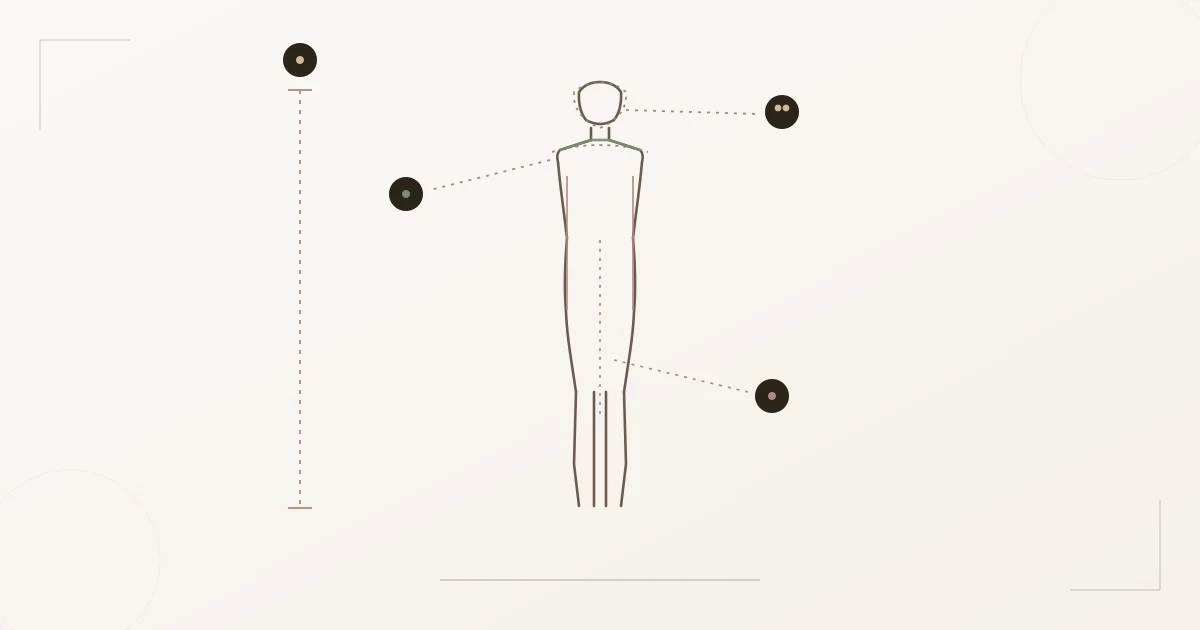
In concrete terms: broad shoulders with a blunt rather than sharp edge, a straight-lined body with only a hinted-at waist (the typical slight H shape), a moderate to tall stature and a natural, unforced way of moving. The Natural comes across as grounded and cohesive — never delicate, never stiff, never theatrical. It radiates a relaxed self-assurance.
David Kibbe stresses that it is not about individual "body parts" but about the overall line and the essence. The Natural essence is one of casual, self-assured understatement: clothing that moves with you instead of constricting you. (If you'd like to refresh the fundamentals of the system, you'll find them in this English-language introduction from The Concept Wardrobe.)
The traits in detail
The Natural is defined by the combination of a broad, blunt bone structure and a relaxed, straight-lined silhouette. These markers almost always appear together:
- Stature: moderate to tall — typically 166–178 cm. The Natural tends to look elongated, without the extreme verticality of a Dramatic.
- Yin/Yang balance: Yang-dominant, but a "soft" Yang — the edges are broad and blunt, not sharp and narrow.
- Bone structure: broad and blunt — distinct but rounded shoulders, sturdier wrists, edges that are visible yet not sharp.
- Flesh: firm and distributed along a straight line — a slight H silhouette with only a hinted-at waist, neither lushly curvy nor sharply contoured.
- Face: broader, with blunt rather than sharp features — moderate cheekbones, a slightly angular but rounded jawline, a relaxed expression.
The decisive test is the interplay: breadth plus a blunt edge plus relaxed straightness. If the breadth is missing, you land in the Classic family. If the edge turns sharp instead of blunt, you move toward Dramatic. If everything softens and grows curvier, you edge toward Soft Natural or Romantic.
Natural vs. Flamboyant Natural vs. Soft Natural — the distinction
The most common mix-up happens within your own family. The Natural is the middle; the Flamboyant Natural is the more extreme version, the Soft Natural the softer one. This table sets the three side by side:
| Trait | Natural | Flamboyant Natural | Soft Natural |
|---|---|---|---|
| Yin/Yang | Yang with a soft edge, balanced | Strongly Yang, least Yin | Yang base with clear Yin |
| Height/impression | Moderate–tall, elongated | Reads tallest & broadest | Somewhat more compact, softer |
| Bones | Broad, blunt, symmetrical | Very broad, long, blunt | Broad, but more softly rounded |
| Curve | Hinted at, slight H shape | Minimal, very straight | Visibly softer, subtle curve |
| Styling signature | Relaxed structure | Wide, long, bold lines | Soft, flowing texture |
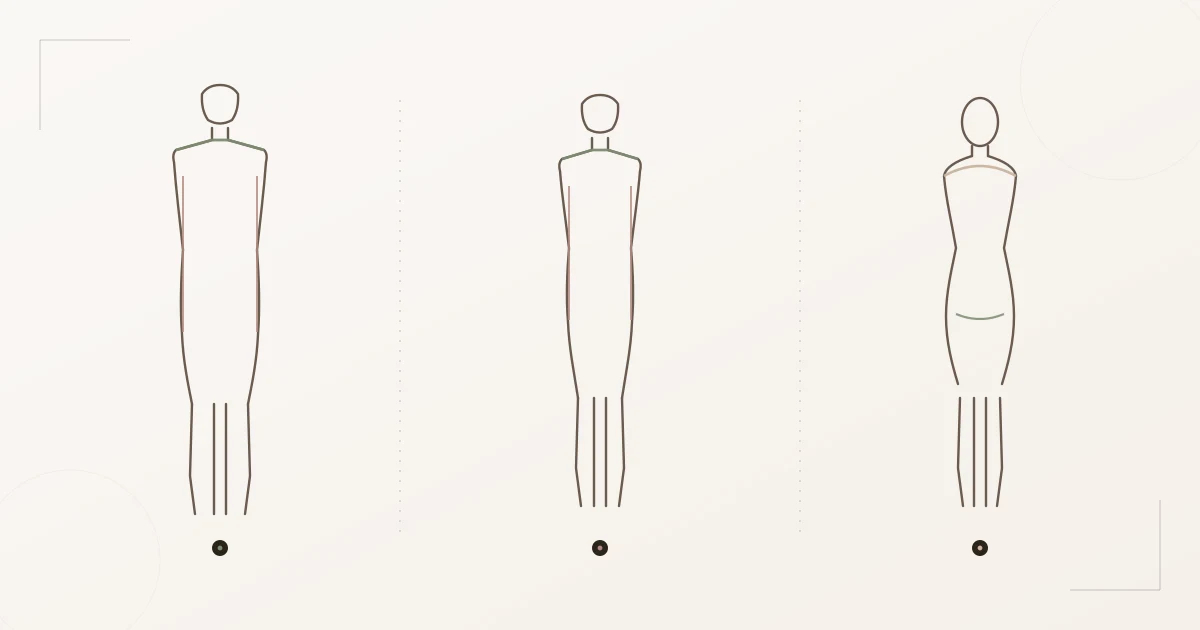
The fastest practical filter runs on height, breadth and softness. Very tall, very broad, very straight — Flamboyant Natural. Broad and straight, but with noticeably softer flesh and a subtle curve — Soft Natural. Right in between, balanced broad-and-blunt with a hinted-at H shape — Natural. If you're still unsure here, you'll find the most common pitfalls in the post Kibbe type identified incorrectly.
The styling logic: relaxed structure with natural texture
The Natural's styling logic is relaxed structure. Every piece has to satisfy two conditions: it must not constrict the broad, straight line — and it needs a natural, unforced quality instead of stiff construction. That is the whole code. Anything that breaks this code looks wrong.
"The Natural needs room the way the Romantic needs curve. Force a Natural into a stiff, constructed suit and they look instantly constricted — as if a relaxed line had been pressed into a corset that's far too tight."
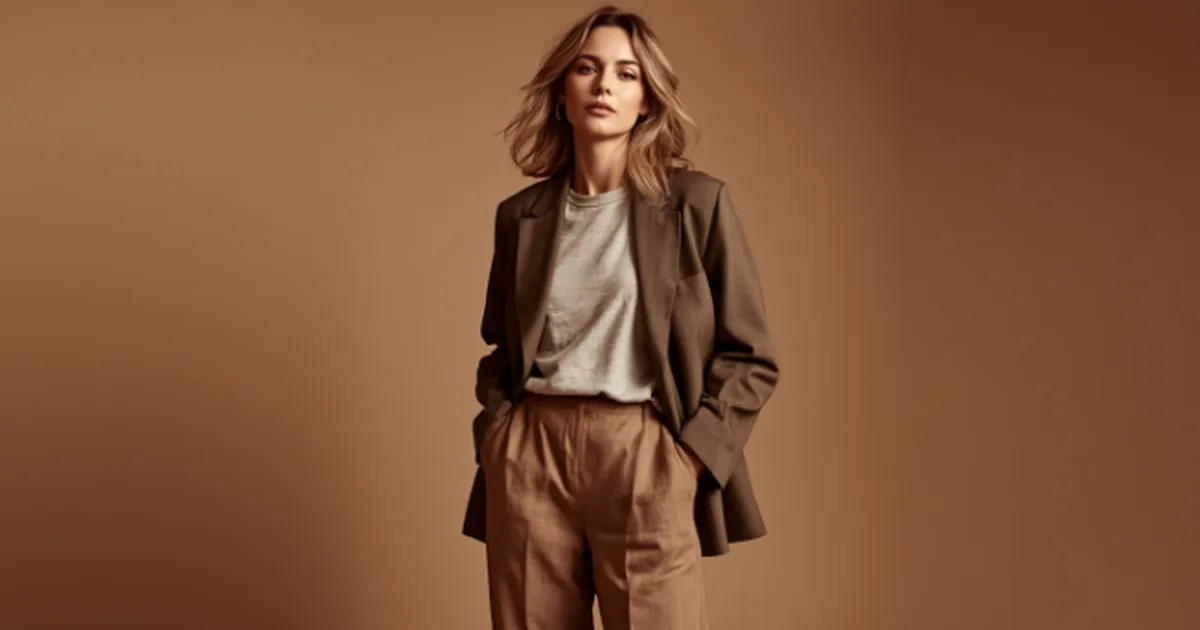
In practice, that means: loose, unconstructed cuts instead of sharp waist definition. Soft shoulders instead of constructed padding. Natural fabrics with texture instead of smooth, stiff materials. A Natural looks instantly right in a relaxed oversized blazer over a soft shirt and wide-leg trousers — and boxed in wearing a stiff, tightly tailored suit. That relaxedness isn't sloppiness; it is the visible form of the broad-and-blunt Yang signature.
Unlike the Flamboyant Natural, though, the Natural needs this roominess in a moderate, balanced dose. Extremely wide, very long and bold statement silhouettes quickly become too much on a pure Natural — the balanced middle wants relaxed order, not drama.
The Natural wardrobe: cuts & pieces
The Natural wardrobe is a collection of relaxed, unconstructed core pieces with natural texture. Effortless, but considered. These pieces form the foundation:
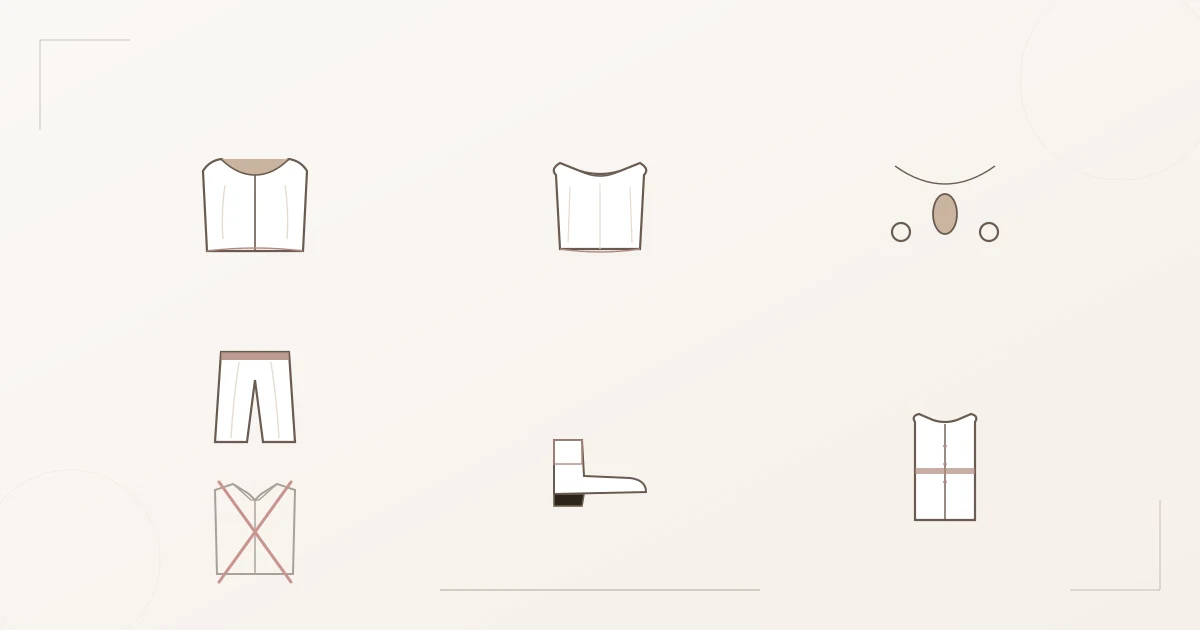
- The unconstructed blazer: soft shoulder, loose drape, no stiff padding — oversized is welcome. The Natural's signature piece.
- The wide-leg or straight trouser: relaxed drape, easy width — exactly where it reads too casual on a Classic, it sits perfectly on a Natural.
- The soft knit: a chunky-knit sweater, relaxed cardigans, anything with texture and drape.
- The shirtdress: a straight, unconstructed cut, ideally with a belt loosely suggesting the waist.
- The leather jacket or long trench: relaxed cut, with a natural patina rather than a high-gloss finish.
- Block-heel ankle boots: grounded and sturdy rather than delicate.
A deliberately curated selection of pieces like these is the heart of any capsule wardrobe by Kibbe type — for the Natural, easy mix-and-match pays off more than any single statement piece.
Fabrics, patterns & colors
Fabrics follow the same logic: natural, textured and with drape. The Natural wears materials that move in a relaxed way instead of stiffly holding a shape.
- Ideal fabrics: linen, washed cotton, suede, soft wool, chunky knit, denim, jersey — anything with visible, natural texture.
- Ideal patterns: organic, understated patterns — subtle plaid, ethnic and nature prints, animal print in moderation, tone-on-tone texture. Never too precisely geometric, never too delicately playful.
- Ideal colors: earthy, warm, natural tones — camel, olive, rust, terracotta, sand, warm brown, muted green. Within your personal color palette, earthy, slightly muted shades work better than crystal-clear neon tones.
- Avoid: stiff high-gloss materials, very precise geometric prints and delicate, fine fabrics — they contradict the relaxed, textured nature of the type.
If you'd like to settle the color question separately, you'll find your starting point in the post Which color type am I? — color and line analysis complement each other, but work independently.
Jewelry & accessories
Jewelry on a Natural is bold, organic and natural. Larger, earthy pieces with material character — wood, horn, leather, matte metal, unpolished stones. One striking natural piece beats many fine, delicate ones.
- Earrings: larger organic shapes — bold hoops, wood or horn pendants. No tiny, delicate studs.
- Necklaces: long, bold statement necklaces in natural materials rather than delicate little chains.
- Bags: relaxed, soft shapes — the hobo bag, large totes, fringed suede.
- Belts: a wide, soft leather belt with a natural look, ideally worn loose.
The 5 biggest styling mistakes
These five mistakes come up most often with Naturals — usually because the type gets confused with a Classic or with the neighboring Natural variations:
- Styling too stiffly and constructed. Sharply tailored suits and stiff padding constrict the relaxed broad line and make the Natural look costumed.
- Too delicate and fine. Tiny jewelry, delicate ruffles and fine details disappear against the broad, blunt structure and look out of place.
- Ironing out the texture. Smooth high-gloss materials take away exactly what makes the Natural — the natural, grounded surface.
- Tipping into the Flamboyant extreme. Very wide, very long, bold statement looks overload the balanced middle. Moderate width is enough.
- Becoming too shapeless. Relaxed doesn't mean structureless. With no line at all — a pure sack silhouette — the Natural looks careless rather than effortless. A soft belt or a clear shoulder line provides support.
Natural at work & every day
The Natural is among the types that come across especially strongly in modern, less formal working life. Relaxed structure is practically the dress code of creative and modern work environments. A Natural looks most professional in a softly cut blazer, straight or wide-leg trousers, fine knit or a soft blouse, and one bold, simple piece of jewelry — all in an earthy, harmonious color family.
In classic, strict business settings the rule is: structure may be present, but never stiff. An unconstructed suit in soft wool beats the sharply tailored skirt suit every time. There's more on translating this into professional life in the post Business look by Kibbe type.
Famous Natural examples
In Kibbe communities, names like Jennifer Aniston, Cameron Diaz or Cindy Crawford are often discussed for the Natural — broad, relaxed silhouettes with an effortless, grounded presence. Important: celebrity assignments are always interpretation, not established fact. David Kibbe himself explicitly advises against determining your own type through celebrity comparisons — the photos are styled, retouched and rarely taken in a neutral pose.
Use famous examples as a rough pointer toward the essence — never as proof. Your type lives in your own line, not in an actress's face.
The Natural self-check: 5 questions
This self-check is no substitute for a full analysis, but it quickly filters whether Natural is plausible for you. Answer honestly in neutral clothing in front of the mirror:
- Breadth: Do your shoulders look broad and prominent — but with a blunt, rounded rather than sharp edge?
- Line: Is your body more straight-lined with only a hinted-at waist (a slight H shape) — rather than lushly curvy or strictly symmetrical?
- Height: Are you moderate to tall (about 166–178 cm) and do you look rather elongated?
- Reaction to the relaxed: Do you feel instantly "right" in a loose, unconstructed blazer — and constricted in stiff, sharply tailored suits?
- Reaction to the delicate: Do tiny jewelry, delicate ruffles and fine details look lost or out of place on you?
Five yeses point strongly to Natural. If you're unsure between the neighboring types, the manual 4-step method in the DIY Kibbe test helps.
Unsure whether you're Natural, Flamboyant Natural or Soft Natural? A professional analysis clarifies your line in a single session — no guesswork.
Book a Kibbe analysis →Frequently asked questions (FAQ)
What is the difference between the Natural and the other Natural types?
The Natural is the balanced middle of the Natural family. The Flamboyant Natural is the more extreme version — taller, broader and more straight-lined, with the strongest Yang. The Soft Natural is the softer version — with clear Yin, softer flesh and a subtle curve. All three share the broad, blunt base structure; they differ in degree and softness.
How do I tell whether I'm a Natural or a Classic?
Breadth decides it. The Natural has broad, blunt bones and a relaxed, straight-lined silhouette. The Classic is symmetrical and moderate, without the emphasized breadth and without the blunt edge. A practical test: wear a sharply tailored suit. If it looks harmonious and elegant — more likely Classic. If it looks constricting and stiff — more likely Natural, which needs room and relaxed structure.
How tall is a Natural typically?
The Natural family tends toward a moderate to taller stature, typically 166–178 cm. A Natural often looks elongated, but doesn't necessarily reach an extreme height. More decisive than the number alone is the combination of breadth, a blunt edge and relaxed straightness — a shorter person with a broad, blunt bone structure can just as easily be a Natural.
Which cuts should a Natural avoid?
Anything stiff and delicate: sharply tailored suits, stiff constructed padding, fine ruffles, delicate details and very smooth high-gloss materials. These shapes constrict the broad, relaxed line or look lost on it. Just as much to avoid are Flamboyant extremes — very wide, bold statement silhouettes overload the balanced middle.
Which colors suit the Natural?
Earthy, warm, natural tones are the Natural signature — camel, olive, rust, terracotta, sand, warm brown and muted green. Within a personal color palette, earthy, slightly muted shades work better than crystal-clear, glaring colors. Very cool, glossy or neon-like tones contradict the grounded, textured nature of the type.
Which hairstyle suits the Natural?
Relaxed, natural hairstyles with texture and movement are the Natural signature — the casual long bob, soft waves, an easygoing lob, beach waves. Very strictly styled, sleek or precisely shaped hairstyles look too constructed. The hairstyle should fall naturally and move with you, not be forced into a fixed shape.
Is Natural a common Kibbe type?
The Natural family is generally considered one of the more common in the Kibbe system, because broad, relaxed bone structures are widespread. Whether the pure Natural is more common than its sub-types Soft and Flamboyant Natural can't be said without a representative study. The figures cited in communities are practical observations, not established numbers.
Can a Natural look elegant and feminine?
Yes — elegance on a Natural just looks different than on a Romantic or Classic. It comes from effortless self-assurance: a softly draping long dress, a relaxed suit in fine fabric, high-quality natural materials and one bold piece of jewelry. The mistake would be to confuse "feminine" with "delicate" — Natural elegance is grounded, not dainty.
What should I do if I'm torn between Natural and Soft Natural?
Softness decides it. If your body looks straight-lined with only a hinted-at waist and firm, blunt flesh — Natural. If you show visibly softer flesh with a subtle curve at the bust and hips — Soft Natural. A practical test: wear a softly flowing wrap dress. If it looks harmonious and feminine — Soft Natural. If it looks too soft and shapeless — Natural, which needs more relaxed structure.
What is the biggest styling mistake for the Natural?
Styling yourself too stiffly in order to look "more serious" — and in doing so destroying exactly the relaxed line that makes the Natural strong. The second most common mistake is the opposite: giving up on structure entirely for the sake of comfort and disappearing into shapeless sack silhouettes. The solution lies in the middle: relaxed structure — loose, but with a clear line.
Sources & further reading: The Concept Wardrobe — Kibbe Body Types · Gabrielle Arruda — Kibbe Body Types Introduction.