
Table of Contents
- The Quick Answer
- What Defines the Flamboyant Natural Type?
- The Characteristics in Detail
- Are You Really Flamboyant Natural? Telling the Types Apart
- The Styling Logic: Relaxed Elongation
- The Flamboyant Natural Wardrobe: Cuts & Pieces
- Fabrics, Patterns & Colors
- Jewelry & Accessories
- The 5 Biggest Styling Mistakes
- Flamboyant Natural at Work & in Everyday Life
- Famous Flamboyant Natural Examples
- The Flamboyant Natural Self-Check: 5 Questions
- Frequently Asked Questions (FAQ)
The Quick Answer
Quick Answer
Flamboyant Natural is a doubly Yang-influenced blended type in the Natural family: a long vertical line plus a broad, blunt bone structure — with straight, taut flesh and practically no waist curve. The result is a tall, powerfully relaxed presence that, of all 13 types, can carry the most width. Its styling logic is called relaxed elongation: long, unbroken lines in unconstructed, flowing, easygoing shapes — oversized isn't a danger here, it's the superpower. The most common mistakes: stiff precision tailoring that forces the relaxed power into a corset, and forced waist emphasis where there is no curve. This guide covers every characteristic, how to tell Flamboyant Natural apart from Dramatic, Soft Natural, and Soft Dramatic — and the complete wardrobe logic.
No other type in this series has been mentioned so often and left unexplained for so long: the Dramatic guide explicitly sends tall readers with broad shoulders here, the Soft Natural guide points to the “tall, straight sister” of its own family — and until now, both references led nowhere. Time for the complete guide to the type the fashion world is currently celebrating without calling it by name: the entire oversized aesthetic of recent years is, at its core, Flamboyant Natural styling.
What Defines the Flamboyant Natural Type?
In the Kibbe Body Type System, Flamboyant Natural belongs to the Natural family — and carries the family's Yang twice over: it combines the length of the Yang-dominant types with the width of Natural bones. The foundation is a long, broad, blunt bone structure: expansive, squarish-straight shoulders without a sharp point, long arms and legs, larger hands and feet.
The second hallmark is the flesh over it: straight and taut, with no waist curve to speak of — the line falls largely straight down from the shoulder frame. Exactly this combination explains this type's classic mix-up history: whoever sees only the height and the straight line guesses Dramatic. Whoever knows only the Natural family guesses Soft Natural. Only length, width, and straight flesh together add up to Flamboyant Natural:
- Bone structure: long and broad — expansive, blunt shoulders, long limbs, a strong bone frame without sharpness
- Body flesh: straight, taut, “dry” — barely any waist curve; even with weight gain, the line stays straight rather than curvy
- Face: open, blunt features — broad cheekbones, a strong but not sharply drawn jaw, overall friendly and direct rather than dramatic
And as with all Yang-dominant types, the long vertical line is a hard criterion: a Flamboyant Natural always reads tall, typically from about 165–168 cm. A small, compact woman with broad shoulders is not a Flamboyant Natural but usually Soft Natural or Flamboyant Gamine — the mistyping guide explains just how uncompromising this height rule is.
The Characteristics in Detail
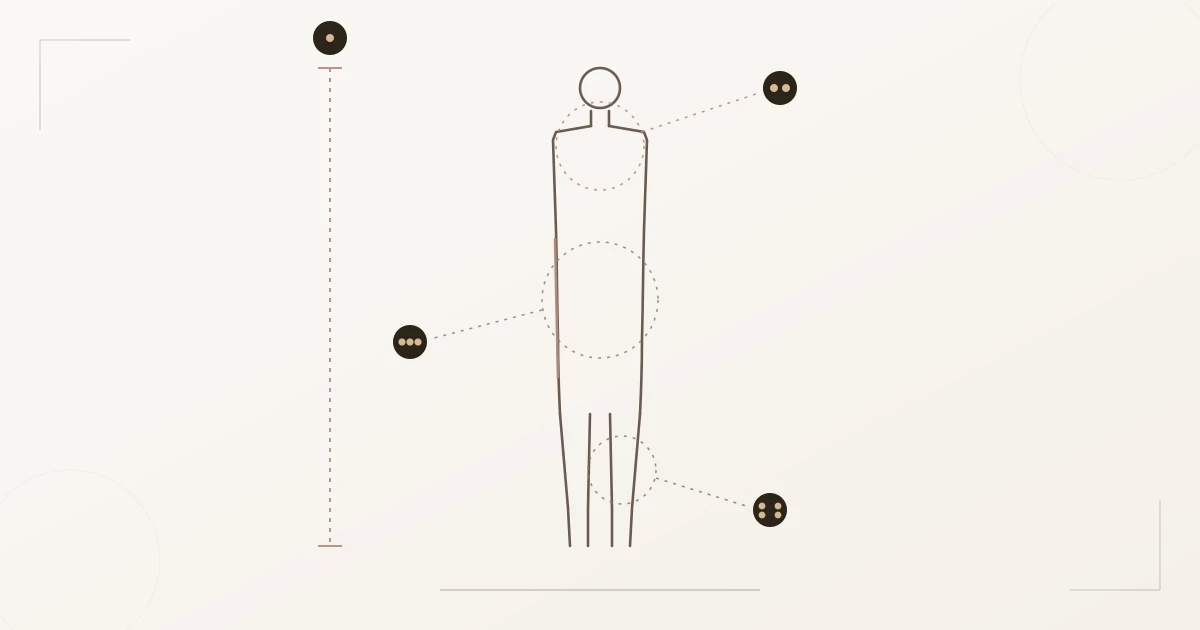
| Characteristic | The Flamboyant Natural | For Comparison |
|---|---|---|
| Vertical line / height | Long — from about 165–168 cm, always reads tall | Soft Natural: moderate, usually under 168 cm |
| Shoulders & bones | Broad and blunt — expansive, straight, without a point | Dramatic: narrow and sharply cut |
| Body flesh | Straight and taut — barely any waist curve | Soft Dramatic: a real, pronounced hourglass |
| Face | Open and blunt — broad cheekbones, a strong jaw | Dramatic: sharply drawn, striking features |
| Overall impression | Relaxed and powerful, effortless — natural presence without severity | Soft Dramatic: opulent and glamorous rather than relaxed |
As always: these characteristics describe structure, not weight. A Flamboyant Natural stays a Flamboyant Natural at every weight — the broad, long bone base and the fundamentally straight line don't change, only their fullness.
Are You Really Flamboyant Natural? Telling It Apart from the Neighboring Types
Flamboyant Natural is confused above all with three types — and each mix-up leads to a completely different wardrobe. The key distinctions:
Flamboyant Natural vs. Dramatic
Both are tall, straight, and Yang-dominant — the difference lies in the quality of the bones: the Dramatic is narrow and sharp (pointed shoulders, finely drawn facial features, vertical and precise overall), the Flamboyant Natural is broad and blunt (expansive straight shoulders, open features, horizontal and generous overall). The practical check: stand in front of the mirror and look only at your shoulder line. If it runs narrow and tapers to a point — Dramatic. If it's broad, straight, like a stable frame — Flamboyant Natural. In clothing, the same question separates the two: precision or ease. The Dramatic shines in strict tailored sharpness that looks stiff and constricted on the Flamboyant Natural.
Flamboyant Natural vs. Soft Natural
Same family, two directions: both share the broad, blunt Natural bones. But the Soft Natural is more moderate in length and carries soft Yin flesh with a visible curve over the bone frame — the Flamboyant Natural is distinctly longer and stays straight. Two filters: first, height (SN usually under, FN from about 165–168 cm); second, the waist (SN has a soft, real waist curve, FN practically none). The consequence: the Soft Natural needs waist definition in clothing, the Flamboyant Natural is free to ignore it completely.
Flamboyant Natural vs. Soft Dramatic
Both tall, both commanding — but opposites in the flesh: the Soft Dramatic carries a real, lush hourglass over its sharp bone base; the Flamboyant Natural stays straight over its broad bone base. The bones themselves differ too: sharp and narrow in the SD, blunt and broad in the FN. If you're wavering between the two, check two things: is there a distinct, permanent waist curve (SD) or not (FN)? And do the shoulders read pointed (SD) or like a broad, straight frame (FN)?
If uncertainty persists, follow the proven sequence: hard filters first (measure your height), standardized photos instead of the mirror, judge structure before fullness. The free Kibbe test gives you a first indication — the complete type profile lives on the Flamboyant Natural type page.
The Styling Logic: Relaxed Elongation
The Flamboyant Natural wardrobe follows a principle the community aptly calls “relaxed elongation” — length worn at ease. Three rules together make up the line:
- The long, unbroken line remains the law. As with all Yang-dominant types: continuous lengths, no horizontal breaks, maxi and long formats, vertical columns all of a piece. Short, skimpy pieces cut the vertical line apart.
- Relaxed instead of precise. The decisive difference from the Dramatic: the length falls loosely — unconstructed cuts, flowing drape, visible texture, nothing fits “like a glove.” Perfectly taut precision looks stiff on this type; a touch of nonchalance is part of the elegance.
- Generous scale. The broad, long stature carries what swallows other types: oversized volume, large accessories, expansive silhouettes. What looks like borrowed clothes on a Theatrical Romantic looks like a fashion editorial on a Flamboyant Natural — this type is the reason oversized looks effortless on some people and lost on others.
The difference from the Dramatic in one sentence: both wear the long line — but the Dramatic wears it as precision, the Flamboyant Natural as ease.
The Flamboyant Natural Wardrobe: Cuts & Pieces
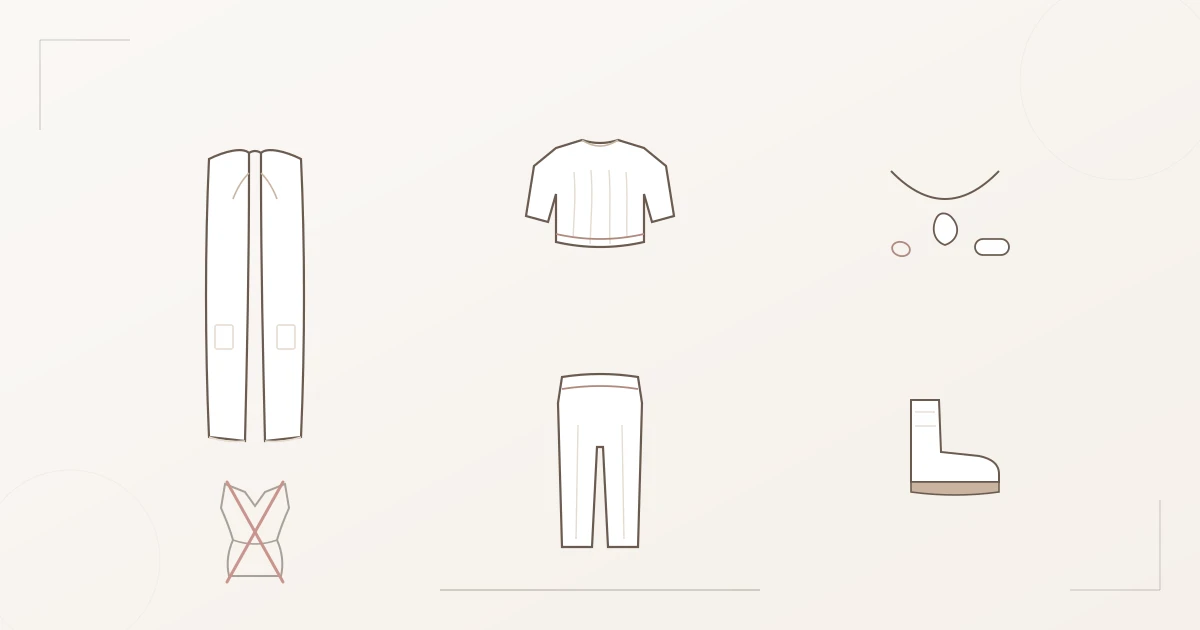
The Long Unconstructed Coat — The Main Event
The signature piece of this line: a long, straight-falling coat or duster without strict shoulder construction — worn open, with patch pockets, in calf to ankle length. It elongates the vertical line just as it does on the Dramatic, but in relaxed form: the fabric falls instead of standing. Over knitwear and wide pants, it creates the effortless column that makes this type unmistakable.
Knitwear & Tops
Oversized knits in a coarse, visible texture are no compromise here — they're the centerpiece: dropped shoulders, a roomy body, length past the hip. Add to that: flowing blouses left untucked, long cardigans, tunics. The drape is what matters — a piece can have volume as long as it flows downward instead of adding width horizontally.
Pants & Skirts
Pants: wide and long — palazzo, wide-leg, straight menswear cuts, ideally with a crease as a vertical line, always full-length. Skirts: long and straight or with a flowing A-line, maxi lengths with texture. To avoid: skimpy pencil shapes and anything that cinches at the waist.
Dresses
Straight-falling maxi and shirt dresses, layered looks of flowing pieces, knit dresses in column form. The silhouette follows the body's straight line — waist seams, obligatory belts, and wrap styling work against the structure (the wrap logic belongs to the curvy family, not here).
Layering — The Core Technique
No type layers better: long layers stacked — a long cardigan over a tunic over wide pants, an open coat over a knit dress — build depth and texture without breaking the vertical line, because each layer falls longer than the one beneath it. The rule for good FN layering: all layers run out downward, none ends at waist height, and at least one stays open. It's exactly this layered depth that shifts the type, in everyday life, from “just tall” to “effortlessly dressed” — and it works most powerfully in tone-on-tone gradations.
Fabrics, Patterns & Colors
| Category | Ideal | Avoid |
|---|---|---|
| Fabrics | Natural, textured, with weight and drape: linen, coarse knits, wool, suede, denim, washed cotton | Stiff fine fabrics that hold a precise shape, and gossamer, shiny fabrics (too delicate for the strong frame) |
| Patterns | Generous and earthy: wide stripes, large abstract or botanical prints, global-inspired and nature motifs | Small-scale, delicate patterns — mini florals and fine polka dots “pixelate” on the tall stature |
| Color logic | Earthy, rich tones in tone-on-tone layers — the monochrome column adds extra length | Hard, busy fragmentation: many contrasting color blocks cut the length apart |
Which specific colors suit you is, as always, determined not by your Kibbe type but by color analysis — more on that in Color Analysis or Style Consultation.
Jewelry & Accessories
- Jewelry: large, organic, matte — long necklaces with irregular pendants, wide bangles in wood, horn, or hammered metal, large matte earrings. The shapes are allowed to be imperfect: organic beats geometric, matte beats sparkling.
- Scale: generous — filigree chains and dainty little studs vanish on the broad frame. One large, earthy piece goes further than five fine ones.
- Bags: large and relaxed — hobo bags, soft totes, saddle bags in natural leather or suede. Small stiff box bags look like toys.
- Shoes: flat and substantial — sturdy boots, chunky loafers, platform sandals, clean sneakers. Heels work when they're blocky and stable; delicate stilettos break the grounded effect.
- Belts: if at all, then wide, loose, and slung low — never narrow and cinched at the waist.
The 5 Biggest Styling Mistakes for Flamboyant Natural
1. Forcing the Waist
Narrow belts, wrap dresses, waist-defined cuts: on a straight line, forced waist emphasis doesn't create an hourglass — it creates wrinkles, tension, and a visibly “cinched-in” middle. The straight column is this type's strength — interrupt it and you lose length and ease at the same time.
2. Stiff Precision Tailoring
The classically strict, heavily constructed blazer with shoulder pads and a close fit presses the broad, relaxed structure into a corset — the effect tips from powerful to constricted. Structure yes, but unconstructed: a soft shoulder, an open drape, length.
3. Details That Are Too Small and Delicate
Little ruffles, mini prints, filigree jewelry, dainty little bags: on a tall, broad frame, small-scale details look lost and make the whole picture feel off — as if the pieces belonged to someone else. The scale has to match the stature: generous.
4. Too Short and Too Skimpy
Cropped little jackets, skimpy skirts, and tight short dresses cut the long vertical line apart and make the strong frame look compressed. The rule of thumb: better one size longer and wider than shorter and tighter — this type gains with every inch of length.
5. Over-Polishing
Perfectly pinned hair, a precisely taut silhouette, everything smooth and exact: that robs this type of its greatest quality — effortlessness. Flamboyant Natural elegance lives on controlled nonchalance: an open coat, a casually pushed-up sleeve, texture instead of smoothness. Perfection here isn't the goal — it's the obstacle.
Flamboyant Natural at Work & in Everyday Life
Direct Answer
Flamboyant Natural becomes office-ready through quality instead of construction: a long, softly draping blazer without a rigid shoulder, wide full-length pants with a crease, high-quality fine knitwear instead of a stiff blouse — in rich, calm tones. The result is powerful ease: commanding and self-assured without a single stiff piece.
The complete office translation for all five families is in Business Looks by Kibbe Type. For building your wardrobe as a system: the Capsule Wardrobe by Kibbe Type shows how many pieces, in what mix, are really enough.
Famous Flamboyant Natural Examples
The Flamboyant Natural examples cited most often in the Kibbe community are Gisele Bündchen and Princess Diana — both tall, with a broad, straight shoulder line, long limbs, and a presence that shows exactly this type's blend: powerful and commanding, but relaxed rather than severe. Gisele Bündchen's off-duty uniform — wide jeans, flowing blouses, open long coats, flat shoes — reads like a Flamboyant Natural textbook; Diana's famous later looks (oversized blazers, straight column dresses, a strong shoulder line) show the same logic in an elegant register.
As always, the important caveat: both attributions are community consensus, not documented official typings by David Kibbe — typing from a distance remains inherently uncertain. For your own, reliable determination, what matters isn't the comparison to a star but your own structure — when in doubt, via professional analysis.

The Flamboyant Natural Self-Check: 5 Questions
Before you commit, answer these five questions honestly:
- The height question: Are you (actually measured) at least about 165–168 cm — or do you regularly look taller in photos than you are? If not, look at Soft Natural or Flamboyant Gamine instead.
- The shoulder question: Is your shoulder line broad, straight, and blunt — a stable frame that clothes hang from? Pointed, narrow shoulders point to Dramatic; soft, sloping ones to the curvy families.
- The line question: Does your silhouette stay essentially straight at every weight — without a distinct, permanent waist curve? A real hourglass points to Soft Dramatic; a soft curve on a more compact frame to Soft Natural.
- The presence question: Do strangers describe you as “relaxed and powerful, natural, commanding” — and not as “strictly elegant” (Dramatic) or “opulent and glamorous” (Soft Dramatic)?
- The fabric question (the practical test): Try on a long open oversized coat, then a waist-defined, strictly constructed skirt suit. If the coat looks like it was made for you and the suit feels like a uniform, your body is confirming the Flamboyant Natural line.
Four to five yes answers are a strong signal. If uncertainty persists between two neighboring types, the methodical route through the Kibbe Test Guide helps — or the trained outside eye of a professional analysis.
If your Yang tips as sharp geometric precision rather than broad relaxed contour — and you're distinctly petite (up to about 165 cm/5'5") with a compact rather than wide-open silhouette? Then you're not a Flamboyant Natural but the Flamboyant Gamine — the same Yang dominance, but in an angular-precise rather than organic-broad expression.
Frequently Asked Questions (FAQ)
What is the Flamboyant Natural type in the Kibbe system?
A doubly Yang-influenced blended type in the Natural family: a long vertical line plus a broad, blunt bone structure, with straight, taut flesh and no pronounced waist curve. Clothing follows the principle of relaxed elongation — long, unbroken lines in unconstructed, easygoing shapes.
How tall is a Flamboyant Natural?
Tall — from about 165–168 cm, with a long vertical line that often reads taller than the tape measure shows. Shorter, compact women with broad shoulders are, as a rule, Soft Natural or Flamboyant Gamine, not Flamboyant Natural.
What is the difference between Flamboyant Natural and Dramatic?
The quality of the bones: the Dramatic is narrow and sharp — pointed shoulders, precisely drawn features. The Flamboyant Natural is broad and blunt — expansive straight shoulders, open features. In clothing, the Dramatic wears precision, the Flamboyant Natural wears ease — both on a long line.
What is the difference between Flamboyant Natural and Soft Natural?
Length and flesh: both share the broad, blunt Natural bones. The Soft Natural is more moderate in length and carries soft flesh with a visible waist curve; the Flamboyant Natural is distinctly longer and stays straight. That's why the Soft Natural needs waist definition and the Flamboyant Natural doesn't.
What is the difference between Flamboyant Natural and Soft Dramatic?
The flesh and the bone quality: the Soft Dramatic has a real, lush hourglass over sharp, narrow bones. The Flamboyant Natural stays straight over broad, blunt bones. Both are tall — but the curve question and the shoulder shape separate them clearly.
What clothing suits the Flamboyant Natural type?
Long, straight, unconstructed silhouettes: long open coats and dusters, textured oversized knits, wide full-length pants, straight maxi dresses, flowing layers. Everything on a generous scale — nothing skimpy, nothing stiff, no forced waist.
Can a Flamboyant Natural wear oversized pieces?
Yes — better than any other Kibbe type. The long, broad stature carries volume that swallows smaller types: oversized isn't a danger here, it's the line's superpower. The only requirement: the volume has to fall downward and the length has to stay intact.
What fabrics should a Flamboyant Natural wear?
Natural, textured fabrics with weight and drape: linen, coarse knits, wool, suede, denim, washed cotton. Avoid: stiff precision fabrics and gossamer, shiny fine fabrics — neither suits the strong, relaxed frame.
How does a Flamboyant Natural dress for the office?
With powerful ease: a long, softly draping blazer without rigid shoulder construction, wide full-length pants, high-quality fine knitwear instead of a stiff blouse, rich calm colors. Quality and length replace severity — commanding without a single stiff piece.
What jewelry suits the Flamboyant Natural?
Large, organic, and matte: long necklaces with irregular pendants, wide bangles in wood or hammered metal, large matte earrings. Organic beats geometric, matte beats sparkling — and the scale stays generous; filigree pieces vanish on the broad frame.
Does my Flamboyant Natural type change if I lose or gain weight?
No. The type is based on the long, broad bone base and the fundamentally straight line of the flesh — not on absolute weight. Both stay intact at every weight; only the fullness changes, not the structure.
Which celebrities are Flamboyant Natural types?
The most frequently cited are Gisele Bündchen and Princess Diana — both tall, with a broad, straight shoulder line and a relaxed, powerful presence. Both attributions are community consensus, not documented official typings; typing from a distance remains inherently uncertain.
Are You Flamboyant Natural — or Dramatic or Soft Natural After All?
The free Kibbe test gives you a structure-based assessment in just a few minutes — and the professional analysis delivers the reasoned answer, complete with your personal style dossier.