
Table of Contents
- The Quick Answer
- What Defines the Soft Gamine Type?
- The Characteristics in Detail
- Are You Really Soft Gamine? Telling the Types Apart
- The Styling Logic: Broken Line Plus Sweetness
- The Soft Gamine Wardrobe: Cuts & Pieces
- Fabrics, Patterns & Colors
- Jewelry & Accessories
- The 5 Biggest Styling Mistakes
- Soft Gamine at Work & in Everyday Life
- Famous Soft Gamine Examples
- The Soft Gamine Self-Check: 5 Questions
- Frequently Asked Questions (FAQ)
The Quick Answer
Quick Answer
The Soft Gamine is the softer half of the Gamine family: small and compact like every Gamine, with the same contrast principle between sharp and soft features — but with a clear Yin surplus. Softer cheeks, rounder features, more fullness at bust and hip, a visible small curve. The styling logic stays the broken line of the Gamine (separates, contrast, no continuous look), but is balanced with sweeter details: puff sleeves instead of hard edges, a crew neck instead of a boat neck, a pearl necklace instead of geometric earrings, ballet flats instead of ankle boots. Anyone who recognizes themselves as Gamine but finds the pure contrast look too harsh is usually a Soft Gamine — the most common of the three Gamine variations. This guide explains every characteristic and how to tell it apart from the pure Gamine, the Flamboyant Gamine, and the Theatrical Romantic.
The Soft Gamine is the Kibbe type that suffers most from “but I’m small and soft, so I must be Romantic?” Anyone who has had that reflex and yet noticed that ruffled gowns and soft wrap dresses don’t suit them — that combined, jaunty pieces do, a twinset, a skirt-plus-blouse look — is probably looking at a Soft Gamine. This guide picks up where the Gamine family post leaves off and explains the most common of its variations in detail.
What Defines the Soft Gamine Type?
In the Kibbe Body Type System, the Soft Gamine is one of the two active variations of the Gamine family (the pure Gamine has been a theoretical middle since David Kibbe’s 2021 update). Like every Gamine, she is small, compact, and shaped by contrast: sharp Yang features and soft Yin features sit side by side, not blended. The difference from the pure Gamine and the Flamboyant Gamine lies in the direction the scale tips: with the Soft Gamine, Yin dominates.
Concretely, that means: the Yin elements — soft roundness, full cheeks, large eyes, a small curve at bust and hip — are more clearly pronounced than in the pure Gamine, while the sharp Yang points (defined cheekbones, a small angular shoulder line) stand beside them only as an accent. The contrast remains visible — otherwise it wouldn’t be a Gamine — but softness dominates:
- Stature: small and compact — the short vertical is a hard criterion, typically up to about 165 cm
- Yin/Yang ratio: Yin dominant, Yang as a small accent — both visible, but unevenly distributed
- Body flesh: noticeably soft with a visible small curve at bust and hip, not flat or athletic — but without the lush hourglass of the Romantic
- Face: full and soft — round cheeks, full lips, large childlike eyes, often with a small pointed chin or fine sharp cheekbones as the only Yang points
As with all Yin-dominant types, the height rule applies without compromise: taller than about 165 cm is typically no longer a Gamine, but slips into the Natural or Dramatic family. Why this rule is so hard is explained in the mistyping guide.
The Characteristics in Detail
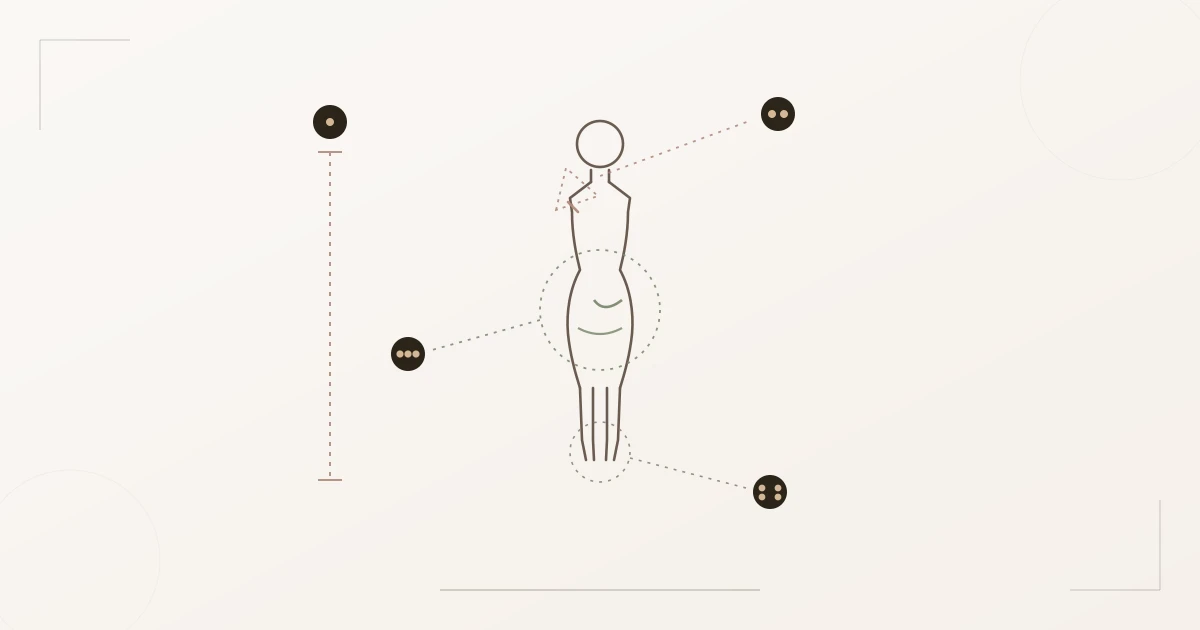
| Characteristic | The Soft Gamine | For Comparison |
|---|---|---|
| Vertical line / height | Small, compact — up to about 165 cm | Flamboyant Gamine: identically small, but sharper |
| Yin/Yang ratio | Yin dominant, Yang as an accent | Flamboyant Gamine: Yang dominant, Yin as an accent |
| Body flesh | Soft with a visible small curve | Theatrical Romantic: full, lush hourglass |
| Face | Round and full with small sharp points | Romantic: uniformly round and soft with no edge |
| Overall impression | Sweet and playful, girlishly lively | Flamboyant Gamine: cheeky-sharp, energetic |
As always: these characteristics describe structure, not weight. A Soft Gamine stays a Soft Gamine at every weight — the compact stature, the side-by-side of soft and isolated sharp features, and the Yin dominance don’t change, only their fullness.
Are You Really Soft Gamine? Telling It Apart from the Neighboring Types
The Soft Gamine sits at a delicate intersection: upward toward the pure Gamine and Flamboyant Gamine (the same family), outward toward the Theatrical Romantic and Romantic (similar softness, different family). All four mix-ups are common, and all four lead to different wardrobes.
Soft Gamine vs. pure Gamine
The pure Gamine would have equal parts Yin and Yang — in practice almost never that balanced. Anyone who recognizes themselves as Gamine almost always tips one way or the other. With the Soft Gamine it’s the softer direction: rounder features, more fullness, more curve. A practical check: if people more often describe you as “sweet, girlish, cute” than as “cheeky, impish, angular,” the scale tips toward soft Yin — so Soft Gamine.
Soft Gamine vs. Flamboyant Gamine
Within the Gamine family, this is the central boundary. The Flamboyant Gamine shares the height and the contrast principle but tips toward Yang: more angular features, defined cheekbones and chin, a wirier and less fleshy structure. Two filters: first the face (soft-full → Soft Gamine, angular-sharp → Flamboyant Gamine), second the body fullness (visible small curve → Soft Gamine, wiry-flat → Flamboyant Gamine). In the wardrobe, the Soft Gamine needs softer forms within the Gamine frame (puff sleeves, crew necks, small-scale ruffles, pearls), the Flamboyant Gamine sharper ones (clean geometric shapes, boat necks, hard edges).
Soft Gamine vs. Theatrical Romantic
The most frequently confused boundary — both are small, soft, and have a Yang accent. The difference lies in the kind of blend: with the Theatrical Romantic, Yin is dominant throughout and the sharpness is a fine nuance within the delicate structure — the silhouette remains a true, full hourglass, the unbroken line flows. With the Soft Gamine, the Yang stands beside it as a visible contrast point — the silhouette is more compact, less lushly curvy, the styling line has to be deliberately broken. The simplest practical test: wear a floor-length wrap dress and then a skirt-plus-blouse set. If the dress reads harmoniously sensual and the two-piece lifeless — Theatrical Romantic. If the dress reads overdressed and the two-piece lively-you — Soft Gamine.
Soft Gamine vs. Romantic
Both small and soft, but structure separates them. The Romantic is uniformly round with no edge at all — the hourglass is full and even, the face has no sharp points. With the Soft Gamine, at least one visible sharp accent sits in the middle of the softness (chin, cheekbones, a small angular shoulder) — and the curve is there, but distinctly slimmer and more compact, not lush. The consequence: the Romantic wears unbroken soft lines, the Soft Gamine broken lines with soft details.
If uncertainty persists, the proven sequence applies: hard filters first (measure your height), standardized photos instead of the mirror, judge structure before fullness. A first indication comes from the free Kibbe test — the complete type profile lives on the Soft Gamine type page.
The Styling Logic: Broken Line Plus Sweetness
The Soft Gamine wardrobe follows all the Gamine rules first, then diverges in one clear direction: it rounds them off. Three rules together produce the line:
- The broken line stays the foundation. Like every Gamine, the Soft Gamine wears separates instead of one-pieces, contrasts instead of tone-on-tone, visible waist breaks, combined sets. Long unbroken columns compress her just as they do every Gamine — the soft Yin doesn’t change that.
- But softer edges everywhere. Where the Flamboyant Gamine seeks hard edges (boat necks, geometric patterns, pointed shoes), the Soft Gamine chooses the round variant of the same idea: crew neck instead of boat neck, puff sleeves instead of a straight sleeve, circle or A-line skirt instead of a strict pencil skirt, ballet flats instead of ankle boots, dots instead of hard stripes.
- Sweet details are allowed — on a small scale. Ruffles, bows, pearls, playful prints work on the Soft Gamine, where they would look kitsch on the pure or Flamboyant Gamine. The rule still holds, though: small in scale. Huge flounces or XL flowers tip immediately into costume territory; small, precisely placed sweet elements underline the line.
The difference from the Flamboyant Gamine in one sentence: both are Gamine, both break the line — but the Flamboyant Gamine bets on hard, precise contrasts, the Soft Gamine on soft, playful ones.
The Soft Gamine Wardrobe: Cuts & Pieces
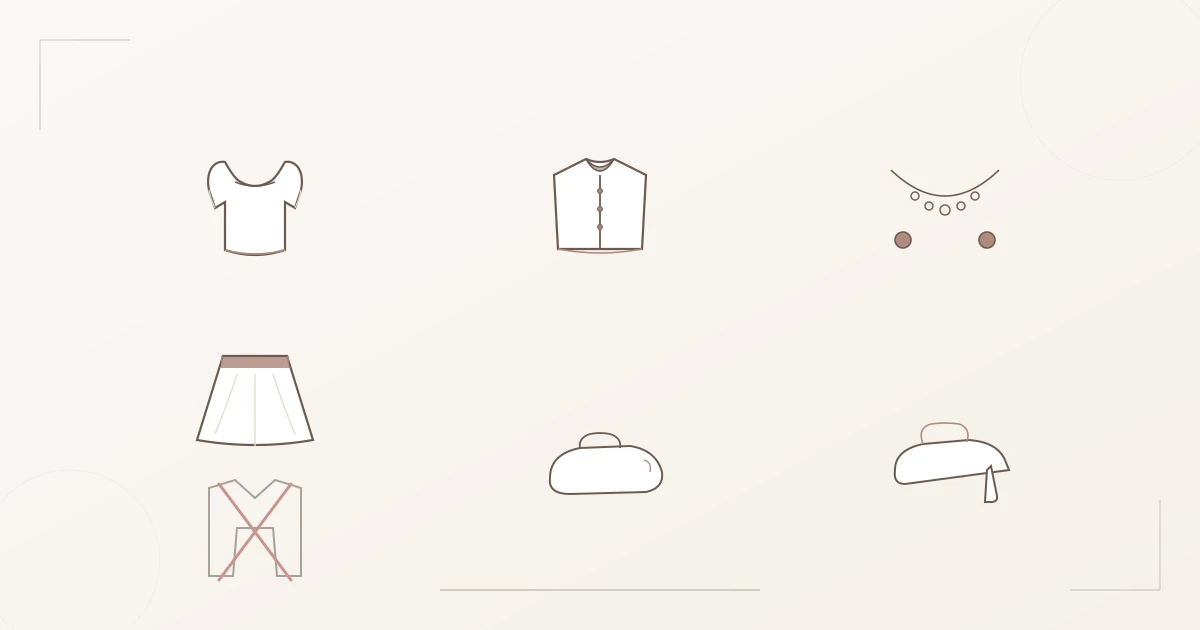
The Twinset and the Skirt-Blouse Look — The Main Event
The signature principle of the Soft Gamine is the combined, sweetly structured two-piece combination: a cardigan over a matching top, a blouse plus a skirt in a contrasting color, a twinset with a pearl necklace. Exactly where the pure Gamine sets hard color blocks, the Soft Gamine finds the same break effect with softer color transitions and more ornamental details.
Tops
Short to waist-length tops with soft details: puff-sleeve blouses, crew-neck shirts, Peter Pan collars, cardigans with a round neckline, small ruffles at the neckline or sleeve. Small playful patterns work — polka dots, small florals, fine checks — where graphic blocks belong to the Flamboyant Gamine.
Skirts & Pants
Skirts: A-line and pleated skirts in a knee-length cut, skater skirts, flared minis; nothing stricter than a pencil skirt. Pants: cropped cigarette pants and slim pants down to the ankle — as usual for the Gamine, with a visible break, but ideally with a soft waistband and no hard crease. The focus lies more on skirts than on pants — the Yin dominance expresses itself in the choice.
Jackets & Dresses
Jackets: cropped bolero, short cardigan, a soft blazer with a rounded lapel or no lapel at all, ideally with a peplum. Dresses work best with a visible waist break: 1950s silhouettes, fit-and-flare, a wrap top with a flared skirt. The classic is the combined hourglass silhouette in a compact length. The oversized boyfriend blazer, on the other hand (deliberately crossed out in the diagram), is one of the worst combinations for this type — it swallows both at once: the compact stature and the soft curve.
Fabrics, Patterns & Colors
| Category | Ideal | Avoid |
|---|---|---|
| Fabrics | Crisp but softer than the pure Gamine’s: fine jersey, soft cotton with body, piqué, lightweight denim, lace in a small pattern | Stiff, board-like fabrics (too hard), heavy flowing draping fabrics (smooth out the line), rough natural fabrics (belong to the Natural) |
| Patterns | Small, playful, round: polka dots, small florals, fine checks, playful prints, little hearts — on a compact scale | Large graphic block patterns (too hard, they belong to the Flamboyant Gamine) and huge washed-out prints (too large in scale) |
| Color logic | Contrast stays, but more softly modulated — pastel against saturated, warm against cool, sweet accent colors | Continuous monochrome columns (they lengthen but kill the break) and hard light-dark shock contrasts |
Which specific colors suit you is, as always, determined not by your Kibbe type but by color analysis — more on that in Color Analysis or Style Consultation.
Jewelry & Accessories
- Jewelry: small, ornamental, and sweet — a pearl necklace (a Soft Gamine classic), delicate stud earrings with a round stone, a fine charm pendant, small vintage brooches. As with the Gamine, the scale stays compact, but the shapes are round and playful instead of geometric.
- The contrast: The Soft Gamine may mix and is one of the few types on which a pearl necklace and a small graphic element work at the same time — the side-by-side is the Gamine signature, only in a soft execution.
- Bags: compact and round — small crossbody bags with soft edges, sweet retro box bags, mini backpacks with a rounded shape.
- Shoes: ballet flats (the classic), Mary Janes, ankle-strap heels with a round toe, retro sneakers. As with the Gamine, welcome: the visible break at the ankle. Unlike the Flamboyant Gamine: rather round than pointed.
- Accessories in general: hair bows, playful headbands, delicate scarves with a small pattern, sweet gloves. Anything that carries Gamine playfulness but falls softer.
The 5 Biggest Styling Mistakes for Soft Gamine
1. Dressing like a pure Romantic
The most common mistake: anyone who sees themselves as small and soft reaches for unbroken wrap dresses, long flowing skirts, and soft gowns — the classic Romantic look. On the Soft Gamine, this reads heavy and overdressed; the silhouette needs breaks, not smooth curves. The difference is lost confidence per outfit.
2. Too hard in Flamboyant Gamine style
Conversely: anyone who reads Gamine guides and wears exclusively hard edges (boat necks, color blocking in primary colors, geometric prints, pointed ankle boots) forces a hardness that their own soft structure can’t deliver. The result reads costumed. Soft rounds within the Gamine frame is the right middle ground.
3. The long, unbroken line
As with every Gamine, deadly: maxi dresses, long coats to the floor, monochrome columns without a break. They compress the compact stature and take away its liveliness. If length, then broken with a belt, contrast layers, or clear color blocks.
4. Too large in scale
Huge statement earrings, XL flowers, sweeping oversized blazers: anything made for the tall types swallows the Soft Gamine. The rule of thumb still holds: compact, precise, with a point — not large and sweeping.
5. Sweetness overdone — from ruffles to doll territory
Because sweetness is allowed on this type, it easily slips into too much: layered ruffles, huge flounces, XL bows, doll dresses. Sweetness stays an ingredient within the Gamine contrast logic, not the whole meal. One sweet detail plus one contrasting jaunty point beats three sweet details with no break.
Soft Gamine at Work & in Everyday Life
Direct Answer
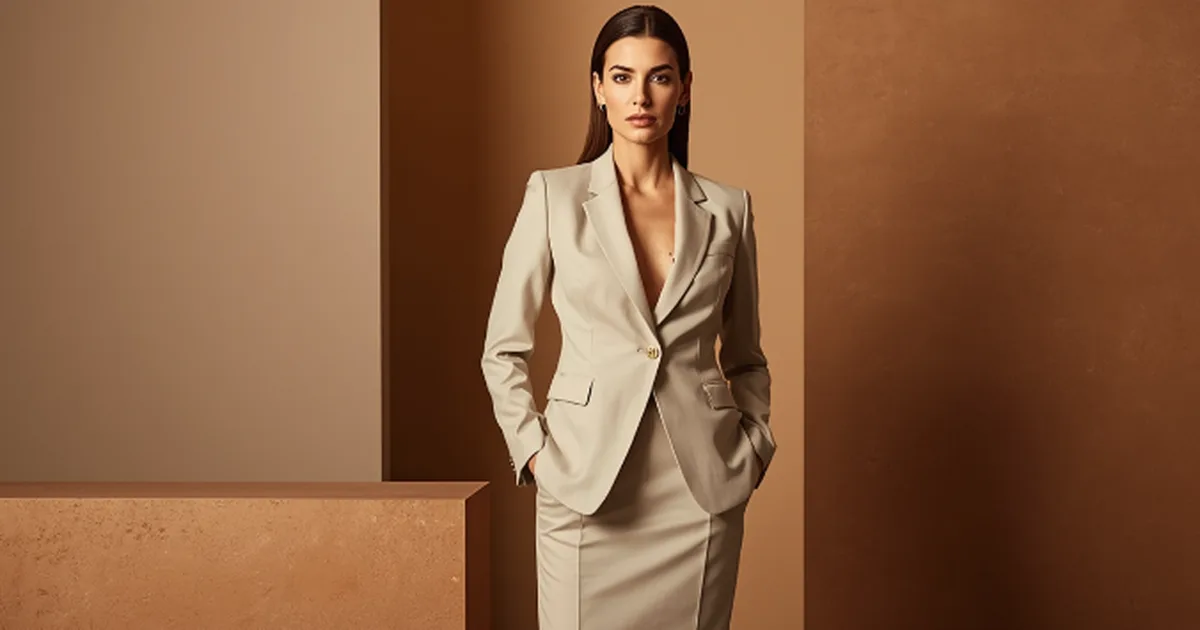
The Soft Gamine becomes business-ready through softly structured separates: a cropped blazer with a rounded lapel over a slim blouse and an A-line skirt in a contrasting color, together with ballet flats with a round toe and a pearl necklace. Instead of the continuous pantsuit (which compresses the compact stature), the deliberate soft break creates presence — professional and yet lively-feminine.
The complete office translation for all five families is in Business Looks by Kibbe Type. For building your wardrobe as a system: the Capsule Wardrobe by Kibbe Type shows how the Soft Gamine can build especially many looks from a few pieces using combined separates — her combination principle is tailor-made for capsule logic.
Famous Soft Gamine Examples
In the Kibbe community, the Soft Gamine is especially often associated with Golden Age Hollywood. Frequently named are Bette Davis (small, with huge eyes and a soft face over defined features) and Ginger Rogers (compact, curvy and playful, with a visible Yang accent at the shoulders and facial features). Both show the Soft Gamine signature in exemplary fashion: small and soft, but always with a visible sharp contrast point — and with the typical preference for combined, jaunty silhouettes over long sensual gowns.
Important as always with celebrity examples: such attributions are community consensus, not documented official typings by David Kibbe — typing from a distance remains inherently uncertain. For your own, reliable determination, what matters isn’t the comparison to a star but your own structure — when in doubt, via professional analysis.
The Soft Gamine Self-Check: 5 Questions
Before you commit, answer these five questions honestly:
- The height question: Are you (measured) at most about 165 cm? If you’re clearly taller, look instead at the Natural or Classic family — the Gamine needs the compact stature.
- The contrast question: Do you find on yourself at the same time clearly sharp features (a defined chin, a small angular shoulder line, prominent cheekbones) and clearly soft ones (round cheeks, full lips, large eyes)? Without this contrast, you’re more likely Romantic; only with contrast is it the Gamine family.
- The dominance question: Do the soft features predominate within this contrast, and do the sharp points read more as accents? If yes, the scale tips toward Yin — so Soft Gamine, not Flamboyant Gamine.
- The curve question: Do you have a visible small curve at bust and hip — noticeably feminine, but not a lush hourglass? A full hourglass points to Theatrical Romantic, a wiry-flat build to Flamboyant Gamine.
- The fabric question (the practical test): Put on, one after the other, a floor-length wrap dress and then a cardigan-plus-A-line-skirt two-piece. If the dress reads overdressed and heavy and the two-piece looks made for you, your body confirms the Soft Gamine line.
Four to five yes answers are a strong signal. If uncertainty persists between two neighboring types, the methodical route through the Kibbe Test Guide helps — or the trained outside eye of a professional analysis.
If your balance tips clearly toward Yang instead — angular cheekbones, a wiry, narrow structure, no visible fleshy curve, a spirited-sharp rather than sweet-playful effect? Then you're likely not a Soft Gamine but a Flamboyant Gamine — the same petite stature with the same contrast principle, but with sharp geometric precision instead of soft details.
Frequently Asked Questions (FAQ)
What is the Soft Gamine type in the Kibbe system?
The softer half of the Gamine family: small and compact like every Gamine, with the same contrast principle between sharp and soft features — but with dominant Yin. Soft roundness, a visible small curve, sweeter facial features, while the sharp Yang points remain only as an accent. Styling follows the broken line of the Gamine, but with soft, sweet details instead of hard edges.
How tall is a Soft Gamine?
Small — up to about 165 cm. The short, compact vertical is a hard criterion of every Gamine variation. Taller women with similar characteristics usually belong to the Natural or Classic family, not the Soft Gamine.
What is the difference between Soft Gamine and Flamboyant Gamine?
The direction of the blend: both are small, high-contrast, with a broken line. With the Soft Gamine, Yin dominates — round cheeks, a visible small curve, softer facial features. With the Flamboyant Gamine, Yang dominates — more angular features, a wirier build, hardly any curve. The Soft Gamine wears softer forms within the Gamine frame, the Flamboyant Gamine sharper ones.
What is the difference between Soft Gamine and Theatrical Romantic?
Both small and soft, but structure separates them. The Theatrical Romantic has a full, lush hourglass and Yin-dominant softness throughout with a fine sharp tone; the silhouette wants unbroken flowing lines. The Soft Gamine is more compact with a smaller curve and needs the broken line with contrast. The practical check: if floor-length wrap dresses read harmoniously, it’s TR; if combined two-pieces read harmoniously, it’s SG.
What is the difference between Soft Gamine and Romantic?
The edge: the Romantic is uniformly round and soft with no sharp spot at all. The Soft Gamine has, in the middle of the softness, visible sharp accents (a defined chin, small angular shoulders, prominent cheekbones). The Romantic wears unbroken soft lines, the Soft Gamine broken lines with soft details.
Is the pure Gamine or the Soft Gamine more common?
The Soft Gamine is distinctly more common. The pure Gamine — perfectly equal parts Yin and Yang without any tendency — is theoretical: David Kibbe set it aside as a standalone recommendation in his 2021 update. In practice, almost every Gamine tips one way, and the softer Yin variant (Soft Gamine) is the more common one.
What clothing suits the Soft Gamine type?
Combined, softly structured separates: cardigan twinsets, skirt-plus-blouse combinations, cropped puff-sleeve tops, A-line and pleated skirts, cropped cigarette pants with a soft waistband, waist-emphasizing dresses with a fit-and-flare silhouette. Always with a broken line and soft, sweet details instead of hard edges.
What fabrics should a Soft Gamine wear?
Crisp but softer than the pure Gamine’s: fine jersey, soft cotton with body, piqué, lightweight denim, lace in a small pattern. Avoid: stiff, board-like fabrics, heavy flowing draping fabrics (they smooth the line out), and rough natural fabrics.
Can a Soft Gamine wear ruffles and sweet details?
Yes — more than any other Kibbe type. Ruffles, bows, pearls, playful prints work on the Soft Gamine, where they would look kitsch or out of place on other types. The rule still holds: small in scale and as an ingredient within the Gamine contrast frame, not as a complete doll costume.
How does a Soft Gamine dress for the office?
With softly structured separates: a cropped blazer with a rounded lapel over a slim blouse and an A-line skirt in a contrasting color, together with ballet flats or ankle-strap heels with a round toe, and a pearl necklace. Instead of the continuous pantsuit, the deliberate soft break creates presence — professional and lively-feminine.
What jewelry suits the Soft Gamine?
Small, ornamental, and sweet: a pearl necklace, delicate stud earrings with a round stone, a fine charm pendant, small vintage brooches. The scale stays compact as with every Gamine, but the shapes are round and playful instead of hard and geometric.
Which celebrities are Soft Gamine types?
In the community, Bette Davis and Ginger Rogers are especially often named — both small, curvy and playful, with visible sharp contrast points in an otherwise soft face. Such attributions are community consensus, not official typings; typing from a distance remains uncertain.
Are You Soft Gamine — or Actually Theatrical Romantic or Flamboyant Gamine?
The free Kibbe test gives you a structure-based assessment in just a few minutes — and the professional analysis delivers the reasoned answer, complete with your personal style dossier.