
Table of Contents
- The Quick Answer
- What Defines the Soft Dramatic Type?
- The Characteristics in Detail
- Are You Really Soft Dramatic? Telling the Types Apart
- The Styling Logic: Long Line Plus Real Curve
- The Soft Dramatic Wardrobe: Cuts & Pieces
- Fabrics, Patterns & Colors
- Jewelry & Accessories
- The 5 Biggest Styling Mistakes
- Soft Dramatic at Work & in Everyday Life
- Famous Soft Dramatic Examples
- The Soft Dramatic Self-Check: 5 Questions
- Frequently Asked Questions (FAQ)
The Quick Answer
Quick Answer
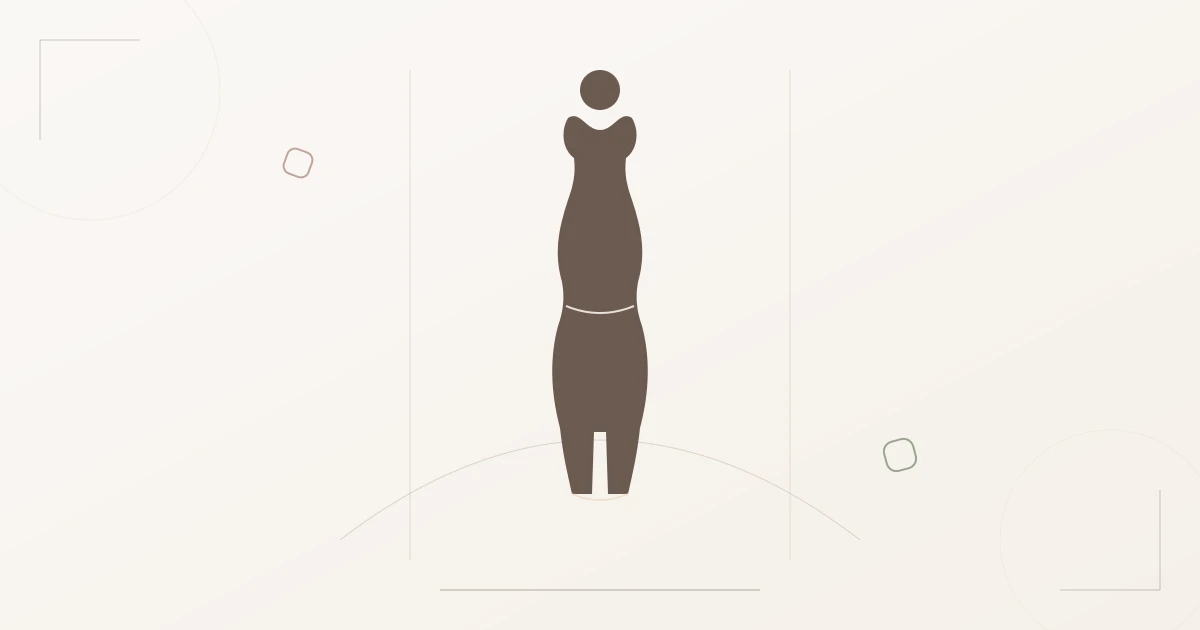
Soft Dramatic is a Yang-dominant blended type: a long, sharp bone structure like the pure Dramatic — but with soft, curvy Yin flesh on top. The result is a long, pronounced hourglass silhouette no other type has. Its styling logic combines two principles normally kept apart: the Dramatic's long, unbroken vertical line plus a real, framed waist curve. The most common mistakes: forcing the curve into a stiff Dramatic construction (it reads armored), or into delicate Romantic details (it reads costume-like). This guide covers every characteristic, how to tell Soft Dramatic apart from Dramatic, Theatrical Romantic, and Soft Natural — and the complete wardrobe logic.
Soft Dramatic is the type most often filed under the wrong neighbor. Tall and curvy sounds like Dramatic at first (the height) or Romantic (the curves), and many women with this line spend years caught between two wrong recommendations: stiff, straight cuts that flatten their curves, and delicate, playful details that look absurdly small. Both earlier deep dives in this series — Dramatic and Romantic — point back here more than once. Time for its own complete guide.
What Defines the Soft Dramatic Type?
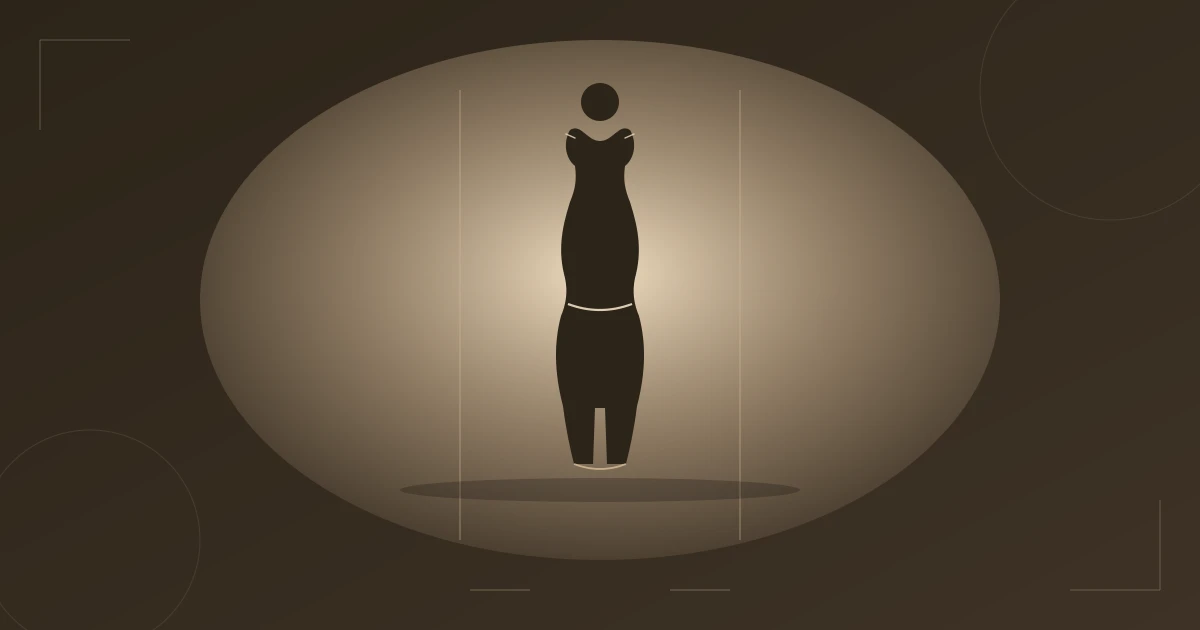
In the Kibbe Body Type System, Soft Dramatic is one of six blended types that sit between the main families. It belongs to the Dramatic family because its foundation — the bone structure — is unmistakably Yang: long, sharp, angular. But unlike the pure Dramatic, it doesn't stop there. Over that sharp framework lies soft, lush Yin flesh — real curves at the bust and hips, a clearly defined waist.
This combination — sharp bones, soft flesh — is the core of the type, and it's why it gets misread so often: look only at the curves, and you see Romantic. Look only at the height, and you see Dramatic. Only the interplay of both adds up to Soft Dramatic:
- Bone structure: long and sharp — high, clearly defined shoulders, long limbs, prominent facial bones (like the pure Dramatic)
- Body flesh: soft and lush — a pronounced hourglass with a full bust and hips, a noticeably narrower waist in between
- Face: a sharp underlying structure (high cheekbones, a defined jaw) with softer, more sensual fullness on top — full lips or large eyes over a prominent bone structure
As with all Yang-dominant families, the long vertical line is a hard criterion here too: Soft Dramatic always reads as tall, typically from about 165–168 cm up. A small, petite woman with the same soft curves is not Soft Dramatic but Romantic or Theatrical Romantic — the characteristics look similar, but height decides the family. The mistyping guide explains just how uncompromising this rule is.
The Characteristics in Detail
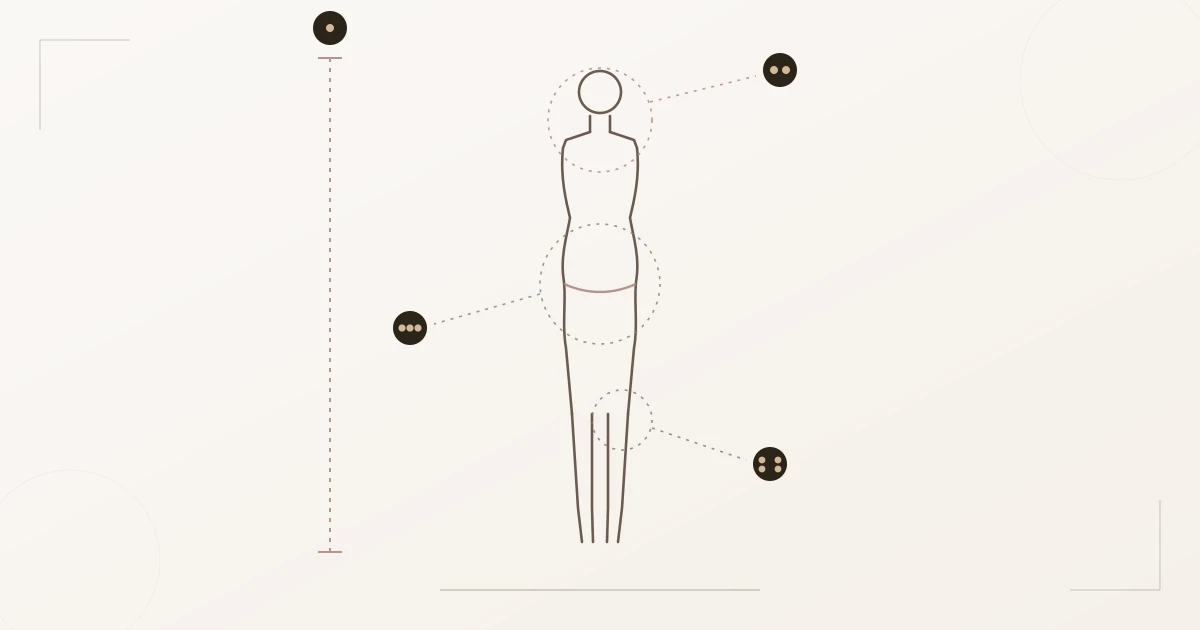
| Characteristic | The Soft Dramatic | For Comparison |
|---|---|---|
| Vertical line / height | Long — from about 165–168 cm | Theatrical Romantic: short, up to about 165 cm |
| Shoulders & bones | Sharp, long, clearly defined — like the pure Dramatic | Dramatic: identically sharp, but without a curve on top |
| Body flesh | Soft, lush, pronounced hourglass — distinct waist | Dramatic: straight, column-like, barely a curve |
| Face | Sharp bone base, soft sensual fullness on top | Romantic: soft throughout, no sharp base |
| Overall impression | Opulent, sensual, commanding — a “diva” presence | Soft Natural: soft and earthy rather than opulent and sensual |
As with all Kibbe types: these characteristics describe structure, not weight. A Soft Dramatic stays a Soft Dramatic at every weight — the long bone base and the underlying curve structure don't change, only their fullness.
Are You Really Soft Dramatic? Telling It Apart from the Neighboring Types
Soft Dramatic sits at the intersection of three families — which is exactly why it gets confused so often. The key distinctions:
Soft Dramatic vs. Dramatic (Pure)
The difference lies entirely in the flesh, not the bone: both have the same long, sharp structure. But the pure Dramatic stays straight and column-like on top — barely any waist curve, even with weight gain. The Soft Dramatic develops a real, visible hourglass. The practical check: does a distinct waist emerge beneath the long, straight base line? Then Soft Dramatic. Does everything stay straight? Then Dramatic.
Soft Dramatic vs. Theatrical Romantic
The finest and most common mix-up in the community — both are curvy with a certain Yang undertone. The difference is dominance: in Theatrical Romantic, Yin dominates (a soft, delicate structure) with a light sharp accent on top. In Soft Dramatic, Yang dominates (a long, sharp bone base) with curves on top. The most reliable filter is, again, height: Theatrical Romantic stays short (up to about 165 cm), Soft Dramatic needs length (about 165–168 cm). Second filter: does the bone structure itself read sharp and long, or delicate and small? A well-known example: Selena Gomez was typed inconsistently for years before David Kibbe confirmed her as Theatrical Romantic — not Soft Dramatic, despite similar curves.
Soft Dramatic vs. Soft Natural
Both have soft flesh over a Yang bone base — but the bone base itself is completely different: Soft Natural has broad, blunt Yang bones (strong, fairly straight shoulders), Soft Dramatic has narrow, sharp Yang bones (long, tapered shoulders). The overall impression differs accordingly: Soft Natural reads as earthy and effortless, Soft Dramatic reads as opulent and commanding. More on telling them apart in the Soft Natural deep dive.
Another reason self-typing so often fails here: all three neighboring types share individual surface features with Soft Dramatic — curves, a certain presence, sometimes even the height. Only the combination of all three axes (height, bone sharpness, flesh fullness) produces a clear picture. Look at just one axis alone, and you'll almost always land on the wrong neighboring type — the exact pattern the mistyping guide describes.
If uncertainty persists, follow the proven sequence: hard filters first (measure your height), standardized photos instead of the mirror, judge structure before fullness. The free Kibbe test gives you a first indication — the complete type profile lives on the Soft Dramatic type page.
The Styling Logic: Long Line Plus Real Curve
The Soft Dramatic wardrobe has to serve two principles at once that stay separate in the pure types. Three rules follow from that:
- The vertical line stays long — but not rigid. As with the Dramatic, unbroken length is what counts. Unlike the Dramatic, the fabric is allowed — and meant — to flow and follow the waist instead of running past it in a straight line.
- The waist gets framed, not hidden. Unlike the pure Dramatic, waist definition isn't a mistake here — it's mandatory: a straight column ignores half of the type's own line. Unlike the Romantic, though, the framing needs structure, not pure softness.
- Grand gestures instead of small details. As with the Dramatic, the tall, commanding stature calls for statement elements — only here they should curve rather than read geometric-sharp: large, softly flowing prints instead of narrow pinstripes, one rounded statement piece of jewelry instead of angular, edged shapes.
The decisive difference from the pure Dramatic in one sentence: where the Dramatic uses precision and sharpness as its means of expression, the Soft Dramatic uses drape and fullness — both stay grand and commanding, but by different routes.
The Soft Dramatic Wardrobe: Cuts & Pieces
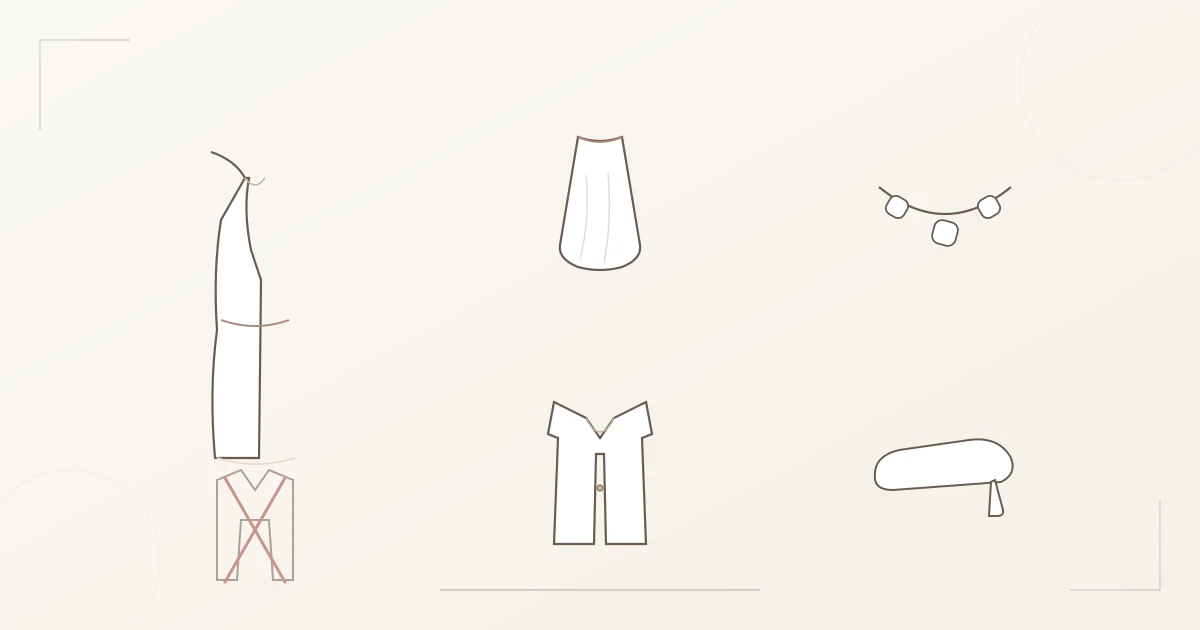
The Long Wrap Coat — The Main Event
The signature piece of this family: a long coat with a soft shawl collar or a wide, gently curved lapel that ties or closes at the waist — falling to calf or floor length. It extends the line the way the Dramatic's coat does, while framing the waist the way no stiff, straight coat ever could.
Dresses
Full-length wrap dresses, waist-defined sheath shapes in flowing fabric, bias-cut dresses that skim the curve instead of pressing against it. Necklines can go deep and dramatic — V-necks, asymmetrical shoulder lines. The floor-length wrap look is to this type what the straight maxi dress is to the pure Dramatic.
Skirts & Trousers
Skirts: long, bias-cut shapes that flow at the hip and define the waist. Trousers: a high waistband with a wide, flowing leg (palazzo shape) or a fluid straight-leg trouser that still follows the waist — never a completely rigid, board-like construction.
Jackets & Blazers
Unlike the pure Dramatic, the classic, fully rigid blazer only works here to a point. Better: a structured-yet-flowing jacket with a soft, wide lapel and visible waist shaping — enough structure for presence, enough movement for the curve. This is a recognized sticking point: some Soft Dramatics do better with a softer, unstructured jacket, others with a structured but fitted version. Both approaches respect the ground rule — no rigid board, no pure softness.
Fabrics, Patterns & Colors
| Category | Ideal | Avoid |
|---|---|---|
| Fabrics | Flowing, but with substance: heavy crepe, soft satin, supple wool, jersey with good drape | Board-stiff fabrics (they fight the curve) and gossamer-thin, insubstantial fabrics (they disappear on the tall stature) |
| Patterns | Large-scale and flowing: big florals, watercolor prints, curved patterns | Tiny florals (too delicate), hard geometric block patterns (too rigid) |
| Color logic | Rich, deep fields of color — monochrome or dramatic contrasts in bold tones | Washed-out pastels, lots of small color changes |
Which specific colors suit you is, as always, determined not by your Kibbe type but by color analysis — more on that in Color Analysis or Style Consultation.
Jewelry & Accessories
- Jewelry: large and opulent like the Dramatic's — but with rounded rather than sharp edges. Large round earrings, curved statement necklaces, lush bangles with a soft shape instead of geometric hardness.
- One statement piece: the Dramatic's rule applies here too — “one large piece instead of many small ones” — just rounded and flowing instead of angular.
- Bags: generously sized, with a soft, curved shape instead of sharp edges.
- Shoes: high, curved heels, softly flowing or draped straps. Unlike the Dramatic, the shapes can be rounded instead of pointed.
- Belts: explicitly welcome here (unlike with the Dramatic) — a belt that defines the waist is a key tool for this line, not its enemy.
The 5 Biggest Styling Mistakes for Soft Dramatic
1. Flattening the Curve
Copying stiff, straight Dramatic cuts one-to-one, without accounting for your own waist curve: the result reads pressed rather than commanding — the silhouette visibly fights the body.
2. Retreating into Romantic Delicacy
Small florals, delicate jewelry, gossamer-thin fabrics: on a tall, commanding stature, these details don't read feminine, they read like a costume — as if you'd squeezed yourself into someone else's smaller role.
3. Avoiding the Jacket Entirely — or Making It Completely Rigid
Both extremes fail: the completely unstructured, soft cardigan loses the presence the type needs; the completely rigid, board-like blazer presses down the curve. The middle ground that actually works is structured-yet-flowing, with visible waist shaping.
4. Small-Scale Patterns and Prints
Fine checks, tiny dots, dense small-scale patterns “pixelate” on a tall, curvy stature just as they do on the pure Dramatic. Large-scale, flowing prints work where small-scale ones disappear.
5. Apologizing for Your Presence
As with the pure Dramatic: this stature has no neutral setting. Anyone who tries to make tall, curvy, and opulent look “low-key” usually produces the opposite of elegance — insecurity. The wardrobe works best when it supports the natural presence instead of trying to hide it.
Soft Dramatic at Work & in Everyday Life
Direct Answer
Soft Dramatic becomes office-ready with a fitted, structured-yet-flowing jacket in a rich color, long fluid trousers, or a waist-defined sheath dress — the presence stays, but it's channeled through quality and fit instead of stiffness. For more approachable occasions, it's enough to dial back color and detail; the silhouette stays the same.
Two proven everyday outfit formulas: Formula one — a waist-defined sheath dress in ink or burgundy, a long open coat over it, large round statement earrings. Formula two — fluid palazzo trousers in a dark color, a fitted blouse with a soft drape, a structured-yet-flowing jacket worn open on top. Both formulas respect the long vertical line while framing the waist — the balance that sets this type apart from Dramatic. For evening, the logic can get louder: a deeper neckline, satin fabric, one large piece of jewelry instead of several small ones.
The complete office translation for all five families is in Business Looks by Kibbe Type. For building your wardrobe as a system: the Capsule Wardrobe by Kibbe Type shows how many pieces, in what mix, are really enough.
Famous Soft Dramatic Examples
Sophia Loren and Halle Berry are frequently cited as Soft Dramatic examples — both tall, with a long, sharply defined bone base (prominent cheekbones, a clear shoulder line) and pronounced, sensual curves on top. Both show why this type is often called the “diva” archetype: opulent and curvy, but never soft-and-fragile — the sharp structure underneath gives the softness contour and presence instead of letting it read diffuse.
One caveat with all celebrity examples in the Kibbe system: community attributions aren't always documented consistently, and typing from a distance is inherently uncertain. For your own, reliable determination, what matters isn't the comparison to a film star but your own structure — when in doubt, via professional analysis.
The Soft Dramatic Self-Check: 5 Questions
Before you commit, answer these five questions honestly:
- The height question: Are you (actually measured) at least 165–168 cm? If not, look at Theatrical Romantic instead — the characteristics are similar, but height decides the family.
- The bone question: Are your shoulders, wrists, and facial features long and sharply defined even without the curves on top? Soft, delicate bones point to the Romantic family, not Soft Dramatic.
- The curve question: Do you have a real, visible waist between a full bust and hips — at every weight? If your line stays straight and column-like instead, look at pure Dramatic.
- The presence question: Do strangers tend to describe you as “commanding and opulent” rather than “delicate and cute”? Soft Dramatic reads big, not small.
- The fabric question (the practical test): Try on a long, fitted wrap coat, then a delicate ruffled dress. If the coat feels coherent and self-assured and the ruffled dress feels like a costume that isn't yours, your body is confirming the Soft Dramatic line.
Four to five yes answers are a strong signal. If uncertainty persists between two neighboring types, the methodical route through the Kibbe Test Guide helps — or the trained outside eye of a professional analysis.
And if you carry the same mix of curve and sharpness but stay under about 165 cm? Then your path leads not to Soft Dramatic but to the Theatrical Romantic Kibbe type — Yin-dominant instead of Yang-dominant, with its own styling logic on a petite scale.
Frequently Asked Questions (FAQ)
What is the Soft Dramatic type in the Kibbe system?
A Yang-dominant blended type: a long, sharp bone structure like the pure Dramatic, but with soft, curvy Yin flesh on top. The result is a long, pronounced hourglass silhouette. Its clothing follows two principles at once: the Dramatic's long, unbroken vertical line plus a real, framed waist curve.
How tall does a Soft Dramatic have to be?
At least about 165–168 cm — as with the pure Dramatic, the long vertical line is a hard criterion. Shorter women with the same soft curves are typically Theatrical Romantic or Romantic, not Soft Dramatic.
What is the difference between Soft Dramatic and Dramatic?
The body flesh: both have identical long, sharp Yang bones. The pure Dramatic stays straight and column-like on top of them; the Soft Dramatic develops a real, distinct hourglass waist. If a curve emerges beneath the long base line, that points to Soft Dramatic.
What is the difference between Soft Dramatic and Theatrical Romantic?
Dominance: in Theatrical Romantic, Yin dominates (a soft, delicate underlying structure) with a light sharp accent. In Soft Dramatic, Yang dominates (a long, sharp bone base) with curves on top. The fastest filter is height — Theatrical Romantic stays short, Soft Dramatic needs length from about 165–168 cm.
What is the difference between Soft Dramatic and Soft Natural?
The bone base: Soft Natural has broad, blunt Yang bones (strong, straight shoulders), Soft Dramatic has narrow, sharp Yang bones (long, tapered shoulders). The overall impression differs accordingly: earthy and effortless for Soft Natural, opulent and commanding for Soft Dramatic.
What clothing suits the Soft Dramatic type?
Long, waist-defined silhouettes with a flowing drape: a long wrap coat, full-length wrap dresses, bias-cut skirts, high-waisted palazzo trousers, structured-yet-flowing jackets with a soft lapel. Always with visible waist shaping, never completely rigid.
What fabrics should a Soft Dramatic wear?
Flowing fabrics with substance: heavy crepe, soft satin, supple wool, jersey with good drape. Avoid: board-stiff fabrics that work against the curve, and gossamer-thin fabrics that disappear on the tall stature.
Can a Soft Dramatic wear a blazer?
Only in the right version: structured-yet-flowing with visible waist shaping and a soft, wide lapel — not completely rigid like the pure Dramatic's, not completely soft like a cardigan. The version that works combines structure with movement.
How does a Soft Dramatic dress for the office?
In fitted-yet-flowing silhouettes in rich colors: a structured but fitted jacket, long fluid trousers, or a waist-defined sheath dress. The natural presence stays intact, but it's channeled through quality and fit instead of stiffness.
What jewelry suits the Soft Dramatic?
Large and opulent like the Dramatic's, but with rounded rather than sharp edges: large round earrings, curved statement necklaces, lush soft bangles. One large piece instead of many small ones — the Dramatic's rule, just rounded off.
Does my Soft Dramatic type change if I lose or gain weight?
No. The type is based on the long bone base and the underlying curve structure of the flesh, not on absolute weight. Both stay intact at every weight — only the fullness changes, not the structure.
Which celebrities are Soft Dramatic types?
Sophia Loren and Halle Berry are frequently cited — both tall, with a long, sharp bone base and pronounced, sensual curves on top, often described as the “diva” archetype. Celebrity attributions in the Kibbe system, though, aren't always documented consistently and are inherently uncertain when typed from a distance.
Are You Soft Dramatic — or Theatrical Romantic After All?
The free Kibbe test gives you a structure-based assessment in just a few minutes — and the professional analysis delivers the reasoned answer, complete with your personal style dossier.