
Table of Contents
- The Quick Answer
- What Defines the Flamboyant Gamine Type?
- The Characteristics in Detail
- Are You Really Flamboyant Gamine? Telling the Types Apart
- The Styling Logic: Broken Line Plus Sharpness
- The Flamboyant Gamine Wardrobe: Cuts & Pieces
- Fabrics, Patterns & Colors
- Jewelry & Accessories
- The 5 Biggest Styling Mistakes
- Flamboyant Gamine at Work & in Everyday Life
- Famous Flamboyant Gamine Examples
- The Flamboyant Gamine Self-Check: 5 Questions
- Frequently Asked Questions (FAQ)
The Quick Answer
Quick Answer
The Flamboyant Gamine is the sharper half of the Gamine family: small and compact like every Gamine, with the same contrast principle between sharp and soft features — but with a clear Yang surplus. Angular cheekbones, a defined chin, a wiry-slim structure without any fleshy curve, precise geometric features. The styling logic stays the broken line of the Gamine (separates, contrast, no continuous look), but is sharpened with hard, geometric details: a boat neck instead of a crew neck, a pencil skirt instead of a circle skirt, geometric statement earrings instead of pearls, pointed ankle boots instead of ballet flats. Anyone who recognizes themselves as Gamine and prefers the cheeky-precise, energetic look over the sweet-girlish one is usually a Flamboyant Gamine — the rarest but most striking of the three Gamine variations. This guide explains every characteristic and how to tell it apart from the pure Gamine, the Soft Gamine, the Dramatic, and the Flamboyant Natural.
The Flamboyant Gamine is the Kibbe type that suffers most from “but I’m small, so I must be Romantic or Soft Gamine?” Anyone who has had that reflex and yet noticed that ruffles and soft details overwhelm them — that sharp-edged blazers, geometric combinations, and a precise contrast look actually work — is probably looking at a Flamboyant Gamine. This guide picks up where the Gamine family post leaves off and explains the sharpest of its variations in detail.
What Defines the Flamboyant Gamine Type?
In the Kibbe Body Type System, the Flamboyant Gamine is one of the two active variations of the Gamine family (the pure Gamine has been a theoretical middle since David Kibbe’s 2021 update). Like every Gamine, she is small, compact, and shaped by contrast: sharp Yang features and soft Yin features sit side by side, not blended. The difference from the pure Gamine and the Soft Gamine lies in the direction the scale tips: with the Flamboyant Gamine, Yang dominates.
Concretely, that means: the Yang elements — sharp edges, angular cheekbones, a defined pointed chin, wiry limbs, a slim and compact silhouette without any visible fleshy curve — are clearly dominant, while the Yin elements (large eyes, soft lips, small curves) stand beside them only as an accent. The contrast remains visible — otherwise it wouldn’t be a Gamine — but sharpness dominates:
- Stature: small and compact — the short vertical is a hard criterion, typically up to about 165 cm
- Yin/Yang ratio: Yang dominant, Yin as a small accent — both visible, but unevenly distributed
- Body flesh: wiry-slim, defined, without any fleshy curve — more boyish-compact than womanly-lush
- Face: shaped by sharp geometric features — a defined chin, high angular cheekbones, a clean jawline, often with large eyes as the only visible Yin accent
As with all Gamine types, the height rule applies without compromise: taller than about 165 cm is typically no longer a Gamine, but slips into the Dramatic or Natural family. Why this rule is so hard is explained in the mistyping guide.
The Characteristics in Detail
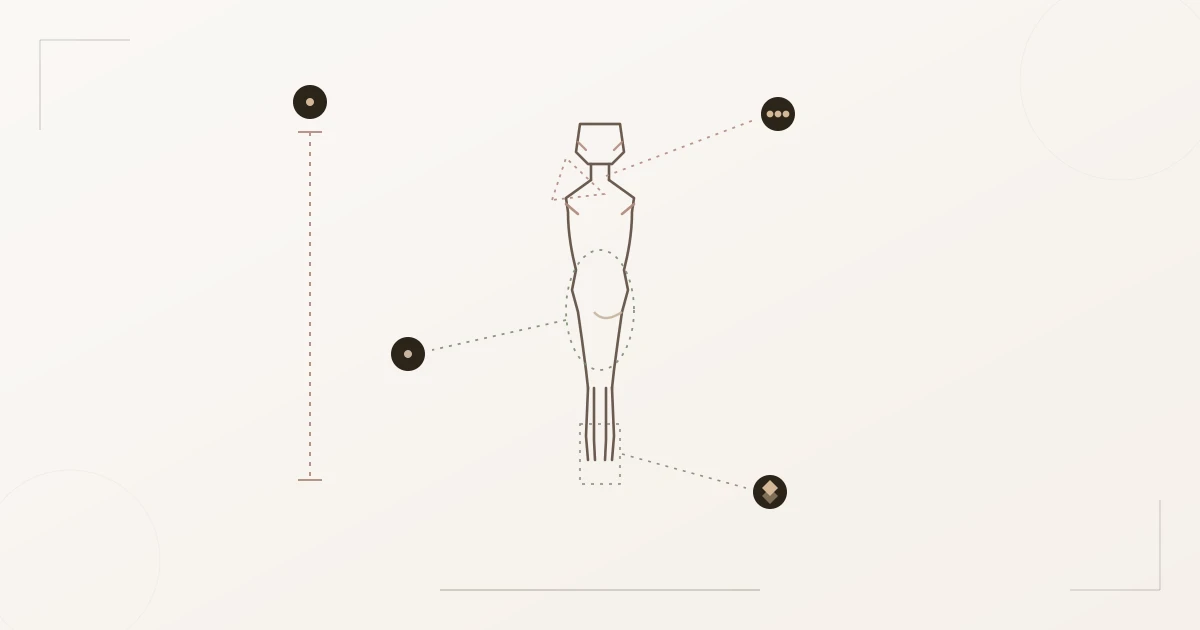
| Characteristic | The Flamboyant Gamine | For Comparison |
|---|---|---|
| Vertical line / height | Small, compact — up to about 165 cm | Soft Gamine: identically small, but softer |
| Yin/Yang ratio | Yang dominant, Yin as an accent | Soft Gamine: Yin dominant, Yang as an accent |
| Body flesh | Wiry, slim, without any fleshy curve | Dramatic: identically slim, but clearly taller |
| Face | Angular, defined, with large eyes as a Yin accent | Soft Gamine: round and full with isolated sharp points |
| Overall impression | Cheeky-sharp, energetic, impish | Soft Gamine: sweet and playful, girlishly lively |
As always: these characteristics describe structure, not weight. A Flamboyant Gamine stays a Flamboyant Gamine at every weight — the compact stature, the sharp geometric features, and the Yang dominance don’t change, only their fullness.
Are You Really Flamboyant Gamine? Telling It Apart from the Neighboring Types
The Flamboyant Gamine sits at four delicate intersections: inward toward the pure Gamine and Soft Gamine (the same family), outward toward the Dramatic (identical sharpness, different height) and the Flamboyant Natural (identical Yang dominance with contrast, different family). All four mix-ups are common, and all four lead to completely different wardrobes.
Flamboyant Gamine vs. pure Gamine
The pure Gamine would have equal parts Yin and Yang — in practice almost never that balanced. Anyone who recognizes themselves as Gamine almost always tips one way or the other. With the Flamboyant Gamine it’s the sharper direction: more angular features, less fleshy structure, more defined cheekbones and jawline. A practical check: if people more often describe you as “cheeky, impish, angular, energetic” than as “sweet, girlish, cute,” the scale tips toward sharp Yang — so Flamboyant Gamine.
Flamboyant Gamine vs. Soft Gamine
Within the Gamine family, this is the central boundary. The Soft Gamine shares the height and the contrast principle but tips toward Yin: rounder features, softer cheeks, more fullness with a visible small curve at bust and hip. Two filters: first the face (angular-sharp → Flamboyant Gamine, soft-full → Soft Gamine), second the body fullness (wiry-flat → Flamboyant Gamine, a felt small curve → Soft Gamine). In the wardrobe, the Flamboyant Gamine needs sharper forms within the Gamine frame (boat neck, geometric patterns, hard edges), the Soft Gamine softer ones (puff sleeves, crew necks, small-scale ruffles, pearls).
Flamboyant Gamine vs. Dramatic
Both share the sharp geometric features, the wiry structure, and the Yang dominance — height separates them without compromise. The Dramatic is clearly tall (typically from 173 cm) with a long, unbroken vertical; the Flamboyant Gamine is clearly small (up to about 165 cm) with a short, broken line. Anyone who would be a Dramatic at a small height loses the Dramatic impact immediately — the long column only works with real height. Anyone who would be a Flamboyant Gamine at a tall height loses the compact impact — the contrast reads chopped instead of cheeky. The simplest practical test: wear a floor-length slim column, then a skirt-plus-blouse set with a contrasting blazer. If the column reads majestic and cohesive — Dramatic. If it reads overdressed and the set reads lively-sharp — Flamboyant Gamine.
Flamboyant Gamine vs. Flamboyant Natural
The most rarely discussed but underestimated mix-up. Both are Yang-dominant with visible contrast — the difference lies in the kind of Yang and in height. The Flamboyant Natural is clearly taller (from about 170 cm), her Yang shows itself as a broad, open contour (wide shoulders, longer limbs, relaxed strength), her contrast is soft-organic — denim, open shirts, wide silhouettes. The Flamboyant Gamine is small and compact, her Yang shows itself as sharp geometric precision (angular cheekbones, pointed angles, clean geometric shapes), her contrast is hard-precise — boat neck, geometric blazers, pointed shoes. Anyone who would be an FN at a small height loses the relaxed width; anyone who would be an FG at a tall height loses the compact precision.
If uncertainty persists, the proven sequence applies: hard filters first (measure your height), standardized photos instead of the mirror, judge structure before fullness. A first indication comes from the free Kibbe test — the complete type profile lives on the Flamboyant Gamine type page.
The Styling Logic: Broken Line Plus Sharpness
The Flamboyant Gamine wardrobe follows all the Gamine rules first, then diverges in one clear direction: it sharpens them. Three rules together produce the line:
- The broken line stays the foundation. Like every Gamine, the Flamboyant Gamine wears separates instead of one-pieces, contrasts instead of tone-on-tone, visible waist breaks, combined sets. Long unbroken columns compress her just as they do every Gamine — the dominant Yang doesn’t change that.
- But sharper edges everywhere. Where the Soft Gamine seeks round variants (crew neck, puff sleeves, circle skirt, ballet flats), the Flamboyant Gamine chooses the geometric variant of the same idea: boat neck or V-neck instead of crew neck, a clean slim sleeve instead of a puff, a pencil or A-line skirt with a hard edge instead of a circle skirt, pointed ankle boots instead of ballet flats, stripes and geometric patterns instead of dots and florals.
- Precise geometric details are a must. Diamonds, chevrons, stripes, pointed necklines, hard edges work on the Flamboyant Gamine where they would read cold on the Soft Gamine or severe on the Romantic. The rule still holds, though: small in scale. Huge chevrons or XL block stripes tip immediately into uniform territory; small, precisely placed geometric elements underline the line.
The difference from the Soft Gamine in one sentence: both are Gamine, both break the line — but the Soft Gamine bets on soft, playful contrasts, the Flamboyant Gamine on hard, precise ones.
The Flamboyant Gamine Wardrobe: Cuts & Pieces
Tops
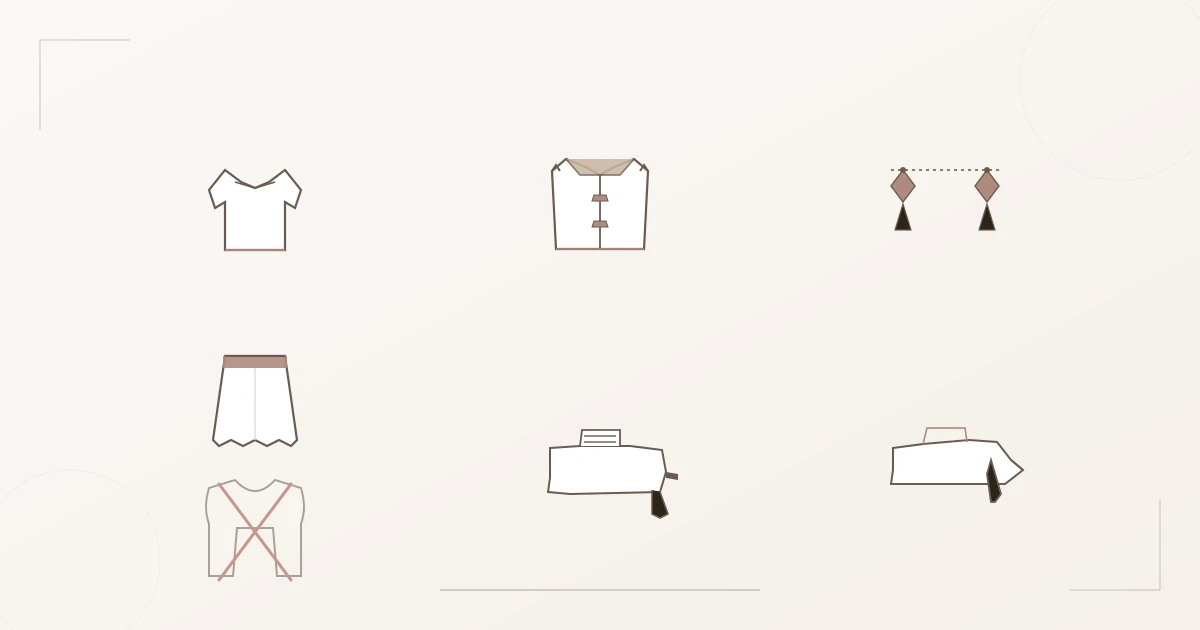
Short, waist-fitted tops with clean edges are standard. Boat neck, V-neck, geometric bateau neckline — anything that shows a clean edge. Cropped blouses, short blazers, straight-cut T-shirts. Sleeves: clean, slim, never voluminous. Collars: crisp and geometric, no soft waterfall. The boat-neck top is the FG signature and only works this precisely on this sub-family.
Skirts & Pants
The pencil skirt from mini to knee length with a clean edge is FG standard, as is the short A-line with hard edges (not the Soft Gamine’s circle skirt). For pants: cigarette pants, capris, cropped ankle-length pants with a clean line, straight-cut 7/8 pants. What never works: palazzo pants, wide leg cuts, long flowing skirts — they all bury the compact stature.
Dresses & Blazers
Dresses only work when they bring the Gamine contrast into the dress itself — contrasting color blocking, a visible geometric belt, a visible waist break with a color change. Classic Kibbe: the structured blazer with sharp lapels and a defined shoulder line is an FG core piece, often paired with a crisp skirt or slim pants for a contrasting two-piece.
Shoes
Pointed ankle boots, Oxford lace-ups, cleanly shaped loafers, pointed pumps with a clean edge. Ballet flats only with visible structure (a pointed toe, a geometric silhouette), never in the soft round cut of the Soft Gamine. Heels: short and cleanly shaped, no delicate stiletto, no soft block heel.
Fabrics, Patterns & Colors
Fabrics follow the Yang principle: clean, structured, with a defined texture — cotton poplin, wool cloth, denim with a clear structure, leather, fine cashmere. Softly flowing silk chiffons or plush velours break the precision and read overwhelming. Even knits only work in tight, structured variants (ribbed knit, cable patterns on a small scale), no cozy voluminous chunky-knit sweaters.
Patterns are core to the FG vocabulary: stripes, chevrons, diamonds, geometric checks, small-scale polka dots, precise prints. Anything with hard clean edges. Florals only if they are stylized-geometric (no watercolor, no roses), or entirely on a small scale as a tiny scattered print. Large florals and softly gradient color patterns tip immediately into Romantic or Natural territory.
Colors carry the contrast: strong color contrasts are the FG signature — black and white, navy and white, red and black, cobalt and camel. Tone-on-tone steals the line. Within a palette, clean, defined colors work better than softly gradient pastels. Color analysis helps you find the individually best contrasts — the overarching frame stays contrast over gradient.
Jewelry & Accessories
Jewelry on the Flamboyant Gamine is a visible style element, not discreetly held back. Geometric statement earrings (diamonds, triangles, small-scale geometric rings), asymmetric necklaces with a clean geometric pendant shape, short statement chains with a metallic shine. What never works: long flowing pearl strands (SG and R territory), voluminous organic shapes (N and FN territory), delicate pendants without a clean contour (C and SC territory).
For bags: cleanly shaped small clutches, compact box bags with hard edges, geometric crossbody bags. The small size follows the Gamine rule (nothing that overwhelms the compact stature), the geometric shape follows the FG rule (nothing softly round without a contour).
For belts: clean geometric shapes with a visible hard edge, often with a striking geometric buckle. The contrast belt is a core Gamine tool for making the broken line visible — on the FG in an especially geometric execution. For headwear: berets, small-scale geometric felt hats, clean newsboy caps. Scarves: thin and cleanly knotted, never voluminously wrapped around the neck.
The 5 Biggest Styling Mistakes for Flamboyant Gamine
- Wearing soft ruffles and puff sleeves. The classic reflex: “I’m small, so sweet and girlish.” On the Flamboyant Gamine, these details overwhelm the sharp geometric features and make her look as if she’s in costume. The sweetness belongs to the Soft Gamine, not to the FG.
- Unbroken long silhouettes. A floor-length dress, a maxi cardigan, a long slim coat — all of them compress the compact stature and kill the Gamine contrast. The broken line is a must, even on the FG.
- Soft washed-out color gradients. Watercolor prints, gradient ombré dresses, pastel-on-pastel combinations — all of it blurs the contrast that carries the entire FG styling. Strong color contrasts are the FG signature, not optional.
- Wearing oversized silhouettes. A boyfriend blazer, wide palazzo pants, an oversized cardigan — all three steal the compact precision. Volume is FN territory; the FG needs clarity instead of width.
- Too little contrast in the face. A neutral nude lipstick and discreet eyeliner underplay the angular features. The FG can carry and needs visible geometric precision in the makeup too: a clean lash line, defined contour, a clear lipstick contrast.
Flamboyant Gamine at Work & in Everyday Life
In the business context, the Flamboyant Gamine is often the sub-family most likely to be underplayed — because the classic corporate codes (pencil skirt, straight blouse, discreet blazer) seem at first glance to work. In truth, the FG becomes invisible in that neutral uniform and reads severe-boring rather than cheeky-professional. The solution is sharpness within the corporate rules: a structured blazer with clean lapels, a contrasting pencil skirt (not tone-on-tone), a visible geometric belt, a clean geometric necklace or earrings, pointed ankle boots instead of standard pumps.
For everyday alternatives: the Flamboyant Gamine wears the clean geometric two-pieces in casual form as well — jeans with visible structure plus a boat-neck top plus a short blazer, or an A-line skirt with a clean edge plus a straight T-shirt plus geometric statement earrings. The capsule wardrobe for the FG has few but very precise geometric core pieces.
Famous Flamboyant Gamine Examples
The canonical references for Flamboyant Gamine — compact, high-contrast, and Yang-dominant — are above all Twiggy (the defining model of the 1960s, small-wiry with sharp angular features and iconic geometric styling) and Edie Sedgwick (petite, angular, an iconic contrast presence in stripes and geometric shapes). Winona Ryder is discussed in many current Kibbe analyses as a classic Flamboyant Gamine (small, angular, energetic-cheeky); some analyses read her rather as a Soft Gamine — the debate itself shows just how tight the boundary is within the Gamine family.
Important as always with celebrity examples: the image material is filtered. Red-carpet photos, professional styling, and retouched editorials often distort the structure so heavily that the actual Kibbe assignment becomes difficult. Your own characteristics — measured on yourself and photographed in a standardized way — are always the more reliable basis than any celebrity reference.
The Flamboyant Gamine Self-Check: 5 Questions
Five questions whose consistent “yes” supports the diagnosis. A single “no” is rarely disqualifying — four “no” answers should send you to check a different type (usually Soft Gamine or Dramatic):
- Are you shorter than about 165 cm? The short vertical is a hard criterion. Above it, statistically almost always sits the Dramatic or Natural family.
- Do your cheekbones and chin read more angular-defined than full-round? That’s the central Yang filter in the face — Flamboyant Gamine requires geometric precision.
- Is your curve at bust and hip more wiry-slim than visibly fleshy? The FG has little visible feminine curve — the stature is boyish-compact, not lush.
- Do combined, contrasting two-pieces with clean edges (boat neck plus pencil skirt, geometric blazer plus slim pants) look cohesive on you — while unbroken soft dresses or ruffles feel overwhelming? This is the central styling test.
- Do people often describe you as “cheeky, impish, sharp, energetic” — and rarely as “sweet, girlish, dreamy”? Outside perception is an important secondary filter for the Gamine sub-family.
Three to five “yes” answers make Flamboyant Gamine a very solid working hypothesis. With three “yes” and two clear “no” answers, it’s worth comparing with the Soft Gamine guide (if question 2 or 3 leans “soft”) or the Dramatic guide (if question 1 lands on “no, I’m taller”).
Personally Confirmed
If You Want to Know for Sure Whether You’re Flamboyant Gamine
The boundary with Soft Gamine, Dramatic, and Flamboyant Natural decides whether your styling reads precise-cheeky or overwhelmed-boring. In a JO-Style Kibbe analysis, you get a structured photo evaluation, a clear assignment, and an action plan with cuts, fabrics, and colors.
To the Kibbe analysis →Frequently Asked Questions (FAQ)
What is the difference between Flamboyant Gamine and Gamine?
The pure Gamine would be the theoretically balanced middle with equal parts Yin and Yang. In practice, almost every Gamine tips one way or the other. With the Flamboyant Gamine, Yang dominates — more angular features, less fleshy structure, more defined edges. Since David Kibbe’s 2021 update, the pure Gamine has been considered a theoretical reference, while the Soft Gamine and the Flamboyant Gamine are the two actively typed variations.
How is Flamboyant Gamine different from Soft Gamine?
Both are small, compact, and high-contrast — the difference lies in the Yin/Yang distribution. The Flamboyant Gamine is Yang-dominant (angular cheekbones, a defined chin, a wiry structure without any fleshy curve), the Soft Gamine is Yin-dominant (round cheeks, a visible soft curve, sweeter features). The wardrobe follows: FG wears boat necks, geometric patterns, and hard edges; SG wears crew necks, puff sleeves, and soft playful details.
How tall can you be as a Flamboyant Gamine?
The Gamine family has a hard height ceiling at about 165 cm. Above 165 cm, the compact impact that defines the Gamine is typically lost — the assignment slips into the Dramatic or Natural family. This rule holds without compromise: even with all other characteristics, anyone above 168 cm is typically no longer a Gamine.
Is the Flamboyant Gamine the rarest Kibbe type?
Within the Gamine family, the Flamboyant Gamine is rarer than the Soft Gamine — most Gamines tip toward the softer side. Overall, the Gamine family is rather uncommon in the Kibbe community, compared with the middle types (Classic family, Natural family). Statistics on the exact distribution don’t exist, because there’s no representative study — the frequency claims in Kibbe communities are practitioner observations.
Can a Flamboyant Gamine wear dresses?
Yes, but only with visible contrast within the dress. A one-piece floor-length dress without a visible waist break compresses the FG like every Gamine. What works: short dresses with a visible contrast belt, color-block dresses with a clean color division, dresses with a visible geometric neckline or a clean waist break through a color change. The dress has to bring the broken line into the design.
What hairstyle suits the Flamboyant Gamine?
Short, cleanly shaped hairstyles with visible geometric structure are the FG signature — a pixie cut, a geometric bob, a long bob with a clean edge. Long open wavy hair overwhelms the compact precision and steals the sharp features. If the hair is long, asymmetric cuts work, or clean up-dos with visible geometric elements (a clean parting, clean contours).
What colors suit the Flamboyant Gamine?
Strong color contrasts are the FG signature — black and white, navy and white, red and black, clean color blocks. Tone-on-tone steals the line, softly gradient pastels read overwhelmed. Within a personal color palette (which a color analysis determines individually), clean, defined colors work better than softly gradient nuances. The contrast between two colors matters more than the exact color choice.
Why don’t ruffles and puff sleeves work on the Flamboyant Gamine?
Because they attach to the wrong signal. Ruffles and puff sleeves are sweet, playful Yin signals — they work on the Soft Gamine, whose Yin dominates and needs the edges. On the Flamboyant Gamine, whose Yang dominates, they read like a costume over the actual picture: the geometric precision of the features disappears under the sweet detail instead of being complemented by it.
Which brands suit the Flamboyant Gamine?
Brands with clean, geometric lines and a sensibility for contrast — depending on the budget, for example COS, Arket, & Other Stories, Massimo Dutti, or brands with classic French precision. More important than the brand is the cut sensibility: boat-neck availability, clean short blazers, precise geometric patterns. Brands with a lot of ruffles, puff, volume, and softly flowing fabrics (for example boho-oriented labels) rarely fit.
Can Flamboyant Gamine look business-ready?
Yes — the challenge is more about not disappearing into the corporate uniform. An FG reads most professional in a structured blazer plus a contrasting skirt or slim pants plus a visible geometric detail (belt, necklace, earrings). A tone-on-tone two-piece without contrast makes the FG invisible. The business guide by Kibbe type shows the specific combinations.
What is the biggest styling mistake for the Flamboyant Gamine?
Treating yourself as “just a small woman” and therefore wearing sweet girlish details (ruffles, puff sleeves, pastel florals). That’s the reflex of nearly every mistyped FG. The Flamboyant Gamine is not a small Romantic and not a sweet Soft Gamine — she is the sharp, geometric, energetic Gamine variation and needs precision instead of sweetness.
What to do if I’m torn between Flamboyant Gamine and Dramatic?
Height decides. If you’re under about 165 cm — Flamboyant Gamine. If you’re clearly over 170 cm — Dramatic. Between 165 and 170 cm, the silhouette test decides: wear a long slim column. If it reads majestic and cohesive — Dramatic. If it reads overdressed and you feel lost in the fabric — Flamboyant Gamine, who needs contrast and combination rather than an unbroken vertical.