
TL;DR — Which jacket suits my figure?
- Three levers decide: length, volume and the ribbed hem — the jacket type comes after.
- There are three usable landing points: the waist, the high hip, or well below the hip. Never exactly in between.
- A ribbed hem gathers the width exactly where it closes — usually at the hip.
- Don’t double the volume: a padded jacket plus wide trousers gives you width twice over.
- With quilted jackets the channel size counts: fine quilting adds less bulk than large puffs.
Which jacket suits your figure is decided by three levers: length, volume and the ribbed hem. The hem should not end at your widest point, the jacket’s volume should not sit where you already have width, and an elastic hem gathers the fullness exactly at the height where it closes. The jacket type is the last question, not the first.
This is about short jackets — blousons, bombers, quilted jackets, leather jackets, denim jackets and transitional jackets. The coat and the blazer follow their own rules; both have their own guide.
Contents
- The three levers: length, volume, ribbed hem
- Jacket length and landing point
- The ribbed-hem effect: where the width lands
- The jacket types at a glance
- Don’t double the volume
- Quilting: the scale of the channels
- Jackets by body shape
- Jackets by body line
- The 5-point fit check
- The most common jacket-buying mistakes
- FAQ — Frequently asked questions
The three levers: length, volume, ribbed hem
A short jacket works through three variables: where it ends, how much room it takes up, and where it draws in. These three shape the silhouette more than the jacket type — the same quilted jacket in two lengths reads completely differently.
The difference to a coat or blazer matters: a short jacket ends mid-torso, often exactly in the zone between waist and hip. That is where proportion is decided. A coat skims past that zone, a blazer is engineered for it — a casual jacket is not.
On top of that comes something no other top has: padding creates real, physical volume. A blouse can add bulk visually; a down jacket actually does. That is why this guide has its own section on volume.
Jacket length and landing point
There are three usable landing points for a short jacket: at the waist, at the high hip, or well below the hip. The length in between — that is, exactly on the widest point of the hip — is the only one that reliably works against you, because the horizontal hem edge draws the eye right there.
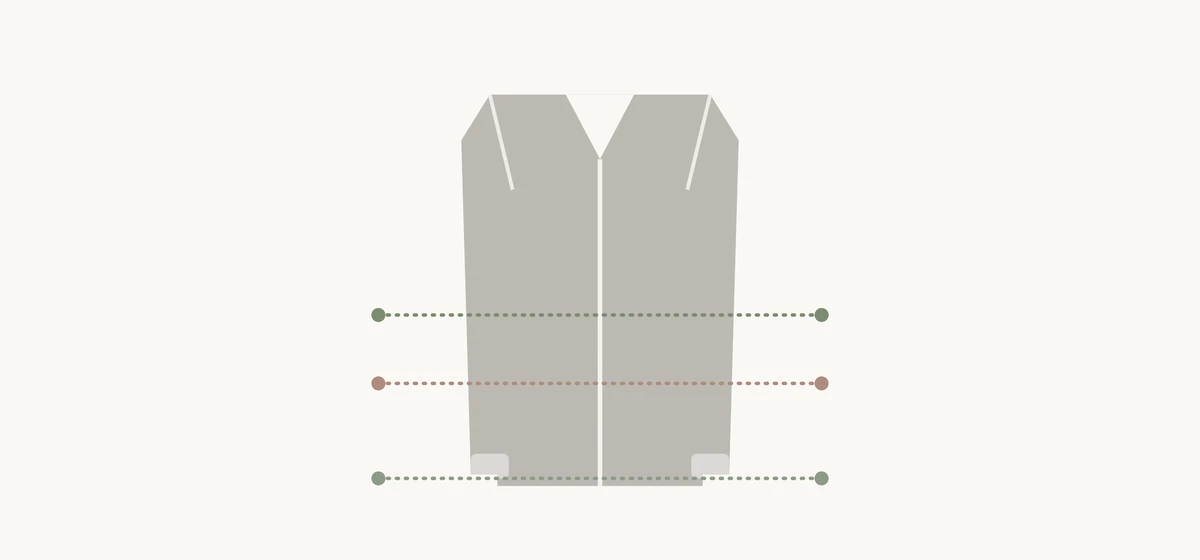
The waist length lengthens most: it moves the visual start of the leg upward and works especially well with a high-rise trouser. The high hip is the all-rounder — it ends above the widest point and stays practical. The longer version skims past the hip line entirely and suits you when you want calm there.
Where your widest point actually sits is settled when determining your body shape — for some it is the hip, for others the thighs.
The ribbed-hem effect: where the width lands
An elastic ribbed hem draws the bottom edge together — and gathers the entire fullness of the jacket directly above it. This is the most overlooked mechanism on short jackets: the ribbed hem does not just mark the end, it creates volume at exactly its own height.
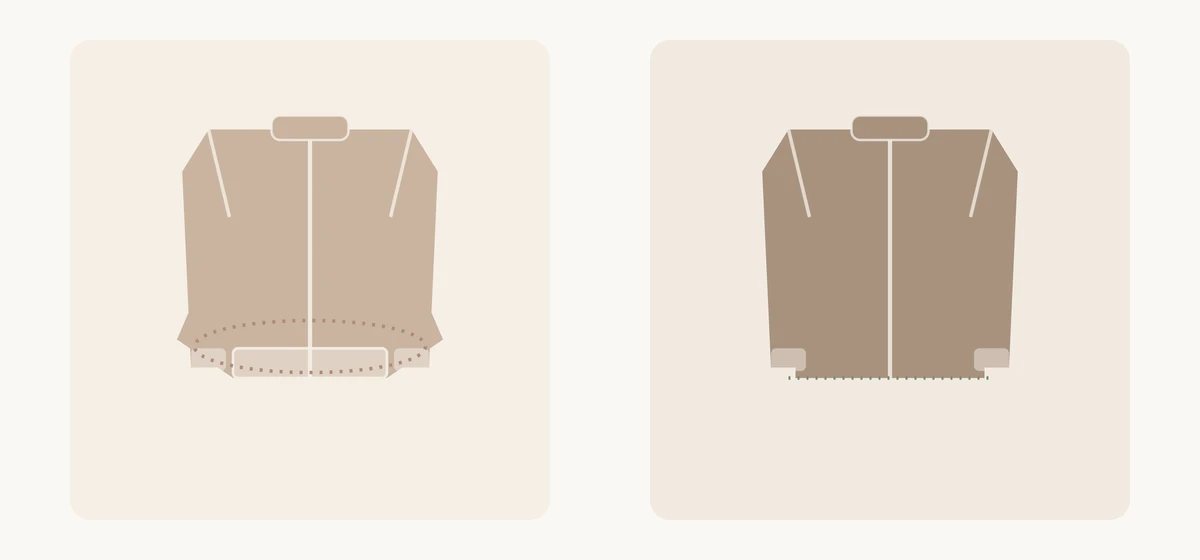
The ribbed hem tells you where the jacket becomes wide. Sitting on your widest point, it reinforces it — sitting above it, it creates a waist.
From that follows a simple rule: narrow hips gain from a ribbed hem, because it adds volume where there is little — which makes the blouson a good choice for the inverted triangle. Wider hips are better served by a straight hem or a drawstring you can leave open. A ribbed hem at waist height, by contrast, works almost always, because it emphasises the narrowest point.
The jacket types at a glance
The common short jackets differ above all in hem construction, volume and collar shape:
| Jacket type | Feature | Flatters |
|---|---|---|
| Blouson / bomber | waist-length, wide, tight ribbed hem | inverted triangle, narrow hips; creates volume below |
| Quilted jacket | padded, visible quilting channels | almost anyone — the channel size decides |
| Leather (biker) jacket | short, lapels, often asymmetric zip | straight and strong lines; emphasises the shoulder |
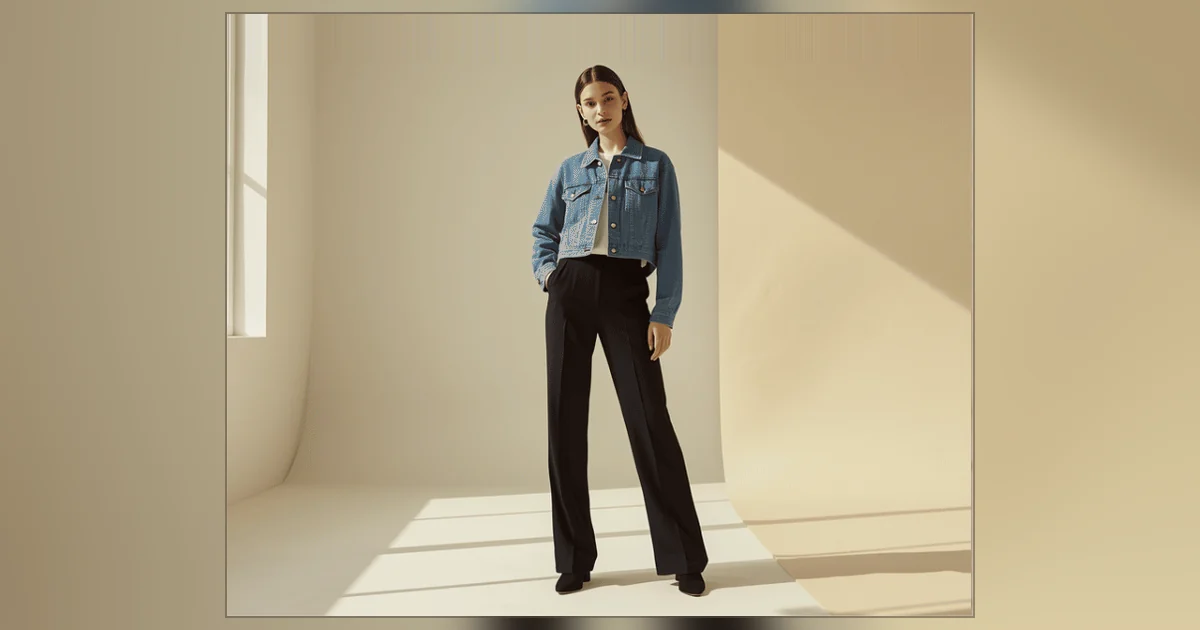
| Denim jacket | short, yoke, chest pockets | hourglass and rectangle; close to the waist |
| Transitional jacket | light, straight hem, often a drawstring | wider hips — the straight hem falls smooth |
| Parka | longer, hood, lined | tall women; skims past the hip line |
Two of these types come from military history: the bomber jacket goes back to the US MA-1 flight jacket in nylon, part of US forces equipment from 1950 to the early 1980s. The parka is a longer, often lined anorak with a hood that is detachable on some models.
Don’t double the volume
A padded jacket adds real volume, not just visual volume — and that volume adds to everything worn under and beside it. That is the difference from every other garment, and the most common reason a winter outfit reads wider in the mirror than expected.
The rule is: volume in one place, not two. A padded jacket takes a slimmer trouser; a wide palazzo trouser takes a slim, unlined jacket. Both together stack two widths that reinforce each other.
The same applies inward: a thick roll-neck under a narrowly cut quilted jacket strains and makes the jacket read smaller than it is. So plan the jacket with the layer you will actually wear underneath — and try it on in the shop over a jumper, not a T-shirt.
Quilting: the scale of the channels
A quilted jacket is made of quilted or padded fabric; its characteristic look comes from the row- or pillow-shaped segments formed by the quilting seams. Those segments are a scaling element — just like the size of a pattern.
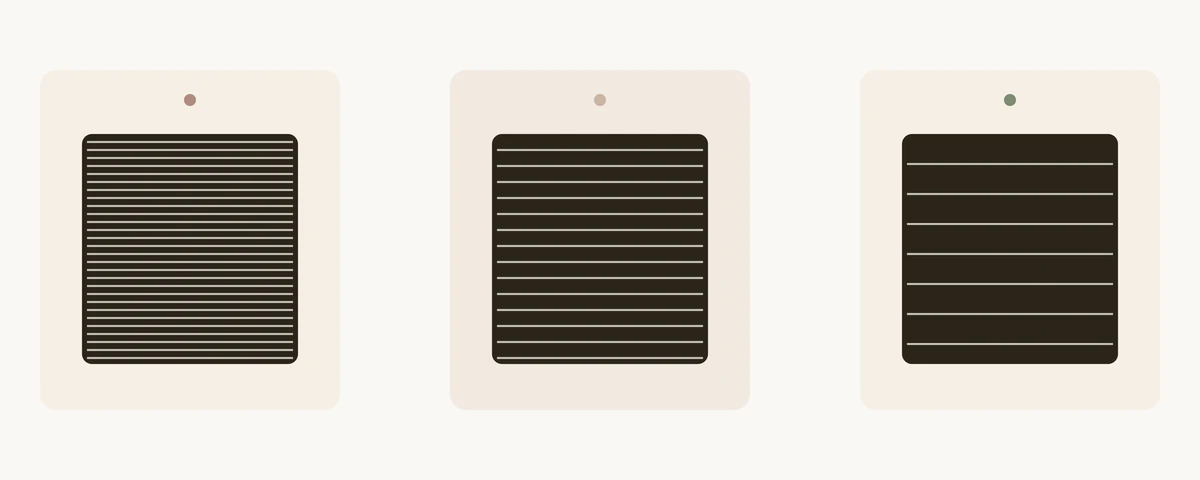
Fine, narrow channels add less bulk and read calmer — they suit a delicate bone structure and situations where the jacket should not dominate. Wide channels and large puffs bring more volume and a bolder look; they need a frame that carries them. You know the same scaling logic from patterns by figure.
Direction counts too: vertical quilting leads the eye downward and reads calmer, horizontal quilting emphasises the width of the jacket. The modern quilted jacket, incidentally, goes back to Steve Gulyas, who developed it in the 1950s as a US Air Force pilot as special clothing and later refined it in England as civilian wear.
Jackets by body shape
By body shape the balance rule applies: volume where width is missing — calm where it is already there. With short jackets the hem is the decisive point, because it lands mid-torso.
The pear chooses a straight hem falling past the hip, or a length well below it — no ribbed hem on the widest point. The inverted triangle benefits from exactly the opposite: the blouson with a ribbed hem, avoiding extra shoulder emphasis. The rectangle gains from a waist-close denim jacket or a belt worn over the jacket. The apple wears the jacket open and straight-cut, so two vertical front edges appear. The hourglass keeps the waist visible: a short length, or a jacket that closes without straining over the hip.
Jackets by body line
Body shape tells you where the hem should land — your body line tells you what character the jacket may have. The same leather jacket looks assured on one woman and borrowed on another.
Clean, straight lines wear sharply cut, structured jackets with clean edges — the biker jacket is at home here. Soft, round lines wear softer materials and rounder shapes; hard construction looks foreign on them. Strong, relaxed lines wear generous, unstructured cuts and robust materials like denim or waxed cotton. Delicate structures need smaller details: narrower collars, finer quilting, less hardware. Which line is yours is clarified by the Kibbe styling guide.
The 5-point fit check
Check it closed, in motion, and with the layer you will actually wear underneath:
- Shoulder seam. It ends on the shoulder edge. With raglan sleeves, check instead that the seam runs smoothly over the shoulder.
- Armhole with a jumper. Put a jumper on and raise your arms. If the whole jacket rides up, it is cut too tight.
- Close the fastening. If horizontal pull creases appear at the zip, width is missing — even if it closes.
- Check the hem. It ends at the waist, the high hip or well below it, not exactly on the widest point.
- Sleeve end. The sleeve ends at the wrist and does not expose half your forearm when you raise your arms.
The most common jacket-buying mistakes
Most jackets are tried on in a T-shirt and worn in winter over a jumper. The most common wrong buy sits exactly in that gap.
- Trying it on without the later layer. A jacket that fits over a T-shirt can strain over a jumper.
- Letting the hem end on the widest point. The horizontal edge then emphasises exactly that point.
- Overlooking the ribbed hem. It decides where the width lands — not just where the jacket stops.
- Doubling the volume. A padded jacket plus wide trousers stacks two widths.
- Ignoring channel size. Large quilted puffs add noticeably more bulk than fine quilting.
- Forgetting to plan for care. Down and padding need their own treatment, otherwise they clump (see Washing and caring for clothes properly).
From the rule to your own line
Which jacket carries your structure?
Length and hem you can measure — which character and scale suit you, you cannot. A professional style and Kibbe analysis translates your bone structure into concrete cuts, lengths and materials. Free initial consultation included.
FAQ — Frequently asked questions
Which jacket suits my figure?
Decide by three levers: length, volume and the ribbed hem. The hem should not end at your widest point, the jacket’s volume should not sit where you already have width, and an elastic hem gathers the fullness exactly where it closes. Only then does the jacket type matter.
How long should a short jacket be?
There are three sensible landing points: at the waist, at the high hip, or well below the hip. Avoid the length in between — exactly on the widest point of the hip — because the horizontal hem edge draws the eye there. At the waist the legs read longest.
What does a ribbed hem do to a jacket?
An elastic ribbed hem pulls the bottom edge together and lets the fullness gather above it. That creates volume at exactly the height where the ribbing sits — usually the hip. For narrow hips that is an advantage; with wider hips, choose a straight hem or a drawstring you can leave open.
Which jacket works with broad shoulders?
With broader shoulders, avoid extra shoulder emphasis: no thick padding, no applied yokes, no heavily quilted shoulders. Softer constructions, raglan sleeves and jackets that add some width lower down work better. A jacket with a ribbed hem at the hip deliberately creates balance here.
Does a quilted jacket make you look bigger?
Not automatically — it depends on channel size and quilting direction. A quilted jacket is made of padded fabric whose look comes from row- or pillow-shaped segments. Fine, narrow channels add less bulk than large puffs, and vertical quilting reads calmer than horizontal.
Which jacket length makes you look taller?
A short jacket ending at or just above the waist makes the legs read longest — especially with a high-rise trouser. What matters is that the hem does not sit on the widest point of the hip. A continuous colour of jacket, trouser and shoe extends the line further.
Blouson or straight jacket — which is better?
Both work, they simply do different things. The blouson is a roughly waist-length, wide jacket with tight ribbing at hem and cuffs; it gathers volume at the hip. A straight-cut jacket falls smoothly and calms the silhouette. Choose by what your proportion needs.
How do I check whether a jacket fits?
Check it closed and in motion: the shoulder seam ends on the shoulder edge, the armhole allows you to raise your arms, the fastening creates no horizontal creases, and there is still room for a jumper underneath. Sit down and raise your arms — a jacket that only works standing does not work.