
TL;DR — Which blazer suits my figure?
- The shoulder decides first — it is the only zone on a blazer that practically cannot be altered.
- The top button marks your visible waist. Its height changes the whole proportion.
- The hem never ends on the widest point of the hip — above or below it.
- Lapel width in proportion to your bone structure: narrow for delicate, wider for strong frames.
- The sleeve ends at the wrist bone — with one to one and a half centimetres of cuff showing.
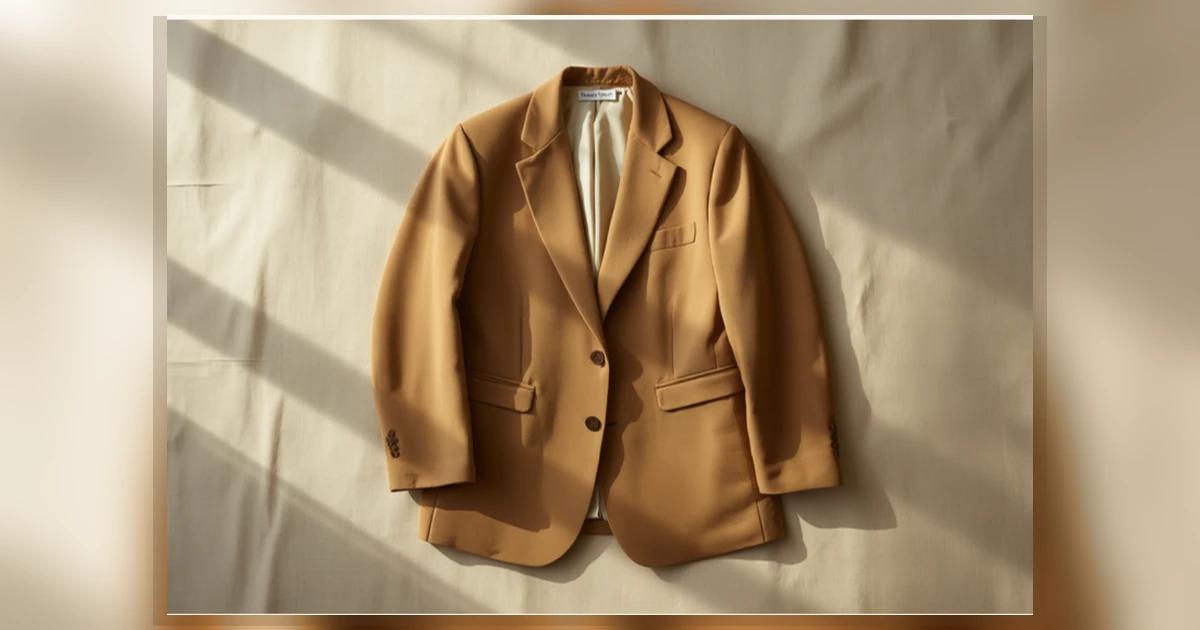
Which blazer suits your figure is decided first at the shoulder: the shoulder seam must end exactly on your shoulder edge. After that come button position, length and lapel width — in that order, because they differ in how well they can be corrected. The cut is the last question, not the first.
This guide covers the blazer as a garment — fit, construction and proportion. How to style it in a business context by your Kibbe type, which family needs which blazer effect and what a business capsule looks like is in the guide Business look by Kibbe type. Here it is about whether the blazer fits at all.
Contents
- The shoulder decides first
- The 6-point fit check
- The button position is your waist point
- The blazer cuts at a glance
- Blazer length by proportion
- Lapels: the scale at your upper body
- Blazers by body shape
- Sleeve length and armhole
- Fabric and construction
- The most common blazer-buying mistakes
- FAQ — Frequently asked questions
The shoulder decides first
The blazer is the one garment whose shoulder practically cannot be altered. The entire construction meets there: shoulder pads, interfacing, sleeve cap and armhole. Moving the seam would mean re-setting the sleeve completely — expensive and rarely convincing.
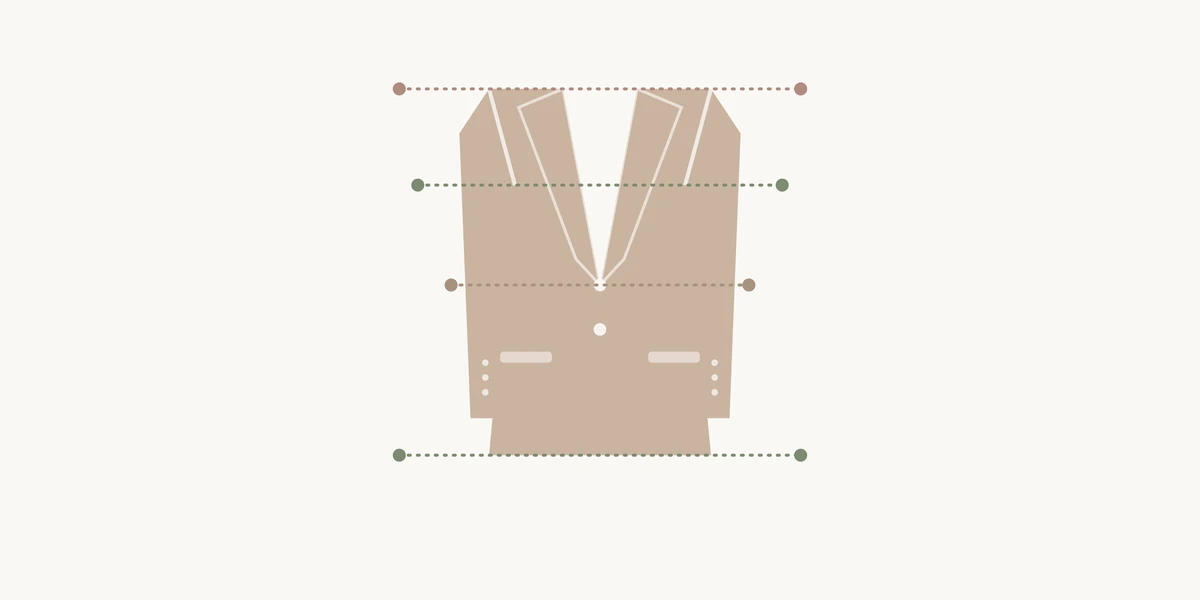
From that follows the buying rule: buy for the shoulder, alter the rest. Width at waist and hem, sleeve length, blazer length — those are routine work for any alteration shop. If the shoulder does not sit, none of it helps.
You can check it at a glance: the seam ends where your shoulder bone ends, and the sleeve cap falls straight down. If the seam slips onto the upper arm, the blazer is too big — even if it otherwise feels good. If it sits above the edge, the blazer pulls across when closed.
The 6-point fit check
Check these six points buttoned up and sitting down — an open blazer forgives almost everything and reveals nothing:
- Shoulder seam. It ends on your shoulder edge, not before and not beyond it.
- Armhole. It sits high enough that you can raise your arms without the whole blazer moving with them.
- Close the button. If an X of pull creases appears at the button, the blazer is too tight — regardless of the fact that it closes.
- Back. The fabric stays smooth between the shoulder blades. Horizontal folds mean the back is too narrow.
- Sleeve length. The sleeve ends at the wrist bone; one to one and a half centimetres of blouse cuff may show.
- Hem. It does not end on the widest point of the hip, but above or below it.
If points 3 to 6 fail, that is usually an alteration. If point 1 or 2 fails, keep looking.
The button position is your waist point
The top fastened button determines where the eye sees your waist. It is the most underestimated lever on a blazer — and it changes the entire proportion without anything about the cut being different.
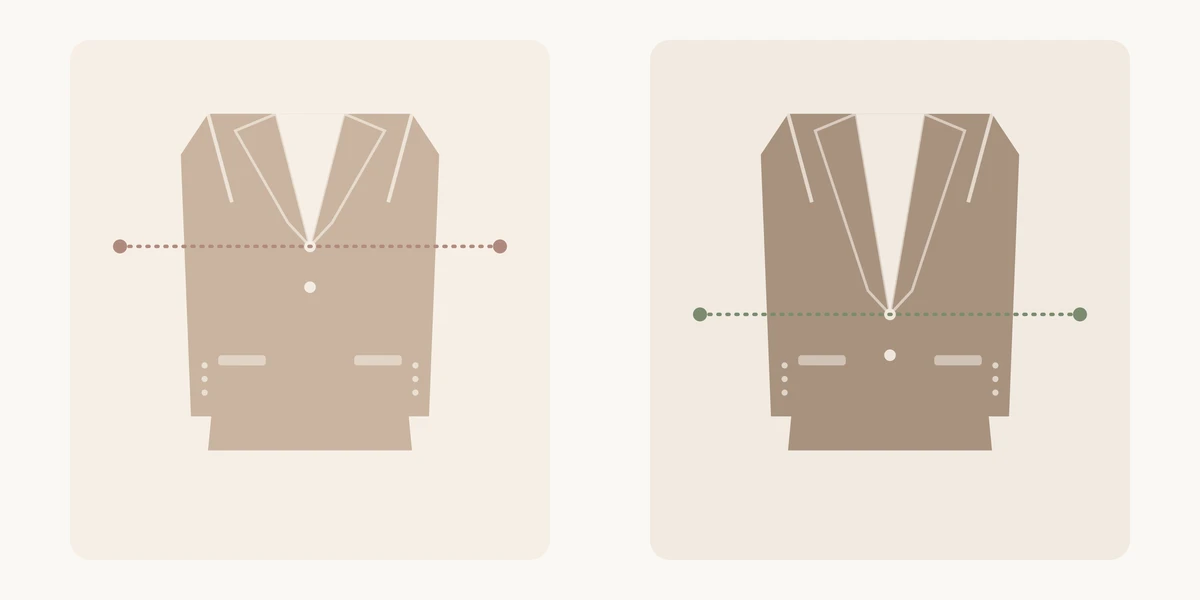
If the button sits at or just above your natural waist, the upper body reads more compact and the legs longer. For most proportions that is the safest choice. If it sits noticeably lower, the visible waist moves down: the upper body reads elongated, the leg line shorter.
Two blazers in the same cut and the same size can look completely different — only because the button sits two centimetres higher. In the shop, look at that first, then at everything else.
On double-breasted models the fastening point sits lower by construction, which is why they make the upper body read longer. Why an unbroken vertical line lengthens further is explained in the guide Looking slimmer through clothing.
The blazer cuts at a glance
The blazer follows no strict cutting rules — it is made single- or double-breasted, with a peak or notch lapel. That is exactly why an overview pays off:
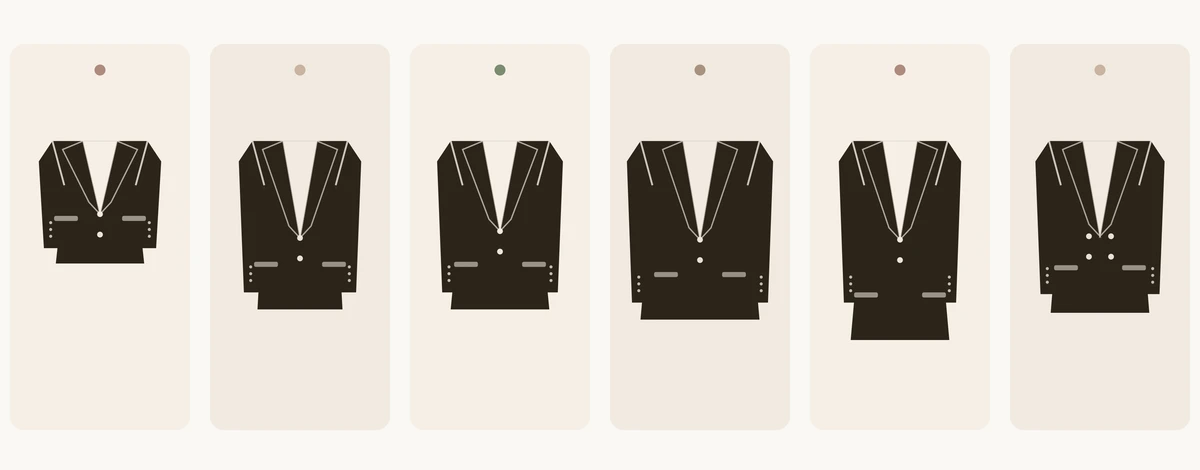
| Blazer cut | Feature | Flatters |
|---|---|---|
| Cropped | ends at or above the waist | long legs, petite women with a high-rise trouser |
| Tailored | defined waist, narrow hem | hourglass, a defined waist |
| Straight | continuously straight line | almost any figure; the safe base |
| Oversized | wide shoulder, plenty of volume | strong, relaxed structures |
| Longline | well below the hip | tall women, a long vertical line |
| Double-breasted | lower fastening point, double button row | straight silhouettes; lengthens the upper body |
The table is a starting point by proportion. The character of the cut decides on top of that — more on this below.
Blazer length by proportion
Blazer length divides your body into two visible sections — and therefore determines how long the legs read. A widespread rule of thumb puts the hem where your fingertips end with arms hanging down. It is a good starting value, but not a law.
More important is the landing-point rule: the hem should not end exactly on the widest point of the hip, because the horizontal edge draws the eye right there. Ending above it emphasises the waist; ending well below it skims the hip line entirely. Where that widest point sits on you is settled when determining your body shape.
For smaller proportions: the shorter the blazer, the longer the legs read — especially combined with a high rise. For tall women the longline cut can play out the vertical line in full.
Lapels: the scale at your upper body
The lapel is the outward-folded upper front edge of the blazer; together with the collar it forms what tailors call the Fasson. It is the first detail sitting directly below your face — and therefore a scaling element, not decoration.
The rule is proportion: a narrow lapel reads fine and suits a delicate bone structure, a wide one gives the upper body weight and carries stronger frames. As a rough orientation, the lapel point sits about halfway between collar and shoulder edge. A very wide lapel on narrow shoulders overwhelms; a very narrow one on strong shoulders looks lost.
The lapel shape steers the effect too: a peak lapel draws the eye upward and reads more formal, a notch lapel calmer and more everyday. You know the same scaling logic from the neckline — except that the blazer executes it with a firm edge.
Blazers by body shape
By body shape the blazer choice follows the balance rule: add where width is missing, calm where it is there. The shoulder area is the strongest lever, because it defines the silhouette at the top.
The pear (wider hips) gains from a clearly drawn shoulder and a hem that skims past the hip. The inverted triangle (wider shoulders) avoids extra padding and chooses softer construction and more fluid fabrics. The rectangle gains shape from a tailored cut or a belt. The apple wears the blazer open and straight-cut — the two vertical front edges create a continuous line. The hourglass keeps the waist visible: a tailored cut with the button at the natural waist.
Sleeve length and armhole
The blazer sleeve ends at the wrist bone — leaving one to one and a half centimetres of blouse cuff visible underneath. That is the classic tailoring rule: the narrow strip of contrast at the wrist makes the arm read longer and the blazer look made to measure.
Sleeves that are too long are the most common quiet mistake. They visually shorten the hand and make the whole blazer look oversized, even when shoulder and waist fit. Shortening sleeves is routine work — on models with functioning buttonholes it gets more involved, because they must be shortened from the shoulder.
The armhole decides freedom of movement. A high-set armhole looks tighter at first glance but allows more movement: you can raise your arms without the whole blazer coming along. A low-set armhole feels more comfortable when trying on and pulls constantly in everyday use.
Fabric and construction
The construction decides whether a blazer gives structure or follows the body line. A blazer with interfacing and padding draws a clear shoulder line and holds shape. An unstructured blazer without interfacing falls softly and follows the silhouette — it reads more relaxed, but gives no support.
With fabric the same logic applies as with other garments: virgin wool and wool blends hold shape and fall cleanly, crêpe and viscose blends flow more softly, linen creases deliberately and reads summery and relaxed. How fabric drape steers the effect in general is in the guide Which blouse suits my figure.
Which character the construction should have depends on your body line: clean, straight lines wear structured, sharply drawn blazers. Soft, round lines wear unstructured models in fluid qualities. Strong, relaxed lines wear generous, unstructured cuts. Which line is yours is clarified by the Kibbe styling guide.
The most common blazer-buying mistakes
A blazer that looks good open is not yet a blazer that fits. Everything essential only shows when it is buttoned.
- Only trying it on open. Pull creases at the button and a too-narrow back only show buttoned up.
- Tolerating the shoulder. It is the only zone that practically cannot be altered — and the most common reason a blazer never quite works.
- Ignoring sleeve length. Sleeves that are too long make the whole blazer look oversized, even when everything else fits.
- Letting the hem end on the hip. The horizontal edge then emphasises exactly the widest point.
- Confusing oversized with one size up. A true oversized cut is engineered; a too-large blazer simply fits badly.
- Skipping alterations. Taking in the waist, shortening sleeves, adjusting the hem — that turns almost-right into right (see Avoiding wrong buys).
From fit to your own line
Which blazer carries your structure?
You can check the fit — which character suits you, you cannot. A professional style and Kibbe analysis translates your bone structure into concrete cuts, lapel widths and constructions. So the next blazer is the last wrong buy. Free initial consultation included.
FAQ — Frequently asked questions
Which blazer suits my figure?
Decide on the shoulder first: the shoulder seam must end on your shoulder edge — that is the only zone on a blazer that practically cannot be altered. After that come button position (it sets your visible waist point), length and lapel width. The cut comes last.
How do I know a blazer fits properly?
At six points: the shoulder seam ends on the shoulder edge, the armhole sits high enough for movement, the blazer closes without an X of creases at the button, the back stays smooth, the sleeves end at the wrist bone, and the hem does not end on the widest point of the hip. Check it buttoned and sitting down.
Why can the blazer shoulder not be altered?
Because the entire construction meets at the shoulder: shoulder pads, interfacing, sleeve cap and armhole. Moving it means re-setting the sleeve completely — expensive and rarely convincing. Width at waist and hem, and sleeve and blazer length, are routine work by contrast.
Where should the button sit on a blazer?
The top fastened button marks your waist visually — where it sits is where the eye sees the narrowest point. If it sits at or just above your natural waist, the legs read longer. If it sits noticeably lower, the waist moves down and the upper body reads more elongated, but the legs shorter.
How long should a women’s blazer be?
A widespread rule of thumb: the hem ends roughly where your fingertips end with arms hanging down. More important is the landing-point rule — the hem should not end exactly on the widest point of the hip, but above or below it. Cropped ends at or above the waist, longline well below the hip.
How wide should the lapel be?
The lapel should be proportional to your shoulder width and bone structure. A narrow lapel reads fine and suits delicate structures, a wide one gives the upper body weight and carries stronger frames. As a rough orientation, the lapel point sits about halfway between collar and shoulder edge.
What is the right blazer sleeve length?
The blazer sleeve ends at the wrist bone. If you wear a blouse underneath, one to one and a half centimetres of cuff may show — that is the classic tailoring rule and makes the arm read longer. Sleeves that are too long visually shorten the hand and make the whole blazer look oversized.
Oversized or tailored — which suits me?
That depends less on size than on bone structure and proportion. Strong, relaxed structures carry oversized well because they fill the volume. Delicate structures disappear in it — here a tailored or cropped cut reads more coherent. What stays true: even an oversized blazer must fit at the shoulder.